

In a state as forward-thinking and environmentally conscious as California, homeowners are increasingly seeking ways to not only live more sustainably but also to enhance their property's value and resilience. This quest often leads to the globally recognized standard for green building: LEED certification. For California homeowners, achieving LEED status for a residence isn't merely about compliance; it's a strategic investment in a healthier, more efficient, and ultimately more valuable home.
At Powercore Inc, a dual-licensed General B and C-10 Electrical Contractor based in Roseville, CA, we understand the unique aspirations of California residents. Our expertise spans solar, battery storage, HVAC, roofing, ADUs, remodels, and more, positioning us perfectly to guide you through the intricacies of building or renovating a home that meets the rigorous demands of LEED for Homes.
This comprehensive guide delves into why LEED Certification California is a smart move, how it intertwines with California's ambitious green initiatives, and how Powercore Inc can be your trusted partner in unlocking the full potential of a sustainable, high-performance residence.
What is LEED for Homes in California?
LEED, or Leadership in Energy and Environmental Design, is the most widely used green building rating system in the world. Developed by the U.S. Green Building Council (USGBC), LEED provides a framework for healthy, highly efficient, and cost-saving green buildings. While many associate LEED with commercial skyscrapers, the 'LEED for Homes' rating system is specifically tailored to residential projects, encompassing everything from single-family homes to multi-family residential buildings.
For California homes, LEED certification offers a clear, measurable standard for green building practices. It evaluates a home across several key categories, awarding points based on implemented strategies. The more points a project earns, the higher its certification level:
- Certified: 40–49 points
- Silver: 50–59 points
- Gold: 60–79 points
- Platinum: 80+ points
These categories include:
- Integrative Process: Emphasizing teamwork and holistic design from the project's inception.
- Location and Transportation: Encouraging development in dense, urban areas, reducing vehicle miles traveled.
- Sustainable Sites: Promoting environmentally sensitive site design, reduced heat island effect, and stormwater management.
- Water Efficiency: Reducing indoor and outdoor water usage through efficient fixtures and landscaping.
- Energy and Atmosphere: Optimizing energy performance, promoting renewable energy, and reducing refrigerant impacts.
- Materials and Resources: Encouraging the use of sustainable, recycled, and locally sourced materials while minimizing construction waste.
- Indoor Environmental Quality: Enhancing occupant comfort, health, and well-being through improved air quality and thermal control.
- Innovation: Recognizing exemplary performance above credit requirements and innovative strategies.
- Regional Priority: Addressing geographically specific environmental concerns.
Achieving LEED certification in California means your home has been designed, built, and operates to the highest standards of sustainability, a commitment that resonates deeply with the state's environmental ethos.
Why Pursue LEED Certification for Your California Home?
The decision to pursue LEED certification goes beyond a simple plaque on your wall. It's a strategic move that delivers tangible and intangible benefits, especially within California's unique climate and market conditions.
Enhanced Environmental Stewardship
California faces significant environmental challenges, from droughts and wildfires to air quality concerns. A LEED-certified home actively contributes to mitigating these issues. By reducing energy and water consumption, minimizing waste, and utilizing sustainable materials, you're playing a direct role in preserving California's natural resources and reducing your carbon footprint. This aligns perfectly with the state's goal for a carbon-neutral future.
Significant Cost Savings and ROI
While an initial investment may be required for certain green features, LEED homes are designed for long-term savings. Lower utility bills are a primary benefit, driven by:
- Energy Efficiency: Superior insulation, high-performance windows, efficient HVAC systems, and smart thermostats drastically cut heating and cooling costs.
- Water Conservation: Low-flow fixtures, drought-tolerant landscaping, and potentially greywater recycling systems lead to substantial reductions in water bills, a critical advantage in California's arid regions.
Beyond operational savings, LEED certification can also enhance your home's market value. Studies consistently show that green-certified homes command higher resale prices and sell faster than conventional homes, offering a robust return on investment.
Superior Indoor Environmental Quality and Comfort
LEED homes prioritize occupant health and comfort. This means:
- Improved Air Quality: Use of low-VOC (volatile organic compound) paints, sealants, and flooring, coupled with advanced ventilation systems, significantly reduces indoor pollutants and allergens.
- Thermal Comfort: Better insulation and efficient HVAC systems maintain consistent indoor temperatures, eliminating hot and cold spots common in less efficient homes.
- Daylighting: Strategic window placement maximizes natural light, reducing the need for artificial lighting and creating a more pleasant living environment.
Resilience and Future-Proofing
California's climate is changing, bringing more extreme weather events. LEED principles often incorporate features that enhance a home's resilience:
- Water Management: Systems for stormwater capture and drought-resistant landscaping.
- Energy Independence: Integration of solar and battery storage systems can provide critical backup power during grid outages.
- Durable Materials: Selecting materials that are robust and long-lasting, reducing maintenance and replacement needs.
By building to LEED standards, you're not just creating a home for today but one that's prepared for tomorrow's challenges.
Key LEED Pillars and Powercore Inc Solutions for California Homes
Achieving LEED certification requires a holistic approach, integrating sustainable practices across all aspects of design and construction. Powercore Inc, with our comprehensive range of services, is uniquely positioned to assist California homeowners in meeting these stringent requirements.
Energy and Atmosphere: Solar, HVAC, and Efficiency
This category is often where significant points are earned. Optimizing energy performance is paramount in California, where energy costs can be high.
- Residential Solar & Battery Storage: Powercore Inc specializes in designing and installing high-performance solar photovoltaic (PV) systems. Coupling solar with battery storage not only maximizes energy independence but also helps manage California's time-of-use (TOU) rates, contributing significantly to LEED points.
- High-Efficiency HVAC: Our HVAC services focus on installing energy-efficient systems, optimizing ductwork, and implementing smart climate controls to minimize heating and cooling loads.
- Advanced Building Envelope: Proper insulation, high-performance windows, and air sealing are critical. Our siding and exterior services ensure your home's envelope is robust, reducing energy transfer and improving thermal comfort.
Water Efficiency: Fixtures and Landscaping
Given California's persistent drought concerns, water conservation is a high priority for LEED.
- Low-Flow Fixtures: Specifying and installing ultra-low-flow toilets, showerheads, and faucets.
- Drought-Tolerant Landscaping: Designing outdoor spaces with native, drought-resistant plants and efficient irrigation systems (e.g., drip irrigation).
- Greywater Systems: Exploring options for reusing water from sinks and showers for irrigation, where permitted by local regulations.
Sustainable Sites and Transportation
LEED encourages minimizing a home's impact on its site and promoting alternative transportation.
- Heat Island Reduction: Using light-colored roofing materials (which Powercore Inc can assist with via our roofing services) and permeable paving.
- EV Charging Stations: Installing electric vehicle charging infrastructure directly contributes to points under the Location and Transportation category, aligning with California's push for widespread EV adoption.
Materials and Resources: Responsible Sourcing
This category focuses on minimizing the environmental impact of building materials.
- Recycled & Regional Materials: Prioritizing materials with high recycled content or those sourced within a specific radius to reduce transportation emissions.
- Construction Waste Management: Implementing strategies to divert construction debris from landfills through recycling and reuse programs, a standard practice for Powercore Inc on our remodels and new construction projects.
Indoor Environmental Quality: Healthier Living
Ensuring a healthy indoor environment is a cornerstone of LEED.
- Low-VOC Products: Using paints, adhesives, sealants, and flooring that emit minimal volatile organic compounds.
- Enhanced Ventilation: Designing mechanical ventilation systems to provide fresh air and exhaust stale air efficiently.
- Moisture Control: Implementing robust strategies to prevent moisture accumulation and mold growth.
California's Green Building Landscape and Incentives
California is a global leader in green building and renewable energy adoption. This progressive environment creates fertile ground for LEED certification.
State Regulations and Title 24
California's Building Energy Efficiency Standards (Title 24, Part 6) are among the strictest in the nation, requiring new construction and major renovations to meet high energy performance benchmarks. Many LEED requirements align with or exceed Title 24 standards, making the path to certification a natural extension of compliant building practices in the state.
Incentives and Rebates for Sustainable Upgrades
California offers numerous incentives that can make achieving LEED status more financially attractive:
- Solar & Battery Storage Incentives: Programs like the Self-Generation Incentive Program (SGIP) in California provide rebates for energy storage installations. While direct LEED certification rebates are rare, the components that contribute to LEED points (like solar and battery storage) often qualify for their own state and local incentives.
- Federal Tax Credits: The Residential Clean Energy Credit (IRS) offers a significant tax credit for homeowners installing eligible renewable energy systems, including solar PV and battery storage.
- Local Programs: Many California cities and counties offer their own green building initiatives, permit fee reductions, or property tax benefits for sustainable construction.
Powercore Inc stays current on these programs, helping our clients navigate the landscape of incentives to maximize their investment in sustainable home improvements.
The LEED Certification Process with Powercore Inc
Pursuing LEED certification can seem daunting, but with the right team, it's a streamlined and rewarding process. Powercore Inc, with our extensive experience in California's construction and electrical industries, acts as a crucial partner.
Understanding the Phases:
- Project Registration: Your project is registered with the USGBC.
- Design Phase: This involves integrating LEED strategies into your home's design. Powercore Inc can provide expert consultation on how our services—from solar and battery to HVAC and siding—can contribute to specific LEED credits.
- Construction Phase: Implementing the green building practices. This is where Powercore Inc's dual license as a General B and C-10 Electrical Contractor truly shines, allowing us to manage and execute diverse aspects of your project, ensuring adherence to LEED specifications for energy, water, materials, and indoor environmental quality.
- Verification & Certification: A third-party LEED Green Rater verifies the project's compliance, leading to final certification. We ensure all necessary documentation for our scope of work is meticulously prepared.
Powercore Inc: Your LEED Partner
As experienced contractors licensed in California (CSLB #1134334 General B, #1098175 C-10 Electrical), Powercore Inc can:
- Consult on LEED Feasibility: Advise on which LEED credits are most achievable for your project and budget.
- Integrate Sustainable Systems: Seamlessly install high-performance solar systems, advanced HVAC units, and EV charging infrastructure that align with LEED requirements.
- Manage Green Remodels & New Construction: Execute your remodel or new construction project with an eye toward sustainable materials, waste management, and energy efficiency.
- Streamline Execution: Our comprehensive service offerings mean fewer subcontractors, better coordination, and a more efficient pathway to achieving your green building goals.
We believe that building green shouldn't be overly complex. Our goal is to make the process as smooth and transparent as possible, helping you achieve a home that is both environmentally responsible and personally rewarding.
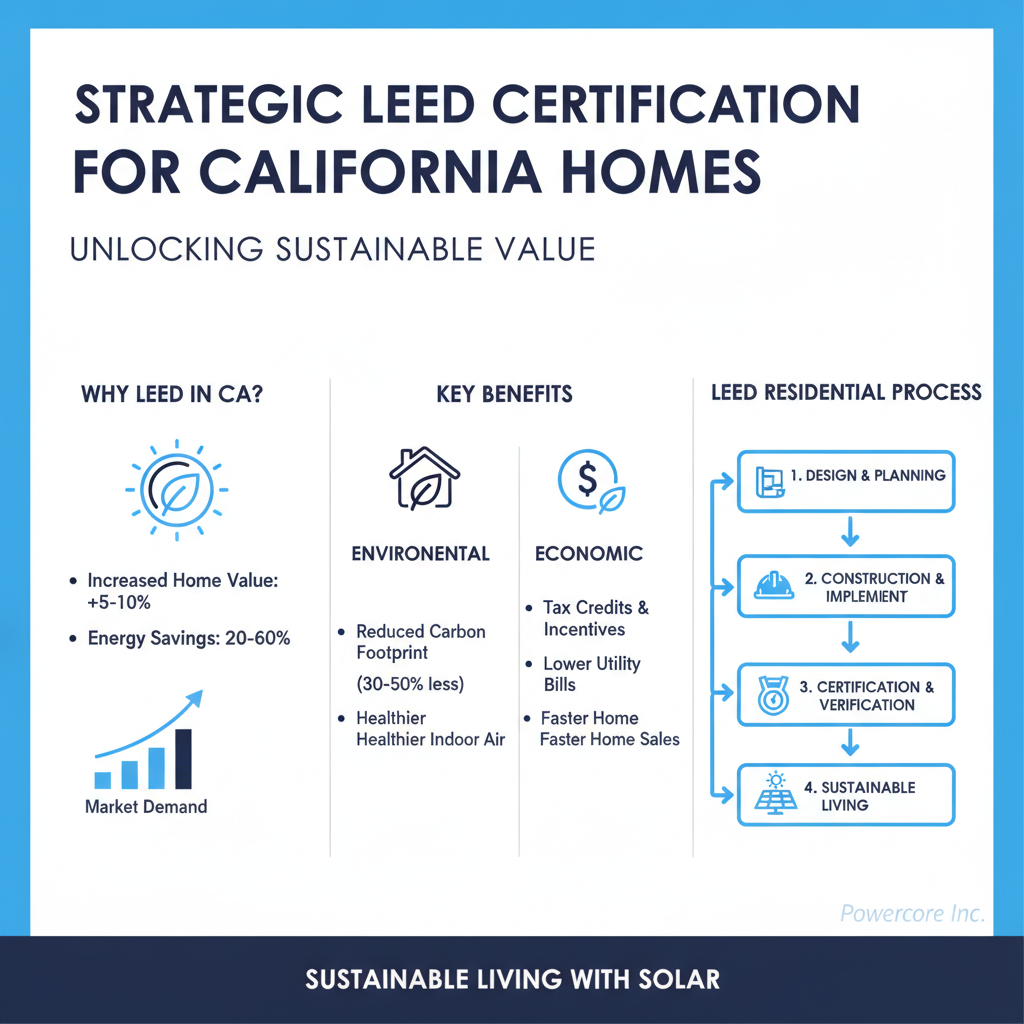
Cost vs. Value: Is LEED Worth the Investment in California?
A common question for any significant home improvement is the cost versus the long-term value. While LEED certification may involve a slightly higher upfront investment compared to conventional construction, the financial and qualitative benefits often outweigh these initial costs, particularly in the California market.
Initial Investment Considerations
The additional costs for LEED certification can vary widely depending on the desired certification level and the starting point of the project (e.g., new construction vs. existing home remodel). These costs typically stem from:
- Design & Consulting Fees: Engaging a LEED Accredited Professional (AP) or Green Rater for guidance and documentation.
- High-Performance Materials & Systems: Investing in superior insulation, advanced HVAC, solar panels, water-efficient fixtures, and sustainable materials.
- Testing & Verification: Fees for third-party inspections and performance testing.
However, it's crucial to view these not as expenses, but as investments. Many of these upgrades, such as passive house design principles, are simply good building practices that would be beneficial regardless of certification goals.
Long-Term Value and ROI
The return on investment for a LEED-certified home in California manifests in several ways:
- Reduced Operating Costs: Lower energy and water bills provide continuous savings throughout the home's lifespan. These savings become more significant as utility rates in California continue to climb.
- Increased Property Value: Green homes consistently sell for more and faster. A LEED certification provides third-party validation of your home's quality and sustainability, appealing to the growing demographic of environmentally conscious buyers in California.
- Access to Incentives: As mentioned, many green components qualify for state and federal incentives, offsetting initial costs.
- Enhanced Comfort & Health: While not purely financial, the improved indoor air quality, consistent temperatures, and overall healthier living environment contribute significantly to occupant satisfaction and well-being, a value difficult to quantify but deeply felt.
- Future-Proofing: As building codes in California become increasingly stringent regarding energy efficiency and sustainability, a LEED-certified home is already ahead of the curve, potentially saving future retrofit costs.
For California homeowners, investing in LEED homes California is a strategic decision that aligns with personal values, delivers tangible financial benefits, and secures a resilient future for their property.
Beyond Certification: Living Sustainably with Powercore Inc
Even if full LEED certification isn't your immediate goal, embracing its principles can dramatically improve your home. Powercore Inc is dedicated to helping all California homeowners make sustainable choices, whether it's a single upgrade or a comprehensive overhaul.
We can assist with individual projects that contribute to a greener home:
- Installing a new solar power system with battery backup.
- Upgrading to a high-efficiency HVAC unit.
- Replacing old windows or siding for better insulation.
- Adding an ADU designed with energy efficiency in mind.
- Integrating an EV charging station.
Each of these steps moves your home closer to the ideals of LEED, enhancing its performance, reducing its environmental impact, and improving your quality of life.
Take the Next Step with Powercore Inc
Embracing LEED principles or pursuing full LEED Certification California homes represents a profound commitment to sustainable living and long-term value. With Powercore Inc, you gain a partner with the expertise, licenses, and dedication to transform your vision into a high-performing reality.
From initial consultation to project completion, our team ensures every aspect of your sustainable home project is handled with professionalism and precision. We serve all of California, bringing top-tier craftsmanship and innovative solutions to your doorstep.
Ready to explore the strategic benefits of LEED for your California home? Contact Powercore Inc today for a consultation. Call us at 916-699-8778 to discuss your sustainable living goals and discover how we can help you build a greener, more valuable future.