

Pioneering a Greener California: Your Home's Solar Legacy
California, a state synonymous with innovation and progress, stands at the forefront of the global movement towards a sustainable future. With ambitious climate goals and a commitment to clean energy, the Golden State is a beacon of environmental stewardship. But the journey towards a carbon-neutral future isn't solely in the hands of policymakers and corporations; it begins right at home.
Every California homeowner has a unique opportunity to contribute significantly to this monumental shift by embracing solar power. Beyond the tangible savings on your utility bill, installing a solar energy system is a powerful declaration of environmental responsibility, directly impacting your carbon footprint reduction. It's about more than just electricity; it's about building a sustainable legacy for your family and for California.
At Powercore Inc, a dual-licensed General B & C-10 Electrical Contractor based in Roseville, CA, we understand the profound impact that individual actions have on our collective future. We're dedicated to empowering California homeowners to become active participants in the state's green revolution, transforming their properties into sources of clean, renewable energy. This comprehensive guide will illuminate how solar power dramatically reduces your home's carbon footprint and contributes to a healthier, more resilient California.
Understanding Your Home's Carbon Footprint in the Golden State
Before we can effectively reduce our carbon footprint, it's essential to understand what it entails and where your home's emissions originate. A carbon footprint represents the total amount of greenhouse gases (GHGs), primarily carbon dioxide (CO2), emitted directly and indirectly by human activities. For a typical California household, these emissions stem from several key areas:
- Electricity Consumption: While California boasts an increasingly clean grid, a portion of its electricity still comes from fossil fuels. Every kilowatt-hour (kWh) you consume that isn't from renewable sources contributes to emissions.
- Natural Gas Usage: Many California homes use natural gas for heating, water heating, cooking, and clothes drying. Burning natural gas releases CO2 directly into the atmosphere.
- Transportation: Vehicle emissions are a significant contributor, though this is often considered separate from the direct home footprint. However, the rise of electric vehicles (EVs) powered by home electricity links transportation directly to your home's energy source.
- Waste and Consumption: The production, transportation, and disposal of goods and food also carry an embedded carbon footprint, influencing your indirect emissions.
California's unique energy landscape, with its push for electrification and reliance on natural gas, means that energy choices made at home have a direct and measurable impact. According to the U.S. Environmental Protection Agency (EPA), the average American household produces approximately 16 metric tons of carbon dioxide equivalents per year. While California's per capita emissions are lower than the national average due to cleaner energy policies, there's still substantial room for improvement, especially in residential energy use.
Reducing this footprint isn't just an abstract environmental goal; it has tangible benefits for all Californians. Lowering emissions contributes to cleaner air, reduces the risk of climate-related disasters like extreme wildfires and droughts, and fosters greater energy independence. Your home's energy choices are a direct investment in the health and future of the Golden State.
Solar Power: The Ultimate Carbon Combatant for California Homes
This is where solar energy shines as an unparalleled solution for carbon footprint reduction with solar. When you install a solar panel system on your California home, you are directly offsetting electricity that would otherwise be generated by power plants burning fossil fuels. Here's how solar power acts as a powerful carbon combatant:
- Direct Displacement of Fossil Fuels: Solar panels convert sunlight directly into electricity without burning any fuel, producing zero emissions during operation. Every kWh generated by your rooftop solar system means one less kWh needed from the grid's fossil fuel sources, such as natural gas power plants.
- Reduced Grid Carbon Intensity: As more Californians adopt solar, the overall carbon intensity of the state's electricity grid decreases. This collective effort accelerates California's transition to 100% clean energy, benefiting everyone, even those without solar.
- Minimal Lifecycle Emissions: While the manufacturing and installation of solar panels do require energy and resources, studies consistently show that solar panels pay back their embodied energy (the energy used to produce them) within 1-4 years. Given a lifespan of 25-30+ years, the net carbon reduction over their lifetime is substantial, far outweighing their initial environmental cost.
- Future-Proofing Against Grid Fluctuations: By generating your own power, you reduce reliance on a centralized grid that can be susceptible to price volatility and the environmental impacts of fossil fuel extraction and transport. This empowers homeowners with greater energy independence and stability.
Quantifying the Impact: How Much Carbon Does Solar Save?
Let's get specific about the numbers. The actual carbon savings from your solar system depend on several factors, including the size of your system, your energy consumption, and the carbon intensity of your local grid. However, we can use averages to illustrate the powerful impact.
- Average System Size: A typical California residential solar system is between 5 kW and 8 kW. Let's consider a 6 kW system.
- Average Annual Production: In California, a 6 kW system can produce approximately 9,000 to 10,000 kWh per year, depending on location, roof angle, and shading.
- Carbon Intensity of California's Grid: While variable, the carbon intensity of California's grid is decreasing. As of recent data, producing 1 kWh of electricity in California can still be associated with roughly 0.2 to 0.3 kg of CO2 emissions (this number is constantly improving).
Using a conservative estimate of 0.25 kg CO2/kWh and 9,500 kWh annual production:
9,500 kWh * 0.25 kg CO2/kWh = 2,375 kg CO2 saved per year.
To put 2,375 kg (or 2.375 metric tons) of CO2 into perspective, this is roughly equivalent to:
- Removing the emissions from 0.5 to 1 passenger vehicle driven for one year.
- Offsetting the CO2 absorbed by planting approximately 39 tree seedlings grown for 10 years.
- Avoiding the CO2 emissions from consuming around 267 gallons of gasoline.
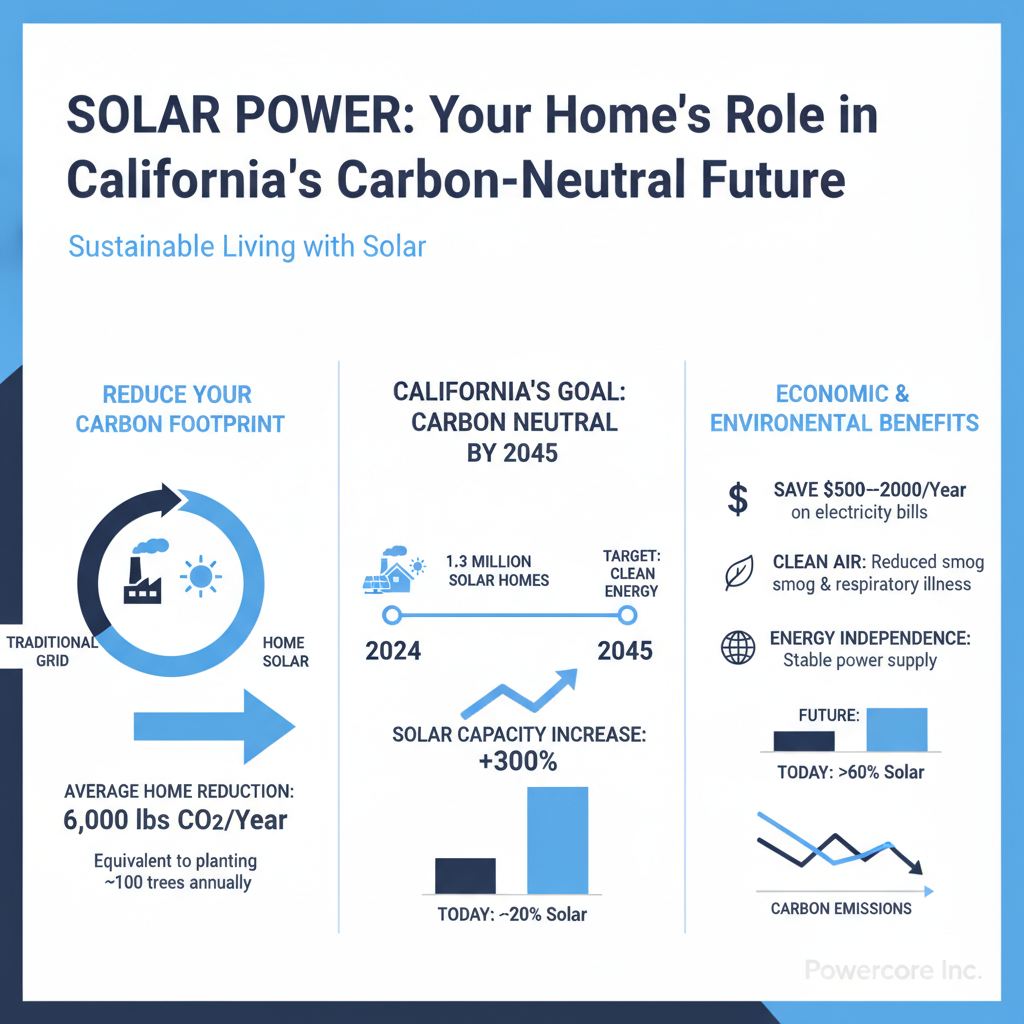
Over the 25-30+ year lifespan of a solar system, these numbers multiply significantly. A single home going solar can prevent tens of thousands of kilograms of CO2 from entering the atmosphere, making a tangible and lasting contribution to carbon footprint reduction with solar. This isn't just about saving money; it's about actively decarbonizing our planet, one rooftop at a time.
Beyond Electrons: Holistic Environmental Benefits of Solar in California
While carbon footprint reduction is a primary driver for solar adoption, the environmental advantages extend far beyond just CO2. For California, a state frequently grappling with environmental challenges, solar power offers a suite of holistic benefits:
Reducing Water Usage in Energy Production
California is no stranger to drought. Traditional thermal power plants (coal, natural gas, nuclear) require vast amounts of water for cooling. Generating electricity from these sources places significant strain on freshwater resources, a critical concern in a state where water scarcity is an ongoing issue. Solar photovoltaic (PV) systems, on the other hand, require virtually no water for electricity generation once installed. By switching to solar, you indirectly contribute to conserving California's precious water supplies, alleviating pressure on rivers, lakes, and aquifers.
Improving Air Quality and Public Health
Fossil fuel power plants don't just emit CO2; they also release harmful pollutants like sulfur dioxide (SO2), nitrogen oxides (NOx), particulate matter, and mercury. These pollutants contribute to smog, acid rain, and respiratory illnesses, posing serious health risks, particularly in California's densely populated urban areas and valleys, which often suffer from poor air quality. By reducing the demand for grid electricity generated by these plants, solar power directly leads to cleaner air, fewer instances of respiratory problems, and improved public health outcomes across the state. This benefit is particularly salient for vulnerable populations and communities located near polluting facilities.
Contributing to Grid Stability and Resilience
California's electric grid faces unique challenges, from aging infrastructure to the threat of Public Safety Power Shutoffs (PSPS) during wildfire season. Distributed solar generation, especially when paired with battery storage, enhances grid stability and resilience. It reduces the need for expensive and often polluting 'peaker plants' that kick in during periods of high demand. Furthermore, local solar generation reduces transmission losses, meaning more of the energy produced reaches homes efficiently. For homeowners, solar with storage provides an invaluable safeguard against outages, ensuring energy independence when the grid falters, and further contributing to a more robust energy infrastructure for California.
Synergies with Other Sustainable Technologies (Powercore Inc's Expertise)
The environmental impact of solar is amplified when integrated with other sustainable home improvements. Powercore Inc, with its comprehensive suite of services, helps California homeowners unlock these synergies:
- EV Charging: Powering your electric vehicle with solar-generated electricity creates a truly zero-emission transportation solution, extending your carbon footprint reduction beyond the home to your commute.
- Battery Storage: Pairing solar with battery storage maximizes self-consumption of your clean energy, reduces reliance on the grid during peak (and often dirtier) hours, and provides critical backup power during outages, further solidifying your home's energy independence and environmental stewardship.
- HVAC Upgrades: Upgrading to energy-efficient HVAC systems reduces your overall energy demand, allowing a smaller solar system to meet more of your needs, or enabling your existing system to offset an even greater portion of your energy consumption.
- Roofing & Siding: A new, energy-efficient roof or well-insulated siding reduces heating and cooling loads, making your home more comfortable and your solar system more effective. Our dual licensing (General B and C-10 Electrical) means Powercore Inc can handle all these interconnected upgrades seamlessly.
- ADUs & Remodels: Integrating solar and other energy-efficient solutions from the ground up in new ADUs or major remodels ensures optimal performance and a sustainable design from day one, maximizing carbon reduction potential.
By taking a holistic approach to home sustainability, homeowners can achieve unparalleled levels of carbon footprint reduction with solar, creating a truly green living environment. Powercore Inc is uniquely positioned to guide you through this integrated process, leveraging our expertise across all these critical areas.
Navigating California's Solar Landscape for Maximum Impact
California's commitment to clean energy makes it one of the best places in the world to go solar. However, understanding the landscape, from regulations to incentives, is key to maximizing your system's environmental and financial impact.
California's Ambitious Climate Goals
California has set some of the most aggressive climate targets globally, including:
- SB 100: Mandates 100% clean electricity by 2045.
- Executive Order B-55-18: Establishes a statewide goal of carbon neutrality by 2045 and maintaining net negative emissions thereafter.
Residential solar is not just a personal choice; it's a vital component of achieving these statewide mandates. Every home that installs solar contributes directly to these ambitious goals, helping California lead the nation in battling climate change and fostering a healthier environment for all its residents.
Incentives and Policies for Solar Adoption
To encourage solar adoption, various incentives and policies are in place:
- Federal Solar Investment Tax Credit (ITC): This significant federal tax credit allows homeowners to deduct a percentage of their solar installation costs from their federal taxes, making solar more affordable.
- Net Energy Metering (NEM 3.0): California's latest net metering policy, NEM 3.0, has shifted the economic landscape for solar. While still beneficial, it emphasizes the importance of pairing solar with battery storage to maximize savings and self-consumption. This strategic shift aligns perfectly with the goal of increasing grid resilience and reducing reliance on traditional power sources.
- Local Programs: Depending on your city or county, additional local incentives or financing options may be available. A knowledgeable contractor like Powercore Inc can help you navigate these.
Understanding these policies is crucial for designing a system that not only maximizes your carbon footprint reduction but also provides the best financial return. Powercore Inc's expertise ensures that your solar solution is optimized for California's unique regulatory environment.
The Importance of Professional Installation and Maintenance
For your solar system to deliver consistent carbon savings and perform reliably for decades, professional installation and ongoing maintenance are paramount. Here's why:
- Optimal Performance: Expert design ensures your panels are correctly angled and positioned for maximum sun exposure, translating to higher energy production and greater carbon offset.
- Safety and Compliance: Solar installations involve electrical work and structural considerations. A licensed contractor ensures all work adheres to California's strict building codes and safety regulations, obtaining necessary permits and passing inspections. Powercore Inc's C-10 Electrical Contractor license (CSLB #1098175) means we are fully qualified for all electrical aspects of your solar installation.
- Longevity and Warranty: Proper installation protects your investment and ensures the validity of manufacturer warranties. A reputable installer will also provide ongoing support and monitoring.
- Integrated Solutions: As a General B licensed contractor (CSLB #1134334), Powercore Inc can seamlessly integrate solar with roofing, electrical upgrades, and other home improvements, ensuring a cohesive and high-performing system. This comprehensive approach prevents potential issues and maximizes your home's overall energy efficiency.
Choosing an experienced, reputable contractor like Powercore Inc guarantees that your solar project is executed with precision, quality, and an unwavering commitment to safety and customer satisfaction. We serve all of California, bringing our expertise to homeowners across the state.
Your Sustainable Legacy: Powering California's Future
Investing in solar energy for your California home is more than an upgrade; it's a profound commitment to sustainable living and a direct contribution to a healthier planet. Every ray of sunshine converted into electricity on your rooftop is a step towards carbon footprint reduction with solar, cleaner air, and a more resilient energy grid for California.
By embracing solar, you're not just reducing your utility bills; you're becoming a climate champion, building a sustainable legacy for future generations. You're aligning your home with California's bold vision for a carbon-neutral future, demonstrating that individual action, when multiplied across a state, can drive monumental change. The ripple effect of your decision extends far beyond your property lines, influencing your community and inspiring others to join the green revolution.
Powercore Inc is proud to partner with California homeowners on this vital journey. With our comprehensive expertise in solar, battery storage, and a wide range of home improvement services, we're here to make your transition to clean energy seamless and impactful. Together, we can harness the power of the sun to build a brighter, greener future for the Golden State.
Ready to transform your home into a beacon of sustainability and significantly reduce your carbon footprint? Contact Powercore Inc today for a personalized consultation. Our expert team is ready to design a custom solar solution tailored to your home and energy goals, anywhere in California. Call us at 916-699-8778 or visit gopowercoreinc.com to start your journey towards a greener tomorrow.