

Introduction: Powering Your Home, Understanding Your Inverter
In the golden state of California, where sunshine fuels countless homes and businesses, solar energy systems are a beacon of sustainable living. At the heart of every photovoltaic (PV) installation lies a critical, yet often overlooked, component: the solar inverter. This unsung hero converts the DC (direct current) electricity generated by your solar panels into AC (alternating current) electricity, the form your home appliances use and that the grid accepts. When your inverter isn't performing optimally, your entire residential solar system can falter, impacting your energy savings and environmental contribution.
At Powercore Inc, a leading California dual-licensed General B & C-10 Electrical Contractor based in Roseville, CA, we understand the nuances of solar technology. We've witnessed firsthand the confusion and frustration homeowners face when their solar system isn't producing as expected. That's why we've compiled this comprehensive guide – to empower you, the California homeowner, with the knowledge to identify, understand, and even troubleshoot common solar inverter issues. While some problems require the expertise of licensed professionals like ours, knowing the basics can save you time, money, and unnecessary worry.
What is a Solar Inverter and Why is it Crucial?
Think of your solar inverter as the brain of your solar energy system. Without it, your solar panels would be generating electricity that your home couldn't use. Its primary function is called inversion: transforming the variable DC output from your solar panels into a clean, usable AC current that matches your home's electrical frequency and voltage. This allows you to power your lights, appliances, and even send excess electricity back to the grid.
The efficiency and reliability of your inverter directly impact the overall performance and profitability of your solar investment. A well-functioning inverter ensures maximum energy harvest, while a faulty one can lead to significant power losses and missed savings.
Types of Solar Inverters for California Homes
Understanding your inverter type is the first step in effective troubleshooting:
- String Inverters: These are the most common and cost-effective. Multiple solar panels are wired in a series (a 'string') to a single inverter. If one panel in the string underperforms (due to shade or damage), it can affect the output of the entire string. They are typically installed near the main electrical panel or outside your home.
- Microinverters: Unlike string inverters, microinverters are installed directly under each solar panel. This means each panel operates independently, optimizing its own power output. If one panel is shaded or faulty, it doesn't impact the performance of other panels. They are excellent for homes with complex rooflines or potential shading issues.
- Power Optimizers: These combine aspects of both string inverters and microinverters. An optimizer is attached to each panel, conditioning the DC power before sending it to a central string inverter. This allows for panel-level optimization while maintaining a central inversion point.
- Hybrid Inverters: Increasingly popular in California, hybrid inverters integrate a solar and battery storage system into one unit. They can manage power flow from solar panels, batteries, and the grid, offering greater energy independence and resilience during power outages.
Common Signs Your Inverter Needs Attention
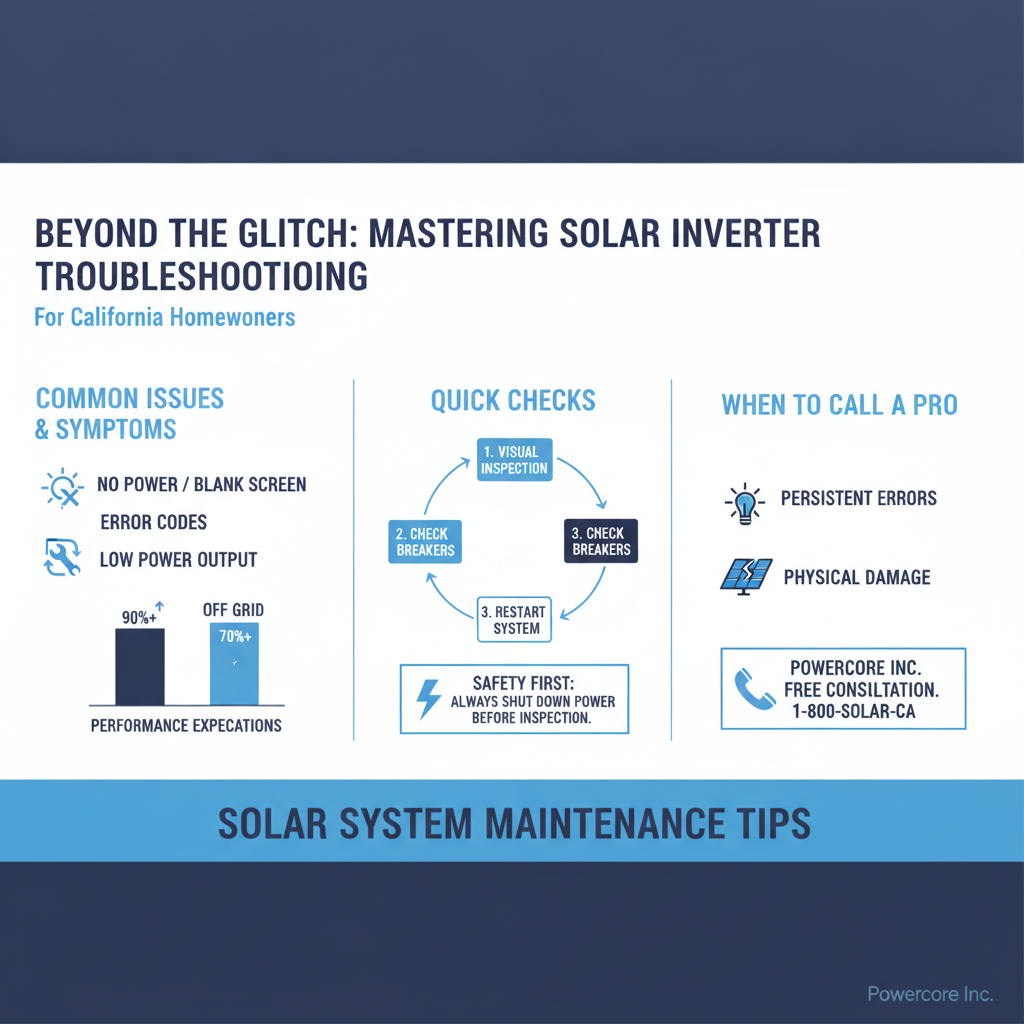
Being proactive about your solar system's health involves recognizing the warning signs. Here are the most common indicators that your inverter might be experiencing an issue:
No Power Output or Significantly Reduced Production
This is often the most obvious sign. If your monitoring system (app or inverter display) shows zero power being generated, or a drastic drop in production compared to typical sunny days, your inverter is likely the culprit. Remember to account for natural variations due to weather or time of day.
Fault Codes or Error Messages
Modern inverters have sophisticated diagnostic capabilities. They display specific error codes or messages on their screen (if equipped) or through your online monitoring portal. These codes are invaluable clues, pointing to the nature of the problem, be it a grid issue, internal fault, or communication error.
Unusual Noises or Odors
While inverters typically make a low hum, loud buzzing, clicking, grinding, or fan noises that are out of the ordinary can indicate an internal problem, such as a failing component or a struggling fan. Any burning smell is a serious red flag and requires immediate attention.
Inconsistent or Intermittent Performance
Your inverter might work perfectly for hours, then suddenly stop, only to resume later. This sporadic behavior can be more challenging to diagnose but often points to loose connections, fluctuating grid voltage, or internal component failures that heat up and cool down.
Physical Damage or Overheating
Visible signs like scorch marks, melted wiring, or a housing that is excessively hot to the touch (beyond normal operating temperatures) are clear indicators of a problem. Overheating can lead to reduced efficiency and a shortened lifespan.
Before You Begin: Safety First!
Working with electricity, especially high-voltage solar systems, can be extremely dangerous. Never attempt repairs or complex diagnostics on your inverter if you are not a qualified and licensed electrician. Your safety is paramount. The following troubleshooting steps are for observational and basic power-cycling purposes only, intended to help you gather information before contacting a professional.
- Always Assume Live Power: Even if your system appears off, assume components are energized.
- Wear Protective Gear: If you must inspect the exterior, wear insulated gloves and safety glasses.
- Follow Manufacturer Guidelines: Refer to your inverter's specific owner's manual for precise shutdown procedures and troubleshooting tips.
- Contact Powercore Inc: When in doubt, or if any step feels beyond your comfort level, immediately call a licensed expert. Powercore Inc's C-10 Electrical license (CSLB #1098175) means we are trained and equipped to handle these systems safely.
Step-by-Step Inverter Troubleshooting Guide for California Homeowners
Here’s a systematic approach to investigate common inverter issues:
Step 1: Check the Basics – Disconnects and Breakers
- Verify AC and DC Disconnects: Locate the AC disconnect (usually near your utility meter or main service panel) and the DC disconnect (often integrated into the inverter itself or nearby). Ensure both are in the 'ON' position. Sometimes, these switches can be accidentally tripped or turned off during other home maintenance.
- Inspect Circuit Breakers: Go to your main electrical panel. Look for any tripped breakers labeled 'Solar PV,' 'Inverter,' or similar. A tripped breaker will be in a position between 'ON' and 'OFF' (usually slightly off-center). Flip it firmly to 'OFF' then back to 'ON'.
- Check Sub-Panel (if applicable): Some solar systems have a dedicated sub-panel. Check breakers there as well.
Step 2: Understand the Inverter Display and Error Codes
Most modern inverters have a digital display or LED indicators. If there's an error, it will usually show a specific code or a flashing light sequence. Consult your inverter's user manual (or look it up online using the inverter's make and model) to decode these messages. This information is crucial for pinpointing the problem.
Step 3: Monitor Production Data
Access your solar monitoring app or online portal. This provides real-time and historical data on your system's output. Look for:
- Consistent Zero Production: If it's sunny and your system shows no production for an extended period.
- Significant Drops: Is today's output drastically lower than comparable sunny days?
- Panel-Level Data (Microinverters/Optimizers): If you have microinverters or optimizers, you might see which specific panels are underperforming, which can help narrow down the issue to a panel rather than the inverter itself.
Step 4: Inspect Visible Components (Carefully!)
From a safe distance, visually inspect the inverter and surrounding wiring:
- Cables: Look for any loose, chewed, frayed, or damaged cables connecting to the inverter.
- Vents: Ensure the inverter's cooling vents are not blocked by debris, dust, or vegetation. Proper airflow is essential to prevent overheating.
- Moisture: Check for any signs of water intrusion or corrosion around the inverter unit.
Step 5: Power Cycle the Inverter (The Soft Reset)
Just like restarting your computer, a power cycle can sometimes resolve temporary glitches. Always follow your manufacturer's specific procedure, but generally, it involves:
- Turn OFF the AC Disconnect: This is usually located near your utility meter or main service panel.
- Turn OFF the DC Disconnect: This is typically located on or near the inverter itself.
- Wait: Give it 5-10 minutes for residual power to dissipate.
- Turn ON the DC Disconnect first.
- Turn ON the AC Disconnect second.
- Observe: The inverter will go through a startup sequence. Watch for lights, messages, and listen for typical operating sounds. Check your monitoring system after a few minutes to see if production has resumed.
Step 6: Consider Environmental Factors
- Extreme Temperatures: Inverters can derate (reduce output) or even shut down in extreme heat or cold to protect themselves. This is particularly relevant in California's diverse climates.
- Shading: While not an inverter fault, significant shading on panels (especially with string inverters) can mimic low inverter output.
- Dust/Pollution: Excessive dust or pollution can accumulate on inverter vents, leading to overheating.
Decoding Common Inverter Error Codes (General Examples)
While specific codes vary by manufacturer (SMA, SolarEdge, Enphase, Fronius, etc.), here are some common categories and what they generally indicate:
Grid Faults or Utility Issues (e.g., Grid Loss, Over/Under Voltage/Frequency)
These codes indicate a problem with the electrical grid connection. The inverter disconnects from the grid for safety. Causes can include a local power outage, voltage fluctuations from the utility, or a tripped AC breaker. Often, the inverter will automatically reconnect once grid conditions stabilize.
Isolation Fault or Ground Fault
This is a serious safety concern, indicating an electrical leakage from the DC wiring to the ground (e.g., through damaged insulation, water ingress, or faulty wiring). The inverter will shut down immediately. Do NOT attempt to troubleshoot this yourself; contact Powercore Inc immediately.
DC Input Faults (Over/Under Voltage, Overcurrent)
These relate to the power coming from your solar panels. Overvoltage might occur if too many panels are connected in series or due to specific atmospheric conditions. Undervoltage could mean insufficient light, too few panels, or a problem within the string of panels (e.g., a faulty panel or connection).
Internal Faults or Component Failures (e.g., Fan Fault, Relay Fault, Hardware Error)
These codes point to a problem within the inverter itself. A fan fault means the cooling system isn't working, leading to overheating. A relay fault or general hardware error suggests a component has failed. These typically require professional diagnosis and repair or replacement.
Communication Errors
Your inverter might use Wi-Fi, Ethernet, or cellular to send data to your monitoring portal. A communication error means the inverter is producing power but can't report it. This doesn't affect production but prevents you from monitoring performance. Often, a simple network reset (of your router or the inverter's communication module) can resolve this.
When to Call the Professionals: Powercore Inc's Expertise
While basic troubleshooting can help you understand the issue, most inverter problems require the skills and tools of a licensed professional. Here's when to pick up the phone:
- Persistent Error Codes: If an error code doesn't clear after a power cycle, or if it's a critical safety fault like an isolation/ground fault.
- No Resolution After Basic Steps: You've tried the troubleshooting steps, but your system is still not producing or is exhibiting abnormal behavior.
- Visible Damage or Unsafe Conditions: Any signs of burning, melting, water damage, or persistent unusual noises warrant immediate professional intervention.
- Warranty Claims: If your inverter is under warranty, attempting DIY repairs can void it. Powercore Inc can help you navigate the warranty claims process.
- Lack of Confidence: If you're uncomfortable or unsure at any point, it's always safer to call an expert.
As a California CSLB #1134334 (General B) and #1098175 (C-10 Electrical) licensed contractor, Powercore Inc has the expertise to diagnose and resolve a wide range of solar inverter issues. Our certified electricians are trained in the latest solar technology, ensuring safe, efficient, and lasting repairs for your solar and battery storage system. We serve homeowners across all of California, from Sacramento to San Diego, providing peace of mind and optimal system performance.
Preventative Maintenance for Inverter Longevity
A little proactive care can go a long way in extending your inverter's lifespan and preventing future issues:
- Regular Monitoring: Make it a habit to check your solar production data a few times a week. Early detection of a dip in performance can prevent minor issues from becoming major problems.
- Keep it Clean: Ensure the inverter's cooling fins and vents are free from dust, spiderwebs, and debris. For outdoor units, trim back any vegetation that might block airflow or cast shade.
- Maintain Proper Ventilation: Inverters generate heat. Ensure they are installed in a location with adequate airflow, away from direct sunlight (if possible, or in a shaded area), and not enclosed in tight spaces.
- Software Updates: Some smart inverters receive firmware updates to improve performance, fix bugs, or enhance compatibility. Consult your installer or manufacturer about available updates.
- Professional Inspections: Consider annual or biennial professional inspections by a company like Powercore Inc. We can identify potential issues before they cause system failures, perform necessary checks, and ensure all components are functioning correctly.
The California Context: Regulations, Warranties, and Service
California's solar landscape is unique, with specific regulations and consumer protections. When dealing with inverter issues, consider:
- CSLB Licensing: Always ensure any contractor working on your electrical system, especially your inverter, holds a valid C-10 Electrical license from the California Contractors State License Board (CSLB). This ensures they meet professional standards and are insured. Powercore Inc proudly holds this crucial license.
- Net Energy Metering (NEM): A malfunctioning inverter can significantly impact your eligibility and benefits under California's NEM programs, as accurate production data is essential.
- Warranties: Most inverters come with a manufacturer's warranty, typically 5-12 years, sometimes longer. Understand what your warranty covers (parts, labor, shipping) and its duration. Keep all your documentation handy.
- Service Availability: With Powercore Inc's statewide service, you have access to expert help no matter where you are in California. Reliable, local service is vital for timely repairs and minimizing downtime.
For more insights into the broader benefits and importance of solar power, the U.S. Department of Energy offers valuable resources at energy.gov.
Conclusion: Keeping Your California Solar System Shining Bright
Your solar inverter is a sophisticated piece of technology vital to your home's energy independence. While the idea of troubleshooting it might seem daunting, understanding its basic functions and recognizing common warning signs empowers you to take informed action. Most importantly, knowing when to call in the experts is key to maintaining a safe, efficient, and long-lasting solar system.
At Powercore Inc, we are committed to helping California homeowners maximize their solar investment. Whether you need a simple diagnostic, complex inverter repair, or a complete system overhaul, our team of licensed and experienced professionals is ready to assist. Don't let an inverter glitch dim your solar savings. For reliable solar system maintenance and troubleshooting assistance across California, reach out to Powercore Inc today.
Contact Powercore Inc at 916-699-8778 or visit our contact page to schedule a consultation. Let us ensure your solar energy system continues to perform at its peak, powering your home efficiently for years to come.