

Introduction: Protecting Your Golden State Solar Investment
Installing a solar energy system on your California home is one of the most significant and rewarding investments you can make. It promises decades of clean energy, reduced utility bills, and increased property value. However, like any sophisticated technology, solar panels and their accompanying components are subject to wear, tear, and the occasional manufacturing defect or performance issue. This is where your solar panel warranty claims become not just a safety net, but a critical tool for protecting your long-term investment.
For California homeowners, understanding the nuances of solar warranties – from product and performance guarantees to workmanship coverage – is paramount. It's about more than just knowing if something is covered; it's about proactively managing your system to prevent issues, understanding the claims process, and knowing your rights. At Powercore Inc, your dual-licensed General B & C-10 Electrical Contractor based in Roseville, CA, we believe that informed homeowners are empowered homeowners. This comprehensive guide will demystify solar panel warranty claims, offering a strategic blueprint to ensure your California solar system delivers on its promise for decades to come.
Why Solar Warranties Are Non-Negotiable for California Homeowners
In a state synonymous with solar adoption, where the sun shines bright but also brings unique environmental challenges (intense heat, dust, potential for wildfires), solar panels are designed for durability. Yet, no system is entirely immune to problems. A robust warranty package provides peace of mind and financial security for your investment, typically spanning 25 years or more for panels.
Consider the long lifespan of a solar system. Over two decades, components can degrade, manufacturing flaws might surface, or the initial installation could encounter unforeseen issues. Without adequate warranty protection, you could face substantial out-of-pocket expenses for repairs or replacements that undermine your system's financial viability. Proactive warranty management isn't just about reacting to problems; it's about understanding the terms and conditions, maintaining your system, and knowing whom to call when assistance is needed.
Demystifying Solar Warranties: Your California Guide to Coverage Types
Solar warranties are typically broken down into three main categories, each covering different aspects of your solar energy system:
1. Product/Equipment Warranty
This warranty covers the physical components of your solar system against manufacturing defects, material flaws, and premature wear. It applies to solar panels, inverters (both string inverters and microinverters), optimizers, and sometimes the racking system.
- Solar Panels: Typically 10-12 years, though many premium brands now offer 25-year product warranties, matching their performance warranties. This covers physical defects like delamination, microcracks, or issues with the frame.
- Inverters: Crucial for converting DC power to AC power for your home. String inverters usually come with a 5-12 year warranty, often extendable. Microinverters, which sit under each panel, tend to have longer warranties, frequently 20-25 years, reflecting their distributed nature and design for longevity.
- Racking & Mounting: Usually covered by the product warranty of the racking manufacturer, often 10-25 years, ensuring the structural integrity of your system.
For Californians, where seismic activity is a consideration, ensuring your racking system meets stringent standards and is covered by a strong product warranty is important, even if direct seismic damage is typically covered by homeowner's insurance rather than a solar warranty.
2. Performance/Power Production Warranty
This warranty guarantees that your solar panels will produce a certain percentage of their rated power output over time. Solar panels naturally degrade in efficiency over their lifespan, usually by a small fraction of a percent each year. A performance warranty ensures that this degradation does not exceed a specified rate.
- Typical Terms: Most commonly, a 25-year performance warranty will guarantee 90% of the original power output by year 10, and 80-85% by year 25.
- Claim Trigger: If your panels' power output drops below the guaranteed percentage, you may have a claim. This often requires monitoring your system's output diligently.
Given California's high solar irradiance, ensuring your panels maintain optimal performance is key to maximizing your energy savings and meeting your energy goals, especially under evolving net metering policies like NEM 3.0.
3. Workmanship/Installation Warranty
This is the warranty provided by your solar installer, covering the quality of their installation work. It ensures that the system was installed correctly, safely, and according to industry standards, local building codes, and manufacturer specifications.
- Coverage Examples: Leaks around roof penetrations, faulty wiring connections, improper mounting, or issues directly attributable to the installation process.
- Typical Terms: Varies significantly by installer, ranging from 2 to 10 years, with some premium installers offering 25-year workmanship warranties.
This warranty is arguably the most crucial for California homeowners because improper installation can lead to safety hazards, void product warranties, and severely impact system performance. Choosing a reputable, dual-licensed contractor like Powercore Inc (CSLB #1134334 General B & #1098175 C-10 Electrical) ensures you have a trustworthy partner with the expertise and credentials to stand behind their work.
Navigating the Fine Print: What Every California Homeowner Needs to Know
Warranties are legally binding documents, and understanding their terms is critical. Don't skim the details; educate yourself on potential pitfalls and key clauses:
- Exclusions: Most warranties exclude damage from natural disasters (e.g., severe storms, earthquakes, fires – typically covered by homeowner's insurance), vandalism, unauthorized modifications, or improper maintenance.
- Transferability: If you sell your home, can the warranty be transferred to the new owner? This significantly adds to your property's value. Most reputable warranties are transferable, but check the specifics.
- Voiding a Warranty: Attempting DIY repairs, using non-certified parts, or having an unlicensed contractor service your system can void both product and workmanship warranties. This underscores the importance of professional service from companies like Powercore Inc.
- Documentation: Keep all original purchase agreements, warranty certificates, installation contracts, and any service records in a safe, accessible place. This documentation is your evidence if a claim arises.
Common Issues Leading to Warranty Claims in California Solar Systems
While solar systems are robust, certain issues are more prone to occurring and might lead to a warranty claim:
- Panel Degradation Beyond Spec: If your system's output consistently falls below the performance warranty's threshold, it's a strong indicator of an issue.
- Inverter Failure: Inverters are often the first major component to fail due to their complex electronics and constant operation. Signs include system shutdowns or error codes.
- Microcracks or Hot Spots: These are manufacturing defects within the solar cells that can reduce efficiency and lead to premature failure. They are often not visible to the naked eye but can be detected during professional inspections.
- Roof Leaks: A clear sign of improper installation, typically covered by a workmanship warranty. Prompt attention is critical to prevent further damage to your home.
- Faulty Wiring or Connections: Can lead to reduced power output, intermittent operation, or even safety hazards.
- Physical Damage: While often covered by homeowner's insurance, if damage is due to a material defect (e.g., a panel glass cracking without external impact), it could be a product warranty claim.
Proactive Solar System Maintenance: Your First Line of Warranty Defense
The best warranty claim is the one you never have to make. Proactive maintenance is crucial for extending the life of your system, optimizing its performance, and preserving your warranty validity. For California homes, specific environmental factors make regular upkeep even more vital:
- Regular Cleaning: California's dry climate can lead to significant dust, pollen, and even wildfire ash accumulation on panels. Bird droppings are also common. These can drastically reduce efficiency. A simple rinse with a hose can often suffice, but for stubborn grime or hard-to-reach panels, professional cleaning is recommended.
- System Monitoring: Most modern solar systems come with monitoring apps that allow you to track your daily, weekly, and monthly energy production. Familiarize yourself with these tools. A sudden, unexplained drop in production is often the first sign of a problem.
- Annual Professional Inspections: Schedule an annual check-up with a qualified solar technician. They can identify potential issues like loose wiring, damaged components, or pest infestations (rodents love to chew on wires) before they escalate and potentially void a warranty. Powercore Inc offers comprehensive inspection services to keep your system running optimally.
- Tree Trimming: Ensure nearby trees are trimmed to prevent shading, which significantly impacts panel efficiency, and to prevent falling branches from damaging panels during storms.
- Visual Checks: Periodically inspect your panels from the ground for obvious signs of damage, such as cracks, discolored spots, or debris accumulation.
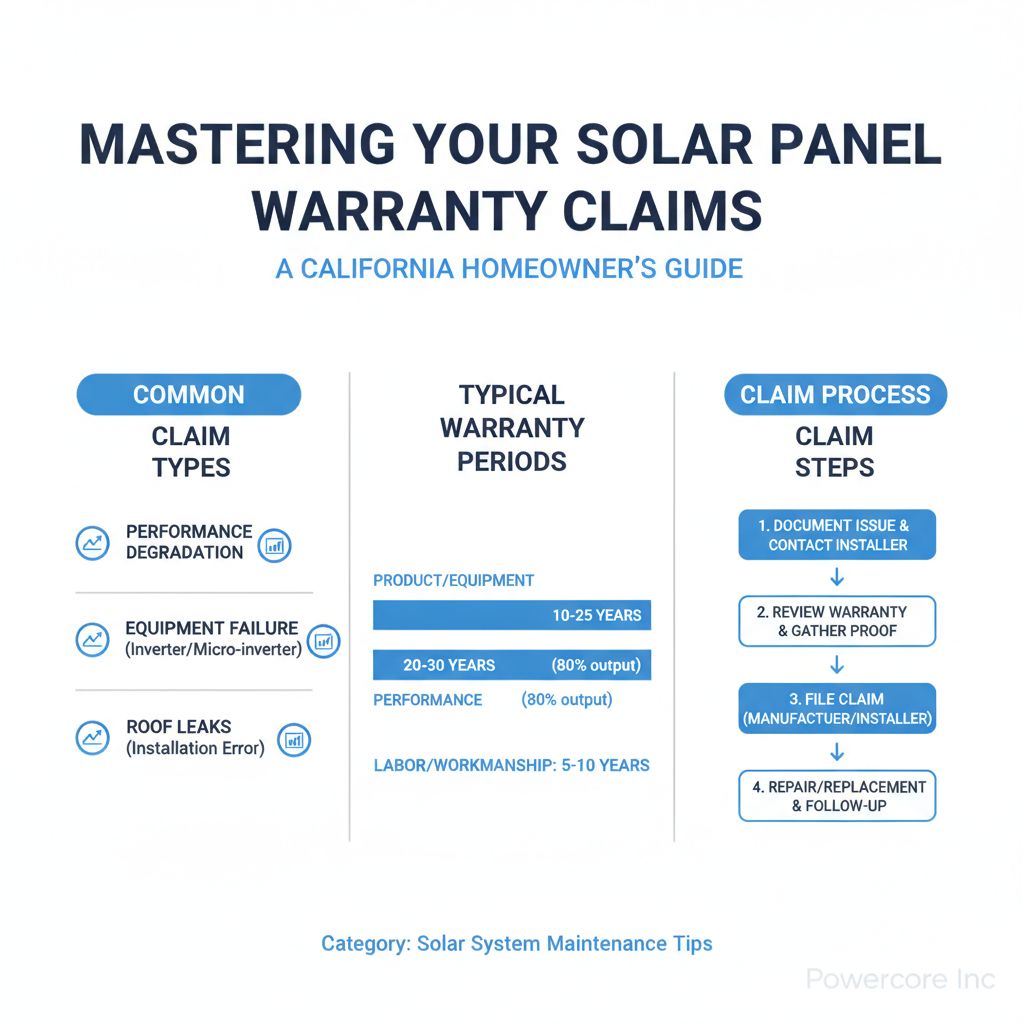
The Step-by-Step California Solar Panel Warranty Claim Process
If you suspect an issue covered by your warranty, here's a general guide to navigating the claims process:
Step 1: Identify and Document the Problem
- Note specific symptoms: Reduced energy production (with dates/times from your monitoring app), visible damage, error codes on your inverter, or strange noises.
- Take photos or videos of any visible damage or error messages.
Step 2: Gather All Relevant Documentation
- Locate your original purchase agreement, installation contract, and all warranty certificates for panels, inverters, and any other components.
- Have your system's installation date and serial numbers for relevant components (panels, inverter) ready.
- Compile any performance logs or monitoring data that illustrates the problem.
Step 3: Contact Your Installer First
Your installer, especially if it's a reputable company like Powercore Inc, is typically your primary point of contact for warranty claims, even for product-related issues. They installed the system and have the expertise to diagnose problems and coordinate with manufacturers. They will guide you through the next steps, which may include a site visit for diagnosis.
Step 4: Understand the Resolution Options
Depending on the issue and warranty terms, resolutions may include:
- Repair: If a component can be fixed.
- Replacement: A new panel, inverter, or part will be provided.
- Compensation: In rare cases, financial compensation might be offered if replacement isn't feasible or desired.
Step 5: Document All Communication
Keep a detailed record of all interactions: dates, names of people you spoke with, summaries of conversations, emails, and copies of any forms or documents submitted. This is crucial for tracking progress and resolving any disputes.
Step 6: Escalate if Necessary
If your installer is unresponsive or unable to resolve the issue, you may need to contact the component manufacturer directly. For workmanship issues, if your installer is no longer in business or uncooperative, you might explore options with the California Contractors State License Board (CSLB) for licensed contractors. California also has strong consumer protection laws that can offer recourse.
California-Specific Consumer Protections & Contractor Credentials
California boasts some of the strongest consumer protection laws in the nation, which extend to solar installations. The CSLB plays a vital role in protecting homeowners by licensing and regulating contractors. When choosing an installer, always verify their CSLB license.
- Licensed Contractors: Powercore Inc holds both a General B (CSLB #1134334) and a C-10 Electrical Contractor (CSLB #1098175) license. This dual licensure signifies a broad range of expertise and adherence to stringent state standards. A licensed contractor is accountable, and having their CSLB number means you have recourse if workmanship issues aren't resolved.
- Contractual Rights: California law requires detailed contracts for home improvement projects, including solar. These contracts must outline scope of work, payment schedules, and warranty information. Always read and understand your contract thoroughly.
- Choosing Wisely: The longevity of your solar system and the reliability of your warranty support heavily depend on your installer. Opt for established, local companies like Powercore Inc that have a proven track record, proper licensing, and a commitment to customer service. An installer that's been around for years is more likely to be there to honor a 25-year workmanship warranty.
Maximizing Your California Solar Investment Beyond Warranties
While warranties are crucial, a truly maximized solar investment goes hand-in-hand with a holistic approach to home energy. Powercore Inc, with our comprehensive service offerings, can help you achieve this:
- Battery Storage Integration: Pair your solar system with battery storage to optimize energy usage, especially important under NEM 3.0, and gain energy independence during Public Safety Power Shutoffs (PSPS).
- Energy Efficiency Upgrades: A well-insulated home with efficient HVAC systems reduces overall energy demand, allowing your solar system to work smarter, not harder. Powercore Inc also specializes in HVAC, roofing, siding, and interior remodeling.
- EV Charging Solutions: As electric vehicles become more common, integrating EV charging into your home's energy ecosystem is a smart move for sustainability and convenience.
- Regular System Health Checks: Think of it like a car – regular tune-ups prevent major breakdowns. Proactive maintenance and monitoring will extend the life of your system beyond just reacting to warranty claims.
Conclusion: Your Trusted Partner in California Solar Longevity
Your solar energy system is a powerful asset, and its warranties are essential for protecting that investment. By understanding the different types of coverage, being diligent about maintenance, and knowing the claims process, you can ensure your California home continues to benefit from clean, reliable energy for decades. Remember, a proactive approach to warranty management is key to peace of mind and sustained performance.
Powercore Inc is your trusted partner for all your solar needs across California, from initial installation to ongoing maintenance and expert guidance on maximizing your system's value. Our dual licenses (General B & C-10 Electrical) and commitment to quality ensure that your solar investment is in the most capable hands. For expert solar solutions, maintenance, or any questions about your system's longevity and warranty support, don't hesitate to reach out to Powercore Inc at 916-699-8778. Let us help you protect and optimize your renewable energy future.