

Introduction: Future-Proofing Your California Home with SGIP Before 2026
California homeowners face a dynamic energy landscape. From fluctuating utility rates and the complexities of NEM 3.0 to the ever-present threat of power outages and Public Safety Power Shutoffs (PSPS), securing a reliable, cost-effective, and sustainable energy future is more critical than ever. The good news? The state offers powerful incentives to help you achieve this, and none is quite as impactful for battery storage as the Self-Generation Incentive Program (SGIP).
As we approach 2026, understanding the SGIP rebate in California is not just about capitalizing on immediate savings; it's about strategic planning for long-term energy independence. This comprehensive guide from Powercore Inc will walk you through everything you need to know about SGIP, why 2026 is a pivotal year, and how to leverage this opportunity to future-proof your California home with cutting-edge solar battery storage.
What is the SGIP Rebate and Why is it Important for California Homeowners?
The Self-Generation Incentive Program (SGIP) is one of California's longest-running and most successful rebate programs for distributed energy resources. Established to promote the deployment of clean, on-site generation and energy storage technologies, SGIP aims to enhance grid reliability, reduce greenhouse gas emissions, and empower consumers with greater control over their energy usage. While it supports various technologies, its focus has increasingly shifted towards battery storage systems.
For California homeowners, SGIP represents a substantial financial incentive that can offset a significant portion of the cost of installing a new battery storage system, or even adding one to an existing solar setup. This makes the transition to energy independence far more accessible and affordable, transforming what might otherwise be a significant upfront investment into a highly attractive proposition.
Key Benefits of SGIP for Homeowners
- Significant Cost Reduction: The primary benefit is the direct rebate, which can drastically reduce the net cost of battery installation.
- Enhanced Energy Resilience: By making battery storage more affordable, SGIP helps homeowners achieve backup power during outages, increasing safety and comfort.
- Support for Clean Energy: Participating in SGIP contributes to California's broader clean energy goals, reducing reliance on fossil fuels.
- Grid Stabilization: Distributed battery storage helps stabilize the grid by reducing demand during peak times, benefiting all Californians.
The Urgency of 2026: SGIP's Evolving Landscape & Why You Should Act Now
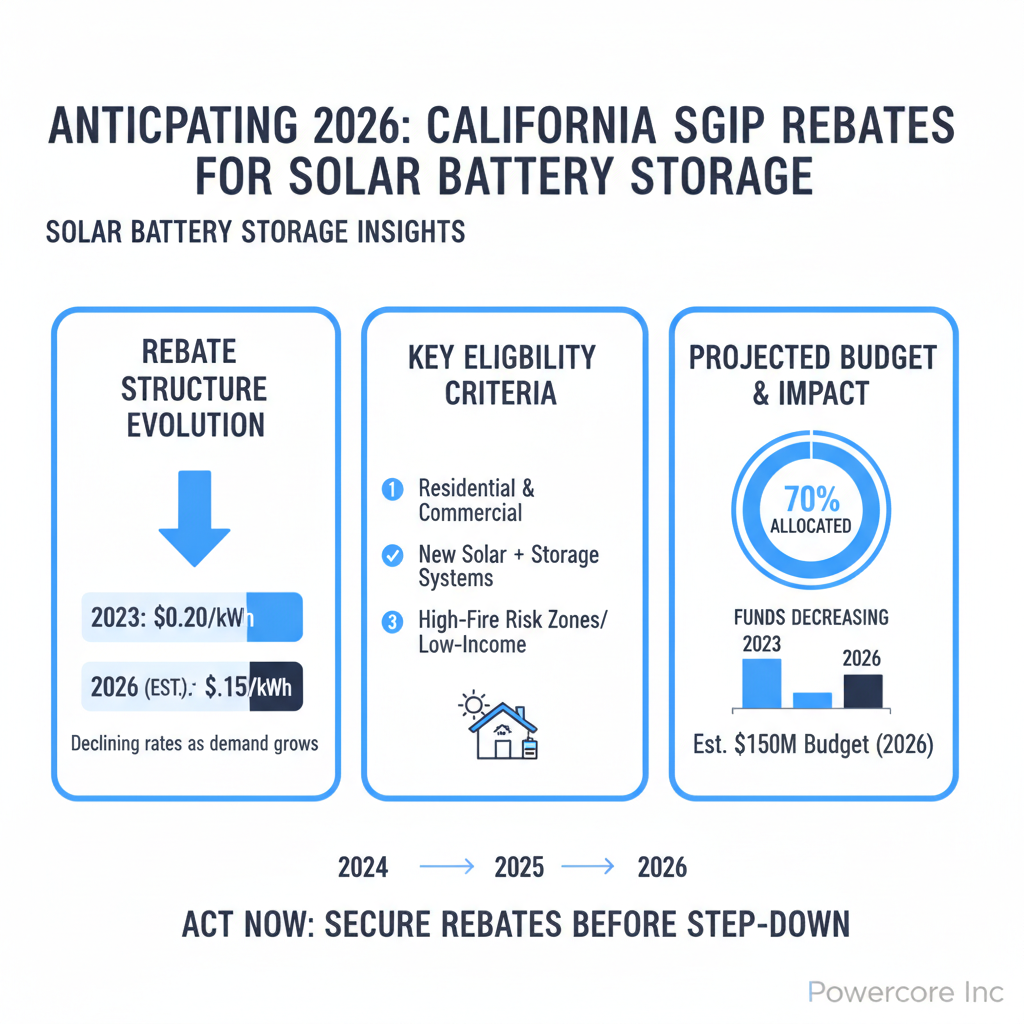
While SGIP has been a cornerstone of California's clean energy initiatives, like many incentive programs, its structure and funding evolve over time. The year 2026 is often cited as a significant horizon for the program, not necessarily as a hard end date, but as a point where the highest rebate tiers may be depleted, or the program's parameters could undergo substantial changes. This creates a critical window of opportunity for homeowners.
Understanding SGIP Tiers and Budget Depletion
SGIP operates on a tiered system, meaning the rebate amount per kilowatt-hour (kWh) of storage capacity decreases as more projects are approved and the budget for each tier is depleted. The program is divided into various categories, including a residential equity budget designed to provide higher incentives to low-income and medically vulnerable households, as well as those in high fire-threat areas. For general market residential customers, the rebate amounts are typically lower and deplete faster.
What this means in practical terms is that the sooner you apply and get approved, the higher the rebate amount you are likely to receive. Waiting until 2026 or later could mean accessing a significantly reduced rebate, or even finding that the general market residential budget has been fully expended.
Strategic Planning for Long-Term Value
Thinking strategically about SGIP before 2026 isn't just about grabbing the highest rebate; it's about establishing your home's energy independence infrastructure at the most advantageous time. By integrating solar and battery storage now, you lock in long-term savings, enhance your property's value, and build resilience against future energy challenges. Powercore Inc specializes in helping homeowners navigate these complex decisions, ensuring you maximize every available incentive.
Why Solar Battery Storage is Non-Negotiable for California Homes
Beyond the financial allure of SGIP, the fundamental benefits of solar battery storage address pressing needs unique to the California energy environment.
Navigating NEM 3.0 with Power Storage
The introduction of NEM 3.0 (Net Energy Metering 3.0) has significantly altered the financial landscape for new solar installations in California. Under NEM 3.0, the export credit rate for excess solar energy sent back to the grid is drastically reduced compared to previous iterations. This means that simply generating excess solar power during the day and selling it back to the utility is no longer as lucrative.
This is where battery storage becomes a game-changer. By storing your surplus solar energy generated during the day and using it during evening peak hours (when utility rates are highest), you effectively maximize your self-consumption. This strategy:
- Reduces reliance on grid purchases: You're using your own free, stored solar energy instead of expensive utility power.
- Optimizes savings: By avoiding peak time-of-use (TOU) rates, you dramatically lower your monthly electricity bill.
- Increases ROI: Battery storage helps new solar systems achieve a faster return on investment under NEM 3.0 by making every kilowatt-hour of self-generated power count.
Uninterrupted Power During Outages
California is no stranger to power outages, whether due to natural disasters, grid strain, or preventative PSPS events. A solar battery storage system acts as an automatic backup power source, seamlessly kicking in when the grid goes down. This means your essential appliances, lights, and even HVAC systems can continue to operate, providing comfort, safety, and peace of mind. For an in-depth look at how battery storage contributes to home resilience, explore our Solar & Battery Storage services.
Maximizing Energy Independence and Environmental Impact
With a solar and battery system, you move closer to true energy independence, reducing your reliance on traditional utility companies and their fluctuating rates. You're harnessing clean, renewable energy, significantly lowering your carbon footprint, and contributing to a healthier planet. This commitment to sustainability also aligns with California's ambitious environmental goals.
Navigating SGIP Eligibility and the Application Process
Understanding who qualifies and how to apply for the SGIP rebate is crucial. The process, while managed by the investor-owned utilities (PG&E, SCE, SDG&E, SoCalGas), is best navigated with an experienced contractor.
General Eligibility Requirements
While specific requirements can vary, general eligibility for residential SGIP typically includes:
- Property Ownership: The storage system must be installed at a residential property within the service territory of an investor-owned utility.
- System Size: There are limits on the maximum eligible storage capacity for residential systems.
- New or Existing Solar: The battery system can be paired with a new or existing solar PV system.
- CEC Certified Equipment: The battery storage equipment must be certified by the California Energy Commission (CEC).
- Qualified Installer: The system must be installed by a CSLB-licensed contractor with the appropriate electrical (C-10) and/or general (B) licenses, like Powercore Inc (CSLB #1134334 and #1098175).
The SGIP Application Process, Simplified
- Find a Qualified Contractor: This is the most critical first step. An experienced contractor like Powercore Inc will not only design and install your system but also handle the complex rebate application paperwork on your behalf. We understand the nuances of the program and ensure all documentation is accurate and submitted correctly.
- System Design & Quote: Your contractor will assess your energy needs, design a suitable solar and battery storage system, and provide a detailed quote, factoring in the anticipated SGIP rebate.
- Reservation Request: Your contractor submits a reservation request to the program administrator (your utility). This holds your place in the current rebate tier.
- Installation: Once the reservation is approved, the system is installed.
- Incentive Claim: After installation and inspection, your contractor submits the final incentive claim.
- Rebate Disbursement: The rebate is typically paid directly to the homeowner or assigned to the contractor to reduce the upfront cost.
For more detailed information on current incentives, visit our California Battery Storage Incentives page.
Choosing Your Ideal Solar Battery System: What to Consider
Selecting the right battery storage system is a critical decision that impacts your home's energy resilience and financial savings. Powercore Inc helps you make an informed choice tailored to your specific needs.
Sizing Your System Correctly
The ideal battery size depends on several factors:
- Daily Energy Consumption: How much electricity do you use on average?
- Backup Needs: Which appliances do you want to power during an outage, and for how long? Do you need whole-home backup or just essential loads?
- Solar Production: How much excess energy does your solar array typically generate?
- NEM 3.0 Strategy: How much storage is needed to maximize self-consumption during peak hours?
An oversized battery costs more than necessary, while an undersized one won't meet your needs. Our experts at Powercore Inc will conduct a thorough energy audit to recommend the perfect fit.
Types of Battery Technologies
Most residential solar battery systems utilize advanced lithium-ion technology, similar to what's found in electric vehicles. Key considerations include:
- Capacity (kWh): The total amount of energy the battery can store.
- Power Output (kW): How much power the battery can deliver at any given moment.
- Depth of Discharge (DoD): The percentage of the battery's capacity that can be used without damaging it (typically 90-100% for modern batteries).
- Cycle Life: The number of charge/discharge cycles the battery can endure over its lifetime.
- Warranty: Look for comprehensive warranties covering capacity degradation and performance.
For a deeper dive into the best options available, read our article: 9 Best Battery Solar Options for Eco-Conscious Homeowners.
Seamless Integration with Your Solar Array
Whether you're installing a new residential solar system or adding storage to an existing one, seamless integration is key. Modern inverters and energy management systems ensure optimal charging and discharging, allowing you to monitor and control your energy flow from a user-friendly app. Powercore Inc's C-10 electrical contractors are experts in integrating these sophisticated systems, ensuring your solar and battery work in perfect harmony.
Maximizing Your Return: Beyond the SGIP Rebate
While the SGIP rebate provides an excellent immediate incentive, the financial and practical benefits of solar battery storage extend far beyond the initial discount. Considering the broader picture ensures you maximize your long-term return on investment.
Federal Solar Tax Credit (ITC)
In addition to state-level incentives like SGIP, homeowners can also benefit from the federal Residential Clean Energy Credit, also known as the Investment Tax Credit (ITC). This credit allows you to deduct 30% of the cost of your solar and battery storage system from your federal taxes. The ITC is scheduled to remain at 30% until 2033, making it a powerful long-term incentive that complements SGIP.
Long-Term Energy Savings and ROI
By effectively managing your energy usage with a battery, you significantly reduce your reliance on grid electricity, especially during expensive peak hours. Over the lifespan of your system, these savings can amount to tens of thousands of dollars, easily outweighing the initial investment. The combination of SGIP, the ITC, and ongoing energy bill reductions creates a compelling financial case for solar battery storage in California.
Increased Home Value
Homes equipped with solar panels and battery storage are increasingly attractive to buyers, often commanding higher resale values. The appeal of lower energy bills, backup power, and a reduced carbon footprint adds tangible value to your property.
Participation in Virtual Power Plants
California is at the forefront of grid modernization, including the development of Virtual Power Plants (VPPs). With a smart battery system, you may have the opportunity to participate in programs where your battery can be aggregated with others to provide services back to the grid, potentially earning you additional income. This concept is explored further in our article: California's Grid Revolution: Homeowners & Virtual Power Plants.
Holistic Energy Management: EV Charging Integration
For electric vehicle owners, integrating EV charging stations with your solar and battery system creates a truly holistic energy ecosystem. You can charge your EV using clean, self-generated electricity, further reducing your reliance on the grid and maximizing your solar investment.
Powercore Inc: Your Trusted Partner for California Energy Solutions
Navigating the complexities of California's energy landscape, understanding rebate programs like SGIP, and designing a robust solar and battery storage system requires expertise. Powercore Inc is a California dual-licensed General B & C-10 Electrical Contractor (CSLB #1134334 and #1098175) based in Roseville, CA, serving all of California.
Our team of certified professionals brings unparalleled experience in all aspects of residential and commercial electrical work, including:
- Comprehensive solar panel and battery storage installation.
- Expert guidance on state and federal incentives.
- Seamless integration of energy management systems.
- Reliable, high-quality craftsmanship.
We pride ourselves on providing tailored solutions that meet the unique needs of each homeowner, ensuring maximum efficiency, resilience, and savings. When you partner with Powercore Inc, you're not just installing a system; you're investing in a secure and sustainable energy future backed by local experts.
Your Strategic Action Plan for 2026 and Beyond
Don't let the opportunity to secure significant savings and energy independence slip away. Here’s how to strategically prepare:
- Assess Your Energy Needs: Understand your current electricity consumption and identify critical loads for backup.
- Consult with Experts: Reach out to a reputable, licensed contractor like Powercore Inc. Our team will provide a no-obligation consultation, assess your property, and design a custom solution.
- Act Proactively: The tiered nature of SGIP means that waiting can result in lower rebate amounts. Begin the process now to secure the best possible incentive.
- Explore All Incentives: Ensure your contractor helps you stack all available incentives, including SGIP and the federal ITC.
Conclusion: Seize the Future of California Energy Today
The SGIP rebate in California, particularly as we look towards 2026, presents an unparalleled opportunity for homeowners to invest in solar battery storage at a significantly reduced cost. This isn't just about saving money; it's about building a resilient, sustainable, and independent energy future for your home in the face of evolving utility rates and grid challenges.
Powercore Inc is ready to guide you through every step of this journey. As your trusted California electrical contractor, we have the expertise, experience, and dedication to ensure your solar and battery storage system is perfectly designed, expertly installed, and fully optimized to maximize your savings and peace of mind. Don't wait until the highest rebate tiers are gone. Secure your home's energy future today.
Ready to explore how solar battery storage and the SGIP rebate can benefit your California home? Contact Powercore Inc today for a personalized consultation. Call us at 916-699-8778 or visit our contact page to get started.