

Strategic Fire-Resistant Siding: Beyond Compliance for California Homes
California’s natural beauty comes with a unique challenge: the increasing threat of wildfires. For homeowners across the state, from the Sierra foothills to the sprawling Wildland-Urban Interface (WUI), fortifying your property against fire is no longer an option—it’s a necessity. While building codes provide a baseline, true resilience requires a strategic approach that goes beyond mere compliance. At the forefront of this defense is your home's exterior siding, serving as the critical first line of protection against embers and flames.
Choosing the right siding material is a pivotal decision that impacts not only your home's aesthetics and energy efficiency but also its ability to withstand a wildfire event. This comprehensive guide from Powercore Inc, your trusted California dual-licensed General B & C-10 Electrical Contractor, will navigate you through the strategic considerations for selecting fire-resistant siding options. We'll explore the materials that offer superior protection, discuss the relevant California regulations, and highlight how integrating these choices into a holistic home hardening strategy can provide unparalleled peace of mind and long-term value for your property.
Understanding California's Wildland-Urban Interface (WUI) & Building Codes
The Wildland-Urban Interface (WUI) defines areas where structures and other human development meet or intermingle with wildland fuel. In California, these zones are increasingly prevalent, making every homeowner in or near a WUI area a potential target for wildfire impact. Understanding your property's location relative to WUI is the first step in assessing your risk and planning your home hardening strategy.
Chapter 7A of the California Building Code (CBC)
California has some of the most stringent building codes in the nation, particularly concerning fire safety in WUI zones. Chapter 7A of the California Building Code (CBC) outlines specific construction requirements for buildings located in designated WUI fire hazard areas. These regulations are designed to improve the ignition resistance of structures during wildfires by controlling the use of materials and construction methods.
- Ignition-Resistant Materials: Chapter 7A mandates the use of ignition-resistant or non-combustible materials for various exterior components, including siding, roofing, decks, and vents.
- Ember Resistance: A primary focus is on preventing ember intrusion, as embers are often the cause of home ignition during a wildfire, traveling miles ahead of the actual flame front.
- Specific Performance Standards: Materials must meet certain performance criteria, often tested under specific ASTM (American Society for Testing and Materials) standards for flame spread, material combustibility, and fire resistance.
Navigating these regulations can be complex, but partnering with an experienced contractor like Powercore Inc ensures that your siding and exterior solutions not only meet but often exceed these crucial safety standards. We are well-versed in the latest WUI requirements and can guide you through the compliance process, ensuring your home is built or renovated for maximum fire resilience.
Key Characteristics of Fire-Resistant Siding
When evaluating siding options for their fire resilience, it's essential to understand the core characteristics that define their performance during a wildfire. Not all materials are created equal, and their ability to resist ignition, slow flame spread, and maintain structural integrity can make a significant difference in your home's survival.
Non-Combustibility
This is arguably the most critical characteristic. Non-combustible materials do not ignite, burn, or release flammable gases when exposed to heat. Materials like fiber cement, stucco, and metal fall into this category, offering superior protection against direct flame contact and radiant heat. They will not contribute fuel to a fire, making them a cornerstone of fire-safe construction.
Ignition Resistance
Even if a material is not entirely non-combustible, it can be ignition-resistant. This means it has a high tolerance to heat and embers before igniting. Treated wood products or engineered wood siding can fall into this category, often incorporating fire retardants during manufacturing. While they may eventually burn under extreme conditions, their resistance to ignition significantly delays the spread of fire, buying precious time.
Flame Spread Rating
This rating indicates how quickly a flame will spread across the surface of a material. Materials are tested and assigned a class (Class A, B, or C), with Class A being the most fire-resistant (lowest flame spread). Chapter 7A often requires Class A rated materials for siding in WUI areas. A low flame spread rating is crucial because it reduces the likelihood of the fire rapidly encompassing your home's exterior.
Ember Resistance and Gap Sealing
Beyond the material itself, how siding is installed plays a vital role in its fire resistance. Embers are a major threat, capable of traveling long distances and igniting vulnerable areas. Proper installation techniques, including sealing gaps, joints, and penetrations, are essential to prevent embers from entering the wall assembly or attic space. This includes careful attention to trim, soffits, and the interface with windows and doors.
Top Fire-Resistant Siding Options for California Homes
When it comes to protecting your California home, selecting the right fire-resistant siding is paramount. Here’s a detailed look at the leading options, each offering unique benefits for resilience, aesthetics, and long-term value.
Fiber Cement Siding (e.g., James Hardie)
Fiber cement is widely considered one of the best choices for fire resistance, especially in California's high-risk areas. Made from a blend of cement, sand, and cellulose fibers, it is non-combustible and holds a Class A fire rating. Brands like James Hardie are renowned for their durable fiber cement products.
- Superior Fire Resistance: It will not ignite when exposed to flames, nor will it fuel a fire. This makes it an excellent barrier against both direct flame impingement and ember attack.
- Durability and Longevity: Fiber cement is highly resistant to rot, pests, moisture, and extreme weather, offering exceptional longevity with minimal maintenance.
- Versatile Aesthetics: Available in a wide range of styles, textures (mimicking wood grain, stucco, or traditional lap siding), and colors, allowing homeowners to achieve their desired architectural look without compromising safety.
- Cost-Effectiveness: While the initial cost might be higher than some alternatives, its durability, low maintenance, and insurance benefits often lead to significant long-term savings.
For a deeper dive into how fiber cement compares to other popular options, you might find our article on LP SmartSide vs. James Hardie particularly insightful.
Stucco
Traditional stucco, made from cement, sand, lime, and water, is another excellent non-combustible material. Its inherent fire resistance makes it a popular choice, particularly in Mediterranean and Spanish-style architecture prevalent in California.
- Inherent Non-Combustibility: Stucco provides a solid, seamless, non-combustible barrier that significantly resists the spread of fire.
- Durability and Insulation: It offers good insulation properties and is highly durable against weather, pests, and rot.
- Aesthetic Flexibility: Can be finished in various textures and colors, offering a timeless and elegant appearance.
- Installation Complexity: Proper application, including the lath and multiple coats, is crucial for its fire resistance and long-term performance, requiring skilled craftsmanship.
Metal Siding (Steel, Aluminum)
Metal siding, primarily steel and aluminum, offers inherent non-combustibility and a sleek, modern aesthetic. Both are excellent choices for fire resistance.
- Non-Combustible: Metal siding will not ignite or contribute to a fire's spread, providing a robust protective layer.
- Durability: Highly resistant to pests, rot, and moisture. Steel offers exceptional impact resistance, while aluminum is lighter and corrosion-resistant.
- Modern Aesthetics: Available in various profiles (vertical panels, corrugated, lap siding) and colors, appealing to contemporary designs.
- Considerations: While metal won't burn, it can conduct heat, potentially impacting interior temperatures during a fire. Proper insulation behind the siding is critical.
Stone and Masonry
Natural stone, brick, and engineered stone veneers offer unparalleled fire resistance. These materials are entirely non-combustible and provide exceptional thermal mass.
- Ultimate Fire Resistance: Stone and masonry are impervious to fire and will not ignite or degrade, even under intense heat.
- Extreme Durability: These materials are incredibly long-lasting, resistant to virtually all environmental threats.
- Premium Aesthetics: Offer a timeless, high-end look that significantly enhances curb appeal and property value.
- Higher Cost and Weight: The primary drawbacks are the higher material and installation costs, along with the significant weight that requires robust structural support.
Ignition-Resistant Wood & Engineered Wood Siding
While natural wood is generally combustible, some engineered wood products and specially treated wood sidings are designed to be ignition-resistant. These options aim to offer the aesthetic appeal of wood with enhanced fire safety.
- Treated Wood: Some wood species can be treated with fire-retardant chemicals to improve their ignition resistance. However, these treatments may require reapplication over time and still generally don't achieve the same level of fire safety as non-combustible materials.
- Engineered Wood Siding (e.g., LP SmartSide with specific treatments): Certain engineered wood products incorporate fire-resistant additives during manufacturing. While they offer improved performance over untreated wood, it's crucial to verify their specific fire ratings and ensure they meet Chapter 7A requirements if you are in a WUI zone. They are typically ignition-resistant, not non-combustible.
- Aesthetic Appeal: These options allow homeowners to retain the warm, natural look of wood.
- Verification is Key: Always check the manufacturer's specifications and local building codes to ensure these materials provide adequate protection for your specific location and risk profile.
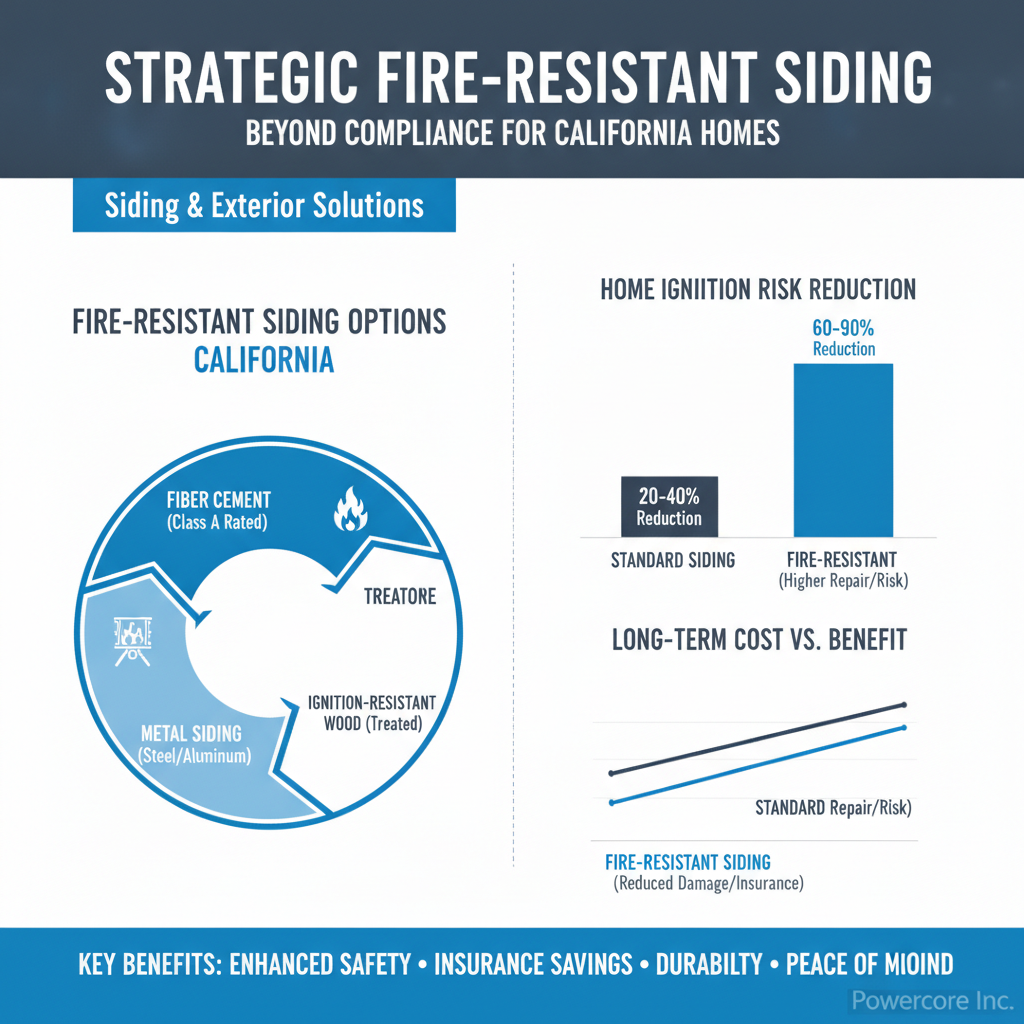
Beyond the Siding: A Holistic Approach to Home Hardening
While strategic fire-resistant siding is a cornerstone of wildfire defense, it's crucial to recognize that a truly resilient home requires a holistic approach. Wildfires are complex events, and embers can exploit any vulnerability. Powercore Inc understands that protecting your property means addressing every facet of its exterior, ensuring all components work in concert to resist ignition.
Fire-Resistant Roofing
Your roof is the most exposed surface of your home and a primary point of entry for wind-blown embers. Choosing fire-resistant roofing materials is as critical as selecting fire-resistant siding. Class A rated roofing, such as metal, concrete or clay tiles, or specific asphalt shingles, can significantly reduce the risk of your home igniting from above.
Ember-Resistant Vents and Soffits
Ember intrusion into attic and crawl spaces is a common cause of home ignition. Standard vents can act as direct pathways for embers. Upgrading to fine-mesh, ember-resistant vents (often with openings smaller than 1/8 inch) and ensuring that all soffits are properly enclosed with non-combustible materials can seal these vulnerable entry points.
Windows and Doors
Windows can shatter from radiant heat, allowing embers to enter the home. Dual-paned or tempered glass windows offer greater resistance. Similarly, exterior doors should be solid core, metal, or fire-rated to prevent ignition and ember entry.
Defensible Space and Landscaping
Creating and maintaining defensible space around your home is an indispensable part of wildfire preparedness. This involves removing flammable vegetation, especially within 5 to 30 feet of your structure, and selecting fire-resistant plants further out. A well-maintained defensible space reduces the intensity of flames reaching your home, giving your fire-resistant siding and other hardened elements a better chance to perform their job.
Decks and Outdoor Structures
Decks, patios, and other attached structures can also be ignition points. Using fire-resistant decking materials, enclosing the underside of decks to prevent ember accumulation, and keeping the area clear of combustibles are essential steps in a comprehensive strategy.
Powercore Inc specializes in remodels and new construction that integrate these multi-faceted fire resilience strategies. Our expertise ensures that every component of your home's exterior contributes to its overall safety, providing a robust defense against California's unique environmental challenges.
Cost Considerations & ROI of Fire-Resistant Siding
Investing in fire-resistant siding is a significant decision for any California homeowner. While the initial outlay might seem higher than traditional materials, understanding the long-term return on investment (ROI) reveals the true value of this critical upgrade.
Initial Investment Factors
The cost of fire-resistant siding varies based on several factors:
- Material Choice: Fiber cement and engineered wood siding can have a moderate to high cost per square foot, while metal and stucco fall within a similar range. Natural stone and masonry represent the highest initial investment.
- Labor Costs: Installation complexity differs. Stucco and masonry require specialized skills and more labor time, increasing costs. Fiber cement also requires precise installation.
- Home Size and Architectural Style: Larger homes or those with intricate architectural details (e.g., multiple gables, bay windows) will naturally incur higher material and labor costs.
- Geographic Location: Costs can vary by region within California, influenced by local labor rates and material availability.
Long-Term Savings and ROI
The return on investment for fire-resistant siding extends far beyond the immediate protection it offers:
- Insurance Benefits: Many insurance providers offer discounts or more favorable premiums for homes equipped with WUI-compliant, fire-resistant exterior materials. These savings can accumulate significantly over the years.
- Increased Property Value: A home demonstrably hardened against wildfires is a more attractive and valuable asset in the California real estate market. Buyers are increasingly prioritizing safety and resilience, making fire-resistant siding a strong selling point.
- Reduced Maintenance: Materials like fiber cement, stucco, and metal are inherently durable and require less maintenance than traditional wood siding, leading to lower long-term upkeep costs.
- Peace of Mind: While intangible, the peace of mind knowing your home is significantly more protected from wildfire threats is invaluable. Avoiding the catastrophic loss and emotional toll of a wildfire is the ultimate ROI.
- Potential for Rebates/Incentives: While less common for siding specifically, some local programs or grants may exist for comprehensive home hardening projects in high-risk areas. Always inquire with local authorities.
Choosing the Right Contractor: Why Powercore Inc. is Your Strategic Partner
Installing fire-resistant siding is not a DIY project. It requires specialized knowledge, adherence to strict building codes, and precision craftsmanship to ensure optimal performance. In California, where wildfire risks are so prevalent, selecting the right contractor is as important as choosing the right materials.
Powercore Inc: Your Trusted California Expert
Powercore Inc stands as a leading authority in California for comprehensive home resilience solutions. As a dual-licensed General B (#1134334) and C-10 Electrical Contractor (#1098175) based in Roseville, CA, we bring a unique blend of expertise to every project. Our general contractor license ensures we can manage complex exterior remodels, including full siding and exterior overhauls, while our electrical license guarantees seamless integration with any related electrical work, such as outdoor lighting or EV charging stations.
Unmatched Expertise and Compliance
- WUI Code Compliance: We possess an in-depth understanding of California's stringent Chapter 7A WUI building codes. Our team ensures that all installations meet or exceed these requirements, providing you with a home that is truly hardened against wildfire threats.
- Quality Craftsmanship: Proper installation is paramount for fire-resistant siding to perform as intended. Our skilled craftsmen are trained in the specific techniques required for each material, ensuring every detail, from flashing to joint sealing, contributes to maximum protection.
- Comprehensive Solutions: Beyond siding, Powercore Inc offers a full spectrum of home improvement services, including fire-resistant roofing, general remodels, and even ADU construction. This allows for a truly integrated approach to home hardening, addressing all vulnerabilities simultaneously.
- Statewide Service: Powercore Inc proudly serves homeowners across all of California, bringing our expertise and commitment to resilience to communities statewide.
Before entrusting your home's safety to any contractor, always verify their credentials with the California Contractors State License Board (CSLB). Powercore Inc's licenses are publicly verifiable, reflecting our commitment to professionalism and accountability.
Invest in Strategic Protection: Connect with Powercore Inc Today
The choice of fire-resistant siding is more than an aesthetic decision; it's a strategic investment in the safety, longevity, and value of your California home. By understanding the unique challenges posed by wildfires and selecting materials and installation methods that go beyond basic compliance, you can create a resilient sanctuary for your family.
Don't leave your home's protection to chance. Partner with Powercore Inc, your trusted California experts, to explore the best fire-resistant siding options and develop a comprehensive home hardening strategy tailored to your property's specific needs. Our team is ready to provide professional guidance, superior craftsmanship, and peace of mind. Call us today at 916-699-8778 or contact us online to schedule your consultation and take the crucial next step in safeguarding your California home.