

Introduction: Strategic Siding Choices for California Homeowners
Your home's exterior is more than just a facade; it's a critical shield against California's diverse and often challenging climate, a key determinant of curb appeal, and a significant factor in your property's long-term value. For homeowners across the Golden State, selecting the right siding material is a strategic decision that impacts everything from energy efficiency to maintenance demands. As a dual-licensed General B and C-10 Electrical Contractor based in Roseville, CA, Powercore Inc understands the unique demands and opportunities presented by California's varied environments.
Two names consistently rise to the top of the siding market: LP SmartSide and James Hardie. Both offer compelling advantages, but their fundamental differences in composition, performance, and aesthetic capabilities mean one might be a significantly better fit for your specific home and lifestyle. This comprehensive guide will delve deep into an LP SmartSide vs. James Hardie comparison, equipping you with the knowledge to make an informed, strategic investment for your California property.
From the sun-drenched valleys to the foggy coastlines and fire-prone foothills, California's homes require siding that can withstand it all. Let's explore how these two industry titans stack up.
Understanding the Siding Giants: LP SmartSide and James Hardie
Before we dive into a direct comparison, it's essential to understand what each of these popular siding options brings to the table, particularly in the context of California's unique building landscape.
LP SmartSide: The Engineered Wood Revolution
LP SmartSide is a leading brand of engineered wood siding, a product category that has revolutionized exterior cladding by combining the aesthetic appeal of traditional wood with enhanced durability and performance. It's manufactured using a proprietary SmartGuard® process, which involves four components of protection:
- Zinc Borate: Applied throughout the substrate to resist fungal decay and termite damage. This is a crucial feature for many California regions where pests are a persistent concern.
- Specialty Resins: Industrial-grade binders that create incredible strength and impact resistance.
- Waxes: For advanced moisture resistance, helping to repel water and protect against swelling and warping, vital in areas with fluctuating humidity or heavy rainfall.
- Overlay: A durable, water-resistant overlay is bonded to the product, providing an extra layer of protection and a canvas for beautiful finishes.
The result is a siding material that looks and feels like traditional wood but offers superior resistance to impacts, pests, and moisture. Its lightweight nature also contributes to easier and often faster installation, which can translate to labor cost savings for California homeowners.
James Hardie: The Fiber Cement Standard
James Hardie is synonymous with fiber cement siding, a material that has set the standard for durability and fire resistance in the industry. Invented by James Hardie more than 30 years ago, it is composed of cement, sand, and cellulose fibers. This unique blend creates an extremely robust and non-combustible material.
Key characteristics of James Hardie siding include:
- Exceptional Durability: Fiber cement is highly resistant to rotting, warping, pests (like termites and woodpeckers), and extreme weather conditions, including intense heat, hail, and high winds.
- Superior Fire Resistance: Perhaps its most celebrated attribute, James Hardie siding is non-combustible. This feature is a significant advantage and often a critical requirement in California's Wildland Urban Interface (WUI) zones, offering invaluable peace of mind against wildfires.
- Climate-Specific Engineering: James Hardie developed its HZ5® and HZ10® product lines specifically to perform in different climate zones. HZ10® is designed for areas with significant temperature variations, humidity, and sun exposure, making it highly suitable for many parts of California.
While heavier and requiring specialized installation techniques, the long-term benefits of James Hardie's fiber cement, especially its fire rating and robust nature, make it a compelling choice for many California properties.
Head-to-Head: LP SmartSide vs. James Hardie for California Homes
Now that we understand the foundational differences, let's pit these two siding giants against each other in critical categories that matter most to California homeowners.
Durability and Weather Resistance: Battling California's Elements
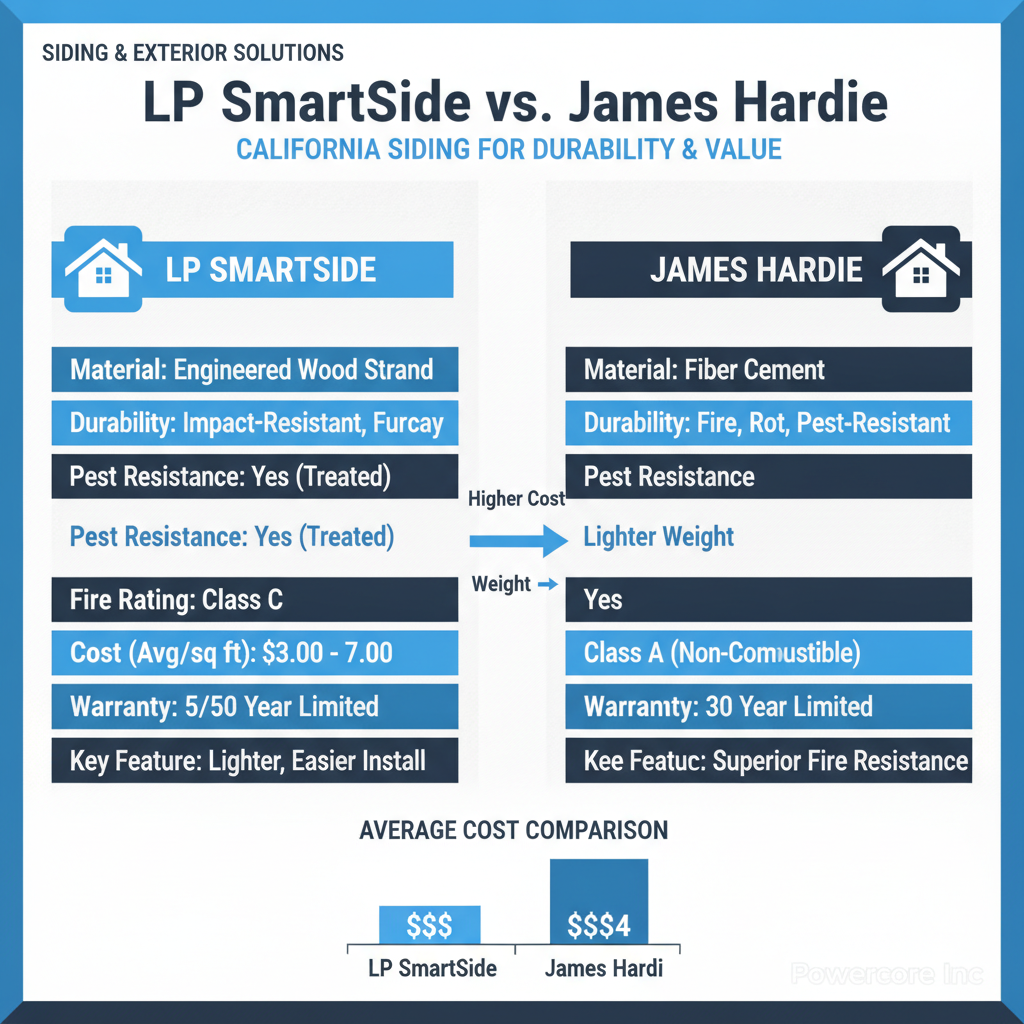
- Fire Resistance: This is arguably the most critical differentiator in California, especially for homes in or near WUI zones. James Hardie fiber cement is non-combustible and carries a Class A fire rating, offering superior protection against wildfires. LP SmartSide, while treated, is an engineered wood product and is combustible, though it meets national fire codes. For ultimate fire protection, particularly in high-risk areas, James Hardie often emerges as the preferred choice.
- Pest Resistance: Both materials excel here. LP SmartSide's zinc borate treatment effectively deters termites and fungal decay. James Hardie's cementitious composition naturally resists pests like termites, ants, and woodpeckers, which can be rampant in many parts of California.
- Moisture Resistance: LP SmartSide's wax and resin treatment provides excellent resistance to moisture, preventing swelling and rot. James Hardie is also highly resistant to moisture, but improper installation or inadequate flashing can lead to issues with either material.
- Impact Resistance: LP SmartSide often holds an edge in impact resistance. Its engineered wood core provides a certain flexibility that can absorb impacts from hail, thrown objects, or accidental bumps better than the more rigid fiber cement. James Hardie is robust but can be more prone to cracking under severe, localized impact.
- UV Resistance: Both brands offer factory-applied finishes (like James Hardie's ColorPlus® Technology and LP's pre-finished options) that provide excellent UV resistance, minimizing fading and maintaining vibrant colors longer in California's intense sun.
Aesthetic Appeal and Design Versatility: Crafting Your Home's Look
- Texture and Look: LP SmartSide is prized for its authentic wood grain appearance, offering a warm, natural aesthetic that can mimic traditional wood siding without the associated maintenance. It's available in various profiles, including lap, panel, and vertical siding. James Hardie also offers a wide range of textures and profiles, including smooth, wood grain, and stucco finishes, allowing for diverse architectural styles from modern to traditional.
- Color Options: Both brands offer extensive color palettes. James Hardie's ColorPlus® Technology bakes on multiple coats of proprietary finish in a controlled environment, leading to a highly durable, fade-resistant color that comes with a 15-year warranty. LP SmartSide can be purchased pre-finished or painted on-site, offering maximum color flexibility. The choice often comes down to desired finish durability versus complete color customization.
Installation and Labor Costs: Efficiency vs. Expertise
- Weight and Handling: LP SmartSide is significantly lighter than James Hardie, making it easier to cut, lift, and install. This can translate to faster installation times and potentially lower labor costs for your California siding project.
- Specialized Tools: LP SmartSide can typically be cut with standard woodworking tools. James Hardie fiber cement, being a denser material, requires specialized cutting tools (e.g., a fiber cement saw blade or shear) and dust mitigation practices (due to silica dust), which can add to labor complexity and cost.
- Installation Complexity: While both require experienced installers, James Hardie has specific installation guidelines (e.g., clearances, flashing requirements) that must be strictly followed to maintain its warranty and performance, especially in varying California climates. Powercore Inc, as a licensed General B contractor, has the expertise to ensure proper installation for both materials.
Maintenance and Long-Term Care: Protecting Your Investment
- Cleaning: Both sidings are relatively low maintenance, requiring only periodic cleaning with a soft brush, mild detergent, and water to remove dirt and grime.
- Repainting Cycles: James Hardie with ColorPlus® Technology boasts an excellent, long-lasting finish (15-year warranty) that typically requires repainting only every 15-20 years. Site-painted James Hardie and LP SmartSide will generally need repainting every 5-10 years, depending on paint quality and sun exposure, which can be intense in California.
- Warranty: Both offer robust warranties. LP SmartSide offers a 5/50-year limited warranty (5-year 100% labor and material replacement, then 50-year prorated material warranty). James Hardie typically offers a 30-year limited non-prorated warranty on the siding itself, plus a 15-year warranty on ColorPlus® finishes. Always review the specific warranty details, especially concerning California's climate conditions.
Cost Analysis: Initial Investment vs. Lifecycle Value in California
- Material Costs: Generally, LP SmartSide tends to have a slightly lower initial material cost per square foot compared to James Hardie. However, prices fluctuate based on profile, finish, and regional market conditions in California.
- Installation Costs: Due to its lighter weight and easier cutting, LP SmartSide can sometimes have lower labor costs. James Hardie's weight and specialized cutting tools can make its installation more labor-intensive and thus more expensive.
- Long-Term Value: When considering lifecycle costs, including maintenance, repainting, and durability against California's specific challenges (like wildfires or pests), the value proposition shifts. A more durable material like James Hardie, with its superior fire rating and longer-lasting finish, might offer a better return on investment over decades, especially in high-risk areas. LP SmartSide's lower initial cost combined with good durability makes it a strong contender for overall value where fire resistance isn't the absolute top priority.
Environmental Impact and Sustainability: Green Choices for the Golden State
- LP SmartSide: Made from sustainably harvested wood, LP SmartSide utilizes wood byproducts and features a low-VOC (Volatile Organic Compound) resin system. Its manufacturing process typically has a lower carbon footprint than fiber cement.
- James Hardie: Composed of natural, abundant materials (cement, sand, cellulose fiber), James Hardie is considered a sustainable building material. Its extreme durability and longevity mean less frequent replacement, reducing waste over the product's lifespan.
Warranty Coverage: Peace of Mind for California Homeowners
Understanding warranties is crucial for any major home investment. Both LP SmartSide and James Hardie offer robust guarantees, but their terms differ:
- LP SmartSide: Typically comes with a 5/50-year limited warranty. This means 100% labor and material replacement for the first five years, followed by a 50-year prorated warranty on the material. This provides excellent initial coverage.
- James Hardie: Offers a 30-year non-prorated limited warranty on the siding itself. For products with ColorPlus® Technology, there's an additional 15-year limited warranty on the finish, covering paint and labor to correct peeling, cracking, and chipping.
When comparing, consider the duration of non-prorated coverage and what specific issues each warranty addresses. Always ensure installation is performed by a qualified contractor like Powercore Inc to validate warranties.
California-Specific Considerations for Siding Selection
Choosing siding in California isn't a one-size-fits-all decision. The state's vast geographical and climatic diversity means that what works perfectly in Sacramento might be less ideal in Malibu or Mammoth Lakes.
Wildfire Zones and Fire Ratings: A Critical Factor
California's increasing vulnerability to wildfires makes fire resistance a paramount concern for many homeowners. Homes in designated Wildland Urban Interface (WUI) zones face strict building codes requiring fire-resistant materials. James Hardie's non-combustible fiber cement siding with its Class A fire rating is often a mandated or highly recommended choice in these areas, providing a crucial layer of protection against ember intrusion and direct flame exposure. While LP SmartSide meets general building codes, it is not non-combustible like fiber cement, making it a less suitable choice for the highest fire-risk regions.
Seismic Activity: Flexibility and Durability
Given California's seismic activity, the ability of siding to withstand earth movement is another important consideration. LP SmartSide's engineered wood composition offers a degree of flexibility that can be advantageous in absorbing minor seismic stresses without cracking. James Hardie, while incredibly strong, is more rigid. Proper installation with adequate expansion gaps is critical for both materials to perform well under seismic conditions, preventing stress fractures.
Coastal vs. Inland Climates: Humidity, Salt, and Extreme Temperatures
- Coastal Regions: Areas like the Bay Area or Southern California coast experience high humidity, salt spray, and consistent fog. Both materials perform well against moisture, but James Hardie's HZ10® product line is specifically engineered for severe heat, humidity, and salty air, making it an excellent choice for coastal durability.
- Inland Valleys (e.g., Sacramento, Central Valley): These regions face extreme temperature fluctuations, from scorching summers to chilly winters. Intense UV radiation is also a factor. Both LP SmartSide and James Hardie are designed to resist thermal expansion and contraction. For fade resistance against the intense sun, James Hardie's ColorPlus® Technology offers superior performance.
- Mountain Regions: Areas with heavy snow and freeze-thaw cycles benefit from siding that resists moisture and rot. Both materials offer strong performance, but proper flashing and water management are essential.
Local Building Codes and Permits: Navigating California Regulations
California's building codes can vary significantly by county and municipality, especially concerning fire-resistant materials, energy efficiency, and seismic requirements. Before embarking on any siding project, it's crucial to understand local regulations and permit requirements. Working with a reputable, dual-licensed contractor like Powercore Inc, with CSLB #1134334 (General B) and #1098175 (C-10 Electrical), ensures that your project complies with all local codes, avoiding costly delays or rework. We navigate the complexities of California's regulatory landscape so you don't have to.
Powercore Inc: Your California Siding Partner
At Powercore Inc, we understand that selecting and installing new siding is a significant investment in your home's future. Our expertise as a dual-licensed General B and C-10 Electrical Contractor, serving all of California from Roseville, means we bring a holistic approach to your exterior solutions. We don't just install siding; we consider its integration with your entire home envelope, including potential impacts on electrical systems, HVAC efficiency, and overall structural integrity.
Whether you lean towards the natural look and impact resistance of LP SmartSide or the unparalleled fire resistance and durability of James Hardie, our team is equipped with the knowledge and experience to guide you. We provide expert consultation, precise installation, and comprehensive service, ensuring your chosen siding performs optimally for decades to come, enhancing your home's beauty, protection, and value.
Our commitment extends beyond just siding. If your exterior renovation includes new lighting, EV charging integration, or even an ADU build, our comprehensive capabilities mean you have one trusted partner for all your home improvement needs.
Making Your Strategic Siding Decision
Ultimately, the choice between LP SmartSide and James Hardie for your California home depends on a balance of factors:
- Budget: Consider both initial material/labor costs and long-term maintenance/repainting cycles.
- Aesthetics: Which look and texture best complements your home's architectural style and your personal preference?
- Climate and Location: Is fire resistance paramount due to WUI zones? Do you need superior protection against coastal humidity or inland heat?
- Durability Needs: How important are impact resistance, pest deterrence, and overall longevity?
- Maintenance Preference: Do you prefer a truly minimal maintenance exterior or are you comfortable with periodic repainting?
Both LP SmartSide and James Hardie are exceptional products, far superior to traditional wood or vinyl in many aspects. The 'best' choice is the one that strategically aligns with your property's specific needs, your budget, and your long-term vision for your California home.
Conclusion
Investing in new siding is a transformative project that protects and beautifies your California home for years to come. By carefully evaluating the strengths of LP SmartSide and James Hardie against your specific requirements, you can make a strategic decision that maximizes durability, enhances curb appeal, and provides lasting value. From the initial consultation to the final installation, partnering with experienced professionals like Powercore Inc ensures your siding project is executed with precision and care, exceeding expectations across all of California's diverse landscapes.
Ready to explore the best siding solution for your California home? Contact Powercore Inc today for a personalized consultation. Our expert team is ready to discuss your needs and provide a tailored estimate for your siding and exterior solutions. Call us at 916-699-8778 to start your project with confidence.