

Introduction: Elevate Your California Home with Strategic Hardwood Flooring
Hardwood flooring stands as a timeless choice for California homeowners, blending unparalleled beauty with enduring value. From the sun-drenched coastal properties of San Diego to the bustling urban landscapes of Los Angeles and the serene foothills of the Sierra Nevada, hardwood offers a sophisticated foundation that enhances any interior design. But embarking on a hardwood flooring project, especially in California's diverse climates, requires more than just picking a pretty plank. It demands a strategic approach to selection, installation, and long-term care to ensure your investment truly thrives.
At Powercore Inc., a trusted remodels and new construction expert based in Roseville and serving all of California, we understand that your home is more than just a structure—it's an investment, a sanctuary, and a reflection of your lifestyle. This comprehensive guide is designed to empower you with the knowledge needed to make informed decisions about your interior remodeling project, ensuring your new hardwood floors are not only stunning but also resilient and perfectly suited to the unique demands of the Golden State.
Why Hardwood in California? A Strategic Investment
The allure of hardwood flooring is undeniable, but its benefits extend far beyond aesthetics, especially for California homes. Understanding these advantages can help solidify your decision.
Durability and Longevity: An Investment That Lasts
When properly cared for, hardwood floors can last for decades, even centuries. Unlike carpet or laminate that often requires replacement every 10-15 years, hardwood can be refinished multiple times, restoring its original luster and extending its lifespan indefinitely. This makes it a sustainable and cost-effective choice in the long run, particularly in high-traffic areas common in active California households.
Aesthetic Appeal and Property Value Enhancement
Hardwood floors are synonymous with elegance and luxury. Their natural warmth, unique grain patterns, and ability to complement any decor style instantly elevate a home's aesthetic. More importantly, real estate experts consistently report that homes with hardwood floors command higher resale values and sell faster. In California’s competitive housing market, this can be a significant advantage, delivering a strong return on your remodeling investment.
Hypoallergenic Benefits: A Healthier Home Environment
For many California families, indoor air quality is a growing concern. Hardwood floors offer a cleaner, healthier alternative to carpets, which can trap dust, pet dander, pollen, and other allergens. Their smooth, non-porous surface is easy to clean, significantly reducing airborne irritants and contributing to a healthier living environment for allergy and asthma sufferers.
Climate Adaptability and Resilience: Addressing California's Unique Environment
California's diverse climate, from arid deserts to humid coastlines, presents unique challenges for flooring. While sensitive to extreme moisture fluctuations, modern hardwood options, especially engineered varieties, are designed to perform well. Furthermore, for a state prone to seismic activity, the inherent flexibility and structural integrity of a properly installed hardwood floor can be a subtle but important factor in overall home resilience.
Choosing Your Hardwood: Strategic Selection for California Living
The first step in any successful hardwood project is selecting the right material. This decision involves balancing aesthetics, durability, and suitability for your home’s specific environment.
Solid Hardwood vs. Engineered Hardwood: A California Climate Perspective
This is perhaps the most critical choice, particularly in California:
- Solid Hardwood: Composed of a single piece of wood, solid hardwood offers unparalleled authenticity and can be refinished many times. However, it’s more susceptible to warping, expanding, or contracting with significant changes in humidity and temperature. This makes it a less ideal choice for below-grade installations (basements, though less common in CA) or areas with extreme moisture fluctuations, like coastal regions without proper HVAC climate control.
- Engineered Hardwood: Made of multiple layers of wood, with a top veneer of real hardwood and a core of plywood or high-density fiberboard. This construction makes it significantly more stable and resistant to moisture and temperature changes. Engineered hardwood is an excellent choice for California homes, particularly those in coastal or high-humidity areas, and can be installed over concrete slabs, which are prevalent in many California homes.
Wood Species and Janka Hardness Scale: Durability Meets Design
Different wood species offer varying levels of hardness, grain patterns, and color tones. The Janka hardness scale measures a wood's resistance to denting and wear, a crucial factor for high-traffic areas:
- Oak (Red and White): A popular choice, known for its distinct grain and excellent hardness (Red Oak Janka: 1290; White Oak Janka: 1360). Versatile for many California home styles.
- Maple: Offers a clean, uniform look with a fine grain and a higher hardness rating (Janka: 1450), making it very durable.
- Hickory: One of the hardest domestic woods (Janka: 1820), ideal for homes with pets or heavy foot traffic, featuring dramatic grain variation.
- Walnut: Softer than oak or maple (Janka: 1010), but highly prized for its rich, dark color and elegant grain. Best for areas with less intense wear.
- Exotic Woods (e.g., Brazilian Cherry, Ipe): Exceptionally hard and unique in appearance, but consider sustainability and cost.
Finishes and Aesthetics: Protecting and Enhancing Your Investment
The finish protects the wood and dictates its aesthetic. Common types include:
- Polyurethane (Oil-Based or Water-Based): Most common, offering good durability. Oil-based yellows over time, while water-based remains clear.
- Aluminum Oxide: Extremely durable, often factory-applied to prefinished floors, offering superior scratch resistance.
- Hard Wax Oil: Penetrates the wood, offering a natural, matte look and easy spot repairs, but requires more regular maintenance.
Sustainably Sourced Options: Eco-Consious Choices for California
For environmentally conscious California homeowners, look for certifications like FSC (Forest Stewardship Council) or PEFC (Programme for the Endorsement of Forest Certification) to ensure your hardwood comes from responsibly managed forests.
The Pre-Installation Playbook: Setting the Stage for Success
Proper preparation is paramount to a successful and long-lasting hardwood floor. Skipping these critical steps can lead to costly issues down the line.
Acclimation: A Crucial Step for California's Climate
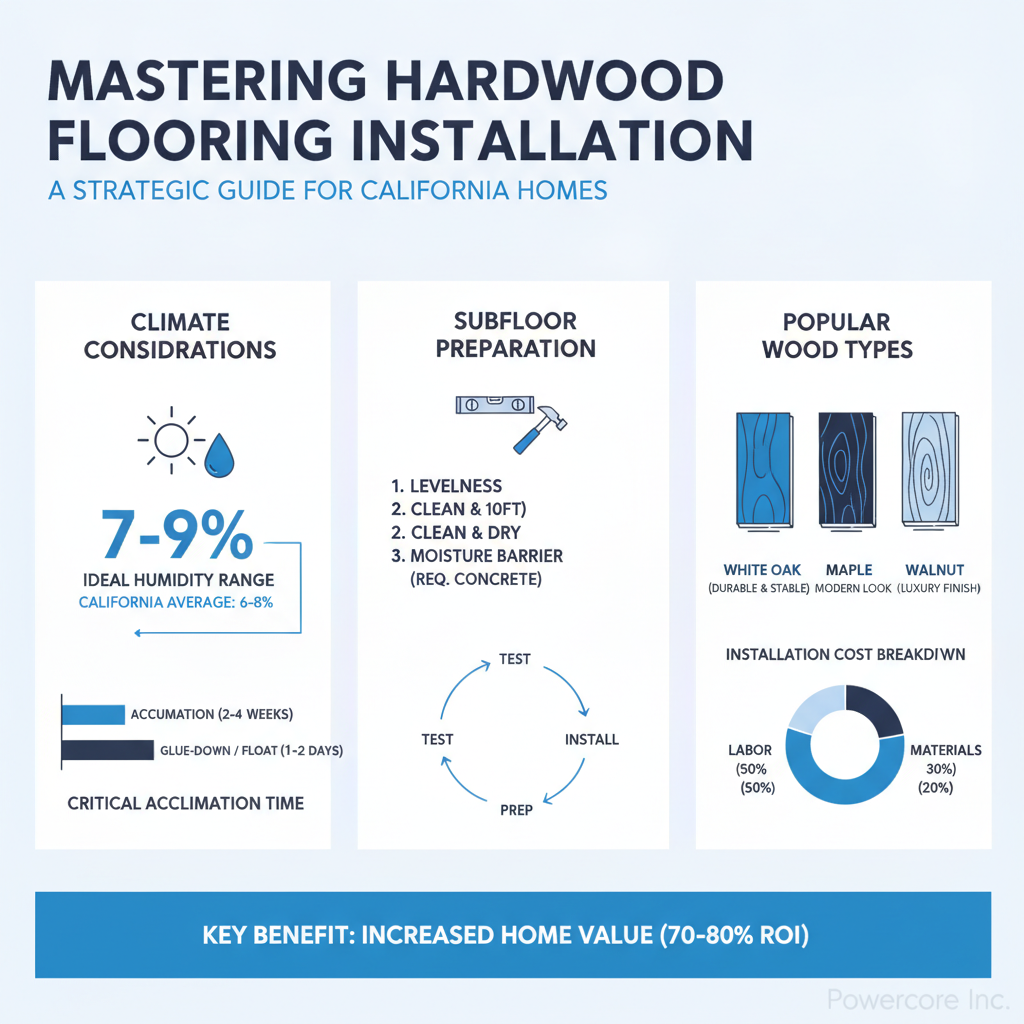
Hardwood is a natural product that reacts to its environment. Before installation, the wood must be acclimated to the temperature and humidity levels of your home. This typically involves laying the unopened boxes in the installation area for 3-7 days. For California's varying climates, proper acclimation prevents expansion or contraction after installation, which can lead to gaps, buckling, or cupping.
Subfloor Preparation: Leveling, Moisture Barriers, and Soundproofing
A perfectly prepared subfloor is the foundation of a flawless hardwood floor:
- Leveling: The subfloor must be flat and level. Any imperfections will transfer to the new hardwood, creating an uneven surface and potential squeaks. Self-leveling compounds or sanding high spots can rectify this.
- Moisture Barriers: Essential, especially for engineered hardwood over concrete slabs or in humid California regions. A vapor barrier (e.g., 6-mil polyethylene sheeting, tar paper, or specialized underlayment) prevents moisture from migrating up from the subfloor and damaging the wood.
- Soundproofing: For multi-story homes or ADUs, an underlayment with sound-dampening properties can significantly reduce noise transfer.
Moisture Testing: An Absolute Must
Before any wood is laid, both the subfloor and the hardwood itself must be tested for moisture content using a specialized meter. Wood and subfloor moisture levels should be within specific tolerances (e.g., subfloor below 12%, wood moisture within 2-4% of subfloor). Ignoring this step is a primary cause of hardwood flooring failure.
Removing Old Flooring and Subfloor Inspection
Carefully remove existing flooring, baseboards, and door trims. Use this opportunity to thoroughly inspect the subfloor for any damage, rot, or pest issues that need to be addressed before installation begins.
Hardwood Flooring Installation Techniques: Matching Method to Material
The installation method depends on the type of hardwood, the subfloor, and environmental factors.
Nail-Down or Staple-Down: The Traditional Method
This method is typically used for solid hardwood flooring over a wood subfloor (plywood or OSB). Boards are blind-nailed or stapled through the tongue at an angle, securing them to the subfloor. It creates a very stable and permanent installation.
Glue-Down: Ideal for Engineered Hardwood on Concrete
Engineered hardwood can be glued directly to a concrete slab subfloor. A strong adhesive is spread onto the subfloor, and planks are carefully set into place. This method provides a very stable and quiet floor, often preferred for its strong bond in areas where moisture barriers are crucial.
Float Installation: Versatile and DIY-Friendly
Floating floors are not attached to the subfloor. Instead, the planks are glued together at the tongue and groove, or clicked together with an interlocking system, forming a single, continuous surface that "floats" over an underlayment. This method is common for engineered hardwood and laminate, accommodating slight subfloor imperfections and allowing for natural expansion and contraction, which can be beneficial in California's fluctuating temperatures. It's often more DIY-friendly.
Click-Lock Systems: Modern Convenience
A popular variation of floating installation, click-lock systems feature specially milled edges that simply snap together without the need for glue or nails. This makes installation faster, cleaner, and more accessible for skilled DIYers, though precision is still key.
DIY vs. Professional Installation: Weighing Your Options in California
While the idea of saving money with a DIY project is appealing, hardwood flooring installation is complex and unforgiving. Here's a strategic comparison:
Cost Savings vs. Expertise and Guarantees
- DIY: You save on labor costs, but you'll invest in specialized tools (nail guns, saws, moisture meters), and potentially waste material due to errors. The learning curve is steep, and mistakes can be very expensive to fix.
- Professional: Powercore Inc. brings years of experience, specialized equipment, and skilled craftsmen. We ensure precise cuts, proper acclimation, subfloor preparation, and flawless installation according to industry standards. Our work is backed by guarantees, providing peace of mind that your investment is protected.
Time Commitment and Home Disruption
- DIY: Installation can take significantly longer for an inexperienced individual, potentially disrupting your home for weeks.
- Professional: Our teams work efficiently and systematically, minimizing disruption and completing projects within established timelines. We manage the entire process, from material delivery to debris removal.
Long-Term Value and Avoiding Costly Mistakes
Incorrect installation can lead to buckling, gapping, squeaking, and voided manufacturer warranties. A professional installation ensures the longevity and beauty of your floors, maximizing their value. For complex projects or homes with unique California challenges (e.g., radiant heating, uneven subfloors), professional expertise is invaluable.
Understanding Hardwood Flooring Costs in California
Hardwood flooring is a significant investment, and understanding the cost components is essential for strategic budgeting, especially in California, where costs can be higher than the national average.
Material Costs: What to Expect Per Square Foot
Material costs vary widely based on wood species, type (solid vs. engineered), finish, and brand. On average, expect to pay:
- Engineered Hardwood: $4 - $10 per square foot
- Solid Hardwood: $6 - $15 per square foot (for common species like oak)
- Exotic/Premium Woods: $10 - $20+ per square foot
These figures are for the wood planks themselves. Don't forget to factor in waste, typically 5-10% extra for cuts and imperfections.
Labor Costs: Professional Installation in California
Professional installation costs in California typically range from $3 to $8 per square foot, but can go higher for complex patterns, difficult subfloor conditions, or premium materials. These costs cover preparation, installation, and often some finishing touches.
Additional Costs and Considerations
- Old Flooring Removal: $1 - $3 per square foot (can be more for tile or glued-down carpet).
- Subfloor Repair/Leveling: Highly variable, from a few hundred dollars to several thousand for extensive work.
- Moisture Barrier/Underlayment: $0.50 - $2 per square foot.
- Trim & Molding: New baseboards, shoe molding, or transition pieces will add to the material and labor costs.
- Door Trimming: Doors may need to be trimmed to accommodate the new floor height.
- Permits: While not always required for flooring, if your project is part of a larger remodel (e.g., kitchen or ADU additions), permits will be necessary. Powercore Inc. handles all necessary permitting for our comprehensive projects.
For a detailed breakdown and personalized quote for your specific project, it's always best to consult with a reputable contractor like Powercore Inc. For more insights into remodeling budgets, you might find our article on California Kitchen Remodel Costs helpful, as many principles apply to flooring within larger projects.
Maintenance & Longevity: Protecting Your Hardwood Investment
Once installed, proper care is crucial to maintaining the beauty and extending the life of your hardwood floors.
Regular Cleaning Regimen
- Sweep/Vacuum Regularly: Use a soft-bristle broom or a vacuum with a hard floor attachment to remove dirt and grit, which can scratch the finish.
- Damp Mop Sparingly: Use a slightly damp (not wet!) mop with a pH-neutral hardwood floor cleaner. Avoid excessive water, as it can damage wood.
- Immediately Clean Spills: Wipe up spills promptly to prevent moisture penetration and staining.
Protecting Against Scratches and Dents
- Furniture Pads: Place felt pads under all furniture legs.
- Area Rugs: Use rugs in high-traffic areas and under furniture to provide extra protection.
- Pet Care: Keep pet nails trimmed to minimize scratches.
- Footwear: Consider removing outdoor shoes, especially heels, at the door.
Humidity Control: Crucial for California Homes
Maintaining a consistent indoor humidity level (ideally between 35-55%) is vital for hardwood floors, especially in California's varied climates. Too dry, and wood can shrink and crack; too humid, and it can swell and buckle. Your home’s HVAC system, potentially augmented by humidifiers or dehumidifiers, plays a critical role in this. Powercore Inc. can advise on integrated solutions to protect your flooring investment.
Refinishing and Repair: Restoring Beauty
Even with the best care, hardwood floors may eventually show wear. The beauty of hardwood is that it can be refinished, sanding down the top layer and applying a new finish, effectively giving your floors a brand new look. Minor scratches can often be spot-repaired, while damaged planks can be replaced by a skilled professional.
Integrating Hardwood with Other Home Remodels: A Holistic Approach
Hardwood flooring often serves as a foundational element within larger home renovation projects. Strategic planning ensures seamless integration and maximum impact.
- Kitchen & Bathroom Remodels: While traditionally avoided in full bathrooms due to high moisture, engineered hardwood can be suitable for powder rooms or kitchens with careful planning and proper sealing. When considering a kitchen remodel, coordinating flooring with other design elements creates a cohesive look.
- Open Concept Living: Hardwood is perfect for creating flow in open concept layouts, connecting different functional zones with a consistent, elegant surface.
- ADUs & Guest Homes: For new ADUs, hardwood flooring offers durability and aesthetic appeal, enhancing the long-term value and rental potential of these accessory dwelling units.
Powercore Inc.: Your Trusted Partner for California Home Transformations
Choosing hardwood flooring is a significant decision, and ensuring its proper installation and longevity requires expertise. As a California dual-licensed General B and C-10 Electrical Contractor (CSLB #1134334 and #1098175), Powercore Inc. is uniquely positioned to handle not just your flooring needs, but also any integrated electrical work, HVAC considerations, or structural modifications that might arise during your remodeling project.
Our commitment to quality craftsmanship, strategic planning, and customer satisfaction means you can trust us to deliver exceptional results that enhance the beauty, functionality, and value of your California home. We serve homeowners across the entire state, bringing our comprehensive expertise to every project.
Conclusion: Step Confidently Onto Your New Hardwood Floor
Investing in hardwood flooring is a choice that pays dividends in beauty, durability, and property value. By strategically selecting the right materials, meticulously preparing for installation, and committing to proper maintenance, you can ensure your hardwood floors remain a cherished feature of your California home for generations. Whether you're refreshing a single room or undertaking a full home transformation, Powercore Inc. is here to guide you every step of the way.
Ready to begin your hardwood flooring journey or explore other home remodeling possibilities? Don't hesitate to reach out to the experts at Powercore Inc. Our team is ready to provide tailored advice and professional service for your California home. Contact us today for a consultation or call us directly at 916-699-8778 to discuss your vision.