

Introduction: Securing Your California Home Improvement Dream
California homeowners invest significantly in their properties, dreaming of enhanced comfort, efficiency, and value. Whether it's upgrading to solar and battery storage, modernizing with new HVAC systems, or undertaking a full home remodel, these projects represent substantial financial and emotional commitments. Unfortunately, this fertile ground for home improvement also attracts unscrupulous contractors and outright scammers, turning dream renovations into costly nightmares. In a state as vast and diverse as California, where property values are high and natural disaster recovery can create urgency, vigilance is paramount.
At Powercore Inc, a dual-licensed General B & C-10 Electrical Contractor based in Roseville, CA, we believe in empowering homeowners with the knowledge to protect their investments. With licenses CSLB #1134334 and #1098175, and a commitment to serving all of California, we understand the importance of transparency, professionalism, and trust in every project. This comprehensive guide is designed to be your shield, equipping you with the insights needed to identify red flags, vet contractors thoroughly, and ultimately avoid California home improvement scams.
The Landscape of Home Improvement Scams in California
California's dynamic housing market and frequent extreme weather events, from wildfires to atmospheric rivers, unfortunately create ripe conditions for contractor fraud. Scammers often target vulnerable homeowners, especially after a natural disaster, preying on urgency and fear. Understanding the common tactics is the first step in prevention.
Common Types of Contractor Scams
- The Storm Chaser: After a severe weather event, unlicensed or out-of-state contractors might appear unsolicited, offering immediate repairs (e.g., roofing, siding) often at inflated prices and demanding upfront cash. They may disappear after receiving payment, leaving shoddy or incomplete work.
- Unlicensed Contractors: Perhaps the most pervasive threat. Operating without a valid California Contractors State License Board (CSLB) license is illegal and often means they lack proper insurance, bonding, and competence. Their work is typically uninsured and can lead to significant structural or electrical issues.
- Bait-and-Switch: The contractor provides an attractive low bid, then inflates costs during the project by claiming unforeseen issues, using substandard materials, or adding unnecessary work.
- Large Upfront Payment Demands: While a down payment is normal, demanding an unusually large percentage (often more than legally allowed in California) before any work begins is a major red flag.
- Substandard Materials or Workmanship: Using cheap, inferior materials despite charging for high-quality ones, or performing work that fails to meet code or industry standards. This can lead to costly future repairs.
- Abandoned Projects: The contractor starts the work, collects payment, and then disappears, leaving the project unfinished and the homeowner in a difficult situation.
- Permit & Inspection Evasion: A legitimate contractor will always secure necessary permits. Scammers often try to bypass this, putting your home's safety, legality, and future resale value at risk.
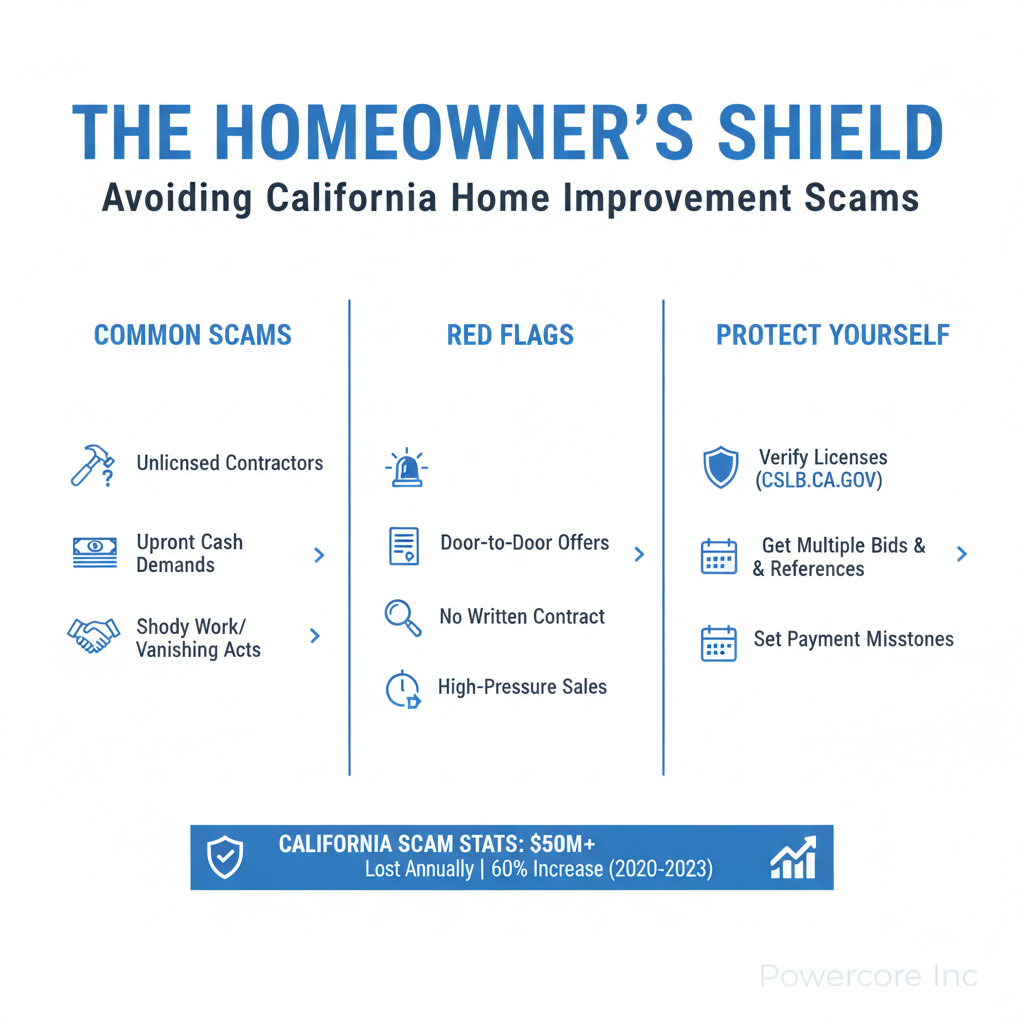
Red Flags: What to Watch Out For
Being aware of the warning signs can save you thousands of dollars and countless headaches. Keep an eye out for these tell-tale indicators:
Unsolicited Offers and High-Pressure Tactics
- Door-to-Door Solicitations: Be wary of contractors who show up unannounced, especially after a storm, claiming to have noticed damage to your home. While legitimate businesses do canvass, high-pressure sales and immediate decision demands are suspicious.
- "Limited-Time" or "Today Only" Deals: Scammers often use urgency to prevent you from doing your due diligence. A reputable contractor will give you time to consider their proposal.
- Excessive Discounts: Be skeptical of offers that seem too good to be true. While competitive pricing is great, drastically lower bids than others often indicate cut corners or hidden costs.
Payment and Contract Irregularities
- Cash-Only Demands: A legitimate business will accept various forms of payment and provide clear invoicing. Demanding only cash or a large cash payment is a major red flag, often indicating an attempt to avoid taxes and leave no paper trail.
- Large Upfront Payments: In California, for home improvement contracts, the down payment cannot exceed 10% of the contract price or $1,000, whichever is less (Business and Professions Code § 7159.5). Any demand exceeding this limit is illegal and a clear warning sign.
- Vague or Incomplete Contracts: A professional contract should be detailed, outlining the scope of work, materials, timeline, payment schedule, change order process, and warranty information. If it's handwritten, lacks specifics, or includes blank spaces, walk away.
- No Right to Cancel Clause: California law grants consumers a three-day right to cancel certain home improvement contracts. Ensure this is explicitly stated in your contract.
Credibility and Professionalism Concerns
- Lack of Licensing or Insurance Proof: Any legitimate contractor in California must be licensed by the CSLB and carry appropriate insurance (workers' compensation and general liability). If they can't provide verifiable proof, do not hire them.
- No References or Poor Reviews: A reputable contractor will proudly share references from satisfied clients and have a solid online presence with positive reviews. Be wary of contractors with no digital footprint or consistently negative feedback.
- No Local Presence: Be cautious of contractors who don't have a local business address or consistent contact information. Storm chasers often operate out of temporary lodging.
Your Proactive Defense: Essential Steps Before You Hire
Protecting your California home improvement investment requires diligent research and adherence to best practices. Powercore Inc advocates for informed decision-making at every stage of your project.
1. Verify Licensing and Insurance – The Golden Rule
This is the single most important step. Always verify a contractor's license number with the California Contractors State License Board (CSLB). You can use their online search tool to check if the license is active, if there are any disciplinary actions, and what classifications the contractor holds.
- Understand License Types: For comprehensive home projects, look for a General Building Contractor (Class B) license. For electrical work, such as EV charging station installations or residential solar and storage, a C-10 Electrical Contractor license is essential. Powercore Inc proudly holds both CSLB #1134334 (General B) and #1098175 (C-10 Electrical), ensuring broad expertise and compliance for a wide range of services.
- Confirm Insurance: Ask for proof of general liability insurance and workers' compensation insurance. General liability protects you from damage to your property caused by the contractor. Workers' compensation protects you from liability if a worker gets injured on your property.
- Further Reading: For a deeper dive into licenses and insurance, read our articles: Decoding California Contractor Licenses: Your Guide to a Protected Home Project and Strategic Home Protection: Why Verifying Contractor Insurance is Crucial in California.
2. Get Multiple Bids and Compare Thoroughly
Obtain at least three detailed bids for your project. This helps you understand the fair market value for the work and spot any outliers. Don't just compare the bottom line; compare the scope of work, materials specified, payment schedules, and warranties.
- Detailed Scope: Ensure each bid clearly outlines exactly what work will be performed, including demolition, preparation, installation, and cleanup.
- Material Specifications: The bid should specify the quality and brand of materials. For example, if you're getting siding done, does it specify James Hardie or LP SmartSide, and what grade?
- Timeline: A realistic project start and completion date should be included.
3. Check References and Online Reviews
A reputable contractor will gladly provide a list of recent clients you can contact. Ask references about their experience, project timeline, budget adherence, and communication with the contractor. Also, check online review platforms like Google, Yelp, and the Better Business Bureau for consistent feedback.
4. Demand a Detailed, Written Contract
Never proceed with a handshake deal. A comprehensive written contract is your legal protection. It should include:
- Contractor's name, address, license number, and contact information.
- Your name and project address.
- Detailed scope of work, including specific tasks and materials.
- Project start and completion dates.
- Total cost and a clear payment schedule, specifying due dates and amounts.
- Provisions for change orders (how additional work will be approved and priced).
- Warranty information for labor and materials.
- Disclosure of subcontractors, if any.
- Cancellation rights, as required by California law.
5. Understand Payment Schedules and Avoid Large Upfront Payments
As mentioned, California law protects homeowners from excessive down payments. Subsequent payments should be tied to specific milestones of completed work, not arbitrary dates. Avoid contractors who demand full payment upfront or large cash deposits.
6. Verify Permits and Inspections
For most significant home improvement projects in California, permits are required by your local city or county building department. These ensure the work meets safety and building codes. A legitimate contractor will handle the permit process and schedule necessary inspections. Never allow work to begin without the proper permits in place, as this can lead to fines, stop-work orders, and difficulty selling your home later.
Navigating Specific High-Value California Home Projects
While general scam prevention applies across the board, certain projects have specific considerations:
Solar & Battery Storage
The booming solar industry in California attracts many companies, but also some less scrupulous actors. Ensure your solar contractor holds a C-10 Electrical license (like Powercore Inc's #1098175) and is familiar with California's net metering policies and battery storage incentives. Beware of overly aggressive sales tactics or promises of unrealistically low electricity bills without a thorough home energy assessment.
ADUs & Remodels
Building an Accessory Dwelling Unit (ADU) or undertaking a major interior remodeling project requires extensive planning, multiple permits, and coordination. A General B contractor (like Powercore Inc's #1134334) is essential for these complex projects. Scammers might try to cut corners on permits or use unlicensed subcontractors, leaving you with code violations.
Roofing & Siding
Especially after severe weather, roofing and siding projects are frequent targets for storm chasers. Always verify licenses, check for local references, and ensure the contractor is familiar with California's specific building codes for weather resilience.
What to Do If You Suspect a Home Improvement Scam
If you encounter red flags or suspect you've been targeted by a scammer:
- Stop Communication: Cease all contact with the contractor immediately.
- Document Everything: Gather all contracts, receipts, emails, text messages, photos of the work (or lack thereof), and contact information.
- Contact CSLB: File a complaint with the California Contractors State License Board (CSLB). They investigate complaints against licensed and unlicensed contractors.
- Contact Local Law Enforcement: If you believe you've been defrauded, report it to your local police department.
- Consumer Protection Agencies: Reach out to your county's consumer protection agency or the California Attorney General's office for guidance.
Why Choose a Reputable Contractor Like Powercore Inc?
Navigating home improvement projects in California doesn't have to be a minefield of potential scams. By choosing a reputable, licensed, and experienced contractor like Powercore Inc, you gain peace of mind and ensure your investment is protected.
- Dual-Licensed Expertise: As a General B and C-10 Electrical Contractor (CSLB #1134334 and #1098175), Powercore Inc offers comprehensive services, from solar and battery storage to HVAC, roofing, ADUs, full remodels, EV charging, and siding and exterior work. This integrated approach means fewer subcontractors and a single point of accountability for complex projects.
- Statewide Service, Local Values: Based in Roseville, CA, Powercore Inc proudly serves homeowners across all of California, bringing big-project expertise with small-town customer service values.
- Transparency and Trust: We believe in clear communication, detailed contracts, and transparent pricing, ensuring you understand every step of your project. We prioritize quality workmanship and adherence to all California building codes and regulations.
- Comprehensive Solutions: Beyond core services, we also specialize in decking and outdoor living, and interior remodeling, making us your trusted partner for nearly any home upgrade.
For more about our commitment to excellence and customer satisfaction, visit our About Us page.
Conclusion: Your Protected Path to a Better Home
Your California home is a significant asset, and every improvement project should enhance its value and your quality of life, not become a source of stress and financial loss. By understanding the common tactics of home improvement scams, recognizing red flags, and diligently following the proactive steps outlined in this guide, you can confidently navigate your renovation journey.
Always prioritize licensing, insurance, detailed contracts, and transparent communication. When you're ready to embark on a home improvement project, choose a contractor known for integrity and expertise. For a secure, high-quality, and worry-free home improvement experience anywhere in California, trust the professionals at Powercore Inc. Reach out today for a consultation and let us help you achieve your home's full potential, safely and professionally.
Contact Powercore Inc at 916-699-8778 or visit our contact page to discuss your next project.