

Introduction: The Electrified Road Ahead for California Homes
California stands at the forefront of the electric vehicle (EV) revolution, with more zero-emission vehicles on its roads than any other state. As EVs become increasingly mainstream, the question for many homeowners shifts from if they will own an EV to how they will efficiently and cost-effectively charge it at home. While the convenience of home charging is undeniable, the initial thought of EV charger installation costs can sometimes feel daunting. At Powercore Inc, we believe that understanding these costs isn't just about budgeting; it's about making a strategic investment in your home's energy future.
This comprehensive guide from Powercore Inc, your trusted California dual-licensed General B & C-10 Electrical Contractor, will demystify the various components that contribute to the total cost of installing an EV charger. We'll dive deep into the specific factors impacting California homeowners, from charger types and electrical upgrades to permits and professional labor. More importantly, we'll explore how to view this expenditure not merely as a cost, but as a crucial step in future-proofing your property, enhancing its value, and integrating it into a more sustainable, energy-independent lifestyle. With Powercore Inc, you're not just installing a charger; you're building a smarter, greener tomorrow for your California home.
Beyond the Sticker Price: What Defines EV Charger Installation Costs in California?
When considering an EV charger for your California home, it's easy to focus solely on the price tag of the charging unit itself. However, the true cost of an electric car charging station for home is a multifaceted sum, encompassing a range of factors that can vary significantly based on your home's existing electrical infrastructure, charger type, and local regulations. In California, these variables often carry unique implications due to the state's stringent building codes, higher labor costs, and specific utility requirements.
A strategic approach to EV charger installation involves understanding each of these components. This includes the charger unit's price, the complexity of electrical modifications, wiring requirements, necessary permits and inspections, and the indispensable cost of professional labor. Each element plays a critical role in ensuring not only the functionality but also the safety and longevity of your charging setup. Ignoring any of these factors can lead to unexpected expenses, delays, or even hazardous installations. Powercore Inc emphasizes transparency in breaking down these costs, helping California homeowners make informed decisions.
Level 1 vs. Level 2 vs. DC Fast Chargers: Charger Unit Costs
The first and most obvious component of your installation cost is the EV charging unit itself. Chargers are categorized by their charging speed, which directly influences their cost and installation complexity:
- Level 1 Chargers: These typically come standard with your EV and plug into a regular 120V household outlet. They offer the slowest charging speed (2-5 miles of range per hour) and usually incur no installation costs beyond the unit itself, assuming a readily available outlet. While convenient for occasional use or plug-in hybrids, they are often insufficient for daily charging needs of all-electric vehicles.
- Level 2 Chargers: The most popular choice for residential installations, Level 2 chargers use a 240V outlet, similar to an electric dryer or oven. They deliver significantly faster charging (25-40 miles of range per hour), making them ideal for overnight charging. The cost of Level 2 units can range from $300 to $1,000+, depending on brand, features (such as smart capabilities for scheduling and energy monitoring), and power output (e.g., 32-amp vs. 48-amp). For a deeper dive, read "What You Need to Know About How Much a Level 2 EV Charger Costs."
- DC Fast Chargers (Level 3): These are primarily found in commercial and public charging stations due to their extremely high power requirements and cost. They can charge an EV to 80% in 20-60 minutes but are generally not suitable or cost-effective for residential installation, with units alone costing upwards of $10,000 and requiring substantial electrical infrastructure upgrades.
For the vast majority of California homeowners, a Level 2 charger strikes the perfect balance between speed, cost, and practical home integration. When selecting a unit, consider its power output (amps), smart features, cable length, and weatherproofing if installing outdoors.
The Electrical Backbone: Wiring, Conduits, and Circuitry
The journey of electricity from your home's main panel to your EV charger is a critical factor in installation costs. This involves several key components:
- Wire Gauge and Length: Level 2 chargers require heavier-gauge wiring than standard household outlets to handle the increased current safely. The longer the distance between your electrical panel and the desired charger location, the more wire will be needed, directly increasing material costs. California's strict electrical codes mandate specific wire types and gauges for various amperages, ensuring safety and preventing overheating.
- Conduit Requirements: In many installations, especially outdoors or in exposed areas, electrical wiring must be protected within conduit. Conduit adds to both material and labor costs. The type of conduit (e.g., PVC, EMT) will depend on local codes, environmental factors, and aesthetic preferences.
- Dedicated Circuit: An EV charger must be installed on a dedicated circuit to prevent overloading your home's electrical system. This means installing a new circuit breaker in your main electrical panel, specifically for the charger. This ensures that the charger receives a consistent power supply without tripping breakers or impacting other appliances.
The complexity of running this electrical backbone can vary dramatically. A simple installation might involve a short run through an unfinished garage, while a more complex project could require routing wires through walls, ceilings, or even trenching outdoors to reach a detached garage or carport. Each foot of wiring, every bend in the conduit, and the accessibility of the installation path contribute to the overall labor and material expenses.
The Heart of the System: Electrical Panel Upgrades
Often the most significant variable in EV charger installation costs for California homeowners is the state of their existing electrical panel. Level 2 EV chargers draw a substantial amount of power, typically requiring a 40-amp or 50-amp circuit. Many older California homes, or even newer ones not built with EV charging in mind, may have a 100-amp service panel that simply doesn't have enough spare capacity to accommodate this additional load.
If your panel is already nearing its maximum capacity, or if it's an older model that doesn't meet current safety standards, a panel upgrade may be necessary. This can involve:
- Main Service Upgrade: Increasing your home's total electrical service from, for example, 100 amps to 200 amps. This is a substantial project that involves replacing the main breaker, service entrance cable, and potentially the meter socket. The cost for a main service upgrade in California can range from $2,000 to $5,000+, depending on complexity, utility requirements, and local labor rates.
- Sub-Panel Installation: In some cases, if your main panel has space but is located far from the charger, or if you plan for future expansions (like a second EV charger or solar battery storage), installing a sub-panel closer to the charging location can be a more efficient solution. This involves running a feeder line from the main panel to the sub-panel, which then houses the EV charger's circuit breaker. Costs for a sub-panel can range from $800 to $2,500.
A qualified EV charging station installer like Powercore Inc will conduct a thorough electrical load calculation during the initial assessment. This determines if your current panel can handle the additional demand of an EV charger safely and efficiently. If an upgrade is needed, it's a critical investment not just for your EV, but for the overall safety and future electrical capacity of your home. It’s also crucial to understand California-specific utility requirements, such as CPUC Rule 29, which outlines guidelines for connecting generation facilities and energy storage to the grid, indirectly influencing panel upgrade needs for a holistic energy system.
Permitting and Inspection Fees in California
In California, any significant electrical work, including the installation of an EV charger, requires permits from your local city or county building department. This is a non-negotiable step designed to ensure that the installation complies with the California Electrical Code and local building regulations, safeguarding your property and its occupants. The permitting process typically involves:
- Application and Fees: Submitting a permit application and paying associated fees, which can range from $50 to $500 or more, depending on your municipality and the scope of work (e.g., whether a panel upgrade is included).
- Plan Review: The building department reviewing the electrical plans to ensure compliance.
- Inspections: After installation, a city or county inspector will verify that the work was performed correctly and safely, according to the approved plans and code.
Attempting to bypass the permitting process is not only illegal but also extremely risky. Unpermitted electrical work can lead to safety hazards (fire, electrocution), fines, difficulty selling your home, and potential issues with your home insurance. A reputable contractor like Powercore Inc will always handle all necessary permits and inspections on your behalf, ensuring your installation is fully compliant and safe.
Professional Labor: The Value of Expertise
The cost of professional labor accounts for a significant portion of the total EV charger installation expense. In California, labor rates for licensed electricians can range from $100 to $200 per hour, reflecting the high demand and specialized skill required. The total labor cost will depend on the complexity and duration of the installation, which in turn is influenced by:
- Distance and Routing: How far the charger is from the main panel and how difficult it is to run the wiring (e.g., through finished walls vs. open garage).
- Panel Work: Whether a new circuit, sub-panel, or main panel upgrade is needed.
- Trenching: If the charger is in a detached garage or outdoor area requiring underground wiring, trenching adds significant labor.
- Mounting: The complexity of securely mounting the charging unit.
- Testing and Configuration: Ensuring the charger is fully functional and integrating any smart features.
While DIY videos might make electrical work seem manageable, installing an EV charger involves high voltage and amperage, posing serious risks if not handled by a qualified professional. Powercore Inc employs C-10 licensed electricians who possess the expertise, tools, and understanding of California's strict electrical codes to perform the installation safely and efficiently. Hiring a licensed and insured contractor protects you from faulty workmanship, ensures code compliance, and provides peace of mind.
Deconstructing the Average California EV Charger Installation Cost
Given the many variables, providing a single average cost for EV charger installation in California can be misleading. However, we can break down typical scenarios to give you a clearer picture. Generally, California homeowners can expect to pay anywhere from $800 to $3,500+ for a Level 2 EV charger installation, excluding the cost of the charger unit itself, but including labor, materials, permits, and potential panel work.
Let's look at common scenarios:
- Simple Installation (Approx. $800 - $1,500):
- Scenario: Your home has a relatively new 200-amp electrical panel with ample spare capacity. The EV charger is installed in an attached garage, very close to the electrical panel, requiring minimal wiring (e.g., less than 10-15 feet) and no conduit in finished areas.
- Costs: Primarily labor for installing a new dedicated 240V circuit, running a short wire, mounting the charger, and basic permitting.
- Moderate Installation (Approx. $1,500 - $2,500):
- Scenario: Your home has sufficient panel capacity, but the charger needs to be installed further from the main panel (e.g., 20-50 feet away), perhaps on the opposite side of the garage or just outside. This might involve longer wire runs, some conduit, and potentially routing through accessible attic or crawl spaces.
- Costs: Increased material costs for longer wiring and conduit, plus additional labor for more complex routing.
- Complex Installation (Approx. $2,500 - $5,000+):
- Scenario: Your home has an older 100-amp electrical panel that requires a significant upgrade to 200 amps to accommodate the EV charger safely. Or, the charger is located in a detached garage or outdoor parking area, necessitating extensive wiring, trenching for underground conduit, and potentially a sub-panel.
- Costs: Includes a major electrical panel upgrade, significant labor for trenching, extensive wiring and conduit, and more complex permitting. This scenario typically represents the higher end of residential installation costs.
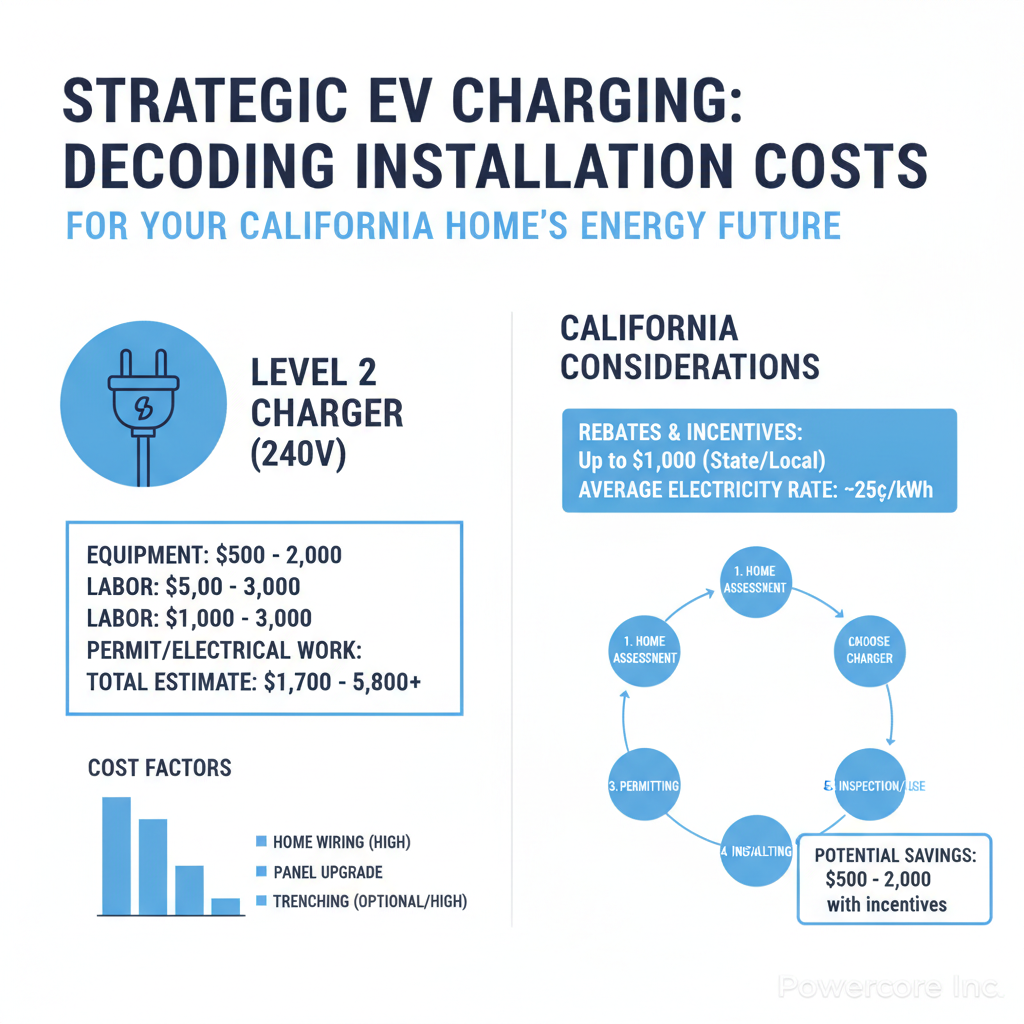
It's important to remember these are estimates. The final cost will be determined by a detailed on-site assessment by a licensed electrician. Powercore Inc provides thorough, transparent quotes, ensuring you understand every aspect of your EV charging installation project.
Unlocking Savings: California EV Charger Incentives & Tax Credits
While the initial outlay for EV charger installation can seem significant, California homeowners have several opportunities to offset these costs through various incentives and tax credits. Strategically leveraging these programs can significantly reduce your net expenditure and accelerate your return on investment.
Federal Residential Clean Energy Credit
The federal government offers a substantial incentive for homeowners who install qualifying clean energy property, including home EV charging equipment. The Residential Clean Energy Credit, enacted under the Inflation Reduction Act, allows you to claim 30% of the cost of eligible property placed in service between 2022 and 2032. This includes the cost of the EV charger itself and any associated installation expenses (e.g., wiring, electrical panel upgrades) necessary for its operation. The credit is non-refundable, meaning it can reduce your tax liability to $0, but you won't get a refund for any excess credit.
Key details:
- The credit applies to new, qualified property.
- There's no specific dollar cap on the credit amount for EV charging equipment, unlike some other clean energy property components.
- It's crucial to retain all receipts and documentation for tax filing purposes.
California State & Local Programs
Beyond the federal credit, California is a leader in promoting EV adoption through various state and local incentives. These programs can be dynamic, so it's always best to check for the most current offerings:
- California Electric Vehicle Infrastructure Project (CALeVIP): While primarily focused on public and commercial charging, CALeVIP sometimes offers rebates for multi-unit dwelling (MUD) and workplace charging, which could indirectly benefit homeowners in shared living situations.
- Local Utility Company Rebates: Many of California's major utility providers, such as Pacific Gas and Electric (PG&E), Southern California Edison (SCE), and San Diego Gas & Electric (SDG&E), offer their own rebate programs for residential EV charger installation. These can vary widely by region and may target specific charger types or income levels. For example, some programs might offer hundreds of dollars in rebates for Level 2 charger installations. It's highly recommended to check your specific utility's website for their current EV charging incentives.
- Air Quality Management Districts (AQMDs): Various regional air quality districts across California may offer incentives for cleaner transportation, sometimes including home charging infrastructure, especially in disadvantaged communities.
Navigating these incentives can be complex, but Powercore Inc is well-versed in California's energy landscape. Our team can help you identify which programs you might qualify for, ensuring you maximize your savings and make your EV charging investment even more attractive.
Strategic Planning: Future-Proofing Your California Home with EV Charging
Installing an EV charger is more than just adding a new appliance; it's a strategic move to future-proof your California home and integrate it into a broader, sustainable energy ecosystem. A thoughtful approach to your EV charging setup can yield benefits far beyond simply powering your vehicle.
Holistic Energy System: Integrating with Solar and Battery Storage
For California homeowners, the true power of an EV charger is unlocked when it's integrated into a holistic home energy system. This often means combining it with solar and battery storage solutions:
- Solar Power for EVs: Imagine charging your EV with clean, renewable energy generated right from your own rooftop. Pairing your EV charger with a residential solar system significantly reduces your reliance on grid electricity, minimizes your carbon footprint, and hedges against rising utility rates. This synergy means you're not just driving green, you're charging green.
- Battery Storage & Time-of-Use (ToU) Optimization: California's energy landscape is increasingly dominated by Time-of-Use (ToU) rates, where electricity prices fluctuate throughout the day. With a home battery system, you can charge your EV during off-peak hours (when electricity is cheapest or even free if using solar), store that energy, and then use it to charge your EV during expensive peak hours. This 'arbitrage' strategy can lead to substantial long-term savings on your electricity bill and greater energy independence.
- Preparing for Multiple EVs: If you anticipate adding another EV to your household in the future, planning for it now can save costs later. A strategic panel upgrade or sub-panel installation can ensure you have the capacity for multiple chargers without needing another major electrical overhaul down the line.
Enhanced Home Value & Appeal
As the EV market continues to grow, an installed home EV charger is becoming an increasingly desirable amenity for potential homebuyers. Installing one now can:
- Increase Property Value: Research indicates that homes with EV charging infrastructure can command higher resale values and sell faster. It signals a modern, forward-thinking home ready for the future.
- Boost Marketability: For many buyers, especially in California, an EV charger is no longer a luxury but a necessity. Having one already installed makes your property stand out in a competitive market.
Smart Home Integration and Energy Management
Many modern EV chargers come with 'smart' features that allow for integration with your home's broader energy management system:
- Scheduling & Monitoring: Smart chargers allow you to schedule charging sessions during off-peak hours directly from your smartphone, taking advantage of lower electricity rates. You can also monitor energy consumption and charging status remotely.
- Load Management: Advanced systems can communicate with other high-demand appliances in your home (like HVAC or water heaters) to intelligently manage your overall electrical load, preventing overloads and optimizing energy use.
By thinking beyond the immediate installation and considering the long-term benefits of integration, California homeowners can transform their EV charger into a cornerstone of a truly future-proof and energy-efficient home.
Choosing the Right Partner: Why Powercore Inc is Your California EV Charging Expert
When it comes to something as critical as your home's electrical system and EV charging infrastructure, choosing the right contractor is paramount. In California, where regulations are strict and the energy landscape is dynamic, you need a partner with proven expertise and comprehensive capabilities. That partner is Powercore Inc.
- Dual-Licensed Expertise: Powercore Inc holds both a California General B (General Building Contractor) license (CSLB #1134334) and a C-10 Electrical Contractor license (CSLB #1098175). This dual licensing is a powerful differentiator. It means we not only understand the intricacies of complex electrical installations but also the broader implications for your entire home structure. Whether it's integrating with a new ADU, part of a whole-house remodel, or simply a standalone EV charger, our team can handle the project holistically and expertly.
- Comprehensive Home Energy Solutions: We don't just do EV charging. Our broad range of services, including solar and battery storage, HVAC climate control, roofing, and more, means we understand how all your home's systems interact. This integrated knowledge allows us to design and install an EV charging solution that perfectly complements your home's existing infrastructure and future energy goals.
- Unwavering Commitment to Safety and Compliance: As licensed California contractors, safety and adherence to local and state codes are at the core of everything we do. We handle all permitting, inspections, and ensure every aspect of your EV charger installation meets the highest industry standards, giving you peace of mind.
- Serving All of California: From Roseville to San Diego, Powercore Inc is equipped to serve homeowners throughout the entire state of California. Our deep understanding of diverse local regulations and utility requirements ensures a smooth, compliant installation no matter your location.
With Powercore Inc, you're not just hiring an electrician; you're partnering with a team dedicated to delivering safe, efficient, and future-forward energy solutions for your California home. Learn more about our commitment to excellence on our About Us page.
Get Your Personalized EV Charging Solution Today
Understanding California EV charger installation costs is the first step towards embracing a more sustainable and convenient lifestyle. But beyond the numbers, it's about making a strategic choice that benefits your home and the environment for years to come. Don't let the complexity of electrical upgrades or navigating incentives deter you from powering your electric future.
Powercore Inc is ready to be your trusted partner. Our expert team will assess your unique needs, provide a transparent and detailed quote, and ensure your EV charger is installed safely, efficiently, and in full compliance with California's stringent standards. We'll help you integrate your EV charging into a smart, future-proof energy system, maximizing both your convenience and your home's value. Take the strategic step towards energy independence and future-proof your California home today.
Ready to discuss your EV charging installation? Contact Powercore Inc for a personalized consultation. Call us directly at 916-699-8778 or visit our contact page to schedule your assessment. Let Powercore Inc power your journey into the electrified future.