
The EV Revolution and Multifamily Living in California
California stands at the forefront of the electric vehicle (EV) revolution, with ambitious goals for zero-emission transportation rapidly transforming our roadways. As more Californians embrace EVs, the demand for accessible and reliable charging infrastructure has skyrocketed. This shift presents a unique challenge and opportunity for owners and developers of multifamily properties across the Golden State.
For apartment complexes, condominiums, and other multi-unit dwellings, providing adequate EV charging isn't just a modern amenity; it's increasingly a regulatory imperative and a critical factor in attracting and retaining residents. However, navigating the complex web of state mandates, local ordinances, and utility requirements can be daunting. From understanding the nuances of CALGreen Code to implementing scalable charging solutions, property managers and developers need a strategic partner.
At Powercore Inc, a California dual-licensed General B & C-10 Electrical Contractor based in Roseville, CA, we specialize in demystifying these requirements and delivering comprehensive, future-proof EV charging solutions. With our expertise spanning all of California, we empower property owners to not only comply with current regulations but also to enhance their property's value and appeal in an electrified future.
The Regulatory Landscape: California's Mandates for Multifamily EV Charging
California leads the nation in setting stringent requirements for EV infrastructure, driven by its commitment to environmental sustainability and reducing carbon emissions. For multifamily properties, these regulations are primarily embedded within the state's building codes and local ordinances, designed to ensure that new construction and significant renovations incorporate EV charging readiness.
Understanding the "Why": State and Local Drivers
The push for EV charging in multifamily dwellings stems from several key initiatives:
- Climate Goals: California aims for 100% zero-emission new car sales by 2035, necessitating widespread charging access.
- Equity and Accessibility: Ensuring EV ownership is viable for residents in all housing types, including those without private garages.
- Reduced Grid Strain: Strategic charging infrastructure can help manage peak electricity demand, especially when paired with smart charging technologies.
Key Regulations: CALGreen, Local Ordinances, and HOA Considerations
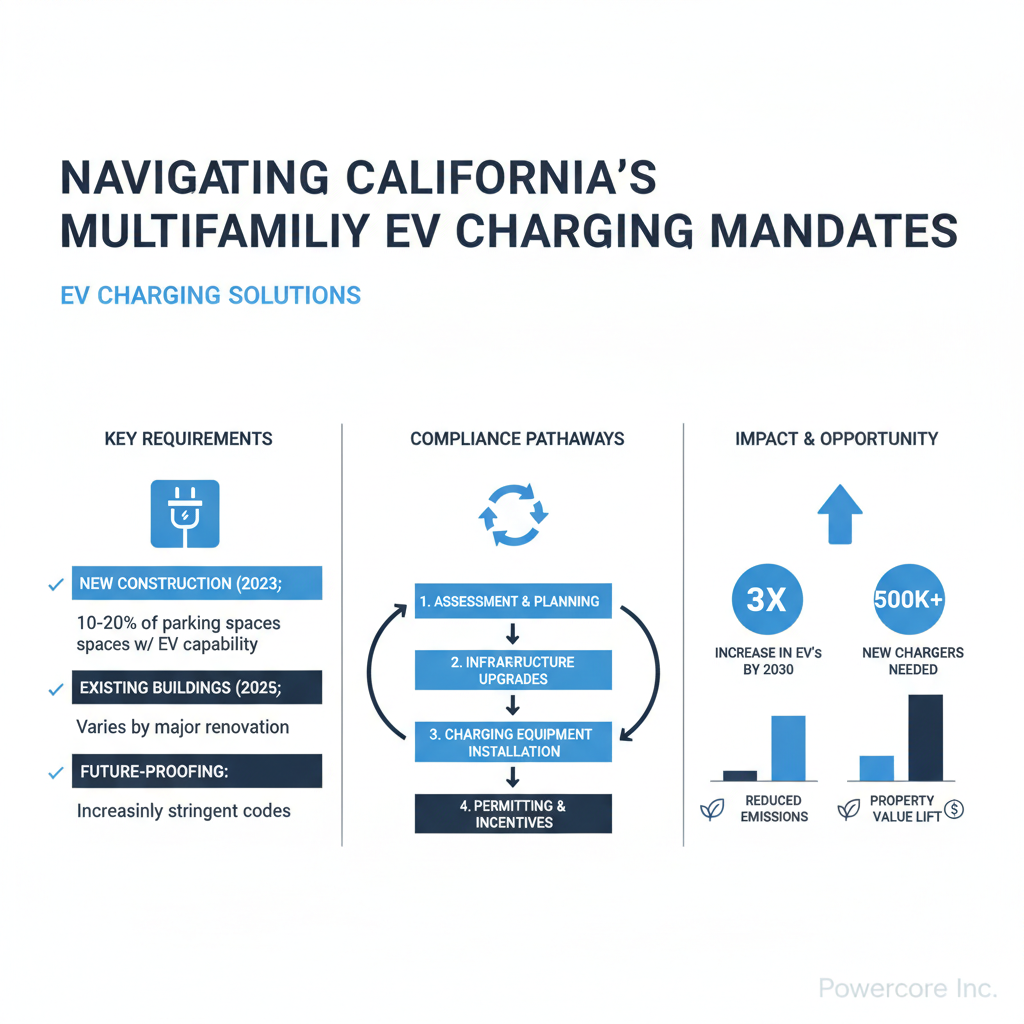
The primary state-level mandate is the California Green Building Standards Code (CALGreen), Title 24, Part 11. CALGreen sets minimum standards for sustainable construction, including specific requirements for EV charging infrastructure in new multifamily residential buildings and additions/alterations that increase parking capacity. These requirements typically categorize parking spaces into three levels of EV readiness:
- EV Capable (EV Cap): Requires the installation of electrical panel capacity and raceway (conduit) to support future EV charging, but without the wiring or charger installed. This is the most basic level of readiness.
- EV Ready (EVR): Requires the installation of raceway and wiring to a dedicated 208/240-volt circuit, terminating in a junction box or receptacle at the parking space. This brings power closer to where a charger would be installed.
- EV Installed (EVI): Requires the actual installation of EV charging equipment, ready for use.
The specific percentages of spaces required for each category can vary based on the project size, type, and local jurisdiction. For instance, new multifamily construction is generally required to have a percentage of its parking spaces designated as EV Capable, EV Ready, or EV Installed. It's crucial for property owners to consult the latest CALGreen updates and their local building department for the exact mandates applicable to their project.
Beyond CALGreen, many California cities and counties have adopted their own reach codes, which are local ordinances that exceed state minimums. These can significantly increase the number of required EV charging spaces or dictate specific charging technologies. For example, some jurisdictions in the Bay Area or Greater Los Angeles might require a higher percentage of EV Ready or EV Installed spaces than the statewide CALGreen minimums.
Finally, for existing condominiums or homeowner associations (HOAs), the California Civil Code addresses EV charging. It generally prohibits HOAs from banning EV charging station installations in common areas or within exclusive use common areas, subject to reasonable architectural standards and safety requirements. This often necessitates careful planning for shared infrastructure and cost allocation among residents.
CPUC Rule 29: Streamlining Utility Interconnection
A critical component of implementing large-scale EV charging infrastructure, especially in existing multifamily properties, is connecting to the utility grid. The California Public Utilities Commission (CPUC) introduced CPUC Rule 29 to streamline the process for developers and property owners to install EV charging equipment. Rule 29, primarily affecting the three large investor-owned utilities (PG&E, SCE, SDG&E), aims to reduce the red tape and costs associated with upgrading electrical service for EV charging.
It provides for specific tariffs and interconnection procedures that can significantly impact the financial viability and timeline of a project. Understanding how to leverage CPUC Rule 29 is essential for any multifamily property looking to install multiple chargers, as it can dictate the path for service upgrades, transformer capacity, and the overall electrical infrastructure modifications needed. Powercore Inc's deep understanding of these utility regulations ensures a smoother, more cost-effective installation process for our clients.
Strategic Planning: Beyond Compliance to Competitive Advantage
While compliance with California's EV charging mandates is non-negotiable, savvy property owners and developers recognize that strategic implementation can transform a regulatory burden into a significant competitive advantage. Thoughtful planning can enhance tenant satisfaction, increase property value, and position your building as a leader in sustainable living.
Assessing Your Property's Needs
Before any installation, a thorough assessment is paramount. Powercore Inc begins by evaluating:
- Tenant Demographics: Is there an existing or anticipated high demand for EVs among your residents?
- Existing Electrical Infrastructure: What is the current capacity of your electrical service? Are panel upgrades or new transformers necessary? This is often the most significant cost factor in existing buildings.
- Parking Layout: How can charging stations be strategically placed for maximum accessibility and minimal disruption?
- Future Growth: How many chargers will you need in 5, 10, or 15 years? Planning for scalability from the outset saves considerable costs later.
- Load Management: Implementing smart charging solutions that can dynamically adjust power delivery to vehicles based on grid demand and building usage can prevent costly electrical overloads and demand charges.
Choosing the Right EV Charging Solution
The market offers a variety of EV charging technologies, each with its own benefits:
- Level 2 Chargers (240V AC): These are the most common for multifamily settings, offering a good balance of charging speed and cost-effectiveness. They can typically add 20-30 miles of range per hour.
- DC Fast Chargers (Level 3): While faster, these are significantly more expensive to install and operate, usually reserved for commercial applications or properties with extremely high turnover (e.g., retail centers).
Beyond the hardware, consider the charging network and management software. Features like access control, usage tracking, payment processing, and load balancing are crucial for efficient operation and fair billing in a multifamily environment. Powercore Inc can guide you through selecting the best hardware and software solutions that integrate seamlessly with your property's needs.
Integrating Solar and Battery Storage
For California multifamily properties, pairing EV charging with solar and battery storage systems represents a powerful strategy. This integration offers numerous benefits:
- Cost Savings: Generate your own clean electricity to power EV chargers, reducing reliance on grid power and offsetting high utility rates, especially during peak demand.
- Energy Independence & Resiliency: Battery storage can provide backup power for essential services, including EV charging, during grid outages.
- Demand Charge Management: Batteries can discharge during peak utility rate periods, reducing expensive demand charges often incurred by high-power EV charging.
- Green Branding: Attract environmentally conscious tenants and enhance your property's sustainability credentials.
This integrated approach is not just about reducing operational costs; it's about creating a truly resilient and attractive property that stands out in California's competitive real estate market. Understanding the interplay between solar production, battery storage, and EV charging demands requires expert knowledge, which Powercore Inc proudly offers.
Navigating Costs and Incentives: Making EV Charging Accessible
The upfront investment in EV charging infrastructure can be substantial, particularly for existing buildings requiring significant electrical upgrades. However, California and various federal programs offer a robust landscape of incentives, rebates, and tax credits designed to offset these costs, making EV charging more accessible for multifamily property owners.
Understanding Installation Costs
Several factors influence the total cost of installing EV charging stations:
- Charger Type and Number: Level 2 chargers are less expensive than DC Fast Chargers. The more chargers, the higher the hardware cost.
- Electrical Infrastructure Upgrades: This is often the most variable and significant cost. Existing properties may require panel upgrades, transformer replacements, new conduits, and extensive wiring runs, especially if parking is far from the main electrical service.
- Trenching and Pavement Work: If electrical lines need to be run underground to parking spaces, trenching and subsequent repairs to asphalt or concrete add to the expense.
- Permitting and Engineering: Navigating local permitting processes, electrical inspections, and professional engineering designs are necessary but add to project costs.
- Network and Software Integration: Choosing a networked charging solution involves ongoing subscription fees, but provides critical management features.
A comprehensive site assessment by a qualified contractor like Powercore Inc is crucial to get an accurate estimate of these costs. Our remodels and construction expertise allows us to efficiently manage complex electrical infrastructure upgrades.
California Incentives and Rebates
California is a leader in offering financial incentives for EV infrastructure. These programs can significantly reduce the net cost of installation:
- CALeVIP (California Electric Vehicle Infrastructure Project): Offers rebates for the purchase and installation of EV chargers in various sectors, including multifamily properties. Funding varies by region and is often administered through local partnerships.
- California Energy Commission (CEC) Programs: The CEC frequently offers grants and rebates for EV infrastructure deployment, often targeting specific communities or technologies.
- Local Utility Programs: California's major utilities (PG&E, SCE, SDG&E) often have their own incentive programs for multifamily EV charging. These can include rebates for hardware, installation, and even infrastructure upgrades like new transformers or service panels. These programs are dynamic, so staying informed is key.
- Federal Tax Credits: While primarily focused on individual EV purchases, federal incentives occasionally become available for commercial EV charging equipment, providing tax credits for eligible projects.
Navigating these programs can be complex due to varying eligibility requirements, application processes, and funding availability. Powercore Inc assists clients in identifying and applying for relevant incentives, maximizing their return on investment and making compliance more affordable.
The Powercore Inc Advantage: Your Partner in EV Charging Solutions
For multifamily property owners across California, partnering with an experienced and reputable contractor is paramount to successfully navigating the intricacies of EV charging mandates and installations. Powercore Inc stands out as the ideal partner, bringing unparalleled expertise and a commitment to excellence.
Expertise in California's Complex Landscape
- Dual-Licensed Authority: As a California CSLB #1134334 General B contractor and #1098175 C-10 Electrical Contractor, Powercore Inc possesses the comprehensive licensure required to handle every aspect of your project. This includes not only the electrical installation of chargers but also any necessary site work, trenching, structural modifications, or panel upgrades. This dual expertise means seamless project execution without the need to coordinate multiple contractors.
- Statewide Service: From San Diego to Eureka, Powercore Inc serves all of California, understanding the unique regional nuances in building codes, utility regulations, and local incentives.
- Integrated Solutions: Our holistic approach means we don't just install chargers. We can integrate your EV charging infrastructure with solar power, battery storage systems, and even broader electrical upgrades to create a truly efficient and future-proof energy ecosystem for your property.
Comprehensive Project Management
Powercore Inc manages your EV charging project from conception to completion, ensuring efficiency, compliance, and minimal disruption to your residents:
- Detailed Site Assessment & Design: We conduct thorough evaluations of your existing electrical infrastructure, parking layout, and tenant needs to design an optimal, scalable solution.
- Permitting & Regulatory Navigation: We handle all necessary permits and ensure strict adherence to CALGreen, local ordinances, and utility requirements like CPUC Rule 29. Our knowledge of these complex regulations helps streamline the approval process.
- Professional Installation: Our certified electricians and skilled construction teams perform all installations with the highest standards of safety and quality, minimizing impact on daily operations. If you want to learn more about the installation process, check out our guide on charger installation for electric cars.
- Post-Installation Support: We ensure your system is fully operational and provide guidance on maintenance and operation.
With Powercore Inc, you gain a trusted partner committed to delivering reliable, efficient, and compliant EV charging solutions that enhance your property's value and tenant experience.
Future-Proofing Your Investment
Investing in EV charging infrastructure for your multifamily property is more than just meeting today's mandates; it's a strategic move to future-proof your investment. As EV adoption continues its exponential growth in California, properties with robust charging solutions will stand apart.
- Increased Property Value: Properties equipped with modern EV charging facilities are perceived as more valuable and desirable, commanding higher rents and resale values.
- Tenant Attraction & Retention: Offering convenient EV charging is a major draw for environmentally conscious residents and those who own or plan to purchase an EV. It significantly enhances tenant satisfaction and loyalty.
- Staying Ahead of Regulations: With California's proactive stance on clean energy, future regulations are likely to become even more stringent. Investing now positions your property ahead of the curve, avoiding costly reactive upgrades later.
- Environmental Stewardship: Demonstrate your commitment to sustainability, appealing to a growing segment of the population that values green initiatives.
Conclusion
California's journey towards an electrified transportation future places multifamily properties at a pivotal intersection of regulatory compliance, tenant demand, and strategic opportunity. Navigating the evolving landscape of EV charging mandates requires more than just installing equipment; it demands a comprehensive understanding of state and local codes, utility regulations, and the foresight to integrate scalable, sustainable solutions.
Powercore Inc is your expert guide and partner in this journey. With our dual licenses, statewide service, and commitment to integrated solutions, we empower California multifamily property owners to meet today's requirements, unlock competitive advantages, and build a greener, more valuable future. Don't let the complexity of EV charging requirements deter you. Take the proactive step to enhance your property and serve your residents better.
Ready to explore strategic EV charging solutions for your multifamily property in California? Contact Powercore Inc today for a comprehensive consultation. Call us at 916-699-8778 or visit our contact page to get started.