

California stands at the forefront of the electric vehicle (EV) revolution, with millions of EVs already on its roads and many more anticipated. This rapid adoption, while crucial for climate goals, brings a significant challenge: how do we ensure our electrical grid can support this burgeoning demand, and how can property owners maximize the benefits of their EV investments? The answer, in large part, lies within an often-overlooked regulatory framework: California Public Utilities Commission (CPUC) Rule 29.
For homeowners, businesses, and developers across the Golden State, understanding CPUC Rule 29 isn't just about compliance; it's about strategic advantage. It's about building an EV charging infrastructure that isn't just functional today but is optimized for future energy demands, grid resilience, and ultimately, your bottom line. At Powercore Inc, a California dual-licensed General B & C-10 Electrical Contractor, we specialize in transforming these regulatory guidelines into tangible benefits, offering comprehensive solutions from EV charging station installation to integrated solar and battery storage systems that align perfectly with Rule 29’s vision.
What is CPUC Rule 29?
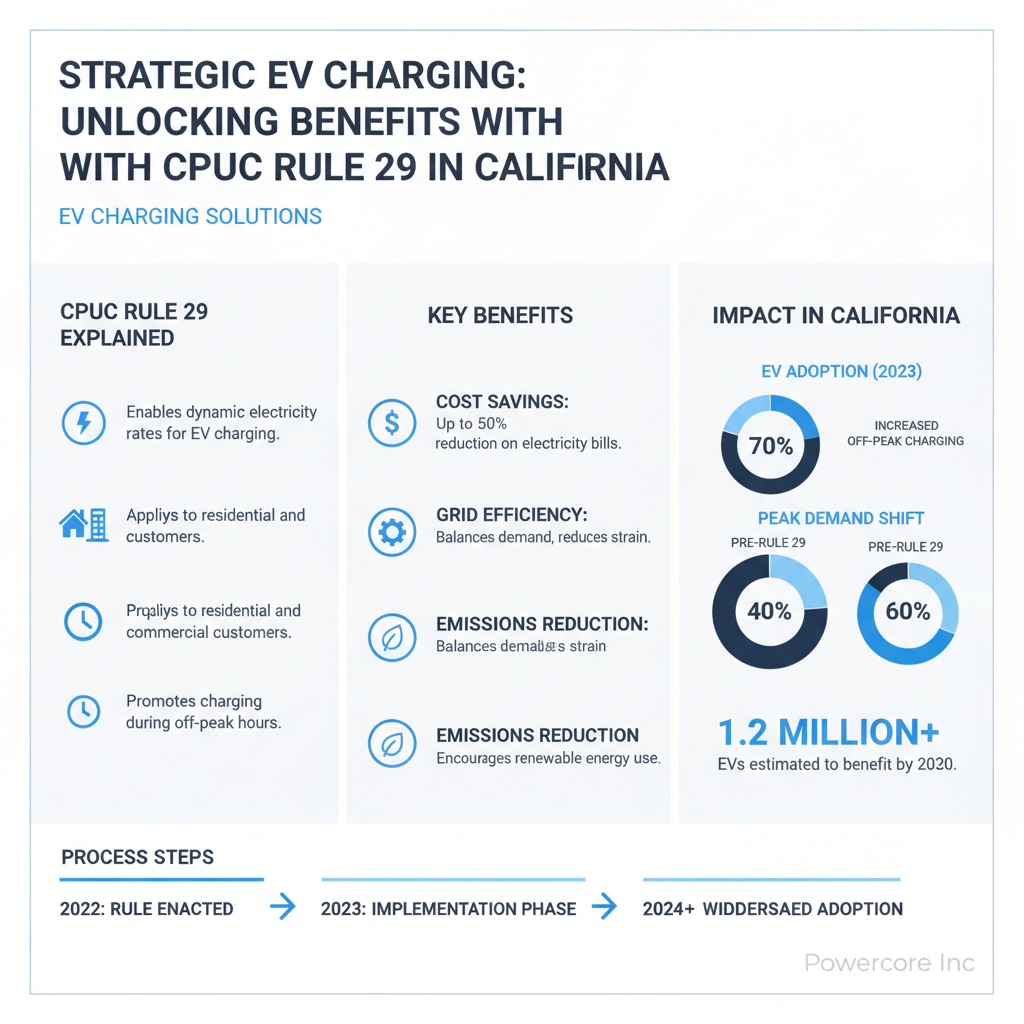
CPUC Rule 29, formally known as "Rules for Electrical Service to Electric Vehicle Charging Facilities," is a vital component of California's energy policy. Enacted by the California Public Utilities Commission (CPUC), it establishes the framework for how utilities provide electrical service to EV charging infrastructure. Unlike a simple building code, Rule 29 is a comprehensive directive designed to facilitate the widespread deployment of EV charging while simultaneously safeguarding grid reliability and promoting efficient energy use.
At its core, Rule 29 mandates that California's investor-owned utilities (IOUs) — Pacific Gas & Electric (PG&E), Southern California Edison (SCE), and San Diego Gas & Electric (SDG&E) — must develop and offer specific tariffs and programs to support EV charging. This isn't just about ensuring power delivery; it's about integrating EVs into the broader energy ecosystem in a smart, sustainable manner.
Key Objectives of Rule 29
Rule 29 serves several critical objectives aimed at paving the way for California's electrified future:
- Accelerate EV Adoption: By standardizing interconnection and service requirements, the rule aims to reduce barriers to installing EV charging infrastructure, making it easier for more Californians to transition to EVs.
- Ensure Grid Reliability: With a surge in EV charging, managing demand is paramount. Rule 29 encourages strategies that minimize strain on the grid, especially during peak hours.
- Promote Smart Charging: The rule fosters the development of programs and technologies that allow EVs to charge when renewable energy is abundant and electricity prices are lower, often through Time-of-Use (TOU) rates.
- Facilitate Distributed Energy Resources (DERs): It lays the groundwork for integrating EV charging with other DERs like solar panels and battery storage, creating a more resilient and decentralized energy system.
- Provide Consumer Protections and Benefits: By ensuring fair and transparent utility services for EV charging, the rule aims to protect consumers and help them realize the economic benefits of EV ownership.
Who Does Rule 29 Affect?
While implemented by utilities, CPUC Rule 29 has far-reaching implications for various stakeholders across California:
- Homeowners: Those installing Level 2 or DC fast chargers at home will find their utility's service options and potential incentives shaped by Rule 29. It often influences how dedicated circuits are metered and the rate plans available for EV charging.
- Businesses and Commercial Property Owners: Companies looking to install charging stations for employees, fleets, or customers need to navigate Rule 29-mandated commercial EV tariffs and infrastructure programs.
- Developers and Builders: New construction projects, especially those designed to be EV-ready, must consider Rule 29's requirements for electrical service sizing and infrastructure planning.
- Electric Utilities: PG&E, SCE, and SDG&E are directly responsible for implementing the rule, developing appropriate tariffs, and offering programs to support EV charging infrastructure.
Beyond Compliance: Strategic Benefits for California Property Owners
Simply meeting Rule 29’s requirements is one thing; leveraging its underlying principles for strategic advantage is another. For California homeowners and businesses, understanding Rule 29 opens doors to optimizing energy costs, enhancing property value, and contributing to a more sustainable and resilient energy future. Powercore Inc helps you move beyond basic compliance to capitalize on these strategic opportunities.
Integrating EV Charging with Solar and Battery Storage
One of the most powerful strategic plays under Rule 29's umbrella is the integration of EV charging with residential solar and battery storage. This synergy allows property owners to create a localized, self-sufficient energy ecosystem that not only powers their homes and businesses but also charges their EVs with clean, self-generated electricity.
- Maximized Self-Consumption: Charge your EV directly with solar power during the day, reducing reliance on grid electricity and significantly lowering charging costs, especially under California's prevalent Time-of-Use (TOU) rates.
- Battery Storage Optimization: Store excess solar energy in a battery for later use, including EV charging during evening peak hours when grid electricity is most expensive. This strategy optimizes your energy consumption and can drastically reduce your utility bills.
- Energy Independence and Resilience: An integrated system provides a buffer against grid outages, ensuring your home, business, and EV remain powered even during blackouts. This is increasingly vital in California's unpredictable energy landscape.
- Enhanced Grid Services: Future-ready systems can potentially participate in demand response programs, further incentivized by utilities under Rule 29, contributing to grid stability and earning you credits.
Optimizing Energy Costs Through Smart Charging
California's energy landscape is characterized by complex TOU rates, where the cost of electricity varies significantly by time of day. CPUC Rule 29 encourages the adoption of smart charging solutions that enable property owners to take full advantage of these rates. By programming your EV charger to operate during off-peak hours — typically overnight or during midday solar abundance — you can drastically reduce your electric car charging cost.
Smart charging, often facilitated by intelligent EV supply equipment (EVSE) and energy management systems, allows for automatic adjustments based on grid conditions, renewable energy availability, and your utility's specific tariffs. This capability is not just about saving money; it's about contributing to a more balanced and efficient grid, a core tenet of Rule 29.
Enhancing Grid Resilience and Sustainability
The strategic integration of EV charging, especially with solar and battery storage, doesn't just benefit the individual property owner; it also significantly contributes to California's broader energy goals. By reducing peak demand from EV charging and potentially enabling vehicle-to-grid (V2G) functionality in the future, these systems bolster grid resilience. They transform EVs from mere energy consumers into potential distributed energy resources that can support the grid during times of stress.
Furthermore, charging EVs with renewable energy sources — whether directly from your rooftop solar or via grid power during periods of high renewable generation — dramatically lowers the carbon footprint associated with transportation, aligning with California's aggressive climate targets.
Navigating the Implementation: What Homeowners and Businesses Need to Know
While the strategic benefits are clear, successfully implementing an EV charging solution that aligns with CPUC Rule 29 requires careful planning and expertise. Powercore Inc guides you through every step, ensuring your installation is compliant, efficient, and future-ready.
Understanding Your Utility's Role
Each of California's major investor-owned utilities — PG&E, SCE, and SDG&E — implements Rule 29 through their own specific programs, tariffs, and interconnection procedures. These can vary in detail, affecting everything from application processes to available incentives for EV infrastructure. It's crucial to understand your local utility's specific offerings and requirements to avoid delays and maximize potential savings. This might include dedicated EV rate plans, infrastructure upgrade programs, or demand response initiatives.
The Importance of Professional Installation
Installing an EV charger, especially a Level 2 or DC fast charger, is a complex electrical undertaking. It involves significant load considerations, potential panel upgrades, and adherence to strict electrical codes (like the National Electrical Code, or NEC) and local regulations. This is where the expertise of a qualified and licensed electrical contractor like Powercore Inc becomes indispensable. As a California dual-licensed General B (CSLB #1134334) and C-10 Electrical Contractor (CSLB #1098175), we possess the comprehensive knowledge and experience to handle every aspect of your EV charging installation, from initial site assessment and load calculations to permitting and final commissioning. We ensure your system is safe, compliant, and optimized for performance.
For a detailed walkthrough of the process, you can refer to our guide on how to get your electric car charger installed.
Future-Proofing Your EV Infrastructure
CPUC Rule 29 inherently encourages forward-thinking infrastructure planning. When installing an EV charging system, consider not just your current needs but also your potential future requirements. This proactive approach can save significant costs and disruptions down the line.
- Electrical Panel Capacity: Assess if your current electrical panel can support the additional load of EV charging. If not, a panel upgrade might be a strategic investment, especially if you plan to add more EVs or other high-demand appliances in the future.
- Conduit Sizing: Even if you only install one charger now, running larger conduits can make it easier and cheaper to add additional charging circuits in the future without tearing down walls or incurring significant labor costs.
- Smart Home Integration: Consider chargers that can integrate with smart home energy management systems. This allows for seamless optimization with solar, storage, and other smart devices, enhancing your control and efficiency.
- Scalability: For businesses, consider modular charging solutions that can expand as your fleet or customer demand grows.
Powercore Inc: Your Partner in Strategic EV Charging Solutions
Navigating the nuances of CPUC Rule 29 and integrating advanced EV charging solutions requires a partner with deep expertise in both electrical infrastructure and California’s unique regulatory landscape. Powercore Inc stands as that partner.
Based in Roseville, CA, and proudly serving all of California, Powercore Inc is renowned for its commitment to quality, safety, and customer satisfaction. Our extensive experience across a broad spectrum of services — including EV charging stations, solar and battery storage, HVAC, and comprehensive remodels and construction — positions us uniquely to deliver integrated, future-proof energy solutions.
Our Dual Licensing Advantage
What sets Powercore Inc apart is our dual licensing from the California Contractors State License Board (CSLB). Holding both a General B (CSLB #1134334) and a C-10 Electrical Contractor (CSLB #1098175) license means we have the expertise to manage your entire project, from foundational structural considerations to intricate electrical installations. This comprehensive capability ensures seamless project execution, adherence to all regulations, and superior quality, giving you peace of mind that your EV charging infrastructure is built to the highest standards.
Comprehensive Services for a Seamless Transition
Whether you're a homeowner looking to add a single Level 2 charger or a business planning a multi-station commercial installation integrated with solar, Powercore Inc offers tailored solutions:
- Residential & Commercial EV Charging: Expert installation and maintenance of all types of EV chargers.
- Solar & Battery Storage Integration: Design and installation of systems that maximize energy independence and cost savings, perfectly complementing your EV charging setup.
- Electrical Upgrades: Panel upgrades, wiring, and infrastructure improvements necessary to support modern EV charging demands.
- Permitting & Compliance: Handling all necessary permits and ensuring full compliance with CPUC Rule 29 and local codes.
Ready to Optimize Your EV Charging?
Don't just install an EV charger; strategically integrate it into your California property's energy future. Understanding and leveraging CPUC Rule 29 is key to unlocking maximum savings, enhancing grid resilience, and boosting your property's value. With Powercore Inc, you gain a trusted partner committed to delivering cutting-edge, compliant, and cost-effective EV charging solutions.
Contact Powercore Inc today to discuss your EV charging needs and discover how we can help you navigate California's energy landscape with confidence. Call us at 916-699-8778 or visit our contact page to schedule a consultation. Let us power your journey forward.