

Introduction to Solar Panel Degradation: Securing Your California Solar Investment
For California homeowners considering or already enjoying the benefits of solar energy, the promise of decades of clean, free power is a powerful motivator. Yet, like any sophisticated technology exposed to the elements, solar panels experience a gradual, natural decline in performance over time. This phenomenon, known as solar panel degradation, is a critical factor in determining the true long-term value and return on investment (ROI) of your solar system.
Understanding solar panel degradation rates isn't just about acknowledging an inevitable process; it's about making informed decisions that safeguard your energy independence and financial savings for years to come. In a state like California, with its intense sun exposure, varying climates, and evolving energy policies like NEM 3.0, maximizing every watt of production is more important than ever.
At Powercore Inc, a leading California dual-licensed General B & C-10 Electrical Contractor, we believe that empowering our clients with knowledge is key to sustainable solar success. This comprehensive guide will demystify solar panel degradation, explain its causes, discuss typical rates, and, most importantly, equip you with strategies to mitigate its effects and ensure your solar investment continues to deliver peak performance throughout its lifespan.
The Science Behind the Fade: What is Solar Panel Degradation?
Solar panel degradation refers to the gradual loss of power output capacity that photovoltaic (PV) modules experience over their operational lifetime. It's a natural aging process, much like a car's engine slowly losing efficiency or a battery holding less charge over time. This decline isn't sudden but a subtle, annual reduction in how much electricity your panels can generate.
Primary Mechanisms of Degradation
Several factors contribute to this efficiency decline, often categorized by their root cause:
- Light-Induced Degradation (LID): This is an initial, rapid drop in power output that occurs during the first few hours or days of a new panel's exposure to sunlight. While largely accounted for by manufacturers in their specifications, it's an important early-stage degradation. Modern silicon cells, particularly N-type, are designed to be more resistant to LID.
- Light- and Elevated Temperature-Induced Degradation (LeTID): A more recently identified phenomenon, LeTID can cause a significant, reversible, or irreversible power loss in silicon solar cells, especially those exposed to high temperatures and intense light. This is particularly relevant for systems in hot climates like many parts of California.
- Potential-Induced Degradation (PID): PID occurs when there's a high voltage difference between the solar cells and the grounded module frame, often exacerbated by high humidity and temperature. This can lead to charge leakage and a substantial drop in power output. High-quality panels and proper system design and grounding are crucial to prevent PID.
- Environmental Stressors: Beyond electrical and light-related issues, physical and chemical factors play a significant role:
- UV Radiation: Prolonged exposure to ultraviolet light can degrade the encapsulant materials (like EVA) and backsheets of solar panels, leading to discoloration, delamination, and reduced light transmission.
- Temperature Cycling: The constant expansion and contraction of materials due to daily and seasonal temperature fluctuations can cause microcracks in cells, solder joint failures, and delamination.
- Humidity and Moisture Ingress: Water vapor can penetrate the module, leading to corrosion of metallic components and degradation of the encapsulant.
- Physical Damage: Hail, strong winds, accumulating snow/ice (less common in most of CA but relevant in mountain regions), and even bird droppings can cause microfractures, scratches, or hot spots.
Typical Degradation Rates: What to Expect from Your Panels
While degradation is inevitable, its rate is relatively predictable. Most reputable solar panel manufacturers offer a linear performance warranty, guaranteeing a certain percentage of the initial power output after 20, 25, or even 30 years.
Industry Benchmarks
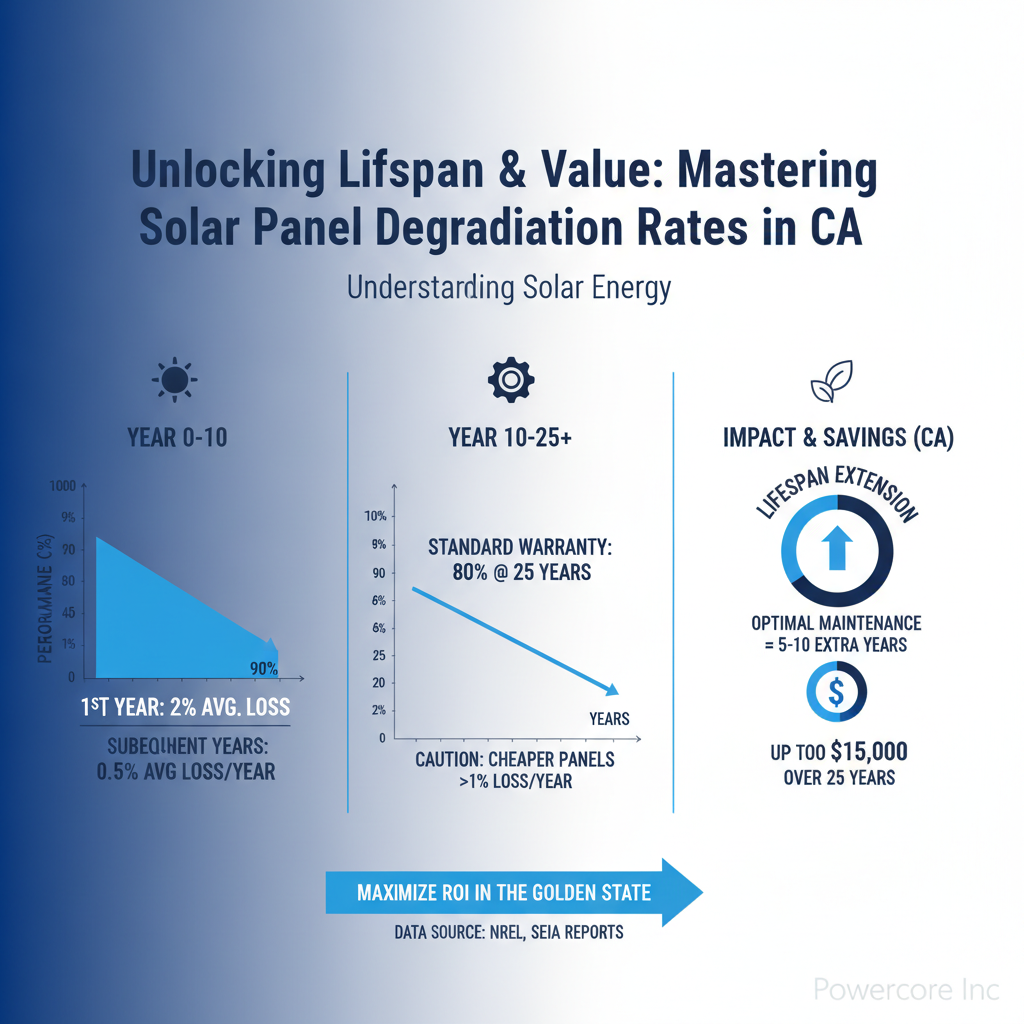
- Average Annual Degradation: Historically, the industry average for conventional crystalline silicon panels has been around 0.5% to 0.8% per year. This means a panel might lose half a percent of its original power output each year.
- First-Year Degradation: Many panels experience a slightly higher initial degradation rate in the first year (e.g., 2-3%) due to LID or LeTID, after which the rate stabilizes to the typical annual percentage.
- 25-Year Performance Warranty: A common warranty guarantees that panels will produce at least 80% to 85% of their original rated power after 25 years. For example, a panel warrantied at 85% after 25 years would have an average annual degradation rate of approximately 0.6% (15% loss over 25 years).
It's important to note that these are averages. The actual degradation rate for your specific system can vary based on the quality of the panels, the installation methods, environmental conditions, and maintenance practices.
California's Climate: The Unique Impact on Solar Longevity
California's diverse and often intense climate presents both incredible opportunities and unique challenges for solar panel longevity. While abundant sunshine is a boon for energy production, certain environmental factors can accelerate degradation if not properly managed.
Sun Intensity and UV Exposure
California boasts some of the highest solar irradiance levels in the country. While this means excellent energy production, it also translates to increased cumulative UV exposure over the lifespan of the panels. Higher UV radiation can accelerate the breakdown of encapsulant materials and backsheets, leading to yellowing, cracking, and reduced efficiency.
Temperature Extremes
From the scorching summers in the Central Valley to the cooler coastal regions, California experiences significant temperature variations. High ambient temperatures, especially when combined with intense sunlight, can lead to elevated cell temperatures within the panels. This thermal stress is a known accelerator for degradation mechanisms like LeTID and can exacerbate microcracking due to thermal cycling. Panels operating at consistently high temperatures tend to degrade faster than those in cooler climates.
Humidity and Coastal Factors
Coastal areas of California often experience higher humidity and salt mist. Moisture ingress can promote corrosion of electrical components and delamination, while salt accumulation on panel surfaces can reduce light transmission and potentially react with panel materials over time.
Wildfires, Smoke, and Air Quality
The unfortunate reality of California's wildfire season introduces another layer of environmental challenge. Smoke and ash can significantly reduce solar panel efficiency by blocking sunlight. While this is often a temporary reduction that can be mitigated with cleaning, repeated exposure to particulate matter can contribute to soiling and potentially accelerate surface wear. Proper panel cleaning schedules are paramount in wildfire-prone regions.
Maximizing Your Solar Investment: Strategies to Mitigate Degradation
Understanding degradation is the first step; actively working to mitigate it is how you unlock sustained value from your solar system. Here's how savvy California homeowners can ensure their panels perform optimally for decades.
1. Choose High-Quality Panels and Technology
The foundation of a long-lasting, high-performing solar system lies in the quality of the panels themselves. Investing in premium modules from reputable manufacturers pays dividends in reduced degradation over time.
- Tier-1 Manufacturers: These companies are often vertically integrated, invest heavily in R&D, and adhere to stringent quality control, leading to more durable and efficient panels with lower degradation rates.
- Advanced Cell Technologies: Look for panels incorporating technologies designed to combat degradation:
- PERC (Passivated Emitter Rear Cell) and TOPCon/HJT (Heterojunction Technology): These cell architectures improve efficiency and often exhibit lower LID and LeTID.
- N-Type Cells: Generally less susceptible to LID and PID compared to traditional P-type cells.
- Half-Cut Cells: Reduce current loss and hot spot formation, contributing to better long-term performance.
- Robust Construction and Materials: Examine the panel's physical integrity, including the strength of the frame, the quality of the glass, and the durability of the backsheet and encapsulant materials (e.g., fluoropolymer-based backsheets offer superior UV resistance).
2. Expert Installation is Paramount
Even the best panels can underperform if not installed correctly. Professional installation by a qualified contractor like Powercore Inc is critical for minimizing degradation.
- Proper Ventilation: Especially crucial in California's hot climate. Panels need adequate airflow underneath them to dissipate heat. Poor ventilation leads to higher operating temperatures, accelerating degradation.
- Shading Mitigation: Even partial, temporary shading can significantly impact a panel's output and, over time, can lead to localized hot spots (bypassing diodes working overtime), which can accelerate degradation in shaded cells. Expert installers will meticulously analyze shading patterns.
- Wiring and Grounding Integrity: Correct wiring and grounding are essential to prevent issues like PID and ensure the system operates safely and efficiently. Our C-10 Electrical Contractor license ensures all electrical work is up to the highest standards.
- Structural Soundness: Secure mounting to prevent physical stress from wind, seismic activity (relevant in CA), or thermal expansion/contraction.
3. Proactive Maintenance and Monitoring
Once installed, ongoing care helps preserve your system's efficiency.
- Regular Cleaning: Dust, pollen, bird droppings, and especially wildfire ash can accumulate on panels, reducing sunlight absorption. Regular cleaning, particularly in drier regions of California, can make a significant difference in annual output. Powercore Inc can advise on appropriate cleaning schedules for your specific location and panel type.
- System Monitoring: Modern solar systems come with monitoring platforms that allow you to track real-time and historical performance. This data is invaluable for detecting unusual drops in production, which could indicate a degradation issue, a malfunctioning component, or soiling.
- Professional Inspections: Annual or bi-annual inspections by qualified technicians can identify potential issues (e.g., loose wiring, microcracks, signs of delamination) before they escalate into major problems. Powercore Inc offers comprehensive inspection and maintenance services across California.
Understanding Solar Panel Warranties: Your Long-Term Safety Net
Warranties are your primary safeguard against unforeseen panel degradation or defects. It's crucial to understand the different types and what they cover.
Product vs. Performance Warranties
- Product Warranty (Equipment Warranty): This covers manufacturing defects, material flaws, and workmanship. Typically ranges from 10 to 12 years, but some premium manufacturers offer 20-25 years. This warranty ensures the physical panel itself is free from defects.
- Performance Warranty (Power Output Warranty): This is arguably the most critical for degradation. It guarantees that your panels will produce a certain percentage of their original rated power output after a specified number of years. Most standard warranties guarantee 90% output after 10-12 years and 80-85% output after 20-25 years. Look for a linear degradation curve warranty, which is more transparent and predictable.
- Installer/Workmanship Warranty: This covers the quality of the installation itself. Powercore Inc stands behind our work with robust workmanship warranties, ensuring that our adherence to best practices translates into long-term system reliability.
What to Look For in a Warranty
- Clarity: Ensure the terms are clear, especially regarding what constitutes a valid claim for underperformance.
- Length: Longer warranties, particularly for performance, indicate greater manufacturer confidence in their product's longevity.
- Transferability: If you sell your home, can the warranty be transferred to the new owner? This adds significant value to your property.
- Reputation of Manufacturer: A warranty is only as good as the company backing it. Choose panels from financially stable, reputable manufacturers.
Powercore Inc: Your Partner in Long-Term Solar Performance
At Powercore Inc, we understand that a solar system is a significant long-term investment for your California home. Our commitment goes beyond mere installation; we focus on delivering sustainable value through superior products, expert craftsmanship, and comprehensive support.
- California Expertise: As a Roseville-based, dual-licensed General B & C-10 Electrical Contractor, we possess an intimate understanding of California's unique climate, regulations, and energy landscape. We tailor our recommendations to ensure optimal performance and longevity in your specific region, whether you're in the scorching Central Valley or along the humid coast.
- Quality First Approach: We meticulously select solar panels and components from leading manufacturers known for their low degradation rates, robust warranties, and proven track records. Our focus is on systems that are built to last, delivering maximum energy production for decades.
- Precision Installation: Our highly skilled, licensed electricians and installers adhere to the highest industry standards, ensuring proper ventilation, meticulous wiring, and secure mounting to minimize environmental and operational degradation factors. We pride ourselves on installations that are not just code-compliant but optimized for long-term efficiency.
- Comprehensive Home Solutions: Beyond solar, our expertise spans battery storage, HVAC, roofing, ADUs, and general remodeling. This holistic approach means we can integrate your solar system seamlessly with other home improvements, creating a truly resilient and energy-efficient property. For instance, combining solar with a new, reflective roof can help reduce attic temperatures, indirectly contributing to lower panel operating temperatures and reduced degradation.
- Post-Installation Support: We offer guidance on system monitoring and maintenance, ensuring you have the tools and knowledge to keep your panels performing at their peak.
Choosing Powercore Inc means partnering with a team dedicated to safeguarding your solar investment and ensuring you reap the full benefits of clean energy for the lifetime of your system.
The Future of Solar Longevity in California: Adapting to NEM 3.0
California's energy landscape is continually evolving, with new policies like NEM 3.0 placing an even greater emphasis on solar system efficiency and longevity. Under NEM 3.0, the export credit for excess solar energy sent back to the grid has been significantly reduced, making it more crucial than ever to maximize self-consumption and ensure your panels are producing efficiently throughout their lifespan.
- Enhanced ROI with Efficiency: With lower export rates, every watt-hour your panels produce and you consume directly translates to greater savings. Understanding and mitigating degradation directly impacts your system's overall financial performance under NEM 3.0.
- Battery Storage Integration: The synergy between solar panels and battery storage systems has never been more vital. Batteries allow homeowners to store excess solar production during the day (when export rates are low) and use it during evening peak hours (when grid electricity is expensive). This maximizes the value of your solar energy, even as panel output gradually declines over many years. When panels degrade, batteries can help smooth out the impact on your home's energy supply.
- Advanced Monitoring and AI: The future will likely see even more sophisticated monitoring systems, leveraging artificial intelligence to predict degradation, identify potential issues before they become critical, and optimize system performance proactively.
- Sustainable Practices: As environmental awareness grows, the focus will also shift towards the full lifecycle of solar panels, including end-of-life recycling and the use of more sustainable materials in manufacturing, further contributing to the overall value proposition of solar.
For California homeowners, embracing a proactive approach to understanding and managing solar panel degradation is not just about maintaining efficiency; it's about future-proofing your home against rising energy costs and adapting intelligently to new energy policies.
Conclusion: Invest Smart and Power Your California Home for Decades
Solar energy remains one of the smartest investments a California homeowner can make, offering energy independence, significant cost savings, and a reduced carbon footprint. By taking the time to understand solar panel degradation rates and the factors that influence them, you empower yourself to make better choices from system design to ongoing maintenance.
Choosing high-quality panels, ensuring expert installation, and committing to proactive monitoring and maintenance are not just best practices; they are essential steps to unlocking the full, long-term value of your solar investment in California's unique environment. Don't let the natural aging process of your panels diminish your returns. Instead, equip yourself with knowledge and partner with experts who prioritize your system's sustained performance.
Ready to explore a solar solution built for longevity and optimized for California's climate? Contact Powercore Inc today for a personalized consultation. Our team of dual-licensed General B & C-10 Electrical Contractors is ready to help you design, install, and maintain a solar system that delivers reliable, efficient power for decades. Call us at 916-699-8778 or visit gopowercoreinc.com to learn more about how we can future-proof your home's energy needs.