

Decoding Solar Panel Choices: Monocrystalline vs. Polycrystalline for California's High-Performance Energy Future
As California continues to lead the nation in renewable energy adoption, more homeowners and businesses are turning to solar power as a strategic investment. The decision to go solar, however, often involves navigating a landscape of technical terms and product specifications. At the heart of many solar installations are the panels themselves, and two primary types dominate the market: monocrystalline and polycrystalline. Understanding the fundamental differences between these technologies is crucial for making an informed decision that aligns with your property's unique needs, budget, and long-term energy goals in the Golden State.
For California property owners, the choice between monocrystalline and polycrystalline panels is not merely technical; it's a strategic one that impacts efficiency, aesthetics, cost-effectiveness, and ultimately, your return on investment. Powercore Inc, your trusted dual-licensed General B & C-10 Electrical Contractor based in Roseville, CA, is here to demystify these options and guide you toward the optimal solar solution for your high-performance energy future.
The Foundation of Solar: How PV Panels Work
Before diving into the specifics of monocrystalline and polycrystalline, it's helpful to grasp the basic principle behind all photovoltaic (PV) solar panels. These devices convert sunlight directly into electricity using the photovoltaic effect. Each solar panel is composed of multiple individual solar cells, typically made from silicon. When photons (particles of light) from the sun strike the silicon atoms, they knock electrons loose, creating an electric current. This direct current (DC) is then converted into alternating current (AC) by an inverter, making it suitable for powering your home or business.
The efficiency of a solar panel refers to its ability to convert sunlight into electricity. Higher efficiency means more electricity generated from the same amount of sunlight, which can be a critical factor, especially in areas with limited roof space or specific energy demands.
Monocrystalline Solar Panels: The Premium Choice for Peak Performance
Monocrystalline solar panels are easily recognizable by their uniform, dark black appearance and rounded edges. They represent the oldest and most developed solar technology, often considered the premium option due to their superior performance characteristics.
Manufacturing Process and Appearance
The manufacturing process for monocrystalline panels begins with a single, highly pure crystal of silicon. This silicon crystal is grown into a large cylindrical ingot using the Czochralski method. The ingot is then thinly sliced into wafers, which are processed into individual solar cells. Because each cell is cut from a single crystal, the electrons have more room to move, resulting in higher efficiency.
- Appearance: Distinctive dark black color, sleek, and uniform. Often preferred for aesthetic reasons on residential properties.
- Cell Shape: Typically have cut corners, giving them a slightly octagonal shape when viewed individually, due to the cylindrical silicon ingot being sliced into square wafers.
Key Advantages of Monocrystalline Panels
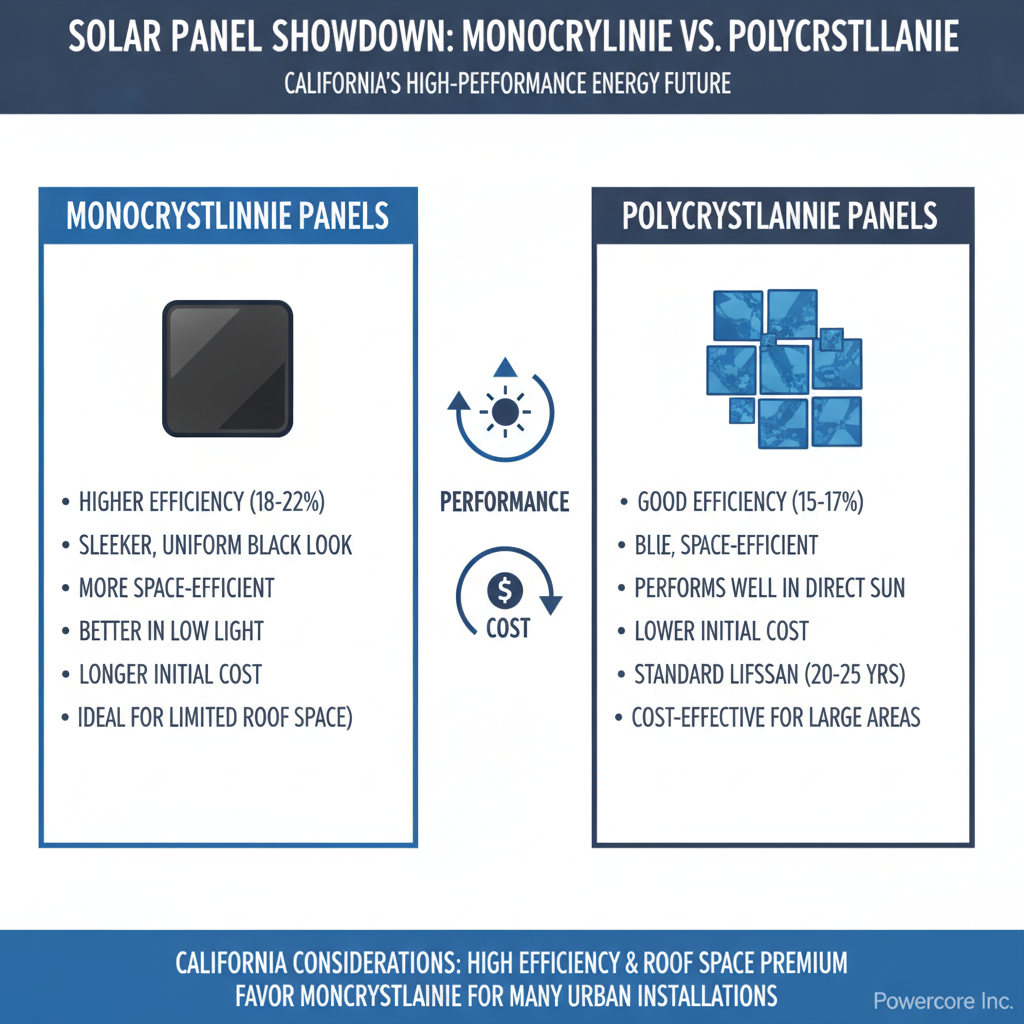
- Highest Efficiency: Monocrystalline panels boast the highest efficiency rates, typically ranging from 17% to 23% or even higher for cutting-edge models. This means they can generate more power per square foot than other panel types, making them ideal for homes with limited roof space. For a deeper dive into efficiency metrics, refer to our article on Understanding Solar Panel High Efficiency.
- Space Efficiency: Due to their higher efficiency, fewer monocrystalline panels are needed to achieve a desired power output. This is a significant advantage for California homeowners with smaller roofs, complex rooflines, or those who want to maximize power generation without occupying excessive space.
- Better Performance in Low-Light Conditions: While all solar panels perform best in direct sunlight, monocrystalline panels generally exhibit slightly better performance in low-light conditions, such as cloudy days or early mornings/late afternoons.
- Longer Lifespan and Durability: These panels are known for their robustness and longevity, often coming with 25-year performance warranties. Their single-crystal structure contributes to their stability and resistance to degradation over time.
- Aesthetic Appeal: The uniform dark color and sleek appearance of monocrystalline panels are often considered more aesthetically pleasing, blending seamlessly with modern architectural designs. This can be an important factor for homeowners concerned about the visual impact of solar on their property.
Potential Drawbacks of Monocrystalline Panels
- Higher Upfront Cost: The sophisticated manufacturing process and high purity of silicon make monocrystalline panels generally more expensive per watt than polycrystalline panels. However, this higher initial investment can often be offset by greater long-term energy savings and incentives.
- Temperature Sensitivity: While high-performing, monocrystalline panels can be slightly more susceptible to performance degradation in extremely hot conditions compared to some other types. However, modern manufacturing has significantly mitigated this issue.
- Wasteful Production: The process of creating single-crystal ingots involves cutting away parts of the silicon crystal, leading to more silicon waste during manufacturing, which has environmental implications.
Monocrystalline in California: Why Efficiency Matters
California's high electricity rates mean that every kilowatt-hour generated by your solar system translates into significant savings. With limited roof space in many urban and suburban areas, maximizing power output within a smaller footprint becomes paramount. Monocrystalline panels excel in these scenarios, allowing homeowners to achieve substantial energy independence even with constrained installation areas. Furthermore, their sleek appearance often aligns well with the premium property values and aesthetic standards prevalent across many Californian communities.
Polycrystalline Solar Panels: The Cost-Effective Workhorse
Polycrystalline solar panels, also known as multi-crystalline, are a popular choice due to their balance of performance and affordability. They are visually distinct from monocrystalline panels, typically exhibiting a blue, speckled appearance.
Manufacturing Process and Appearance
Unlike monocrystalline panels, polycrystalline panels are made by melting raw silicon fragments together in a mold. This molten silicon is then cooled and solidified into a block, which is subsequently sliced into wafers. Because the silicon isn't grown as a single crystal, the resulting cells contain multiple silicon crystals, visible as a mosaic-like pattern on the surface.
- Appearance: Distinctive blue hue, often with a visible "grain" or speckled pattern due to the multiple silicon crystals.
- Cell Shape: Typically perfectly square, as the silicon is cast into a block before slicing.
Key Advantages of Polycrystalline Panels
- Lower Upfront Cost: The simpler manufacturing process and lower purity requirements for silicon make polycrystalline panels significantly more affordable per watt compared to monocrystalline panels. This can make solar energy more accessible for homeowners on a tighter budget or those with larger roof areas where overall cost is a primary concern.
- Less Silicon Waste: The manufacturing process for polycrystalline panels produces less silicon waste, making them a more environmentally friendly option from a production standpoint.
- Good Performance in Direct Sunlight: While slightly less efficient than monocrystalline panels, polycrystalline panels still offer excellent performance in direct, sunny conditions, which are abundant across much of California.
- Slightly Better Temperature Coefficient: In some cases, polycrystalline panels may exhibit a slightly better temperature coefficient, meaning their performance degrades marginally less in very hot conditions, though this difference is often negligible with modern panels.
Potential Drawbacks of Polycrystalline Panels
- Lower Efficiency: Polycrystalline panels typically have lower efficiency rates, generally ranging from 15% to 17%. This means they require more roof space to generate the same amount of electricity as monocrystalline panels.
- More Roof Space Required: Due to their lower efficiency, you'll need more polycrystalline panels to achieve the same total system wattage, which can be a limitation for properties with limited roof area.
- Aesthetic Considerations: The blue, speckled appearance of polycrystalline panels may not be as universally appealing as the sleek black of monocrystalline panels, potentially impacting the visual appeal of a property.
- Slightly Shorter Lifespan: While still very durable and long-lasting, some studies suggest a marginally shorter overall lifespan or slightly faster degradation rate compared to monocrystalline panels, though both typically come with similar 25-year performance warranties.
Polycrystalline in California: When Affordability Meets Abundance
For California properties with ample, unobstructed roof space, polycrystalline panels can offer a highly cost-effective path to solar energy. Their lower upfront cost makes them an attractive option for large installations where square footage isn't a premium. In regions of California with abundant sunshine and consistent direct light, polycrystalline panels can still deliver substantial energy savings and contribute significantly to reducing your carbon footprint without breaking the bank. They represent a robust and reliable choice for a wide range of applications.
Head-to-Head: A Direct Comparison for California Solar Decisions
To help you weigh your options, let's put monocrystalline and polycrystalline panels side-by-side, focusing on the factors most relevant to California property owners.
Efficiency and Performance
As discussed, monocrystalline panels hold the edge in efficiency, typically converting a higher percentage of sunlight into electricity. This directly translates to more power from fewer panels. For California's high energy demands and often premium real estate, this can be a critical advantage, particularly when trying to offset a significant portion of your energy bill or power additional systems like EV charging stations or HVAC climate control.
Cost Analysis
Polycrystalline panels generally have a lower per-watt cost, making them more budget-friendly for the initial investment. However, it's essential to consider the total system cost and long-term savings. A higher-efficiency monocrystalline system, while more expensive upfront, might generate more electricity over its lifespan, leading to greater overall savings, especially in areas with high utility rates like California. When evaluating costs, always factor in potential California battery storage incentives and federal tax credits like the Residential Clean Energy Credit (IRS.gov), which can significantly reduce the net cost of your solar investment.
Aesthetics and Space Requirements
Monocrystalline panels, with their uniform dark appearance, are often preferred for their sleek aesthetics, especially on residential properties where visual appeal is important. Their higher efficiency also means a smaller physical footprint is required to meet energy needs, which is a key advantage for homes with limited roof area or those looking to preserve roof space for future expansions or other installations. Polycrystalline panels, with their blue speckled look, might be less visually subtle but are perfectly functional where aesthetics are a lower priority or roof space is abundant.
Durability and Lifespan
Both types of panels are built to withstand harsh weather conditions and come with similar performance warranties, typically 25 years. Modern manufacturing techniques have significantly improved the durability of both, ensuring a long and reliable service life. The choice here often comes down to marginal differences rather than significant disparities.
Environmental Impact
From a manufacturing perspective, polycrystalline panels generally have a lower carbon footprint due to less silicon waste during production. However, both types contribute significantly to reducing overall carbon emissions once installed by generating clean, renewable energy. The environmental benefit of adopting solar, regardless of panel type, far outweighs these production differences.
Beyond the Basics: Factors Influencing Your California Solar Choice
The decision between monocrystalline and polycrystalline panels is rarely black and white. Several other critical factors, especially pertinent to California properties, should inform your final choice.
Roof Space and Orientation
This is arguably the most significant practical consideration. If your roof has limited usable space, complex angles, or significant shading, the higher efficiency of monocrystalline panels can be a game-changer. Fewer panels are needed to achieve the same output, allowing you to maximize energy generation within constraints. For expansive, unshaded roofs, polycrystalline panels offer a cost-effective way to achieve a large system capacity. Understanding the optimal angle for your solar panels is also crucial for maximizing output, regardless of panel type.
Budget and Long-Term ROI
While monocrystalline panels have a higher upfront cost, their superior efficiency can lead to greater long-term savings, especially in areas with high electricity rates. Consider your financial goals: are you prioritizing the lowest initial investment, or are you looking for the highest possible return over the system's 25+ year lifespan? Powercore Inc helps clients model these scenarios to ensure a strategic investment.
Energy Consumption Patterns
Analyze your household or business's energy usage. Do you have high peak-hour demand? Are you planning to add an EV charger, or perhaps expand your living space with an ADU or a major remodel that will increase energy needs? A higher-efficiency monocrystalline system might be more adept at meeting substantial and growing energy demands, particularly when paired with battery storage solutions to manage Time-of-Use (ToU) rates effectively.
Local Climate Considerations
California's diverse climate zones—from the cool coast to the hot inland deserts—can influence panel performance. While modern panels are robust, areas with consistently higher ambient temperatures might see slightly better relative performance from polycrystalline panels due to their slightly better temperature coefficient, though the difference is often marginal with high-quality products. Powercore Inc's expertise across all of California ensures your system is optimized for local conditions.
Aesthetic Preferences
For many homeowners, the visual impact of solar panels is a significant consideration. If a sleek, uniform appearance is paramount, monocrystalline panels are the clear winner. If aesthetics are less of a concern, or if the blue hue complements your property, polycrystalline panels offer a robust alternative.
California Solar Incentives and Policies
California offers a range of incentives that can make solar more affordable, regardless of panel type. These often evolve, so staying informed is key. The federal Residential Clean Energy Credit (formerly the Investment Tax Credit) provides a significant percentage off the cost of your solar installation. Additionally, state programs and local utility incentives may be available, particularly for battery storage systems that complement your solar array. Powercore Inc is well-versed in navigating these programs to maximize your savings.
The Role of a Trusted Contractor: Why Powercore Inc?
Choosing between monocrystalline and polycrystalline panels is a significant decision, but it's just one piece of the puzzle in designing and installing a high-performance solar energy system. The expertise of your contractor is paramount in ensuring your investment delivers maximum returns for decades to come.
Powercore Inc stands as a premier dual-licensed General B & C-10 Electrical Contractor (CSLB #1134334 & #1098175) serving all of California. Our comprehensive approach goes beyond simply installing panels. We consider every aspect of your property and energy needs, including:
- Custom System Design: Tailoring a solar system that precisely matches your energy consumption, roof characteristics, and budget.
- Expert Installation: Our certified electricians and installers ensure your system is installed to the highest standards of safety, efficiency, and aesthetics.
- Holistic Energy Solutions: Beyond solar, we integrate services like HVAC, roofing, battery storage, and EV charging to create a truly energy-independent and efficient property.
- Navigating Incentives: We help you understand and apply for all eligible state and federal incentives, maximizing your financial benefits.
- Long-Term Partnership: From initial consultation to post-installation support, Powercore Inc is your partner in achieving a sustainable energy future.
Whether you're looking to install residential solar or explore commercial solar solutions, our team possesses the deep knowledge and practical experience to guide you through every step. We don't just sell solar panels; we design and build integrated energy ecosystems that deliver superior performance and enduring value.
Making Your Strategic Solar Choice with Confidence
The choice between monocrystalline and polycrystalline solar panels is a nuanced one, with each offering distinct advantages depending on your specific circumstances. Monocrystalline panels excel in efficiency and aesthetics, making them ideal for space-constrained properties and those prioritizing peak performance and sleek design. Polycrystalline panels offer a robust, cost-effective solution for larger roofs and budget-conscious installations that still demand reliable energy generation.
Ultimately, the "best" panel type is the one that optimally meets your unique energy needs, financial goals, and aesthetic preferences within the specific context of your California property. It's a strategic investment in your home's value, your energy independence, and a cleaner future for our state.
Don't navigate this critical decision alone. Partner with Powercore Inc, the California solar experts, to ensure your solar investment is perfectly tailored and flawlessly executed. Our team is ready to provide a personalized consultation, offering clear, data-driven recommendations to illuminate your path to energy independence.
Ready to explore the best solar options for your California property? Contact Powercore Inc today for a comprehensive consultation. Call us directly at 916-699-8778 to speak with one of our solar specialists and take the first step towards a brighter, more sustainable future.