

Introduction: Unlocking California's Sunshine – The Permitting Pathway
California, a golden state renowned for its abundant sunshine, has become a national leader in solar energy adoption. For homeowners looking to harness this renewable power, the journey to energy independence often begins with an exciting decision: going solar. However, before those panels can grace your rooftop, there's a critical, often complex, step: navigating the labyrinth of California solar permits. While seemingly bureaucratic, these permits are the cornerstone of a safe, compliant, and ultimately successful solar installation.
At Powercore Inc, a dual-licensed General B & C-10 Electrical Contractor based in Roseville, CA, we understand that the permitting process can feel daunting. As your trusted partner for Solar & Battery Storage solutions across all of California, our mission is to demystify this essential phase, transforming potential headaches into a smooth, streamlined experience. We've helped countless Californians realize their solar dreams, ensuring every installation meets stringent local and state regulations.
This comprehensive guide will walk you through everything you need to know about California solar permits, from understanding their importance to detailing the step-by-step process and highlighting common challenges. Our goal is to equip you with the knowledge to make informed decisions and partner with an expert who can navigate the complexities on your behalf, ensuring your solar investment is secure and fully compliant.
Why Solar Permits Are Non-Negotiable in California
While the paperwork might seem like an obstacle, solar permits are far more than just bureaucratic red tape. They are fundamental to protecting your home, your investment, and the safety of your community. Skipping this vital step can lead to significant problems down the line, from fines and forced removal to safety hazards.
Safety: First and Foremost
Solar installations involve complex electrical systems and significant structural modifications to your roof. Permits ensure that your system's design and installation adhere to the highest safety standards, including the National Electrical Code (NEC) and California Building Code. This mitigates risks such as:
- Electrical Fires: Improper wiring or component selection can lead to dangerous electrical faults.
- Structural Integrity: Panels add weight to your roof. Permits ensure your roof can safely bear the load, especially during California's seismic activity or high winds.
- Installer Safety: Regulations protect workers during installation and maintenance.
Compliance and Legality: Avoiding Costly Pitfalls
Operating a solar system without the proper permits is illegal. Local Authority Having Jurisdictions (AHJs) – typically city or county building departments – enforce these regulations. Non-compliance can result in:
- Fines and Penalties: Significant financial repercussions from local authorities.
- Forced System Removal: In extreme cases, you may be required to dismantle your entire solar array.
- Difficulty Selling Your Home: Unpermitted additions can complicate or derail a home sale, as buyers and lenders require proof of compliance.
- Insurance Issues: Homeowner's insurance may refuse to cover damages related to an unpermitted installation.
System Longevity and Performance
A permitted system is a vetted system. The review process ensures that the design is optimal for your home's structure and electrical capacity, leading to better performance and a longer lifespan for your solar investment. It also confirms that components meet industry standards and are correctly integrated.
Home Value and Incentive Eligibility
A properly permitted and installed solar system is a significant asset, enhancing your home's value and energy efficiency. Furthermore, many financial incentives, such as the federal Residential Clean Energy Credit, require that your system be installed in compliance with all applicable building and safety codes, which inherently means having the correct permits.
Decoding California's Permitting Landscape
California's approach to solar permitting is a blend of state-level mandates and local enforcement. While the state provides a framework, the specifics often vary from one city or county to another. Understanding this dual layer of authority is key to a smooth process.
Local Authority Having Jurisdiction (AHJ)
Your primary point of contact for solar permits will be your local AHJ. This is typically the building department of your city or county. Each AHJ may have specific requirements, forms, and timelines, though many have adopted streamlined processes for residential solar installations in response to state mandates.
- Plan Review: The AHJ reviews your proposed solar design and engineering plans to ensure compliance with local building codes, fire codes, and zoning ordinances.
- Inspection: After installation, the AHJ conducts inspections to verify that the system was installed according to the approved plans and meets all safety standards.
State-Level Directives and Standards
California has been proactive in promoting solar energy, often issuing directives to standardize and expedite the permitting process. Key state initiatives include:
- Solar Permitting Guidebook: Developed by the Governor's Office of Planning and Research (OPR), this guide provides best practices for local governments to streamline solar permitting.
- California Solar Rights Act: This act prevents local governments and homeowner associations (HOAs) from unreasonably restricting solar installations.
- Net Energy Metering (NEM): While not directly a permit, the state's NEM policies (now NEM 3.0) significantly influence solar system design and utility interconnection, which is tied into the overall permitting and approval process.
The Step-by-Step California Solar Permitting Process
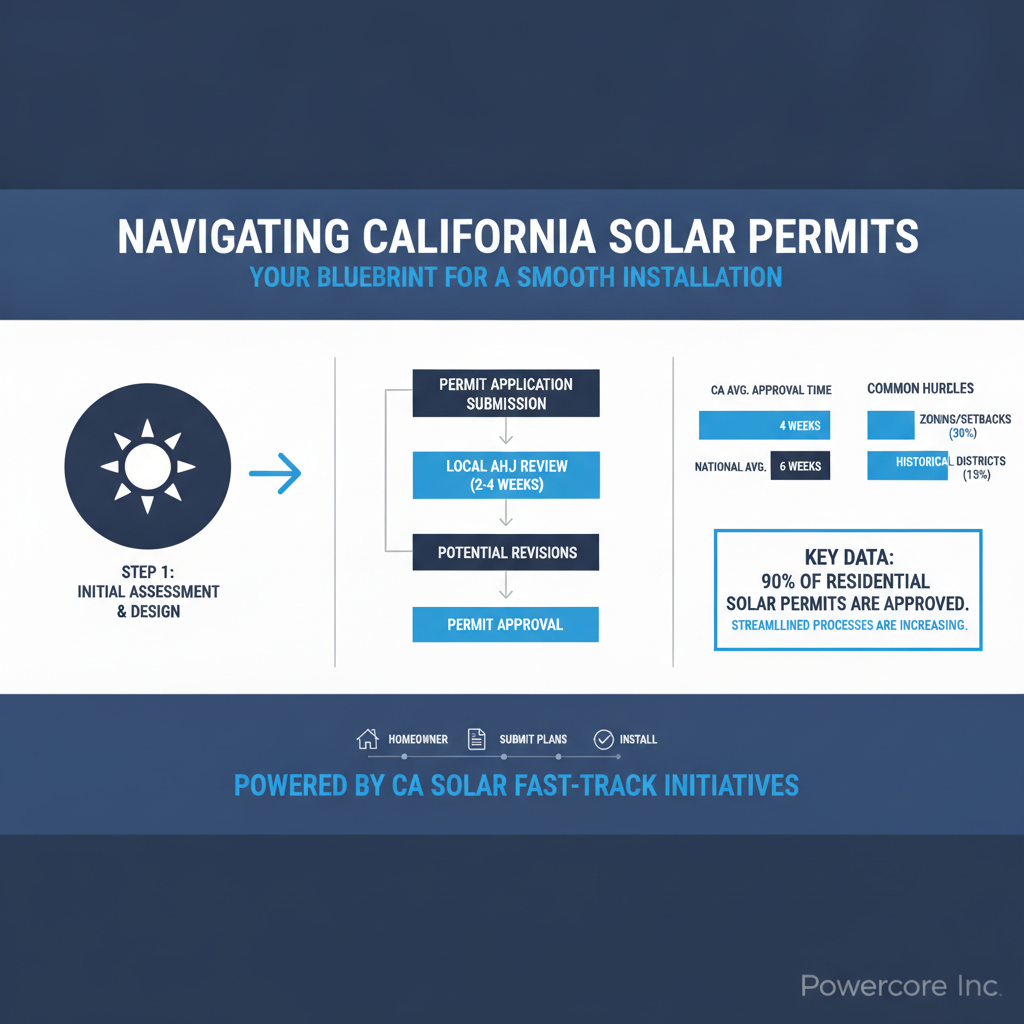
While local variations exist, the general flow of obtaining California solar permits follows a predictable path. Partnering with an experienced contractor like Powercore Inc ensures that each step is handled efficiently and correctly.
Step 1: Initial Consultation and System Design
The process begins with a detailed assessment of your home's energy needs, roof characteristics, and sun exposure. Our experts at Powercore Inc will design a custom residential solar system that maximizes energy production and aligns with your financial goals. This design phase includes:
- Site Assessment: Evaluating your roof's condition, shading, and structural integrity.
- Energy Audit: Analyzing your current energy consumption to size the system appropriately.
- System Proposal: Presenting a detailed plan, including panel type, inverter choice, and battery storage options.
Step 2: Engineering and Plan Preparation
Once you approve the design, our engineering team develops comprehensive plans. These plans are critical for permitting and include:
- Structural Analysis: Ensuring your roof can support the added weight of the panels.
- Electrical Schematics: Detailing the wiring, inverters, and connection to your home's electrical panel.
- Site Plans: Showing the exact placement of panels, conduits, and other equipment.
- Equipment Specifications: Listing all components to be used.
Step 3: Permit Application Submission
With the detailed plans in hand, the permit application is prepared and submitted to your local AHJ. This typically includes:
- Completed Application Forms: Specific to your city or county.
- Engineering Plans: As developed in Step 2.
- Application Fees: Varying by jurisdiction and system size.
At Powercore Inc, we manage this entire submission process, leveraging our experience to ensure all documentation is accurate and complete, minimizing potential delays.
Step 4: Plan Review and Approval
The AHJ will review your application and plans for compliance with local building, electrical, and fire codes. This stage can involve back-and-forth communication if the reviewers require clarifications or minor adjustments. State mandates encourage AHJs to approve or deny residential solar permits within a specific timeframe (often 10-20 business days), though this can vary.
Step 5: Solar Installation
Once the permit is approved and issued, physical installation can begin. Our certified technicians will install your solar panels, inverters, and any battery storage systems according to the approved plans and the highest industry standards. Powercore Inc prides itself on efficient, high-quality installations that prioritize safety and aesthetics.
Step 6: Inspections
After installation, the local AHJ will conduct one or more inspections. These usually include a building inspection (for structural aspects) and an electrical inspection (for wiring and connections). The inspector verifies that the installation matches the approved plans and meets all code requirements.
The success of these inspections is paramount. Any deficiencies found will require correction and re-inspection, potentially delaying your system activation. This is where the expertise of a professional contractor truly shines, ensuring installations are right the first time.
Step 7: Utility Interconnection and Permission to Operate (PTO)
Once your solar system passes all local inspections, the utility company needs to grant Permission to Operate (PTO). This involves submitting documentation to your utility provider (e.g., PG&E, SCE, SDG&E) to connect your system to the grid under the Net Energy Metering (NEM) program. The utility will then install a net meter, allowing you to track both the energy you consume and the excess energy your panels send back to the grid. Only after receiving PTO is your system legally allowed to be turned on and begin generating electricity.
Common Pitfalls and How to Ensure a Smooth Process
Even with streamlined processes, navigating California solar permits can present challenges. Being aware of these common pitfalls can help you avoid delays and ensure a hassle-free experience.
Incomplete or Inaccurate Documentation
This is perhaps the most frequent cause of permitting delays. Missing forms, incorrect specifications, or outdated plans can send an application back to square one. A reputable contractor will have a dedicated team for permit processing, ensuring all paperwork is meticulously prepared.
Code Compliance Issues
Building, electrical, and fire codes are regularly updated. An installer unfamiliar with the latest California amendments or local specific requirements can design a system that fails inspection. This often leads to costly rework and extended delays. Powercore Inc's deep understanding of these codes, coupled with our C-10 Electrical Contractor license (CSLB #1098175), ensures your system is designed and installed to meet all current standards.
Communication Gaps Between Parties
The permitting process involves coordination between the homeowner, the solar installer, the local AHJ, and the utility company. Miscommunication or a lack of proactive follow-up can cause significant slowdowns. A full-service provider like Powercore Inc acts as your single point of contact, managing all communications and ensuring seamless coordination.
Unforeseen Site Conditions
While thorough site assessments aim to catch everything, sometimes unexpected issues arise – perhaps an older electrical panel that needs upgrading, or a previously unnoticed structural detail. These can impact permit approval or require modifications to the original plan. An experienced contractor anticipates these possibilities and can adapt quickly.
Choosing the Wrong Contractor
This is arguably the biggest pitfall. An inexperienced or unlicensed contractor may cut corners, submit incomplete plans, or be unaware of specific local requirements. This inevitably leads to delays, failed inspections, and potential legal issues for the homeowner. Always verify your contractor's licensing and reputation. For tips on finding a reliable installer, you might find our article on 4 Steps to Find Reliable Solar Panel Dealers Near Me helpful.
California-Specific Considerations and Regulations
California's dynamic energy landscape means there are unique elements that can influence your solar permitting process and system design.
NEM 3.0 and System Sizing
The recent transition to Net Energy Metering 3.0 (NEM 3.0) has significantly changed how solar compensation works for new customers. Under NEM 3.0, the value of electricity exported to the grid is lower, placing a greater emphasis on self-consumption and battery storage. This often means designing systems with a focus on optimizing energy use throughout the day and pairing solar with battery storage to maximize savings. Your permit application will need to reflect this optimized design.
ADU Solar Requirements
Accessory Dwelling Units (ADUs) are booming in California, and state law often mandates that new ADUs include solar PV systems. If you're planning an ADU, integrating solar into the initial construction and permitting process is crucial. This falls under the broader umbrella of Remodels & New Construction permitting, where Powercore Inc also holds expertise, ensuring seamless integration of solar into your ADU project.
Wildfire Zones and Roofing Requirements
Given California's vulnerability to wildfires, specific roofing and fire safety standards apply, particularly in high-fire severity zones. Solar installations must comply with these stringent requirements, including proper setbacks from roof edges and valleys, and often require specific types of roofing materials if a full roof replacement is part of the project. Powercore Inc also provides Roofing & Weatherproofing services, ensuring your entire roof system is compliant and ready for solar.
Understanding Solar Permit Costs in California
The cost of solar permits is a component of your overall solar installation budget. These fees are set by local AHJs and can vary significantly.
Typical Permit Fees
On average, residential solar permit fees in California can range from a few hundred dollars to over a thousand, depending on the municipality and the size/complexity of the system. Some jurisdictions have adopted flat fees for standard residential systems, while others calculate fees based on system wattage or construction value.
Factors Influencing Cost
- Jurisdiction: Different cities and counties have different fee schedules.
- System Size: Larger or more complex systems (e.g., with battery storage) may incur higher fees.
- Expedited Review: Some jurisdictions offer expedited review processes for an additional fee.
- Third-Party Engineering: If specialized engineering reports are required, these costs will be factored in.
When you receive a quote from Powercore Inc, all permitting costs are transparently included in your comprehensive project proposal, so you know exactly what to expect.
Powercore Inc: Your Partner in Permitting & Installation
For homeowners across California, choosing the right solar contractor is paramount to navigating the permitting process successfully. Powercore Inc stands out as a leading expert, offering unparalleled service and peace of mind.
Dual Licensing: Unmatched Expertise
As a dual-licensed General B (CSLB #1134334) and C-10 Electrical Contractor (CSLB #1098175), Powercore Inc offers a unique advantage. Our General B license allows us to handle all aspects of construction, including any necessary roof repairs or structural modifications, while our C-10 Electrical license signifies our specialized expertise in electrical systems. This comprehensive licensing means we don't just install solar; we integrate it seamlessly into your home's entire infrastructure, ensuring full compliance and optimal performance.
A Streamlined Permitting Process
We take the burden of permitting off your shoulders. Our in-house team is intimately familiar with the specific requirements of AHJs across California. From initial documentation preparation to submission, follow-up, and managing inspections, we handle every detail, ensuring your project moves forward efficiently and without unnecessary delays.
Comprehensive Solar Solutions
Beyond just permits, Powercore Inc provides end-to-end solar solutions, including advanced solar and battery storage systems, EV charging integration, and even solar detach and reset services for roof replacements. Our holistic approach means your entire energy transition is managed by one trusted provider.
Choosing the Right Solar Contractor for Your California Home
When making such a significant investment, selecting a contractor who understands the nuances of California solar permits is critical. Here's what to look for:
- Proven Experience: Years of successful installations and a strong track record.
- Proper Licensing: Verify their CSLB licenses (General B and C-10 Electrical are ideal for comprehensive solar work).
- Local Knowledge: Familiarity with your specific AHJ's requirements.
- Comprehensive Service: A company that handles everything from design and permitting to installation and interconnection.
- Transparent Communication: Clear explanations of the process, costs, and timelines.
- Strong References: Positive reviews and testimonials from satisfied customers.
Powercore Inc embodies all these qualities, offering peace of mind and a commitment to excellence for every solar project across California. To learn more about our commitment to quality, visit our About Us page.
Conclusion: Powering Your Future with Confidence
Embarking on a solar journey in California is an exciting step towards energy independence and a sustainable future. While the permitting process can seem intricate, it's a vital safeguard ensuring your system is safe, compliant, and performs optimally for decades to come. By understanding the importance of California solar permits and partnering with a seasoned expert, you can navigate this phase with confidence.
Powercore Inc is dedicated to making your transition to solar as smooth and rewarding as possible. Our deep expertise, dual licensing, and commitment to meticulous planning mean you can trust us to handle every aspect of your solar installation, including the complex world of permits. Don't let the paperwork deter you from harnessing the power of the sun.
Ready to explore your solar options and ensure a perfectly permitted installation? Contact Powercore Inc today for a free consultation. Call us directly at 916-699-8778 or visit our contact page to schedule an appointment. Let us be your guide to a brighter, more sustainable future.