
Introduction
Harnessing the sun's energy to heat water has become an increasingly popular choice for homeowners looking to reduce their energy bills and embrace a more sustainable lifestyle. Solar heating hot water systems offer an efficient and eco-friendly solution, utilizing components like solar collectors and storage tanks to convert sunlight into hot water for everyday use.
With the right understanding of how these systems work, including installation processes and maintenance tips, homeowners can make informed decisions that not only benefit their wallets but also contribute positively to the environment.
From exploring financial incentives to selecting the ideal components tailored to individual needs, this guide will illuminate the path toward a greener, more energy-efficient home.
Understanding Solar Heating Hot Water Systems
Solutions for solar heating hot water harness the power of sunlight to efficiently heat water for your home. Usually, these setups comprise:
- Collectors
- A storage tank
- A circulation network
The panels, frequently placed on rooftops, capture sunlight and transform it into thermal power.
This heat is then transferred to water stored in a tank, making it ready for use in showers, dishwashing, and other household needs. An important performance metric to consider is the First Hour Rating (FHR), which measures the amount of hot water that can be supplied in the first hour of use. By understanding these components and metrics, you can appreciate the myriad benefits of solar energy, such as:
- Significant reductions in energy bills
- A smaller carbon footprint
- Contributing to a more sustainable future
Active setups, while more complex and costly to install, provide consistent heating, making them suitable for homes in cooler climates. In contrast, passive systems are simpler and less expensive to install, relying on design features like south-facing windows. Furthermore, by selecting the appropriate option customized for your local climate and domestic requirements, you can enhance your investment while benefiting from the long-term environmental advantages of utilizing renewable energy.
Step-by-Step Installation Process for Solar Heating Systems
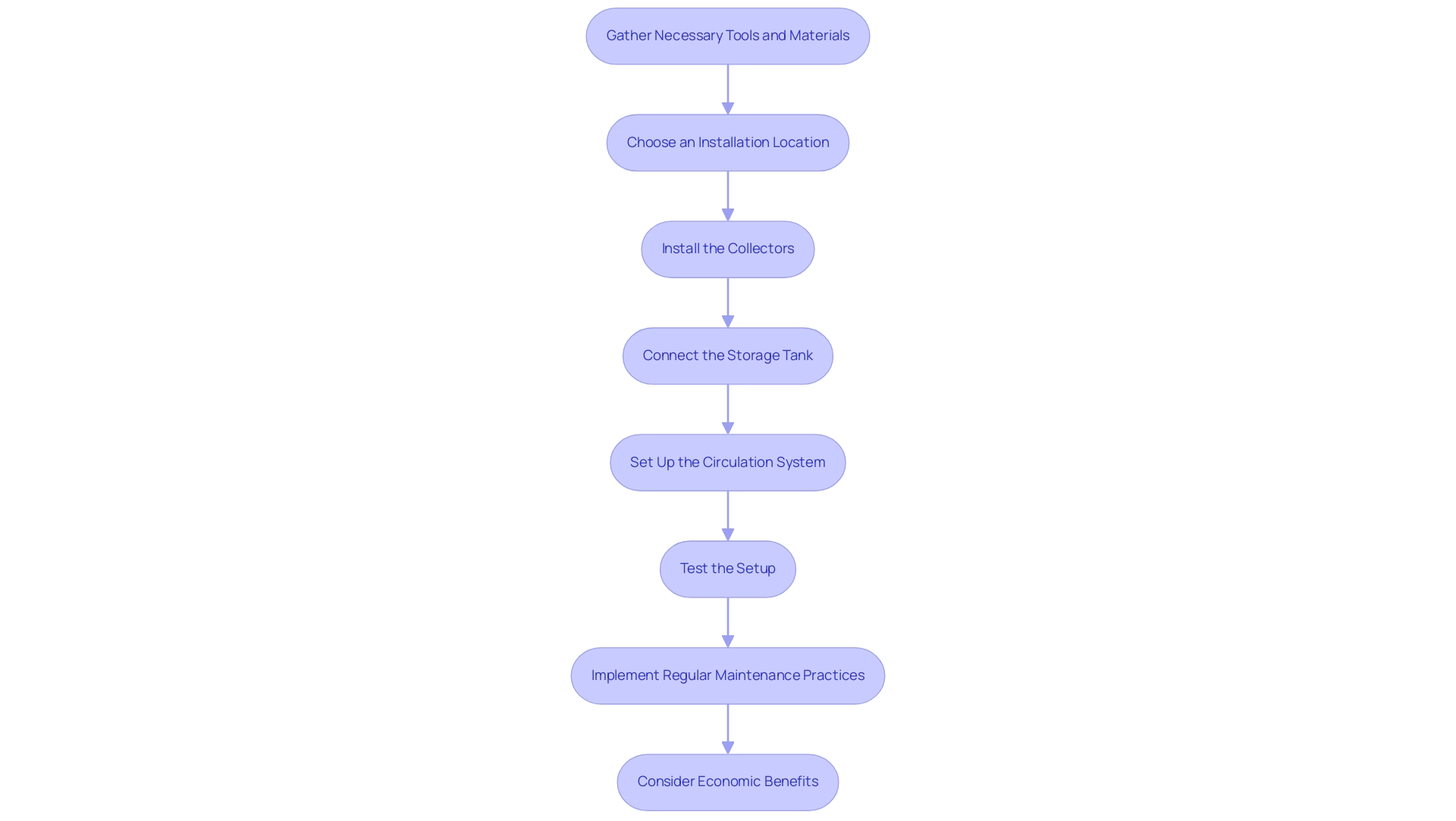
- Gather Necessary Tools and Materials: Before you start, collect all required tools (like a drill, wrench, and level) and materials (collectors, storage tank, pipes, and fittings). Understanding the components of solar heating hot water will help you appreciate how each part contributes to your home's energy efficiency.
- Choose an Installation Location: Select a location with maximum sun exposure, ideally on a south-facing roof. Ensure the area is free from obstructions like trees or buildings to enhance panel functionality.
- Install the Collectors: Follow the manufacturer's instructions to mount the collectors securely. Ensure they are positioned properly for optimal sun exposure, which is crucial for maximizing your solar heating hot water production.
- Connect the Storage Tank: Position the storage tank close to the solar collectors. Connect the tank to the collectors using insulated pipes, ensuring all connections are tight to prevent leaks. A well-placed tank enhances the efficiency of solar heating hot water storage.
- Set Up the Circulation System: Install a circulation pump to move water between the collectors and the tank. Ensure the pump is positioned at the lowest point of the setup for efficient operation, contributing to both energy efficiency and the longevity of your solar heating hot water installation.
- Test the Setup: Once everything is connected, fill the apparatus with water and check for leaks. Turn on the pump and monitor the system to ensure it operates correctly. Regular testing and maintenance will help preserve your investment in solar heating hot water, ensuring you enjoy the economic and environmental benefits for years to come.
- Implement Regular Maintenance Practices: To maximize efficiency, incorporate routine cleaning of the energy panels. This can include hiring professional cleaning services that utilize specialized equipment or exploring innovative options like automated cleaning robots. These practices not only improve performance but can also prolong the longevity of your solar heating hot water system.
- Consider Economic Benefits: Remember that maintaining your energy panels can lead to significant cost savings on your energy bills. By ensuring optimal performance through regular maintenance, you can enhance your investment's return, which can include systems like solar heating hot water, contributing to a more sustainable lifestyle.
Financial Incentives and Rebates for Solar Heating Systems
Numerous states and local authorities, such as California, provide financial incentives that enhance the attractiveness of installing solar heating solutions for environmentally aware homeowners. For example, the California Solar Initiative provides cash rebates based on performance, while the federal government offers a tax credit that can significantly reduce installation costs. Additionally, local utility companies often offer incentives for adopting renewable power solutions.
For example, a home in Southern California experienced more than a 70% reduction in energy costs after installing a water warming solution, demonstrating the financial advantages of these technologies.
It's also crucial to take into account the varieties of thermal installations available:
- Active installations utilize advanced technology for consistent warmth.
- Passive installations leverage natural design elements.
The effectiveness of these setups can vary based on regional climate conditions, so always check the eligibility requirements to ensure you maximize your savings and take full advantage of these eco-friendly benefits!
Choosing the Right Components for Your Solar Heating System
When choosing parts for your heating setup, it's crucial to consider a few important factors:
-
Collectors: Start by selecting between flat-plate collectors and evacuated tube collectors. Flat-plate collectors tend to be more budget-friendly and work well in moderate climates. Conversely, if you live in a colder area, evacuated tubes may be the better choice due to their superior performance in lower temperatures. For instance, parabolic dish solar collectors, with a diameter of 1.5 meters, are priced at around US$ 23, making them an affordable option to consider. Remember, the right collector for solar heating hot water can significantly improve your setup's efficiency.
-
Storage Tank: Your household's hot water requirements for solar heating hot water will dictate the size of your storage tank. Tanks come in various capacities, so it's wise to evaluate your daily hot water usage to ensure you select one that meets your needs for solar heating hot water without excessive wastage.
-
Pipes and Insulation: Don't overlook the importance of using high-quality, insulated pipes. This choice minimizes heat loss during the transport of water, which enhances the overall effectiveness of your solar heating hot water system. Adequate insulation can yield benefits over time by lowering utility costs.
-
Circulation Pump: Finally, invest in a dependable circulation pump with a strong warranty. Look for energy-efficient models that not only perform well but also help keep your electricity bills in check. As Roger Byrne, an expert in machinery and supply chain management, emphasizes,
quality components can lead to significant long-term savings.
This emphasizes the vital function that choosing the appropriate components serves in attaining an efficient energy collection setup.
-
Tesla Home Chargers: Consider incorporating Tesla home chargers with your energy collection setup. These chargers can capture sunlight, offering a sustainable method to power your electric vehicle while enhancing your overall power strategy.
-
Government Programs: Investigate available governmental initiatives and incentives that can support homeowners in embracing renewable power solutions. These programs can greatly lower initial expenses and make thermal energy solutions more reachable.
Furthermore, case studies like 'Final Thoughts on Thermal Collectors' demonstrate the increasing popularity and effectiveness of thermal collectors, motivating prospective purchasers to investigate diverse alternatives according to their particular requirements.
By taking these factors into account, you’ll be on track to establishing an efficient and effective thermal energy setup that aligns with your eco-friendly lifestyle. This considerate method not only meets your immediate power requirements but also aids in creating a more sustainable and eco-friendly future.
Maintenance and Troubleshooting for Solar Heating Systems
To ensure your solar heating system operates efficiently and sustainably, follow these maintenance tips:
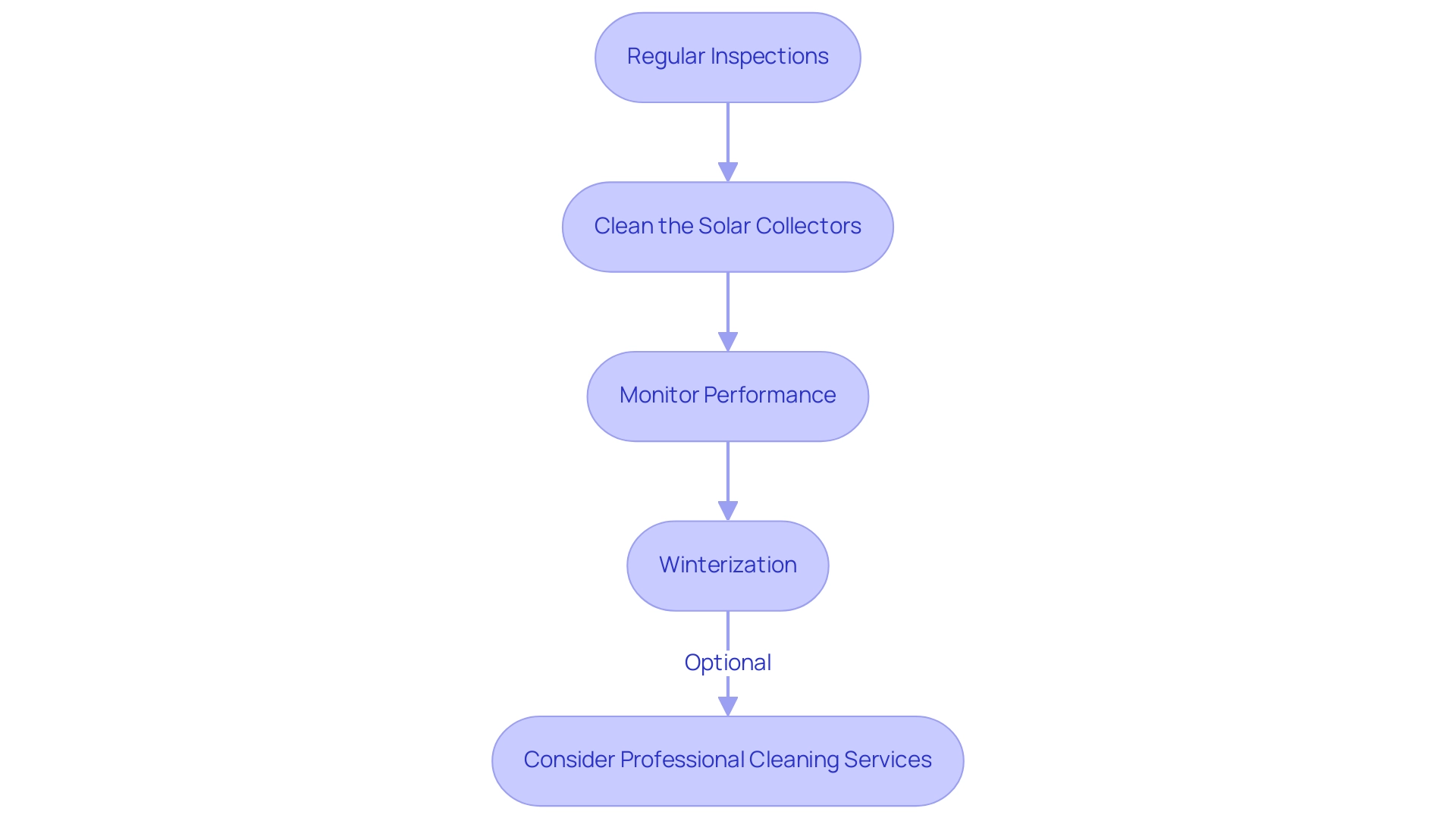
- Regular Inspections: Check the system at least twice a year for any visible signs of wear or damage. Look for leaks, corrosion, or any issues with the collectors or pipes. Regular maintenance is crucial for maximizing performance and longevity.
- Clean the Solar Collectors: Dust and debris can accumulate on the collectors, significantly reducing efficiency. Cleaning them with a soft brush or cloth and mild detergent as needed can help maintain optimal output. Remember, neglecting this step could lead to a performance drop of up to 25%! Innovative methods, such as automated cleaning robots and self-cleaning coatings, can also enhance the cleaning process, making it more efficient and less labor-intensive.
- Monitor Performance: Keep an eye on the temperature gauge and ensure the setup is heating water effectively. If you notice a drop in performance, it may indicate a need for professional servicing. It's essential to address these issues promptly to prevent further efficiency loss. As noted by experts, "Routine maintenance can assist in reducing losses, ensuring your devices keep supplying cost-effective and dependable energy."
- Winterization: In colder climates, take steps to prepare your setup to prevent freezing. This may involve draining the equipment or adding antifreeze as suggested by the manufacturer.
By following these tips, you're not just ensuring your solar heating hot water system runs effectively; you're also contributing to a more sustainable lifestyle and maximizing the economic benefits of your investment. For those looking for a hassle-free solution, consider professional cleaning services that utilize the latest technologies to keep your panels in top condition.
Conclusion
Harnessing solar energy for hot water heating presents a remarkable opportunity for homeowners to lower energy costs while contributing to environmental sustainability. Understanding the components of solar heating systems—such as solar collectors, storage tanks, and circulation systems—provides a solid foundation for making informed decisions. Whether opting for active systems that offer consistent heating or simpler passive solutions, each choice can significantly impact energy efficiency and cost savings.
The installation process, while detailed, can be tackled with the right tools and guidance. By carefully selecting the optimal location, ensuring proper connections, and committing to regular maintenance, homeowners can enhance the performance and longevity of their systems. Exploring financial incentives and rebates further sweetens the deal, making solar heating not only an eco-friendly choice but also a financially savvy one.
Ultimately, choosing the right components tailored to specific needs is crucial for maximizing the effectiveness of a solar heating system. From selecting the appropriate collectors to investing in quality pipes and pumps, each decision plays a role in achieving energy efficiency. Regular inspections and maintenance practices not only keep the system running smoothly but also ensure that it continues to provide substantial economic benefits over time.
By embracing solar heating hot water systems, homeowners can take significant strides toward a more sustainable lifestyle while enjoying the rewarding financial returns that come with it. The path to cleaner energy is clearer than ever—it's time to make the switch and harness the sun’s potential for a brighter, greener future.