

Introduction: Maximizing Your California Solar Investment
As a California homeowner, your solar energy system is a powerful investment, delivering clean energy, reducing utility bills, and contributing to a sustainable future. But like any sophisticated technology, it requires attention to maintain peak performance. At the heart of every solar setup lies the inverter – the unsung hero that transforms the DC electricity from your panels into usable AC power for your home and the grid. When your inverter falters, your entire system can grind to a halt, impacting your energy savings and environmental impact.
This comprehensive guide from Powercore Inc, your trusted dual-licensed General B & C-10 Electrical Contractor in California, is designed to empower you with the knowledge to understand, proactively maintain, and effectively troubleshoot common solar inverter issues. We'll go beyond just identifying a problem, offering practical steps you can take and, crucially, knowing when to call in the certified experts. Our goal is to help you minimize downtime, protect your investment, and ensure your California home continues to harness the abundant sunshine efficiently.
The Heart of Your Solar System: Understanding the Inverter
Before diving into troubleshooting, it's essential to grasp what an inverter does and why its health is paramount to your solar system's operation. Simply put, solar panels generate Direct Current (DC) electricity, but your home appliances and the utility grid use Alternating Current (AC) electricity. The solar inverter is the critical component responsible for this DC-to-AC conversion.
Types of Solar Inverters and Their Roles
- String Inverters: These are the most common type, where multiple solar panels are wired together in a 'string' to a single central inverter. They are cost-effective but can be impacted if one panel in the string underperforms (e.g., due to shading).
- Microinverters: Installed directly beneath each solar panel, microinverters convert DC to AC at the panel level. This optimizes performance for each individual panel, mitigating the impact of shading or damage to other panels.
- Power Optimizers: Similar to microinverters in placement, optimizers condition the DC power at each panel before sending it to a central string inverter. They offer panel-level optimization benefits while still utilizing a single inverter.
- Hybrid Inverters: These advanced inverters can manage both solar power generation and battery storage, often allowing for grid-tied operation with backup power capabilities. If you have a solar battery storage system, you likely have a hybrid inverter.
Regardless of the type, a healthy inverter is crucial for maximizing your system's energy output and overall residential solar efficiency. Any interruption in its function means a direct impact on your energy production and, ultimately, your wallet.
Common Symptoms of Solar Inverter Malfunction
Being aware of the signs that your inverter might be struggling is the first step in proactive maintenance. Here are the most common indicators California homeowners should look out for:
- No Power Production or Significantly Reduced Output: This is the most obvious sign. If your monitoring app shows zero or very low power generation, especially on a sunny day, your inverter is likely the culprit.
- Error Codes or Warning Lights: Most modern inverters have a digital display or LED indicator lights. Familiarize yourself with these. A red light, a blinking light, or a specific error code on the display usually points to a problem.
- Unusual Noises: While inverters can make a low hum, loud buzzing, clicking, or grinding noises are abnormal and indicate an internal component failure.
- System Shutdowns: If your system frequently turns off and on, or completely shuts down without an apparent reason, the inverter might be experiencing internal faults or overheating.
- Physical Damage: Visible signs of damage like scorch marks, melted wiring, or a burning smell around the inverter unit are serious red flags requiring immediate professional attention.
Proactive Inverter Maintenance for California Homeowners: Beyond the Basics
While some issues require professional expertise, many common inverter problems can be prevented or mitigated through diligent, proactive maintenance. This is especially important in California, where diverse climates and high energy demands put your system to the test.
Regular Visual Inspections
Make it a habit to visually inspect your inverter (and surrounding area) at least once a month. Look for:
- Clear Ventilation: Ensure nothing is blocking the inverter's vents. Overheating is a common cause of inverter failure, and proper airflow is critical.
- Cleanliness: Dust, cobwebs, and debris can accumulate around the unit. Gently clean the exterior with a soft cloth.
- Pest Infestation: California homes can be prone to rodent or insect activity. Check for signs of nests or chewed wires around the inverter.
- Weather Damage: After heavy rains or strong winds, check for any visible damage to the casing or wiring.
Monitor Your System Performance
Most solar systems come with a monitoring app or online portal. Regularly check your system's daily, weekly, and monthly energy production. Consistent dips in output that aren't explained by weather or seasonality are a clear sign that something is amiss. This proactive monitoring allows you to catch minor issues before they escalate into major problems.
Keep the Inverter Area Cool and Clear
Inverters generate heat during operation. Ensure the area around your inverter is free from clutter and allows for adequate air circulation. If your inverter is in a garage or utility room, consider its placement relative to other heat-generating appliances. Inverters should ideally be installed in a cool, dry, and shaded location.
Software and Firmware Updates
For smart or hybrid inverters, manufacturers periodically release software and firmware updates that can improve performance, address bugs, and enhance security. Consult your inverter's manual or your installer (like Powercore Inc) about how to check for and apply these updates safely.
Your Step-by-Step Solar Inverter Troubleshooting Guide
When your solar system isn't producing power, it can be frustrating. Before calling for professional help, there are several safe troubleshooting steps you can perform. Remember, safety is paramount.
Safety First: Essential Precautions
Working with electricity can be dangerous. Never attempt repairs or internal diagnostics if you are not a licensed electrician. These steps are for external checks only. Always wear appropriate safety gear, including insulated gloves, if you must touch any components, and ensure the area is dry.
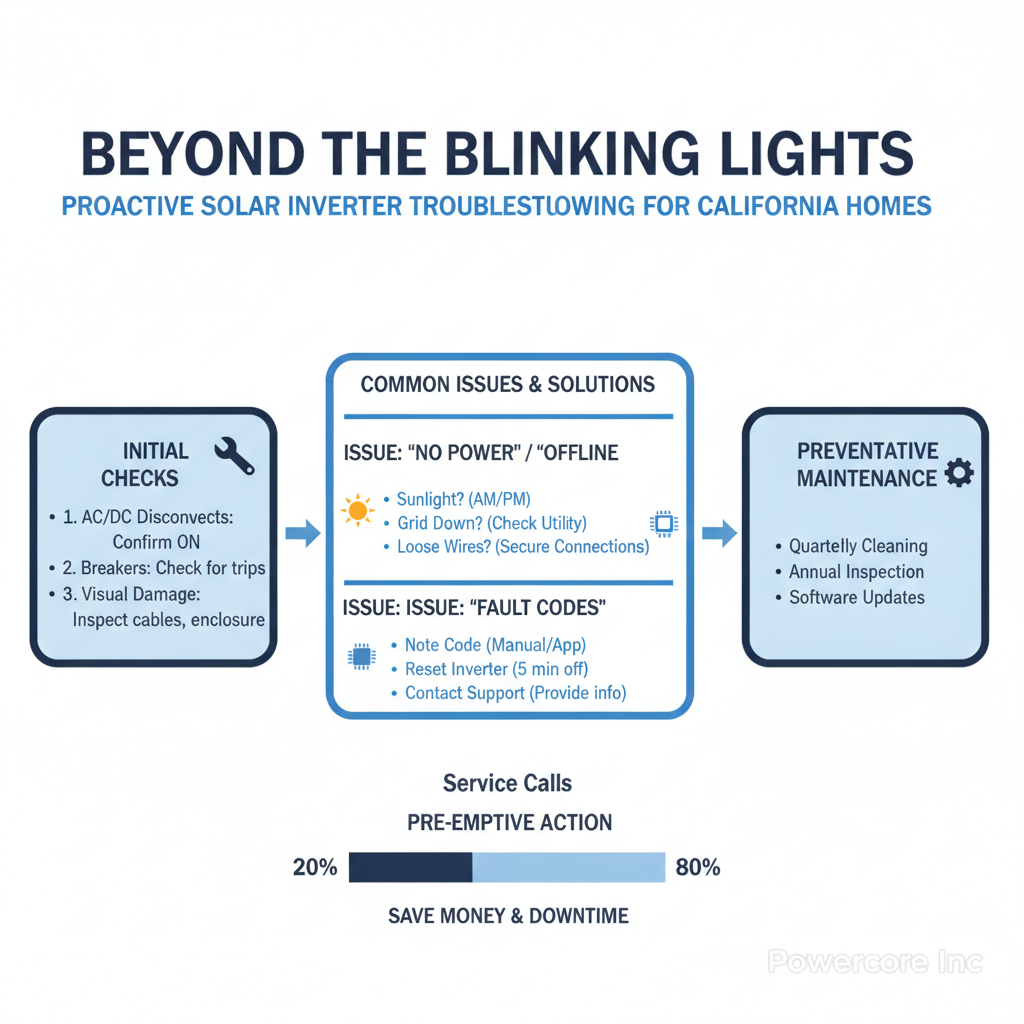
Step 1: Check the Basics – AC and DC Disconnects
Often, the simplest solution is overlooked. Your solar system has several disconnect switches:
- AC Disconnect: This switch is typically located near your inverter or main electrical panel. Ensure it's in the 'ON' position.
- DC Disconnect: Usually located directly on the inverter itself or very close to it, this switch controls the power flow from your solar panels. Make sure it's also in the 'ON' position.
- Breakers in Your Main Electrical Panel: Go to your home's main electrical service panel. Look for the circuit breaker labeled for your solar system (it might be labeled 'Solar PV' or 'Inverter'). Ensure it hasn't tripped. If it has, flip it firmly to the 'OFF' position, wait a few seconds, then flip it back to 'ON'.
Sometimes, a brief power surge or grid fluctuation can trip these switches. Resetting them can often resolve minor issues.
Step 2: Examine the Display and Error Codes
Most inverters have a digital display or a series of indicator lights. If there's an error code:
- Note the Code: Write down the exact error code displayed.
- Consult Your Manual: Refer to your inverter's owner's manual. It will often list common error codes and their corresponding troubleshooting steps. Many minor errors can be resolved by a simple reset as per the manual.
- Indicator Lights: Understand what the different colored lights mean (e.g., green for normal operation, amber for warning, red for fault).
Step 3: Inspect for Obvious Damage or Obstructions
Perform a thorough visual inspection of the inverter unit and its immediate surroundings:
- Vents: Are the cooling vents free from dust, debris, or insect nests? Blocked vents can lead to overheating.
- Cables: Check for any frayed, chewed (from rodents), or disconnected cables leading into or out of the inverter.
- Scorch Marks/Burning Smell: If you see any signs of burning or detect a burning smell, immediately turn off all disconnect switches for safety and call Powercore Inc. Do NOT attempt to investigate further.
Step 4: Verify Your Home's Electrical Panel
Beyond the solar-specific breaker, quickly check if any other main breakers in your home's electrical panel have tripped. A larger power outage or surge affecting your entire home could inadvertently affect your solar system's connection.
Step 5: Monitor Weather Conditions
While inverters are built for outdoor conditions, extreme weather can impact them. Heavy rain, extreme heat, or nearby lightning strikes can sometimes cause temporary faults or even damage. Rule out weather as a factor, especially if the issue appeared after a storm.
Step 6: Consult Your Inverter Manual
This cannot be stressed enough. Your inverter's manual is your primary resource for specific model-related troubleshooting. It will detail specific fault codes, recommended resets, and maintenance schedules. If you don't have a physical copy, most manufacturers offer digital versions on their websites.
Step 7: Power Cycle the System (Carefully!)
A power cycle (or hard reset) can resolve many temporary electronic glitches. This process involves safely shutting down and restarting your entire solar system. Always follow your inverter's manual for the correct shutdown and startup sequence. Typically, this involves:
- Turn off the AC disconnect switch (usually near the inverter or main panel).
- Turn off the DC disconnect switch (on the inverter itself).
- Wait for 5-10 minutes to allow any residual charge to dissipate.
- Reverse the process: Turn on the DC disconnect switch first.
- Then, turn on the AC disconnect switch.
- Wait for the inverter to power up and run through its self-test sequence (this can take a few minutes).
If the system starts producing power again, monitor it closely to ensure the problem doesn't recur.
When to Call the California Solar Experts: Powercore Inc
While DIY troubleshooting can resolve minor issues, there are critical times when professional intervention is not just recommended, but absolutely necessary. For serious solar inverter problems, attempting a DIY fix can be dangerous and void your warranty. This is where Powercore Inc, with our dual California CSLB licenses (#1134334 General B and #1098175 C-10 Electrical), stands ready to provide expert, safe, and efficient service across all of California.
Persistent Error Codes or No Production
If your inverter continues to display an error code after troubleshooting, or if your system still isn't producing power after a power cycle, it's time to call in the professionals. These issues often indicate internal component failure, advanced electrical faults, or complex software glitches that require specialized diagnostic tools and expertise.
Physical Damage, Burning Smell, or Unusual Noises
Any signs of physical damage, a burning smell, or persistent loud/unusual noises are severe warnings. These indicate potentially dangerous electrical conditions, including arcing or component overheating, which could pose a fire hazard. Immediately shut down your system (if safe to do so) and contact Powercore Inc without delay.
System Under Warranty
Most solar inverters come with a manufacturer's warranty, often ranging from 5 to 12 years. Attempting unauthorized repairs can void this warranty. Powercore Inc's certified technicians are experienced with a wide range of inverter brands and models, ensuring that any repairs or replacements are performed correctly and within warranty guidelines.
Complex Electrical Issues
Solar inverters are complex electrical devices integrated into your home's main electrical system. Diagnosing and repairing issues that involve high-voltage DC and AC currents requires licensed electricians. Our C-10 Electrical license means we are fully qualified to handle all aspects of your solar electrical system safely and to code, ensuring not just functionality, but also your home's safety and compliance.
Maximizing Your Solar ROI with Expert Maintenance
Beyond troubleshooting, regular professional maintenance is key to extending the life and efficiency of your solar inverter and entire system. Powercore Inc offers comprehensive solar system check-ups that include:
- Inverter diagnostics and performance testing.
- Wiring and connection inspections.
- Panel cleaning recommendations to ensure maximum efficiency.
- Assessment of overall system health and optimization opportunities.
Proactive maintenance catches small issues before they become expensive problems, ensuring your California home continues to benefit from uninterrupted solar power.
The Powercore Inc Advantage: Your Trusted California Solar Partner
Choosing the right partner for your solar system's maintenance and repair is crucial. Powercore Inc is not just another contractor; we are a dual-licensed General B & C-10 Electrical Contractor based in Roseville, CA, serving all of California. Our unique licensing allows us to offer comprehensive solutions that many other solar companies cannot, from the overall structural and general construction aspects of your home to the intricate electrical work required for your solar system.
When you call Powercore Inc, you're not just getting a solar technician; you're getting a team of experts capable of handling:
- Advanced Inverter Diagnostics: Utilizing state-of-the-art tools to pinpoint the exact cause of inverter malfunctions.
- Safe & Compliant Repairs: All work adheres to the highest safety standards and California electrical codes.
- Warranty Preservation: Our certified technicians perform repairs in a manner that protects your manufacturer warranties.
- Holistic System Assessment: As a comprehensive home services provider, we can identify and address related issues, from roofing integrity impacting panel placement to HVAC climate control influencing overall energy demand.
- Rapid Response: We understand that a non-producing solar system means lost savings. We prioritize prompt and efficient service to get your system back online quickly.
Our commitment extends beyond just fixing a problem. We aim to educate homeowners, provide transparent communication, and deliver lasting solutions that enhance the value and efficiency of your California home. Whether it's a routine check-up, an urgent repair, or exploring upgrades like EV charging stations or additional battery storage, Powercore Inc is your single point of contact for superior home performance.
Conclusion: Powering Your California Home with Confidence
Your solar inverter is the gateway to harnessing the sun's power for your California home. Understanding its function, recognizing signs of trouble, and performing basic proactive maintenance are essential steps every homeowner can take to protect their investment. However, knowing when to step back and call in the experts is equally important. For any complex, persistent, or safety-critical inverter issue, Powercore Inc is your trusted partner.
With our dual licenses, extensive experience, and commitment to excellence, we ensure your solar system operates safely, efficiently, and reliably for years to come. Don't let inverter issues dim your energy independence. For expert solar system maintenance, diagnostics, or repair in California, reach out to Powercore Inc today. Call us at 916-699-8778 or visit our contact page to schedule a service appointment. Let us help you keep your California home powered by the sun with confidence.