

The Tesla Powerwall 3: A New Era of Home Energy Storage for California
California homeowners face a unique and evolving energy landscape. From soaring electricity rates and the complexities of NEM 3.0 to the increasing threat of Public Safety Power Shutoffs (PSPS), reliable and affordable power has never been more critical. Enter the Tesla Powerwall 3, the latest iteration in home battery storage that promises to be a game-changer for energy independence and grid resilience across the Golden State.
At Powercore Inc, a dual-licensed General B and C-10 Electrical Contractor based in Roseville, CA, we’re constantly evaluating the technologies that empower our clients. Our expert team understands that integrating solar and battery storage isn't just about cutting costs; it's about building a more secure, sustainable, and smart home. This comprehensive review delves into the Tesla Powerwall 3, exploring its innovative features, significant benefits for California homes, and how it stacks up against its predecessors, all from the perspective of experienced installers who know California's energy needs intimately.
Is the Powerwall 3 the right investment for your California property? Join us as we unpack why this cutting-edge energy solution could be the cornerstone of your home's future energy strategy.
What is the Tesla Powerwall 3? Understanding the Evolution
The Tesla Powerwall series has consistently pushed the boundaries of residential energy storage, starting with the original Powerwall, then the widely adopted Powerwall 2, and now, the highly anticipated Powerwall 3. Each iteration has brought advancements, but the Powerwall 3 represents a significant leap forward, designed with modern energy demands and grid challenges in mind.
At its core, the Powerwall 3 is an integrated home battery system designed to store energy from solar panels or the grid for use when electricity prices are high, during outages, or at night. What truly sets the Powerwall 3 apart, however, is its integrated solar inverter. This means the battery and the solar inverter are now a single, cohesive unit. This streamlined design simplifies installation, reduces equipment footprint, and enhances overall system efficiency, making it an incredibly attractive option for new solar installations or comprehensive energy upgrades.
For California homeowners specifically, this integration is particularly beneficial. With NEM 3.0 emphasizing self-consumption, a highly efficient and integrated system like the Powerwall 3 helps maximize the value of your solar energy by ensuring more of it is used directly by your home or stored for later, rather than exported to the grid at lower rates.
Key Features and Specifications: What Sets Powerwall 3 Apart?
The Tesla Powerwall 3 isn't just an incremental update; it introduces several critical enhancements that position it as a leader in the home energy storage market. Understanding these features is key to appreciating its potential impact on your home's energy independence.
Integrated Inverter Technology: Simplicity and Efficiency
As mentioned, the most significant innovation in the Powerwall 3 is the inclusion of a fully integrated solar inverter. This means you no longer need a separate solar inverter for your photovoltaic (PV) system if you're installing new solar with a Powerwall 3. This design choice offers several advantages:
- Simplified Installation: Fewer components mean quicker and less complex installation, often translating to reduced labor costs.
- Reduced Footprint: Consolidating the inverter into the battery unit saves space, which is especially valuable in urban California homes where exterior wall space can be limited.
- Enhanced Efficiency: A single, optimized unit can manage energy flow more efficiently between your solar panels, battery, and home, minimizing energy losses during conversion.
- Seamless Integration: The entire system is designed to work in perfect harmony, managed by Tesla's intuitive app, providing superior monitoring and control.
Higher Power Output for Demanding Homes
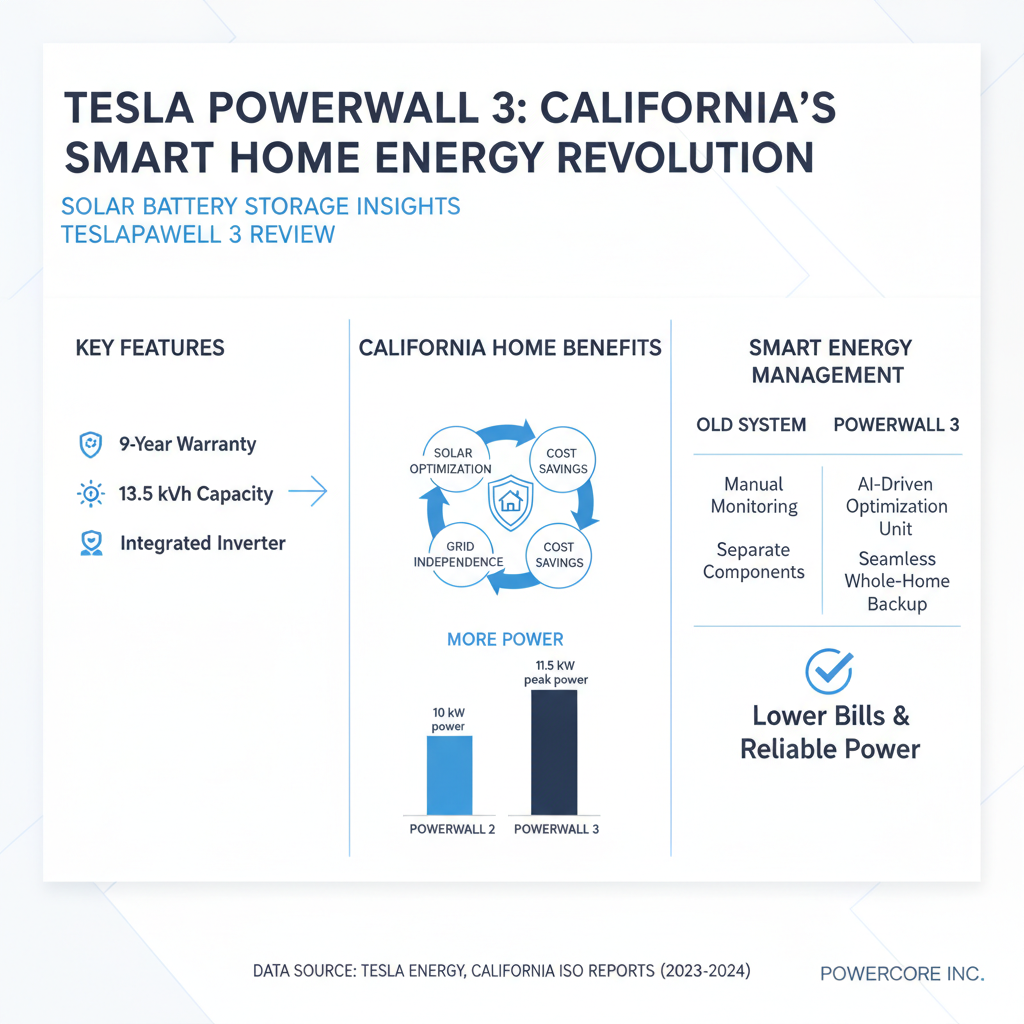
The Powerwall 3 boasts a significantly higher continuous power output compared to its predecessor. With a continuous power rating of 11.5 kW (compared to Powerwall 2's 5 kW), it can handle more demanding loads and power more appliances simultaneously during an outage. This is crucial for larger California homes or those with high-power-draw appliances like electric vehicle chargers, central air conditioning, or well pumps. You'll experience less disruption and more normalcy during grid interruptions.
Increased Energy Capacity and Scalability
While the nominal energy capacity per unit remains similar to the Powerwall 2 (13.5 kWh usable), the Powerwall 3's improved efficiency and integration mean better real-world performance. More importantly, Tesla has maintained its commitment to scalability. Homeowners can still link multiple Powerwall 3 units together to create a larger battery bank, custom-tailored to their specific energy needs and backup requirements. This flexibility is vital for homes ranging from modest bungalows to expansive estates across California.
Enhanced Safety Features and Durability
Safety is paramount, especially when dealing with high-capacity battery systems. The Powerwall 3 incorporates advanced safety features and thermal management systems to ensure reliable and secure operation. It's built for durability, with an IP67 water and dust resistance rating, making it suitable for outdoor installation even in California's diverse climates, from coastal humidity to inland heat.
Seamless Integration with the Tesla Ecosystem
For those already invested in the Tesla ecosystem – perhaps with a Tesla EV or Tesla Solar Panels – the Powerwall 3 offers unparalleled integration. The Tesla app provides a unified platform to monitor solar production, battery storage, home energy consumption, and even EV charging. This holistic view empowers homeowners to make informed decisions about their energy usage, optimize their system's performance, and truly take control of their energy future.
Powerwall 3 Benefits for California Homeowners
For residents of California, the Powerwall 3 isn't just a luxury; it's becoming an essential component of a resilient and cost-effective home. Its features are specifically well-suited to address the unique energy challenges faced by homeowners throughout the state.
Navigating NEM 3.0 and Maximizing Solar ROI
The introduction of Net Energy Metering (NEM) 3.0 in California has fundamentally changed the economics of rooftop solar. With significantly reduced export rates, simply sending excess solar power back to the grid is no longer as financially advantageous. The Powerwall 3 provides the perfect solution by enabling self-consumption. By storing excess solar energy generated during the day and discharging it when the sun isn't shining or when grid electricity is expensive, homeowners can maximize their solar investment, drastically reducing their reliance on grid power and ensuring their solar panels continue to deliver substantial savings.
Uninterrupted Power: Protection Against PSPS and Grid Outages
California is unfortunately no stranger to power outages, whether due to severe weather, infrastructure issues, or the dreaded Public Safety Power Shutoffs (PSPS) implemented by utilities to prevent wildfires. A Powerwall 3 system acts as an automatic backup generator, seamlessly taking over when the grid goes down. This ensures your lights stay on, your refrigerator keeps running, and essential medical equipment remains powered, providing peace of mind and security during unpredictable events.
Reducing Peak Demand Charges and Time-of-Use Savings
California utilities utilize complex Time-of-Use (TOU) rate structures, where electricity costs vary significantly throughout the day, often peaking in the late afternoon and early evening. The Powerwall 3's intelligent software, especially when integrated with solar, can automatically manage your energy flow. It charges during off-peak hours (or with solar production) and discharges during expensive peak hours, effectively shaving off your highest-cost electricity consumption and leading to substantial savings on your monthly utility bills. This intelligent load shifting is a powerful tool for financial optimization.
Optimizing EV Charging with Home Solar and Storage
With California leading the charge in electric vehicle adoption, many homeowners are looking to power their EVs sustainably. The Powerwall 3, especially when paired with a Powercore Inc EV charger installation, allows you to charge your electric vehicle directly from your stored solar energy, significantly reducing your reliance on grid power for transportation. Imagine powering your daily commute with clean, self-generated electricity – a truly sustainable lifestyle made possible.
Achieving Energy Independence and Sustainability Goals
Beyond the financial and practical benefits, the Powerwall 3 empowers homeowners to take a significant step towards energy independence. By generating, storing, and managing their own power, Californians can reduce their carbon footprint, contribute to a cleaner environment, and lessen their reliance on fluctuating utility prices and an aging grid. It’s an investment in both your home's future and the planet's health.
Tesla Powerwall 3 vs. Powerwall 2: A Head-to-Head Comparison
For many, the question isn't just about getting a battery, but which Tesla Powerwall model is best. While the Powerwall 2 has been a highly successful and robust product, the Powerwall 3 introduces key advancements that make it a compelling upgrade, especially for new installations or those seeking maximum efficiency and power.
The most striking difference, as noted, is the integrated solar inverter in the Powerwall 3. The Powerwall 2 requires a separate solar inverter for your PV system, meaning two distinct pieces of equipment. This integration in the Powerwall 3 simplifies the system architecture and often results in a cleaner, more compact installation.
Another major differentiator is the power output. The Powerwall 3 delivers 11.5 kW of continuous power, a substantial increase over the Powerwall 2's 5 kW. This higher output means the Powerwall 3 can support more demanding loads simultaneously, making it better suited for homes with high energy consumption or critical appliances that need to run during an outage. For homes with central AC, well pumps, or multiple EVs, this increased power is a significant advantage.
While the usable energy capacity per unit remains consistent at 13.5 kWh for both models, the Powerwall 3's integrated design and improved efficiency potentially translate to more usable energy delivered to your home over its lifetime. Both systems offer excellent scalability, allowing multiple units to be stacked for increased storage. However, only Powerwall 3 units can be combined with other Powerwall 3 units, and Powerwall 2 units with other Powerwall 2 units – they are not interchangeable within a single system.
Ultimately, the choice between Powerwall 2 (if still available for specific scenarios or existing systems) and Powerwall 3 often comes down to your specific needs. For homeowners planning a new solar installation or a comprehensive energy upgrade, the Powerwall 3's integrated inverter and higher power output often make it the superior choice for efficiency, simplicity, and performance, particularly in the demanding California energy market.
The Installation Process: Why Choose Powercore Inc for Your Powerwall 3
Installing a sophisticated home battery system like the Tesla Powerwall 3 requires specialized expertise and adherence to strict safety and electrical codes. This is where Powercore Inc truly shines. As a California dual-licensed General B (CSLB #1134334) and C-10 Electrical Contractor (CSLB #1098175), we possess the comprehensive knowledge and certifications necessary to ensure a seamless, safe, and fully compliant installation.
Our process begins with a thorough energy assessment of your California home. We don't just sell you a battery; we design a holistic energy solution tailored to your specific consumption patterns, existing solar setup (if any), and future goals. This includes:
- Site Evaluation and System Design: Our experts assess your electrical panel, available space, and energy needs to determine the optimal Powerwall 3 configuration for your home.
- Permitting and Compliance: Navigating California's complex permitting processes and local building codes can be daunting. Powercore Inc handles all necessary permits and ensures your installation meets all local and state regulations, including those specific to battery storage.
- Professional Installation: Our certified electricians and installers meticulously integrate the Powerwall 3 with your existing electrical system and solar panels. With the Powerwall 3's integrated inverter, this process is even more streamlined, but still requires the precision and experience that only a licensed C-10 Electrical Contractor like Powercore Inc can provide.
- System Commissioning and Monitoring: After installation, we thoroughly test the system, connect it to the Tesla app, and walk you through its operation. We ensure you understand how to monitor your energy production, consumption, and battery status, empowering you to take full control.
Choosing Powercore Inc means partnering with a company that understands the intricacies of California's energy landscape and has the proven track record to deliver superior results. Whether you're integrating the Powerwall 3 with a new solar array, an existing system, or even other home improvements like HVAC or roofing, our comprehensive approach ensures maximum efficiency and peace of mind.
Cost and Incentives: Making Powerwall 3 Accessible in California
Investing in a Tesla Powerwall 3 is a significant decision, but it's one that often comes with substantial financial benefits and incentives, particularly for California homeowners.
Federal Solar Investment Tax Credit (ITC)
The most significant incentive currently available is the Federal Solar Investment Tax Credit (ITC), also known as the Residential Clean Energy Credit. This allows homeowners to claim a credit worth 30% of the cost of their solar energy system, which *includes* eligible battery storage like the Powerwall 3 when installed in conjunction with a solar array or charged primarily by solar. This is a direct dollar-for-dollar reduction in your federal income tax liability, making a substantial dent in the upfront cost.
California-Specific Incentives and Programs
While the Self-Generation Incentive Program (SGIP) has historically offered significant rebates for battery storage in California, its residential budget has largely been depleted or is highly targeted towards specific equity and medical needs. It's crucial to check current program availability and eligibility requirements, as these can change frequently. However, other localized incentives or utility-specific programs might exist. Powercore Inc stays abreast of all relevant California incentives and can help you identify any programs you may qualify for.
Long-Term Savings and ROI
Beyond direct incentives, the Powerwall 3 offers substantial long-term savings by reducing your reliance on grid electricity, especially during peak TOU periods. With California's escalating electricity rates and the implications of NEM 3.0, the ability to store and self-consume your solar power, or even arbitrage grid electricity, provides a compelling return on investment over the system's lifespan. Consider the avoided costs of grid outages and the increased property value, and the Powerwall 3 becomes an even more attractive investment.
The Future of Home Energy: Powerwall 3's Role in California's Grid
The Tesla Powerwall 3 isn't just a battery; it's a foundational component of the future of home energy, particularly in a forward-thinking state like California. Its capabilities extend beyond individual home benefits to contributing to a more resilient and sustainable statewide energy grid.
Virtual Power Plants (VPPs) and Grid Services
As more Powerwall 3 systems are installed, they collectively form a network that can act as a Virtual Power Plant (VPP). In a VPP, individual home batteries can be aggregated and intelligently controlled by a central system to support the grid during times of high demand or instability. This means your Powerwall 3 could potentially earn you money by dispatching stored energy back to the grid when it's needed most, further enhancing its value and contributing to California's overall energy security.
Enhanced Grid Resilience and Decarbonization
By enabling widespread solar self-consumption and providing backup power, the Powerwall 3 reduces strain on the centralized grid. This decentralization of energy production and storage makes the entire system more robust and less susceptible to widespread failures. Furthermore, by maximizing the use of renewable solar energy, Powerwall 3 owners are directly contributing to California's ambitious decarbonization goals, moving the state closer to a clean energy future.
Conclusion: Empowering California Homes with Powerwall 3
The Tesla Powerwall 3 represents a significant leap forward in home energy storage, offering California homeowners an unparalleled combination of power, efficiency, and intelligence. Its integrated inverter, higher output, and seamless ecosystem integration are specifically tailored to address the evolving challenges of California's energy market, from navigating NEM 3.0 to ensuring resilience against power outages.
Investing in a Powerwall 3 means more than just buying a battery; it means investing in energy independence, significant long-term savings, and a sustainable future for your home. With the right expertise, installation can be a smooth and rewarding process.
Ready to unlock the full potential of the Tesla Powerwall 3 for your California home? Trust the experienced and dual-licensed professionals at Powercore Inc to design and install a custom energy solution that meets your unique needs. Our team is dedicated to empowering California homeowners with the best in solar, battery storage, and comprehensive home energy upgrades. Contact us today for a consultation and take the first step towards true energy independence. Call Powercore Inc at 916-699-8778 to learn more.