

Navigating California's Energy Future with SGIP Rebates
California, a beacon of innovation and environmental stewardship, continues to lead the charge towards a clean energy future. However, this journey isn't without its challenges. Grid instability, rising electricity costs, and the increasing frequency of Public Safety Power Shutoffs (PSPS) have made energy independence not just a luxury, but a growing necessity for homeowners across the Golden State. This is where solar battery storage systems come into play, offering a robust solution to these modern energy dilemmas.
As we look towards 2026 and beyond, understanding the landscape of incentives designed to support these critical home energy upgrades becomes paramount. Among the most impactful is the Self-Generation Incentive Program (SGIP) rebate. For years, SGIP has been a cornerstone of California's strategy to promote distributed energy resources, making battery storage more accessible and affordable for countless residents. But as programs evolve, so too must our strategies to maximize their benefits.
This comprehensive guide from Powercore Inc, your trusted California dual-licensed General B & C-10 Electrical Contractor, will delve into the intricacies of the SGIP rebate, specifically focusing on what homeowners can expect and how to strategically plan for 2026. We’ll explore the program’s structure, eligibility requirements, the importance of timing, and how to position yourself to unlock maximum savings for a resilient, sustainable future.
Understanding the SGIP Program: A Foundation for 2026
The Self-Generation Incentive Program (SGIP) is one of California's longest-running and most successful incentive programs for distributed energy generation and storage. Established in 2001, its primary goal has evolved to encourage the installation of clean, self-generating energy technologies, with a strong emphasis in recent years on energy storage systems, particularly batteries. The program is administered by the California Public Utilities Commission (CPUC) and implemented by various Program Administrators (PAs) including PG&E, SCE, SDG&E, and SoCalGas.
Why SGIP Matters for California Homeowners
- Cost Reduction: SGIP offers significant upfront rebates that can offset a substantial portion of the cost of a new battery storage system, making clean energy solutions more attainable.
- Grid Resiliency: By encouraging distributed storage, SGIP helps fortify the state's energy grid, reducing strain during peak demand and providing backup power during outages.
- Environmental Impact: Promoting battery storage indirectly supports greater solar adoption by increasing its value proposition, further reducing reliance on fossil fuels.
- Energy Independence: For homeowners, SGIP means an opportunity to gain greater control over their energy consumption, reduce utility bills, and ensure power during emergencies.
The SGIP Step-Down Mechanism and Its Implications
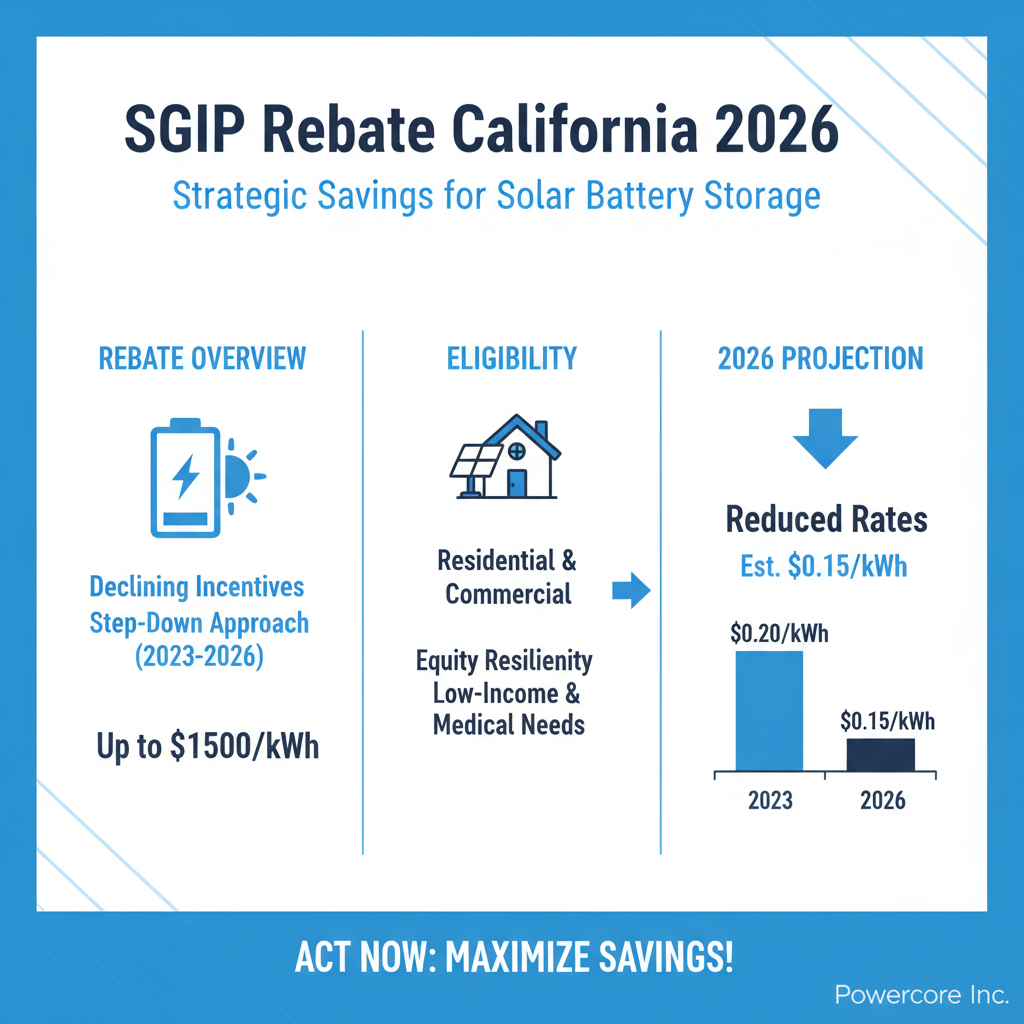
A critical aspect of the SGIP program is its step-down mechanism. The total budget for the program is divided into several "steps," with each step offering a progressively lower incentive rate (cents per Watt-hour, or Wh) than the previous one. As funds for a particular step are fully reserved, the program moves to the next, lower incentive step. This mechanism is designed to gradually reduce the rebate amount over time, encouraging early adoption and allowing the market to mature.
- What it means for 2026: By 2026, the general market SGIP rebates for residential energy storage are projected to be significantly lower than they are today, or potentially fully depleted. This underscores the urgency of planning. However, specific "carve-out" categories, particularly those focused on equity and resiliency, are expected to persist and remain robust, offering higher incentive levels to eligible participants.
- Planning Ahead: Understanding the step-down process is crucial for strategic planning. Waiting too long could mean missing out on substantial savings. This necessitates a forward-thinking approach to your solar battery storage investment.
California's Evolving Energy Landscape: Why 2026 is a Pivotal Year
The energy landscape in California is constantly shifting, driven by policy changes, technological advancements, and the growing demand for sustainable and reliable power. Several factors converge to make 2026 a particularly important year for homeowners considering solar battery storage, with SGIP playing a critical role.
The Impact of NEM 3.0 on Battery Storage Value
The introduction of Net Energy Metering 3.0 (NEM 3.0) fundamentally altered the financial calculus for solar homeowners in California. While NEM 2.0 offered generous export credits for excess solar energy sent back to the grid, NEM 3.0 significantly reduced these rates. This shift dramatically increased the value proposition of battery storage. Instead of exporting power for minimal credit, homeowners can now store their excess solar generation and use it later, particularly during expensive peak-demand hours or at night. This self-consumption model is where battery storage truly shines under NEM 3.0.
Grid Resiliency and PSPS Events
California continues to grapple with the threat of wildfires and extreme weather, leading to the unfortunate necessity of Public Safety Power Shutoffs (PSPS). These pre-emptive outages, while intended to prevent catastrophic events, can leave communities without power for extended periods. Battery storage systems, especially when paired with a critical load panel, offer a direct solution, providing essential backup power to keep your home running when the grid goes down. The state's recognition of this need has reinforced the focus of SGIP on resiliency, particularly for vulnerable populations.
The Focus on Equity and Resiliency Carve-Outs
While general market SGIP rebates may diminish by 2026, the program's commitment to equity and resiliency is expected to remain strong, if not intensify. These carve-outs provide significantly higher incentive rates for specific segments of the population or those in high-risk areas. Eligibility for these categories can include:
- Low-Income Households: Defined by specific income thresholds.
- Medical Baseline Customers: Those requiring electricity for medical equipment.
- Residents in High Fire-Threat Districts (HFTDs): Areas designated by the CPUC as having elevated wildfire risk.
- Households affected by multiple PSPS events.
- Tribal Lands.
For eligible homeowners, these enhanced incentives represent a powerful opportunity to invest in energy storage with a much lower out-of-pocket cost. Powercore Inc specializes in helping homeowners navigate these specific eligibility pathways.
Eligibility for the SGIP Rebate in 2026: What You Need to Know
Understanding the eligibility criteria is the first step in successfully securing an SGIP rebate. While the program evolves, core requirements are expected to remain consistent, with an increasing emphasis on the Equity and Equity Resiliency components.
General Eligibility Requirements
- Service Area: Your property must be located within the service territory of one of the participating Program Administrators (PG&E, SCE, SDG&E, or SoCalGas).
- System Type: The rebate primarily applies to new, commercially available energy storage systems. Used or refurbished systems are generally not eligible.
- Performance & Safety: The energy storage system must meet stringent performance and safety standards, including being listed on the California Energy Commission (CEC) eligible equipment list and complying with UL standards (e.g., UL 9540).
- System Sizing: There are often limits on the maximum system size eligible for the residential SGIP rebate (e.g., typically up to 10 kW / 100 kWh for residential).
- Interconnection: The system must be interconnected to the grid.
Specifics for Equity and Equity Resiliency Categories
These categories are where the most significant incentives will likely reside in 2026. Determining your eligibility here is key to maximizing your rebate.
- Low-Income: Typically based on household income falling below 60% or 80% of the Area Median Income (AMI), verified through tax returns or enrollment in other assistance programs.
- Medical Baseline: Verification required from your utility showing you are a medical baseline customer.
- PSPS Affected: Your address must be in an area that has experienced multiple PSPS events, or you must be a medical baseline customer living in a High Fire-Threat District (HFTD).
- Geographic Location: Living in a designated disadvantaged community or high fire-threat area can also trigger eligibility for enhanced incentives.
- New vs. Existing Solar: SGIP is generally available for both homes with existing solar and those installing new solar simultaneously with battery storage.
Understanding these detailed criteria can be complex, but Powercore Inc’s experts are well-versed in navigating the nuances of SGIP eligibility to ensure you qualify for every possible incentive.
Maximizing Your SGIP Rebate: A Strategic Approach for 2026
With the SGIP program constantly evolving and general market incentives diminishing, a proactive and strategic approach is essential for homeowners looking to capitalize on this valuable opportunity in 2026.
Timing is Everything: Monitor Step Levels
As mentioned, SGIP operates on a step-down mechanism. While general residential steps may be low or exhausted by 2026, the Equity and Equity Resiliency steps will remain active for longer and offer higher incentives. For those who qualify, applying while higher steps are still open is crucial. Work with an experienced contractor like Powercore Inc who actively monitors the SGIP step levels for all relevant program administrators (PG&E, SCE, SDG&E) to ensure your reservation request is submitted at the optimal time.
System Sizing: Optimize for Rebate and Needs
The SGIP rebate is typically calculated based on the usable capacity of your battery system (in Wh or kWh). Therefore, sizing your system correctly is vital. While a larger system might seem better, you need to balance the rebate amount with your actual energy needs and the system's cost-effectiveness. A well-designed system will:
- Maximize self-consumption of your solar energy under NEM 3.0.
- Provide sufficient backup power for your critical loads during outages.
- Qualify for the optimal SGIP rebate amount without overspending on unnecessary capacity.
Bundling with Solar: The Synergy of Solar-Plus-Storage
If you don't already have solar, installing a new solar energy system concurrently with battery storage offers the most significant advantages. The combination allows you to:
- Take full advantage of the federal Solar Investment Tax Credit (ITC) for both solar and eligible battery storage components.
- Design a perfectly integrated system for maximum efficiency and savings.
- Future-proof your home against further changes in energy policy and utility rates.
Critical Load Panels: Enhancing Resiliency and Value
For true energy independence during an outage, integrating your battery system with a critical load panel is essential. This panel isolates essential circuits (refrigerator, internet, lights, medical devices) from the main grid, allowing your battery to power only what's necessary, extending backup duration. While not directly rebated by SGIP, this setup significantly enhances the value and functionality of your battery storage investment, especially for those in PSPS-prone areas.
Leveraging Equity and Equity Resiliency Eligibility
This is arguably the most important strategic focus for 2026. If you believe you might qualify for the Equity or Equity Resiliency categories, thoroughly investigate these options. The higher incentive rates can dramatically reduce your out-of-pocket costs and significantly improve the return on investment for your battery storage system. Powercore Inc has extensive experience in guiding customers through the documentation and verification process for these specialized categories.
Choosing the Right Technology for Longevity and Performance
Not all batteries are created equal. Different battery chemistries (e.g., lithium-ion, LFP) offer varying lifespans, efficiencies, and safety profiles. Consider:
- Capacity and Power Output: Does it meet your needs for daily cycling and backup?
- Warranty: Look for comprehensive warranties covering cycles and years.
- Manufacturer Reputation: Choose reputable brands with proven track records.
- Inverter Compatibility: Ensure seamless integration with your solar inverter if applicable.
Your contractor can help you select a system that balances performance, cost, and SGIP eligibility.
The Role of a Qualified Contractor: Your SGIP Navigator
Navigating the SGIP program, especially with its evolving steps and complex eligibility criteria, can be daunting. This is where partnering with an experienced and reputable contractor like Powercore Inc becomes invaluable. As a California CSLB #1134334 (General B) and #1098175 (C-10 Electrical) licensed contractor, Powercore Inc offers:
- Expert Program Knowledge: We stay current on all SGIP rules, step levels, and eligibility requirements, including the nuanced Equity and Equity Resiliency categories.
- System Design & Sizing: Our team designs a battery storage system optimized for your home's unique energy profile and maximizes your rebate potential.
- Application Management: We handle the complex paperwork, reservation requests, and incentive claims on your behalf, ensuring accuracy and timely submission.
- Seamless Installation: Our certified electricians and installers ensure a safe, efficient, and code-compliant installation, integrating your new battery storage system flawlessly with your existing or new solar setup.
- Full-Service Solutions: Beyond solar and battery storage, Powercore Inc offers comprehensive home energy and improvement solutions, from EV charging to HVAC, ensuring a holistic approach to your home's energy future.
The Application Process: Step-by-Step for Future Applicants
While the specifics can vary slightly between Program Administrators, the general SGIP application process follows a predictable path. Working with Powercore Inc streamlines this significantly.
- Initial Consultation & Eligibility Check: Contact Powercore Inc for a comprehensive assessment. We'll evaluate your energy needs, current solar setup (if any), and potential eligibility for all SGIP categories, especially the higher-incentive Equity and Equity Resiliency tiers.
- System Design & Proposal: Based on the assessment, we'll design a customized battery storage system that meets your needs and maximizes your SGIP rebate. You'll receive a detailed proposal outlining costs, savings, and the estimated rebate amount.
- SGIP Reservation Request: Once you approve the proposal, Powercore Inc will prepare and submit the SGIP Reservation Request on your behalf to your utility's Program Administrator. This "reserves" funds at the current step level, provided they are available.
- Permitting & Installation: After your SGIP reservation is confirmed, we'll handle all necessary permits and proceed with the professional installation of your battery storage system. Our licensed electricians ensure all work meets the highest safety and quality standards.
- Incentive Claim Submission: Once installation is complete and approved by local inspectors, Powercore Inc will submit the final incentive claim documentation to the Program Administrator.
- Rebate Disbursement: After the PA reviews and approves the claim, the SGIP rebate funds will be disbursed, typically either directly to you or as a credit applied to your system cost, depending on your agreement.
Beyond SGIP: Other California Incentives and Considerations
While SGIP is a cornerstone, it's not the only financial incentive available for homeowners investing in clean energy. A holistic view ensures you maximize all possible savings.
Federal Solar Investment Tax Credit (ITC)
The federal ITC, also known as the Residential Clean Energy Credit, offers a significant tax credit for homeowners who install solar panels and/or qualifying battery storage systems. As of the time of writing, this credit is 30% of the cost of your eligible system. Critically, battery storage systems with a capacity of at least 3 kWh are eligible, whether installed with solar or as a standalone system (though often more financially advantageous with solar). This credit directly reduces your federal income tax liability, offering substantial savings.
Long-Term Value of Battery Storage
Even as rebate programs like SGIP evolve, the intrinsic value of battery storage only grows. Beyond the initial incentives, a robust battery system provides:
- Significant Utility Bill Savings: By storing cheaper off-peak power or self-consuming solar, you reduce reliance on expensive on-peak electricity.
- Enhanced Home Value: Homes equipped with solar and battery storage are increasingly attractive to buyers, often commanding higher resale values.
- Environmental Benefits: Reduce your carbon footprint and contribute to a cleaner energy grid.
- Peace of Mind: Uninterrupted power during outages, safeguarding your family and essential appliances.
Why Choose Powercore Inc: Your Trusted Partner for California Energy Solutions
Investing in solar battery storage is a significant decision, and choosing the right partner is paramount. Powercore Inc stands out as a leading, dual-licensed General B & C-10 Electrical Contractor based in Roseville, CA, serving all of California. Our commitment to excellence, deep expertise, and comprehensive service offerings make us the ideal choice for your home's energy future.
- California Licensed & Insured: With CSLB #1134334 (General B) and #1098175 (C-10 Electrical), we hold the necessary qualifications to handle all aspects of your project, from solar and electrical work to general construction.
- Expertise Across Services: Beyond solar and battery storage, we specialize in HVAC, roofing, ADUs, remodels, EV charging, siding, decking, and interior remodeling, offering integrated solutions for your entire home.
- Navigating Complex Incentives: We are experts in understanding and applying for programs like SGIP and the federal ITC, ensuring you receive every possible financial benefit.
- Customer-Centric Approach: Your satisfaction is our priority. We provide transparent communication, detailed proposals, and exceptional craftsmanship from start to finish.
- Local California Knowledge: As a California-based company, we understand the unique energy challenges and opportunities facing homeowners across the state.
Prepare for 2026: Secure Your Energy Future with Powercore Inc
The future of energy in California is dynamic, and proactive planning is the key to resilience and savings. By strategically leveraging the SGIP rebate in 2026, especially through its Equity and Equity Resiliency categories, you can significantly reduce the cost of integrating a powerful battery storage system into your home. This investment not only offers financial benefits but also provides the priceless peace of mind that comes with energy independence and grid reliability.
Don't wait for future incentive changes to limit your options. Now is the time to plan your solar battery storage installation to maximize your savings and fortify your home against California's evolving energy landscape. Contact the experts at Powercore Inc today for a personalized consultation and to begin your strategic journey towards energy independence.
Ready to explore your solar battery storage options and navigate the SGIP rebate for 2026? Call Powercore Inc at 916-699-8778 or visit gopowercoreinc.com to schedule your free consultation!