

Introduction: Beyond the Grid & Into Your Control
In California, the dream of a resilient, energy-independent home is becoming a necessity, not just a luxury. As homeowners navigate fluctuating energy prices, the complexities of Net Energy Metering (NEM 3.0), and the ever-present threat of Public Safety Power Shutoffs (PSPS), the conversation inevitably turns to one powerful solution: home battery storage. But for many, the critical question remains: What is the true Return on Investment (ROI) of home battery storage in the Golden State?
At Powercore Inc, a dual-licensed General B & C-10 Electrical Contractor based in Roseville and serving all of California, we believe understanding the ROI of battery storage goes far beyond a simple calculation of energy bill savings. It encompasses a holistic view of financial benefits, enhanced home value, energy security, and environmental stewardship. This comprehensive guide will unpack the multifaceted value proposition of integrating a battery storage system into your California home, helping you make an informed decision for your energy future.
Redefining ROI for California Homeowners
Traditionally, ROI is a straightforward financial metric. However, in the context of California home battery storage, we need to broaden our definition to include both tangible monetary gains and invaluable intangible benefits.
Tangible Financial Returns: Where Your Money Works Harder
- Time-of-Use (TOU) Arbitrage: California's utility companies heavily penalize peak-hour energy consumption. With a battery, you can store cheaper off-peak electricity (or solar energy generated during the day) and use it during expensive on-peak hours. This strategic energy management, often referred to as TOU arbitrage, can significantly reduce your monthly utility bills. This is especially potent under California's Smart Grid Play, where advanced systems optimize this process automatically.
- NEM 3.0 Optimization: For new solar customers, NEM 3.0 drastically reduces the credit received for excess solar energy sent back to the grid. A battery system becomes crucial here, allowing you to self-consume more of your generated solar power, maximizing your investment in residential solar and reducing reliance on the less favorable export rates.
- Incentives and Tax Credits: California offers robust programs like the Self-Generation Incentive Program (SGIP) that can cover a significant portion of your battery storage installation costs. Additionally, the federal Residential Clean Energy Credit (formerly ITC) allows homeowners to claim a tax credit for a percentage of the total installed cost of their solar-plus-storage system. For current details on these powerful financial aids, visit our California Battery Storage Incentives page, or refer to the official IRS Residential Clean Energy Credit information.
- Increased Home Value: A solar-plus-storage system is a significant upgrade that appeals to energy-conscious buyers. Studies consistently show that homes with solar panels and battery backup command higher resale values and sell faster.
- Reduced Generator Dependency: For those who previously relied on fossil fuel generators for backup power, a battery system eliminates fuel costs, maintenance, and noise pollution, offering a cleaner, quieter, and often more cost-effective long-term backup solution.
Intangible Returns: Peace of Mind & Resilience
- Energy Independence: Imagine reducing your reliance on the utility grid, having greater control over your energy consumption, and contributing to a more sustainable energy future. This independence is a powerful motivator for many California homeowners.
- PSPS and Outage Protection: California's wildfire season brings the threat of PSPS events, and regular grid outages are a reality. A battery storage system provides seamless, automatic backup power, keeping your essential appliances running and safeguarding your family's comfort and safety during grid interruptions. This resilience is often priceless.
- Environmental Impact: By storing and using clean, renewable solar energy, you significantly reduce your carbon footprint, contributing to California's ambitious climate goals and setting an example for sustainable living.
- Grid Stability & Community Benefit: When you participate in virtual power plants or demand response programs (often enabled by battery storage), you help stabilize the grid, benefiting your entire community.
California's Unique Energy Landscape: Why Batteries Are Essential
California stands at the forefront of renewable energy adoption, yet this progress comes with its own set of challenges that make battery storage particularly valuable:
- Aggressive Decarbonization Goals: The state's push towards 100% clean energy by 2045 means an increasing reliance on intermittent renewables like solar and wind, making storage critical for grid stability.
- High Electricity Prices: Californians face some of the highest electricity rates in the nation, making bill management a top priority.
- NEM 3.0's Impact: The shift to a net billing tariff significantly devalues exported solar energy, making self-consumption via battery storage the most financially sensible path for new solar installations.
- PSPS Events and Natural Disasters: Wildfires, extreme weather, and an aging grid infrastructure lead to planned and unplanned outages, elevating the demand for reliable home backup power.
Calculating Your Battery Storage ROI: A Deeper Dive
While a precise ROI calculation requires a personalized assessment, we can outline the key factors Powercore Inc considers:
Key ROI Calculation Factors:
- System Cost: This includes the battery unit(s), inverter, installation, and permitting. Costs vary based on capacity, brand, and system complexity.
- Energy Savings (TOU Arbitrage & Self-Consumption): Estimate how much you'll save by shifting energy usage from peak to off-peak rates and by consuming your own solar generation. This depends on your household's energy profile and utility's TOU structure.
- Incentives & Tax Credits: Factor in the SGIP rebate (if eligible) and the federal Residential Clean Energy Credit (30% in 2024). These significantly reduce your upfront investment.
- Avoided Costs: Consider the cost of not having a battery. This includes potential food spoilage during outages, lost productivity (for home-based workers), and the cost/maintenance of alternative backup solutions like generators.
- Increased Home Value: While harder to quantify precisely, a conservative estimate of 3-4% increase in home value is often cited for solar-plus-storage systems.
- System Lifespan & Warranty: Most modern battery systems come with 10-year warranties, and many are expected to last 15+ years. This long lifespan ensures sustained benefits.
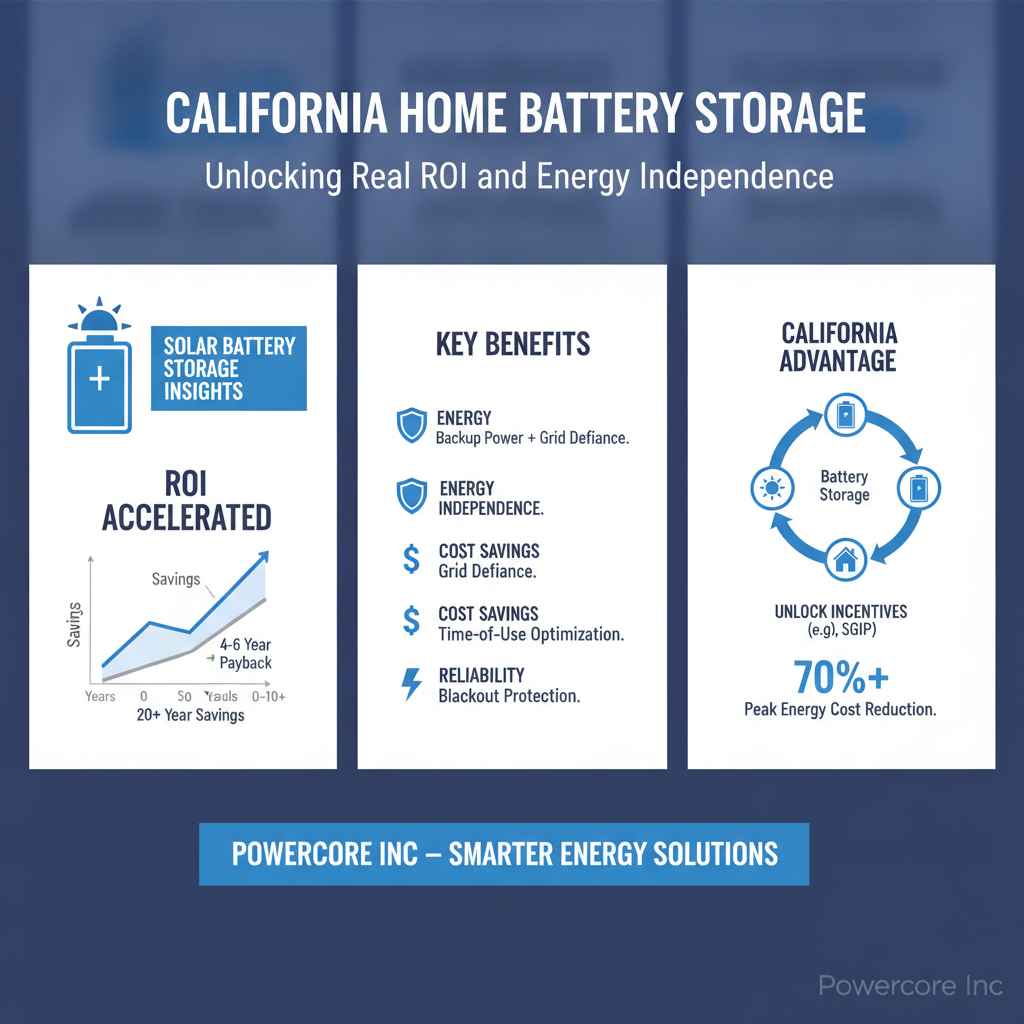
Scenario Example: A California Homeowner's ROI
Consider a typical California family with an average monthly electricity bill of $300, a 7kW solar system, and a desire for outage protection. Investing in a 10-13 kWh battery storage system might look something like this:
- Initial Investment: ~$12,000 - $18,000 (installed, before incentives)
- Federal Tax Credit (30%): Reduces cost by ~$3,600 - $5,400
- SGIP Rebate: Can further reduce cost by several thousands, depending on eligibility and capacity. (Note: SGIP funding varies and tiers can close.)
- Net Cost: Potentially as low as $6,000 - $10,000 after incentives.
- Monthly Savings: $50 - $150/month from TOU arbitrage and increased self-consumption, depending on utility rates and usage patterns.
- Payback Period: 5-10 years, often less with aggressive TOU optimization and high incentive eligibility.
- Beyond Payback: For the remaining 5-10+ years of the battery's life, these monthly savings continue, providing pure profit, alongside the invaluable peace of mind during outages and enhanced property value.
This simplified example highlights the significant financial leverage incentives provide and the ongoing savings that contribute to a compelling ROI.
Choosing the Right Battery Storage System for Your California Home
Selecting the optimal battery storage system is crucial for maximizing your ROI. Powercore Inc guides clients through considerations such as:
- Capacity (kWh): How much energy do you need to store? This depends on your household's daily energy consumption, critical loads you want to back up, and your solar production.
- Power Output (kW): How many appliances do you want to run simultaneously? Higher power output allows you to run more devices at once.
- Battery Chemistry: Lithium-ion batteries (e.g., LiFePO4) are the industry standard due to their efficiency, lifespan, and safety.
- Inverter Type: Hybrid inverters that manage both solar and battery power are increasingly common.
- Brand Reputation & Warranty: Invest in reputable brands with strong warranties to protect your investment.
- Expandability: Can you add more battery capacity later if your energy needs change or your family grows?
Powercore Inc: Your Trusted Partner for Energy Independence
Navigating the complexities of solar and battery storage in California requires expertise. As a dual-licensed General B & C-10 Electrical Contractor, Powercore Inc offers comprehensive services, from initial energy audits and system design to seamless installation and ongoing support. We understand California's unique regulations, incentive programs, and utility structures, ensuring your system is not only optimized for performance but also for maximum financial return.
Our team provides tailored solutions that integrate seamlessly with your existing infrastructure, whether you're adding storage to an existing solar system, planning a new residential solar installation, or even considering whole-home remodels or ADUs that benefit from integrated energy solutions.
The Future Is Now: Investing in Long-Term Value
The decision to invest in home battery storage in California is more than just a purchase; it's a strategic investment in your home's future, your financial stability, and the planet. The ROI extends beyond the balance sheet, offering unparalleled peace of mind, energy security, and a significant step towards true energy independence.
As California continues its energy transition, homes equipped with battery storage will be better positioned to adapt to changing policies, capitalize on smart grid opportunities, and maintain comfort and security regardless of external circumstances.
Ready to Unlock Your Home's Energy Potential?
Don't let the complexities of California's energy landscape deter you. Powercore Inc is here to simplify the process and design a custom solar and battery storage solution that aligns with your specific needs and financial goals. Our experts will help you navigate incentives, understand your true ROI, and ensure a professional, reliable installation.
Take the first step towards energy independence and significant savings. Contact Powercore Inc today for a personalized consultation. Call us at 916-699-8778 or visit our contact page to schedule an appointment. Let us help you power your future.