

Introduction: The Evolving Landscape of California Home Energy
California homeowners face a dynamic and often challenging energy landscape. From escalating utility rates and complex Time-of-Use (TOU) pricing structures to the growing threat of grid instability and Public Safety Power Shutoffs (PSPS), managing home energy has become more critical than ever. Add to this the rapid adoption of electric vehicles (EVs), the transition to all-electric appliances, and the increasing reliance on residential solar and battery storage, and it's clear that traditional electrical systems are simply not designed for the demands of a modern, resilient California home.
Enter load management panels – the unsung heroes and central nervous system of truly smart home energy. These advanced electrical panels go far beyond simply distributing power; they intelligently monitor, prioritize, and dynamically control your home's energy flow, creating a harmonious and highly efficient ecosystem. For California residents striving for energy independence, significant savings, and peace of mind during outages, understanding and implementing strategic load management is no longer a luxury – it's a necessity.
At Powercore Inc, a leading California dual-licensed General B & C-10 Electrical Contractor, we specialize in empowering homeowners to take control of their energy destiny. This comprehensive guide will explore the transformative potential of load management panels, detailing how they integrate with your solar, battery, and EV charging systems to build a more efficient, resilient, and future-proof home.
What Are Load Management Panels? More Than Just a Circuit Breaker Box
Beyond the Traditional Panel: A Paradigm Shift in Home Electrics
To truly appreciate the innovation of load management panels, it's essential to understand their distinction from conventional electrical panels. A traditional panel is a passive distribution hub: it receives power from the grid and routes it to various circuits, with circuit breakers acting as safety switches to prevent overloads. It has no intelligence, no ability to communicate, and no capacity to adapt to changing energy conditions.
Load management panels, also known as smart electrical panels or energy management systems, represent a fundamental upgrade. They are active, intelligent hubs equipped with sophisticated software and hardware that allow them to:
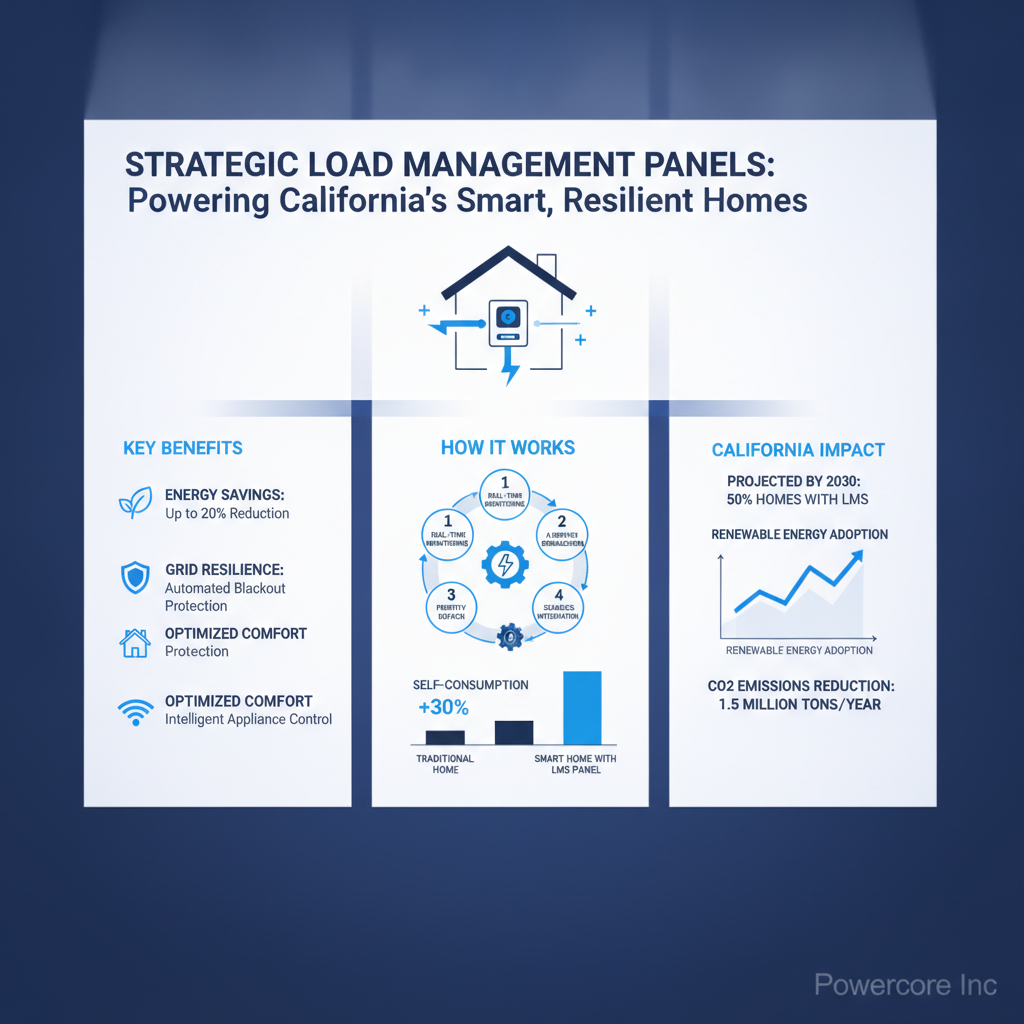
- Monitor Energy Usage in Real-Time: Track consumption across individual circuits, identifying energy hogs and patterns.
- Prioritize Loads: During peak demand or power outages, automatically determine which appliances and systems are most critical (e.g., refrigeration, medical devices) and ensure they receive power.
- Dynamically Allocate Power: Shift energy between sources (grid, solar, battery) and loads based on preset rules, utility rates, and available power.
- Communicate with Smart Devices: Integrate seamlessly with smart home platforms, solar inverters, battery storage systems, and EV chargers for a unified energy strategy.
- Enable Remote Control & Automation: Manage your home's power from anywhere via a smartphone app, setting schedules and optimizing performance.
Think of it as upgrading from a simple switchboard to a sophisticated command center, putting you in the driver's seat of your home's energy consumption and resilience.
Why California Homes Demand Advanced Load Management
The Golden State's Unique Energy Challenges
California's progressive energy policies and environmental leadership come with distinct challenges that make load management panels particularly vital:
- High & Volatile Utility Rates: California boasts some of the highest electricity prices in the nation. Utility providers like PG&E and SCE increasingly rely on complex Time-of-Use (TOU) rate structures, where electricity costs significantly more during peak evening hours. Without smart load management, homeowners often incur substantial costs simply by running appliances at the wrong time.
- Grid Reliability & Power Outages: Wildfires, extreme weather events, and an aging infrastructure contribute to frequent and sometimes prolonged power outages across California. Public Safety Power Shutoffs (PSPS) have become a regular occurrence, leaving many homes in the dark. Load management panels are crucial for maintaining essential power during these events, especially when paired with battery storage.
- NEM 3.0 & Solar Optimization: The updated Net Energy Metering (NEM 3.0) policy has shifted the financial incentives for solar homeowners. Maximizing self-consumption of generated solar power and intelligently charging/discharging home battery storage is now paramount for achieving a strong Return on Investment (ROI). Load management panels are key to this optimization, ensuring your solar energy is used efficiently before sending any excess to the grid at less favorable rates.
Rising Energy Demands and Electrification
Beyond grid complexities, the modern California home is simply more energy-intensive and electrified than ever before:
- Electric Vehicles (EVs): California leads the nation in EV adoption. Charging an EV at home, especially multiple EVs, can place immense strain on a traditional electrical panel, often requiring costly service upgrades. Load management panels intelligently balance EV charging with other household demands, preventing overloads and optimizing charging times to avoid peak utility rates. Read more about integrated smart home energy in our article: Smart Home Energy Automation: Maximizing Efficiency & Resilience in California.
- All-Electric Homes: The push for decarbonization means more homeowners are switching to electric heat pumps for HVAC, induction cooktops, and other high-demand electric appliances. This increased electrical load necessitates a smarter approach to power distribution.
- Smart Home Technology: From smart thermostats to advanced entertainment systems, our homes are filled with devices that, while individually low-power, collectively add to the electrical demand and require intelligent integration for optimal performance and energy savings.
The Core Benefits: Efficiency, Resilience, and Savings
Investing in load management panels offers a trifecta of advantages for California homeowners:
Maximizing Energy Efficiency
An intelligent panel provides unprecedented insight and control over your home's energy use. By identifying phantom loads, optimizing appliance schedules, and ensuring power is directed precisely where and when it's needed, these systems significantly reduce waste. Real-time data empowers homeowners to make informed decisions, leading to a noticeable reduction in overall consumption.
Enhancing Home Resilience
During a power outage, the ability of a load management panel to intelligently interact with your solar and battery storage system is invaluable. Instead of simply backing up a few circuits, the panel can dynamically shift critical loads onto battery power, extending your backup duration and ensuring essential systems like refrigerators, medical equipment, and communication devices remain operational. This strategic prioritization means you get the most out of your stored energy, providing true peace of mind.
Significant Cost Savings
The financial benefits are substantial, especially in California's high-cost energy market:
- TOU Optimization: Automatically shifting high-draw activities (like EV charging or laundry) to off-peak hours when electricity is cheapest.
- Reduced Peak Demand Charges: For homes with solar and batteries, the panel can prevent drawing expensive grid power during peak demand, instead utilizing stored solar energy.
- Maximizing Solar Self-Consumption: Ensuring every watt generated by your residential solar system is used optimally within your home before exporting to the grid under less favorable NEM 3.0 terms.
Future-Proofing Your Investment
As energy technologies continue to evolve, a smart load management panel ensures your home's electrical infrastructure is ready for whatever comes next. It provides the flexibility to seamlessly integrate future upgrades, whether it's another EV charger, more battery storage, or even vehicle-to-grid (V2G) capabilities. It's an investment that grows with your energy needs and the pace of innovation.
Integrating Load Management with Key Smart Home Technologies
The true power of load management panels lies in their ability to orchestrate the various energy-producing and consuming elements of your California smart home. This integration creates a synergistic effect, where the sum is far greater than its parts.
Solar Power Systems
With a smart panel, your solar power system moves beyond simple generation. The panel intelligently monitors solar production in real-time, directing excess energy to charge your battery, power high-demand appliances, or even divert to EV charging during optimal sun hours. This ensures maximum utilization of your free, clean energy and reduces reliance on the grid, especially during expensive peak periods.
Battery Storage
Home battery storage becomes profoundly more effective with a load management panel. The panel can be programmed to:
- Charge from Solar: Prioritize charging the battery with excess solar generation.
- Charge from Grid (Off-Peak): Strategically charge the battery from the grid during the cheapest, off-peak hours.
- Discharge During Peak/Outages: Automatically switch to battery power during expensive peak hours or grid outages, ensuring critical loads are met.
- Optimize Based on Forecasts: Some advanced systems can even integrate with weather forecasts to prepare for cloudy days or potential outages.
EV Charging
Perhaps one of the most significant advantages for California homeowners is the seamless integration with EV charging solutions. Level 2 EV chargers can draw substantial power, and without proper management, they can overload a panel or lead to expensive peak-hour charging. A load management panel:
- Prevents Overloads: Dynamically reduces the charging rate of the EV if other household demands risk exceeding the panel's capacity.
- Optimizes Charging Times: Ensures your EV charges during off-peak hours or when solar production is abundant, saving you money.
- Prioritizes Power: In an outage, the panel can decide whether to charge the EV or prioritize essential household loads based on your preferences.
Smart Appliances & HVAC
The panel can also communicate with smart appliances and HVAC systems, allowing for automated energy shedding during peak times or outages. Imagine your water heater or pool pump automatically deferring operation for an hour when grid power is expensive, without you lifting a finger.
Choosing and Installing Your Load Management Panel: The Powercore Inc Advantage
Selecting and installing the right load management panel system requires careful consideration and expert execution. This isn't a DIY project; it involves significant electrical work and integration with complex systems.
Key Considerations for Your California Home
- Current & Future Energy Needs: Assess your present electricity consumption and anticipate future additions like EVs, ADUs, or further electrification. A comprehensive energy audit is a great starting point.
- Compatibility: Ensure the chosen panel is compatible with your existing or planned solar inverter, battery storage system, and smart home ecosystem.
- Scalability: Opt for a system that can easily expand as your energy demands or technology evolves.
- Utility Rates: Understand your specific utility's (e.g., PG&E, SCE) TOU rates and incentive programs to ensure the panel is programmed for maximum savings.
- Budget & ROI: While an investment, the long-term savings and increased resilience often provide a compelling Return on Investment.
The Installation Process: Precision and Expertise
A professional installation typically involves:
- Site Assessment: A licensed electrician evaluates your current electrical system, energy usage patterns, and future goals.
- System Design: Customized planning for the panel, considering integration with solar, battery, EV chargers, and other smart devices.
- Permitting & Upgrades: Navigating California's stringent electrical codes and securing necessary permits. This may include service upgrades if your existing main panel is insufficient.
- Installation & Wiring: Meticulous installation of the new panel, wiring, and integration with all connected systems.
- Configuration & Testing: Programming the software to optimize for your specific energy goals, TOU rates, and resilience priorities, followed by thorough testing to ensure seamless operation.
Why Powercore Inc is Your Trusted Partner
Choosing the right contractor for such a critical upgrade is paramount. Powercore Inc stands out as California's expert authority, holding both a General B (CSLB #1134334) and a C-10 Electrical Contractor (CSLB #1098175) license. This dual licensure means we possess the comprehensive expertise to handle not just the electrical aspects, but also the broader construction and integration required for complex remodels and new construction projects that often accompany these advanced energy systems.
Our team understands the nuances of California's energy market, from NEM 3.0 intricacies to local utility regulations. We provide end-to-end solutions, ensuring your load management panels are perfectly integrated with your solar and battery storage, EV charging infrastructure, and overall smart home ecosystem. With Powercore Inc, you're not just getting an installation; you're gaining a partner dedicated to optimizing your home's energy performance for years to come.
Navigating California Incentives for a Smarter Home
While specific incentives directly for load management panels are rare, their integration with renewable energy systems can make your overall smart home energy investment more attractive. Key programs and credits to consider include:
- Federal Residential Clean Energy Credit: This federal tax credit (formerly the Investment Tax Credit) offers a 30% credit for the cost of new, qualified clean energy property for your home, including solar panels and home battery storage. Because load management panels are integral to the efficient and safe operation of these systems, their costs may be indirectly factored into eligible expenditures. For more details, consult the IRS Residential Clean Energy Credit guidelines or a qualified tax professional.
- Local Utility Programs: Some California utilities may offer specific demand response programs or incentives for smart energy devices that help reduce grid strain during peak hours. Powercore Inc can help you understand programs available in your specific service area.
Conclusion: Take Control of Your California Home's Energy Future
In a state where energy challenges are as significant as its innovation, load management panels emerge as an indispensable tool for the modern California homeowner. They are the intelligent core that transforms a disparate collection of smart devices into a unified, high-performing energy ecosystem, delivering unparalleled efficiency, unwavering resilience, and substantial cost savings.
By empowering your home to intelligently manage its power flow, you're not just upgrading an electrical box; you're investing in energy independence, future-proofing your property, and contributing to a more sustainable California. Don't let your home's energy strategy remain stuck in the past. Embrace the future with Powercore Inc.
Ready to unlock the full potential of your home's energy? Contact Powercore Inc today for a personalized consultation. Our expert team is ready to design and install a strategic load management solution tailored to your California home's unique needs. Call us at 916-699-8778 or visit our contact page to get started on your journey to ultimate energy control.