

The Hidden Energy Hog in Your California Home
In the quest for a more energy-efficient and cost-effective home, many Californians meticulously plan their solar installations, upgrade to smart thermostats, and even invest in EV charging solutions. Yet, one of the biggest energy consumers often goes overlooked: the water heater. Traditionally, this essential appliance silently siphons a significant portion of your home’s energy, continuously heating water whether you need it or not. For homeowners across the Golden State, where Time-of-Use (TOU) electricity rates can make energy costs fluctuate wildly throughout the day, this constant demand can lead to surprisingly high utility bills.
But what if your water heater could be smarter? What if it could anticipate your hot water needs, avoid peak pricing hours, and even integrate seamlessly with your home’s broader energy ecosystem? Enter the world of smart water heater scheduling – a powerful yet often underestimated strategy for dramatically reducing energy consumption and saving money. As a leading dual-licensed General B and C-10 Electrical Contractor based in Roseville, Powercore Inc is at the forefront of integrating these intelligent solutions into California homes, helping you take control of your energy future.
Understanding Your Water Heater's Energy Footprint
Before diving into smart solutions, it’s crucial to grasp just how much energy your water heater consumes. For the average American household, water heating accounts for about 14-18% of total utility costs – a figure that can be even higher in California due to our specific climate demands and energy pricing structures. Traditional tank-style water heaters operate on a simple principle: they heat a large reservoir of water and then maintain that temperature, often reheating several times a day as the water cools, regardless of actual usage.
Factors influencing this consumption include:
- Tank Size: Larger tanks require more energy to heat and maintain temperature.
- Insulation: Older or poorly insulated tanks lose heat faster, leading to more frequent reheating cycles.
- Usage Habits: Frequent, long showers, running multiple hot water appliances simultaneously (like dishwashers and washing machines), or having a large family significantly increases demand.
- Water Temperature Setting: Higher temperature settings mean more energy expended.
- Ambient Temperature: In colder garages or basements, the water heater works harder to maintain temperature.
- Fuel Type: Electric water heaters tend to be more expensive to operate than natural gas in many areas, but advanced electric heat pump models can be significantly more efficient.
In California, where the push towards electrification is strong and natural gas prices can also be volatile, optimizing electric water heating is paramount. The continuous heating cycle of a conventional water heater is particularly problematic under California’s Time-of-Use (TOU) electricity rates. During peak demand hours – typically late afternoon and early evening – electricity prices can be several times higher than during off-peak or super off-peak periods. A water heater that fires up during these expensive windows is essentially burning money.
The Rise of Smart Water Heaters: Intelligent Control for California Homes
The evolution of water heating has moved far beyond the simple thermostat. Modern smart water heaters, or smart controllers retrofitted to existing units, bring a new level of intelligence and efficiency to your home’s hot water supply. These devices leverage advanced technology to give homeowners unprecedented control and insight into their hot water usage.
What makes a water heater "smart"?
- Connectivity: Most smart water heaters connect to your home Wi-Fi, allowing for remote monitoring and control via a smartphone app.
- Advanced Sensors: Beyond just temperature, some units have flow sensors, leak detection, and even pressure monitoring.
- Learning Algorithms: Many smart systems can learn your household’s hot water consumption patterns over time, anticipating demand and optimizing heating cycles.
- Integration Capabilities: They can often integrate with other smart home platforms (like Google Home or Amazon Alexa) and, crucially for California, with solar panels and battery storage systems.
Types of Smart Water Heating Solutions
- Smart Electric Heat Pump Water Heaters (HPWHs): These are among the most efficient water heaters available. Instead of generating heat directly, they move heat from the surrounding air to the water, similar to how a refrigerator works in reverse. When combined with smart controls, they can be programmed to run during off-peak TOU hours, drastically reducing operational costs. Powercore Inc specializes in HVAC climate control solutions, which often includes the installation and integration of these advanced systems.
- Electric Resistance Water Heaters with Smart Features: Some traditional electric tank water heaters now come with integrated smart modules, allowing for scheduling and remote control.
- Smart Water Heater Controllers/Adapters: For homeowners not ready to replace their entire unit, aftermarket smart controllers can be installed on existing electric water heaters. These devices plug into an outlet and connect to the water heater’s power, allowing you to schedule heating cycles, monitor energy use, and even activate vacation mode from your phone.
The benefits extend beyond just scheduling, including proactive leak detection (potentially preventing costly water damage), vacation modes that save energy when you're away, and diagnostic reporting that can alert you to potential issues before they become major problems.
Strategic Scheduling: Mastering California's TOU Rates
For California homeowners, smart water heater scheduling isn't just about convenience; it's a strategic imperative to combat rising energy costs and maximize savings under Time-of-Use (TOU) rate structures. Most major utilities in California, including PG&E, SCE, and SDG&E, have transitioned residential customers to TOU plans, where the cost of electricity varies depending on the time of day, day of the week, and season.
- Peak Hours: The most expensive times, typically late afternoon/early evening when electricity demand is highest (e.g., 4 PM - 9 PM).
- Off-Peak Hours: Moderately priced times, usually during the day before peak and late evening after peak.
- Super Off-Peak Hours: The least expensive times, often overnight and early mornings when demand is lowest.
A smart water heater's ability to precisely control when it heats water allows you to shift its significant energy consumption away from expensive peak periods to cheaper off-peak or super off-peak hours. Imagine waking up to a hot shower knowing the water was heated overnight at the lowest possible rate, or running your dishwasher in the morning without incurring peak charges because your smart water heater ensured there was plenty of hot water pre-heated.
Advanced smart water heaters and controllers utilize sophisticated algorithms to learn your family’s hot water patterns. They can then intelligently pre-heat water during off-peak times, storing it efficiently for use during peak hours. This effectively turns your water heater into a thermal battery, allowing you to "arbitrage" electricity prices – buying low and using when high, without actually "selling" anything back to the grid. This concept is similar to the advanced TOU arbitrage strategies employed with home battery systems, as discussed in our article, Proactive Home Automation: Mastering Energy Efficiency in California.
How Smart Scheduling Works in Practice
Implementing smart water heater scheduling is typically straightforward:
- Initial Setup: Connect your smart water heater or controller to your home’s Wi-Fi network and download the manufacturer’s app.
- Schedule Input: You can manually set schedules based on your family’s daily routines (e.g., heat water intensely from 5 AM-7 AM for morning showers, then again from 7 PM-9 PM for evening use, ensuring no heating during 4 PM-9 PM peak).
- Learning Mode: Many systems offer a "learning" or "adaptive" mode where the device monitors your hot water usage over a week or two and then proposes an optimized schedule.
- TOU Integration: Some advanced systems can even connect to your utility's TOU rate data (if available via API) or allow you to input your specific peak/off-peak windows, further refining their scheduling for maximum savings.
- Override Capabilities: Need extra hot water for guests or a deep cleaning session? Most apps allow for temporary overrides or "boost" functions.
Different Scheduling Strategies for Maximum Impact
- Daily Routine Optimization: Heat water primarily during super off-peak hours (e.g., 12 AM - 6 AM) to build up a reserve for morning use, then a smaller reheat cycle during mid-day off-peak if needed, completely avoiding peak hours.
- Vacation Mode: When you're away, activate vacation mode to maintain the water at a minimal temperature or turn it off entirely, preventing unnecessary energy waste.
- Pre-heating for High Demand: If you know you'll have exceptionally high hot water demand (e.g., hosting visitors, laundry day), you can manually pre-heat during a cheap period to ensure ample supply.
- Solar Integration: For homes with residential solar & storage, a smart water heater can be programmed to heat water primarily when your solar panels are generating excess electricity, further reducing reliance on grid power and minimizing utility costs. This is a game-changer for overall home energy independence.
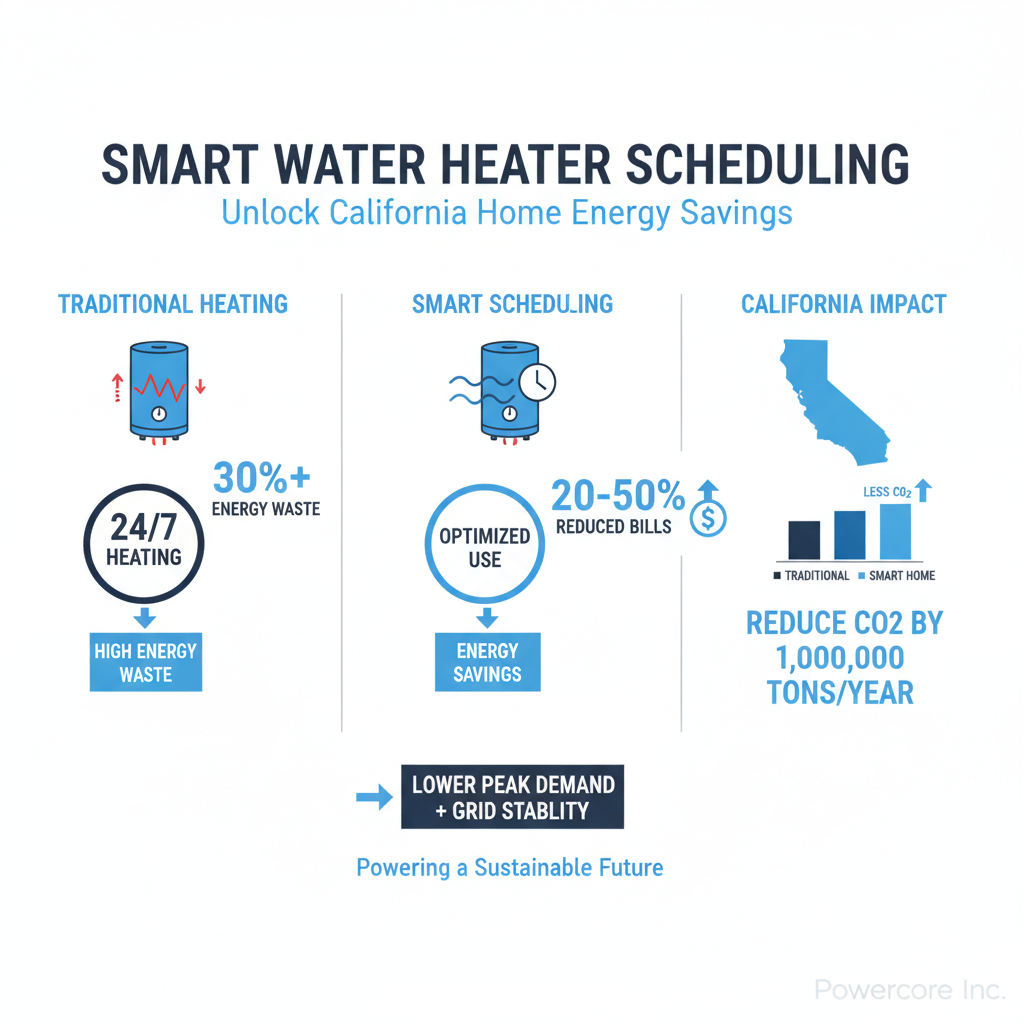
Beyond Savings: The Broader Benefits of Smart Water Heating
While the immediate financial savings are often the primary motivator, smart water heater scheduling offers a wealth of other advantages that contribute to a more comfortable, convenient, and environmentally responsible California home.
Enhanced Comfort and Convenience
Paradoxically, by reducing unnecessary heating, smart water heaters can actually enhance your comfort. Instead of a "dumb" system that heats constantly, a smart system ensures hot water is ready when you need it. No more running out of hot water unexpectedly during peak usage times because the system was optimized. Remote control via an app means you can adjust settings, check status, or initiate a "boost" from anywhere, ensuring your hot water is perfectly aligned with your lifestyle.
Environmental Impact and Grid Support
By shifting significant energy loads away from peak demand, smart water heaters play a crucial role in supporting California's electrical grid. Peak demand often relies on less efficient, "peaker" power plants that kick in only when the grid is strained. Reducing this demand means less reliance on these plants, which often have higher emissions. Furthermore, by optimizing energy consumption, especially when integrated with solar & battery systems, smart water heaters contribute to a lower overall carbon footprint for your household. They are a tangible step towards achieving the goals outlined in articles like Essential Energy: Practical Steps for Eco-Conscious Homeowners.
This intelligent load shifting is a key component of California’s broader smart grid initiative, enabling a more resilient and sustainable energy future for the state.
Installation and Integration: Why Professional Expertise Matters
While the concept of smart water heater scheduling is compelling, the successful implementation and integration of these systems require specialized knowledge and expertise. This is where a trusted, dual-licensed contractor like Powercore Inc becomes indispensable.
Installing a new smart water heater, especially a heat pump model, involves a complex interplay of electrical and plumbing work. Heat pump water heaters require adequate clear space around them for air circulation and proper condensate drainage. Electrical requirements might differ from a traditional unit, potentially necessitating dedicated circuits or wiring upgrades. Furthermore, ensuring proper insulation, venting, and safety measures are crucial for both efficiency and home safety.
Powercore Inc holds both a California CSLB #1134334 (General B) and #1098175 (C-10 Electrical) license. This dual licensure signifies our comprehensive expertise in both general construction and specialized electrical systems. It means we don't just swap out a unit; we assess your home's entire energy landscape, ensuring the new smart water heater is properly sized, safely installed, and seamlessly integrated into your existing infrastructure.
For homes with solar panels or contemplating a residential solar & storage system, Powercore Inc's expertise is particularly valuable. We can design and install a system where your smart water heater works in harmony with your solar production, consuming excess solar energy during the day to heat water, further maximizing your self-consumption and reducing your reliance on the grid. This holistic approach to home energy management is what sets Powercore Inc apart.
Choosing the Right Smart Water Heater for Your California Home
Selecting the ideal smart water heating solution involves several considerations:
- Type: Decide between a full smart heat pump water heater (most efficient), a smart electric resistance unit, or a smart controller for your existing electric tank.
- Size: Proper sizing is critical. Too small, and you run out of hot water; too large, and you're wasting energy heating unused water. A professional assessment considers household size, hot water demand, and recovery rates.
- Smart Features: Evaluate the app interface, learning capabilities, integration with other smart home systems, and specific scheduling options.
- Budget: While initial costs for smart HPWHs can be higher, significant long-term energy savings and potential incentives can offset the investment.
- Incentives: California often offers various rebates and incentives for energy-efficient appliance upgrades. Your Powercore Inc expert can help you navigate these opportunities, though specific programs vary and should always be verified.
Consulting with an experienced contractor like Powercore Inc ensures you make an informed decision tailored to your specific needs, budget, and California's unique energy environment. We provide transparent guidance on the best solutions, considering everything from installation complexities to long-term operational costs.
Powercore Inc: Your Partner in Smart Home Energy Management
At Powercore Inc, we believe in empowering California homeowners with intelligent solutions that enhance comfort, reduce costs, and contribute to a sustainable future. From our base in Roseville, CA, we proudly serve homeowners across the entire state, bringing unparalleled expertise in electrical, solar, HVAC, and general construction services.
Our dual licensing (California CSLB #1134334 General B and #1098175 C-10 Electrical) means we are uniquely qualified to handle all aspects of your smart home energy projects, ensuring every installation is safe, compliant, and optimized for peak performance. Whether you're looking to integrate smart water heater scheduling, explore solar and battery storage, upgrade your HVAC system, or undertake a whole-house remodel, Powercore Inc is your trusted partner.
We are committed to helping you navigate California's evolving energy landscape, providing solutions that not only save you money but also increase your home's value and resilience.
Take Control of Your Hot Water and Energy Bills Today
Don't let your water heater be an overlooked drain on your wallet and the environment. Embrace the power of smart water heater scheduling and transform one of your home's biggest energy consumers into a smart, efficient asset. With Powercore Inc, optimizing your hot water system is a seamless and rewarding experience.
Ready to unlock significant savings and elevate your home's energy intelligence? Contact Powercore Inc today for a consultation tailored to your California home. Our experts are standing by to help you design a smarter, more efficient hot water solution. Call us now at 916-699-8778 to get started on your journey to energy independence and lower utility bills.