

Stucco Trouble? Navigating Stucco Repair vs. Siding Replacement for California Homes
California homes, with their diverse architectural styles, often feature stucco as a popular and aesthetically pleasing exterior finish. From Spanish Colonial to Mediterranean revival, stucco has long been celebrated for its distinctive texture, durability, and fire-resistant qualities. However, even the most well-applied stucco is not impervious to the relentless forces of California's climate – from seismic activity and intense sun to occasional heavy rains and fluctuating humidity. Over time, these elements can lead to cracks, water intrusion, mold growth, and a host of other issues that compromise both your home's integrity and curb appeal.
When faced with deteriorating stucco, homeowners in the Golden State are presented with a critical decision: should you pursue extensive stucco remediation and repair, or is it a more strategic, long-term investment to opt for a complete siding replacement? This isn't merely a aesthetic choice; it's a significant financial and structural one that impacts your home's value, energy efficiency, and overall longevity. As a leading dual-licensed General B & C-10 Electrical Contractor serving all of California, Powercore Inc understands the unique challenges and opportunities this decision presents. We're here to guide you through the complexities, offering expert insights to help you make the best choice for your property.
Understanding Stucco Failure in California: Signs and Causes
Stucco's resilience is legendary, but its vulnerability often stems from improper installation, lack of maintenance, or the sheer power of environmental stressors. Identifying the root cause of stucco failure is the first step in determining the most effective course of action.
Common Signs of Stucco Distress:
- Cracks: While hairline cracks are common and often superficial, wider cracks (larger than a credit card's thickness), spiderweb cracks, or cracks forming around openings (windows, doors) can indicate underlying structural movement or serious water damage.
- Water Stains & Discoloration: Dark streaks, green patches (algae/mold), or efflorescence (white powdery deposits) are clear indicators of moisture intrusion and retention within the stucco system.
- Soft Spots & Crumbling: If stucco feels soft to the touch, crumbles easily, or detaches from the substrate, it suggests extensive water damage and rot of the underlying sheathing.
- Bulging or Delamination: Sections of stucco that appear to bulge outwards or have separated from the wall indicate a loss of adhesion, often due to water freezing and expanding behind the surface.
- Pest Infestations: Termites, ants, and other pests are attracted to moisture and decaying wood, often finding easy entry points through compromised stucco.
California-Specific Factors Contributing to Stucco Failure:
- Seismic Activity: Earthquakes, even minor ones, can cause micro-fractures in stucco, creating pathways for water intrusion.
- Extreme Temperature Swings: The hot, dry summers and cooler, sometimes wet winters cause stucco to expand and contract, leading to stress cracks over time.
- Coastal Humidity & Fog: In coastal regions, persistent moisture can lead to mold and mildew issues, especially on north-facing walls or areas with poor drainage.
- Rain & Drainage Issues: While California experiences droughts, when it does rain, inadequate flashing around windows, doors, and rooflines can direct water behind the stucco.
- Improper Installation: Historical issues with stucco installation, particularly concerning proper weep screeds, flashing, and drainage planes, are common culprits in many older California homes.
Recognizing these signs early can save you significant repair costs and prevent more extensive damage. If you're observing any of these issues, it's time to consult with exterior solution experts like Powercore Inc to assess the situation thoroughly.
Option 1: Stucco Remediation & Repair – When Is It Enough?
For homeowners facing stucco issues, the initial thought is often repair. Stucco remediation involves addressing the specific problems to restore the existing exterior. This can range from minor cosmetic fixes to extensive structural interventions.
What Stucco Remediation Entails:
- Crack Repair: Filling and sealing cracks with elastomeric patch materials designed to move with the stucco.
- Patching & Re-Stuccoing: Removing damaged sections, installing new lath (wire mesh), applying fresh stucco coats, and matching texture and color. This can be challenging for older, aged stucco.
- Waterproofing & Sealing: Applying water-resistant coatings or sealants to the existing stucco surface, particularly in vulnerable areas.
- Flashing & Drainage Improvements: Repairing or installing new flashing around windows, doors, and roof-to-wall intersections, and ensuring proper weep screed function to allow moisture to escape.
- Mold & Mildew Treatment: Cleaning and treating affected areas to remove biological growth and prevent recurrence.
Pros of Stucco Remediation:
- Cost-Effective for Minor Issues: For superficial cracks or small localized damage, repair is generally less expensive than a full replacement.
- Preserves Original Aesthetic: If maintaining the home's original character and stucco appearance is a priority, repairs can help achieve this.
- Faster Project Timeline: Smaller repair jobs typically take less time to complete compared to a full siding overhaul.
Cons of Stucco Remediation:
- Temporary for Systemic Problems: If the underlying issue is widespread water intrusion or faulty original installation, repairs often act as a band-aid, with problems recurring elsewhere.
- Matching Challenges: Achieving a perfect match in color and texture with aged stucco can be incredibly difficult, leading to visible patches.
- Does Not Address Root Causes: Unless the remediation includes a full re-evaluation of the moisture management system, it might not prevent future issues.
- Lower ROI for Extensive Damage: If 30% or more of your stucco needs repair, the cumulative cost and likelihood of future problems often make it a less valuable investment than replacement.
When is stucco remediation suitable? If your stucco damage is truly minimal, isolated, and not indicative of a broader systemic failure, targeted repair can be a viable option. However, for anything more extensive, especially in California's challenging climate, it's crucial to consider the long-term implications.
Option 2: Full Siding Replacement – A Transformative Solution
For many California homeowners, particularly those with significant or recurring stucco issues, a full siding replacement offers a more robust, long-term, and often transformative solution. This involves completely removing the old stucco and installing a new, modern siding system.
Popular Siding Materials for California Homes:
- Fiber Cement Siding (e.g., James Hardie): Extremely popular in California due to its exceptional durability, fire resistance (critical in wildfire-prone areas), resistance to pests, rot, and moisture. It comes in a variety of styles, including planks, shingles, and panels, mimicking wood or stucco, and offers excellent longevity with low maintenance.
- Engineered Wood Siding (e.g., LP SmartSide): A strong contender, offering the look and feel of real wood without the typical maintenance drawbacks. It's highly resistant to impacts, moisture, and pests, and comes with impressive warranties. It's often chosen for its aesthetic versatility and sustainability.
- Vinyl Siding: A cost-effective option known for its low maintenance and wide range of colors and styles. Modern vinyl siding offers improved durability and insulation properties, making it a practical choice for many budgets.
- Stone Veneer & Brick: For a more premium and classic look, stone veneer or thin brick can add significant curb appeal and durability, often used as accents or for the entire exterior.
Pros of Full Siding Replacement:
- Long-Term Solution: Addresses underlying structural and moisture issues by allowing for a complete inspection and repair of the wall sheathing and framing underneath the old stucco.
- Enhanced Water Management: Modern siding systems, when properly installed with contemporary house wraps and flashing, offer superior protection against water intrusion.
- Improved Curb Appeal & Home Value: A new siding exterior can dramatically boost your home's aesthetic, making it more attractive to potential buyers and increasing its market value.
- Energy Efficiency: Many new siding options, especially when combined with insulation upgrades, can significantly improve your home's thermal performance, leading to lower energy bills.
- Reduced Maintenance: Materials like fiber cement and engineered wood require less painting and upkeep compared to traditional stucco, saving you time and money over the decades.
- Pest Resistance: Modern siding materials are designed to resist pests like termites and carpenter ants, which can be a significant concern in California.
- Fire Resistance: Especially with fiber cement, new siding can offer enhanced fire resistance, a critical consideration for many California communities.
Cons of Full Siding Replacement:
- Higher Initial Cost: This is generally a more significant investment upfront compared to basic stucco repairs.
- Longer Project Timeline: Removing old stucco and installing new siding is a comprehensive project that takes more time.
When is full siding replacement the better choice? When stucco damage is extensive, recurring, or indicative of systemic moisture issues, or if you're looking for a significant aesthetic upgrade, improved energy efficiency, and a long-term, low-maintenance solution, siding replacement emerges as the superior option. It provides a fresh start and peace of mind.
Cost Comparison and ROI for California Homeowners
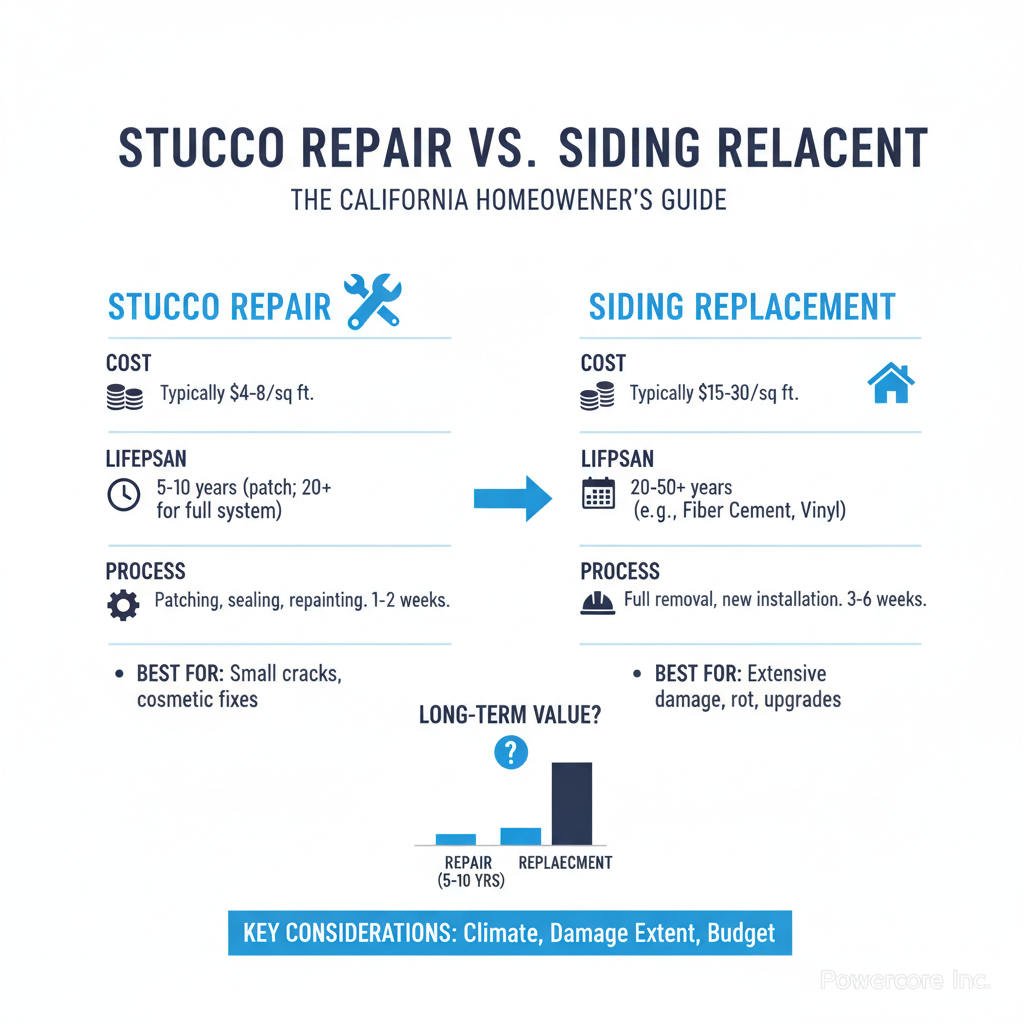
Understanding the financial implications is paramount when deciding between stucco repair and full siding replacement. Costs in California can vary widely based on location (e.g., Bay Area vs. Central Valley), home size, material choices, and the complexity of the project.
Stucco Remediation Costs in California:
- Minor Crack Repair: Can range from $300 to $1,500+ for small, isolated areas.
- Localized Patching (e.g., 50 sq ft): Expect to pay anywhere from $500 to $2,500+, depending on texture and color matching challenges.
- Extensive Remediation (e.g., full wall sections, moisture mitigation): This can quickly escalate to $5,000 to $20,000+, especially if water damage has affected underlying sheathing or framing.
- Full Re-Stuccoing (re-dashing): For an entire home, this could range from $7 to $15 per square foot, totaling $15,000 to $40,000+ for an average 2,000 sq ft home.
The challenge with stucco repair is that costs can accumulate quickly, and without addressing the root cause, you might be paying for the same issues repeatedly.
Siding Replacement Costs in California:
Full siding replacement generally involves a higher initial outlay, but its long-term benefits and increased home value often justify the investment.
- Vinyl Siding: Typically the most budget-friendly, ranging from $4 to $9 per square foot installed. For a 2,000 sq ft home, expect $8,000 to $18,000+.
- Engineered Wood Siding (e.g., LP SmartSide): A mid-range option, costing around $6 to $12 per square foot. Totaling $12,000 to $24,000+ for a 2,000 sq ft home.
- Fiber Cement Siding (e.g., James Hardie): A premium choice known for its durability and aesthetics, often ranging from $8 to $16 per square foot. For a 2,000 sq ft home, this could be $16,000 to $32,000+.
- Additional Costs: These figures typically include old siding removal, new materials, labor, and basic trim. Factors like extensive structural repairs, complex architectural details, or premium finishes will increase the overall cost.
Return on Investment (ROI):
While stucco remediation might seem cheaper upfront, its ROI can be limited if it doesn't solve recurring problems. A full siding replacement, particularly with quality materials like fiber cement or engineered wood, consistently ranks among the top home improvement projects for ROI. According to Remodeling Magazine's Cost vs. Value Report, siding replacement often recoups 68-75% of its cost at resale, not to mention the ongoing savings from reduced maintenance and improved energy efficiency. In California's competitive real estate market, a fresh, durable, and attractive exterior can significantly enhance your home's marketability and appraisal value.
Navigating California Regulations and Permits
Undertaking any significant exterior renovation in California requires careful attention to local and state regulations. This is where partnering with a knowledgeable, dual-licensed contractor like Powercore Inc becomes invaluable.
Building Codes and Permits:
- Local Jurisdiction: The specific requirements for permits will vary by city and county. Most major exterior work, including stucco removal and siding installation, will require a building permit to ensure compliance with local zoning and construction standards.
- Structural Integrity: Permits ensure that any structural repairs uncovered during the project (e.g., rotted sheathing or framing) are addressed safely and to code.
- Energy Efficiency (Title 24): California's Title 24 Energy Code sets strict standards for building efficiency. New siding installations, especially if they involve insulation upgrades, must comply with these requirements. A qualified contractor will ensure your project meets these standards, potentially qualifying you for local energy efficiency incentives.
- Fire Safety: In high-fire-risk areas across California, specific materials and construction methods may be mandated. Fiber cement and other fire-resistant siding options are often preferred or required in these zones.
Working with a contractor like Powercore Inc, which holds both a General B (general building) license and a C-10 Electrical license (CSLB #1134334 and #1098175 respectively), means you have a partner who understands the complexities of comprehensive home projects. We manage the permit process, ensuring all work adheres to California's stringent building codes, guaranteeing a safe, compliant, and high-quality outcome.
Making the Right Decision for Your California Home
The choice between stucco remediation and full siding replacement is a significant one, with long-term implications for your home's health, value, and aesthetic appeal. To help you make an informed decision, consider the following:
Assessment Checklist:
- Extent of Damage: Is the stucco damage localized and superficial, or widespread with signs of systemic moisture intrusion or structural compromise?
- Budget & Financial Goals: What is your immediate budget, and what are your long-term financial goals for your home (e.g., quick resale vs. decades of ownership)?
- Desired Aesthetics: Do you wish to preserve the existing stucco look, or are you open to a complete exterior transformation with a new siding material and style?
- Maintenance Commitment: Are you looking for a low-maintenance solution that requires minimal upkeep, or are you prepared for ongoing stucco maintenance?
- Energy Efficiency Goals: Is improving your home's insulation and reducing energy bills a priority? New siding often presents a prime opportunity for significant energy upgrades.
- Resale Value: How important is maximizing your home's resale value and curb appeal in California's competitive market?
The Powercore Inc Advantage:
At Powercore Inc, we don't just offer services; we offer solutions tailored to the unique needs of California homeowners. Our expertise extends beyond siding and exterior solutions to encompass roofing, HVAC, ADUs, remodels, EV charging, and more. This comprehensive understanding of home systems means we can assess your exterior issues holistically, considering how they interrelate with your roof, insulation, and overall home performance. Our dual licensing (General B & C-10 Electrical) ensures that whether your project involves exterior finishes, electrical upgrades for EV charging, or a full home remodel, we have the in-house expertise to deliver seamless, integrated solutions.
We pride ourselves on providing transparent, honest assessments. Our team will thoroughly inspect your stucco, discuss your goals and budget, and present you with a detailed breakdown of both stucco remediation and siding replacement options, complete with realistic cost estimates and project timelines. We’ll help you understand the long-term value proposition of each choice, empowering you to make the most strategic decision for your California home.
Conclusion and Your Next Step
Dealing with stucco failure can feel overwhelming, but it also presents a unique opportunity to revitalize your California home. Whether you opt for meticulous stucco remediation or a transformative siding replacement, the goal is the same: to protect your investment, enhance your home's beauty, and ensure its longevity. By understanding the signs of distress, weighing the pros and cons of each solution, and considering the long-term ROI, you can confidently move forward.
Don't let deteriorating stucco compromise your home's integrity or curb appeal any longer. For expert guidance on stucco repair vs. siding replacement, and for a comprehensive assessment of your California home's exterior needs, trust the experienced professionals at Powercore Inc. Our commitment to quality, compliance, and customer satisfaction makes us the premier choice for exterior solutions across the Golden State. Contact us today for a consultation and estimate. Call Powercore Inc at 916-699-8778 to discuss your project and discover the perfect solution for your home!