

The California Imperative: Fire-Resistant Siding for Ultimate Home Protection
California, a state renowned for its breathtaking landscapes and vibrant communities, faces an increasingly severe challenge: wildfires. Each year, these devastating events threaten homes, livelihoods, and the very fabric of our communities. For homeowners across the Golden State, safeguarding property against the threat of fire is no longer an option but a critical necessity. While defensible space and evacuation plans are crucial, one of the most impactful long-term investments you can make is in your home's exterior – specifically, its siding.
Choosing the right fire-resistant siding California can be the difference between a minor scare and catastrophic loss. Beyond simply meeting building codes, selecting materials designed to withstand extreme heat and embers provides an invaluable layer of protection, offering peace of mind in an uncertain climate. At Powercore Inc, we understand the unique challenges California homeowners face. As a dual-licensed General B & C-10 Electrical Contractor, we specialize in comprehensive exterior solutions, including advanced fire-resistant siding installations that not only protect your home but also enhance its curb appeal and energy efficiency.
Why Fire-Resistant Siding Is Non-Negotiable in California's Wildland-Urban Interface (WUI)
The term "Wildland-Urban Interface" (WUI) has become a common part of the Californian lexicon. It refers to areas where homes and communities directly intermingle with wildland vegetation, creating zones of heightened wildfire risk. A significant portion of California's population lives within or adjacent to WUI zones, making every home a potential target during wildfire season.
The Growing Threat of California Wildfires
Years of drought, overgrown forests, and climate change have exacerbated the intensity and frequency of wildfires in California. Embers, often carried miles by high winds, are a primary cause of home ignition, making the exterior envelope of your house your first line of defense. Standard siding materials, particularly certain types of wood, can act as fuel, allowing fires to spread rapidly and engulf structures.
California Building Code Chapter 7A: Your Blueprint for Safety
Recognizing the urgent need for enhanced protection, California has implemented stringent building codes, particularly for structures located in WUI areas. Chapter 7A of the California Building Code (CBC) outlines specific requirements for exterior materials, including siding, roofing, windows, and vents, designed to resist ignition from embers and radiant heat. Compliance with Chapter 7A is mandatory for new construction and often for significant renovations or additions in designated WUI zones.
These codes specify that materials must be tested and approved for fire resistance. For siding, this often means materials that are non-combustible or have a Class A fire rating (the highest possible rating), indicating they are highly resistant to ignition and do not contribute significantly to flame spread. Ignoring these regulations not only puts your property at risk but can also lead to issues with insurance, permits, and future resale value.
Peace of Mind and Property Value
Beyond regulatory compliance, investing in fire-resistant siding offers invaluable peace of mind. Knowing your home is equipped with superior protection allows you to face wildfire season with greater confidence. Furthermore, a fire-resilient home is increasingly attractive to buyers in California's competitive real estate market, potentially increasing your property's value and marketability.
Understanding Fire Ratings and Material Classifications
When evaluating fire-resistant siding options, understanding fire ratings is crucial. These ratings provide a standardized measure of a material's ability to resist ignition and spread flames.
Class A, B, and C Fire Ratings
- Class A: This is the highest fire resistance rating. Materials with a Class A rating are designed to offer the best protection against severe fire exposure, resist ignition, and prevent significant flame spread. For siding, this typically means non-combustible materials or those that have been rigorously tested to meet stringent fire performance criteria.
- Class B: Materials with a Class B rating offer moderate fire resistance, suitable for areas with moderate fire exposure.
- Class C: This rating indicates light fire resistance, suitable for areas with minimal fire exposure. In WUI zones, Class C materials are generally not compliant for siding.
For most WUI applications in California, homeowners should aim for materials that achieve a Class A fire rating or are inherently non-combustible. Always consult with a qualified contractor like Powercore Inc to ensure the materials chosen comply with your specific local WUI designation and Chapter 7A requirements.
Top Fire-Resistant Siding Options for California Homes
Choosing the right siding involves balancing fire resistance with aesthetics, durability, and budget. Here's a look at the leading fire-resistant siding materials perfect for California homes:
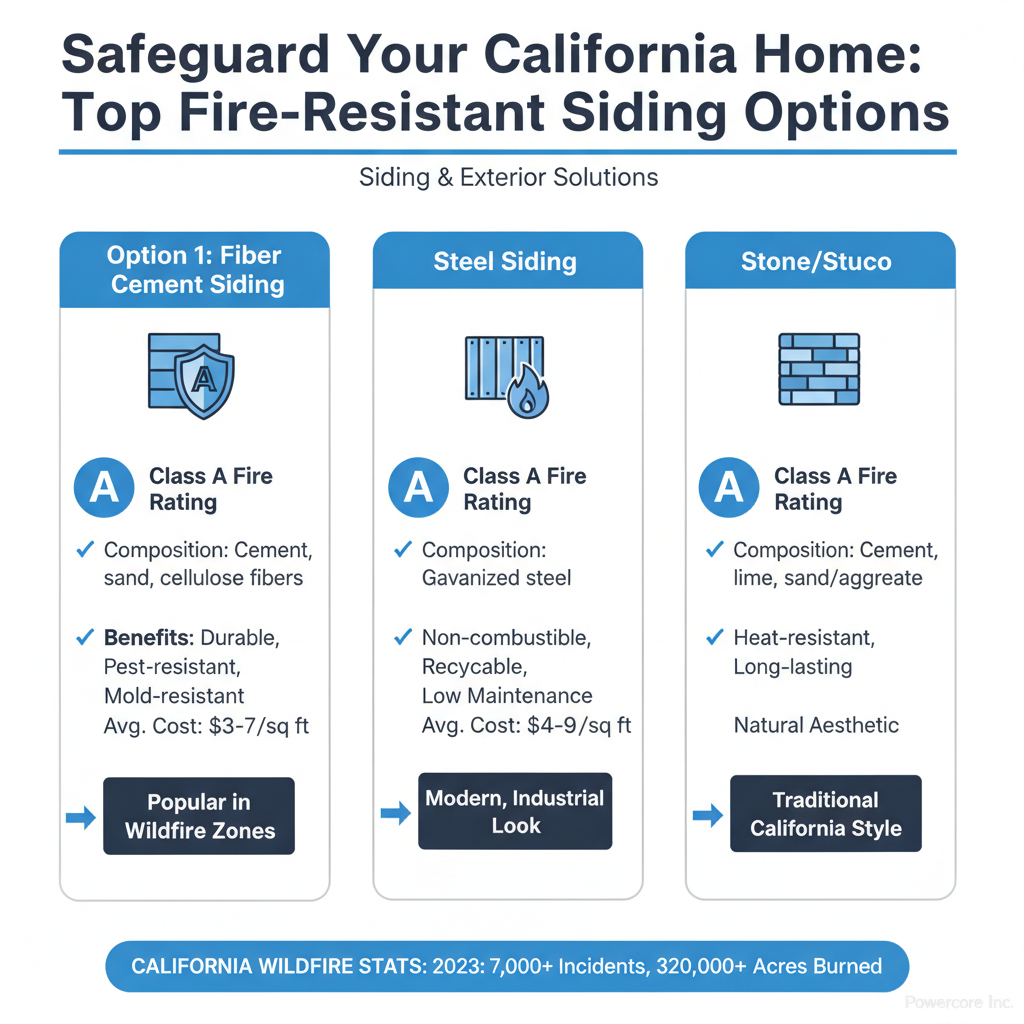
Fiber Cement Siding
- Description: Made from a mix of cement, sand, and cellulose fibers, fiber cement siding is engineered to be incredibly durable and fire-resistant. Brands like James Hardie are particularly popular and well-regarded in California.
- Fire Resistance: Inherently non-combustible, fiber cement siding typically achieves a Class A fire rating. It will not ignite when exposed to flames and helps prevent a fire from spreading.
- Pros:
- Excellent fire resistance (Class A).
- Highly durable, resistant to rot, pests, and extreme weather.
- Versatile aesthetics, mimicking wood, stucco, or masonry.
- Long lifespan (often 30-50 years).
- Low maintenance compared to wood.
- Cons:
- Heavier material, requiring professional installation.
- Can be more expensive upfront than vinyl or basic wood siding.
- Requires periodic painting (unless pre-finished).
- Cost in California: Generally ranges from $7 to $15 per square foot installed, depending on brand, style, and complexity.
Stucco
- Description: A timeless exterior finish, traditional stucco is composed of cement, lime, sand, and water, applied in multiple layers over a lath base.
- Fire Resistance: Stucco is non-combustible and provides a robust fire barrier, typically achieving a Class A fire rating. Its dense composition helps resist the penetration of embers and radiant heat.
- Pros:
- Exceptional fire resistance.
- Extremely durable and long-lasting.
- Excellent insulation properties, contributing to energy efficiency.
- Versatile in color and texture.
- Pest and rot resistant.
- Cons:
- Prone to cracking if not properly installed or due to seismic activity.
- Requires professional installation due to multi-layer application.
- Repair can be challenging to match existing texture.
- Cost in California: Typically ranges from $6 to $12 per square foot installed, varying with finish and application complexity.
Stone and Masonry Veneer
- Description: This includes natural stone, brick, or manufactured stone veneers, providing a classic, robust aesthetic.
- Fire Resistance: Stone and masonry are inherently non-combustible materials, offering superior fire resistance and a Class A rating. They act as an excellent barrier against flames and embers.
- Pros:
- Unmatched fire resistance.
- Extremely durable and long-lasting, virtually maintenance-free.
- Adds significant curb appeal and property value.
- Excellent thermal mass, aiding in temperature regulation.
- Cons:
- Highest upfront cost among siding options.
- Requires specialized, skilled installation.
- Heavy material may require additional structural support.
- Cost in California: Can range significantly from $15 to $50+ per square foot installed, depending on the type of stone/brick and labor.
Steel Siding
- Description: Made from heavy-gauge galvanized steel, this siding is known for its strength and sleek appearance.
- Fire Resistance: Steel is non-combustible and will not ignite or fuel a fire. It provides a robust Class A fire rating, making it an excellent choice for fire-prone areas.
- Pros:
- Exceptional fire resistance.
- Extremely durable, resistant to impacts, pests, and rot.
- Low maintenance.
- Modern aesthetic options.
- Cons:
- Can dent or scratch.
- Higher upfront cost than some alternatives.
- Limited color palette compared to fiber cement.
- Cost in California: Typically ranges from $8 to $18 per square foot installed.
Factors to Consider When Choosing Your Fire-Resistant Siding
Selecting the ideal fire-resistant siding involves more than just its fire rating. Consider these elements to make the best choice for your California home:
Local WUI Designation and Specific Regulations
Your property's exact location within a WUI zone can dictate specific material requirements. Always verify local fire hazard severity zones and consult with your local building department or a knowledgeable contractor like Powercore Inc to ensure compliance. We stay updated on all California Building Code Chapter 7A amendments and local ordinances.
Aesthetics and Architectural Style
Fire resistance doesn't mean sacrificing beauty. Modern fire-resistant materials come in a vast array of colors, textures, and profiles, allowing you to match or enhance your home's architectural style. Whether you prefer a rustic wood look, a sleek modern finish, or a traditional stucco facade, there's a fire-resistant option for you.
Budget: Initial Cost vs. Long-Term Value
While some fire-resistant options have a higher upfront cost, consider the long-term value. These materials often boast superior durability, lower maintenance requirements, and can significantly reduce the risk of fire damage, potentially saving you far more in the long run. They also contribute to increased property value and potentially lower insurance premiums.
Durability and Maintenance
California's climate presents challenges beyond fire, including intense sun, occasional heavy rains, and seismic activity. Choose a material that will withstand these elements with minimal maintenance. Fiber cement, stucco, and masonry are known for their longevity and resilience against rot, pests, and weather degradation.
Installation Complexity and Expertise
Many fire-resistant siding materials are heavier and require specialized installation techniques to ensure proper performance and adherence to building codes. This is where the expertise of a professional contractor like Powercore Inc becomes invaluable. Our team is skilled in handling a wide range of materials and understands the nuances of WUI-compliant installations across California.
Energy Efficiency
Some fire-resistant siding options, particularly stucco and masonry, offer inherent insulation properties that can contribute to your home's overall energy efficiency, leading to lower heating and cooling costs.
Beyond Siding: A Holistic Approach to Home Fire Safety
While fire-resistant siding is a cornerstone of home protection, it's part of a larger strategy. A truly fire-resilient home considers all vulnerabilities:
- Defensible Space: Clear vegetation and combustible materials at least 100 feet around your home.
- Roofing Materials: Opt for Class A rated roofing materials like tile, metal, or asphalt composition shingles.
- Vents: Install WUI-compliant vents with fine mesh screens to prevent ember entry.
- Windows and Doors: Use multi-pane windows with tempered glass and solid core doors to resist heat and embers.
- Decks and Eaves: Ensure these areas are also constructed with fire-resistant materials or are properly enclosed to prevent ember intrusion.
Powercore Inc offers comprehensive exterior solutions beyond siding, including roofing, decking, and HVAC systems, all of which play a role in creating a safer, more resilient California home.
The Powercore Inc Advantage: Your Trusted California Contractor
Navigating the complexities of fire-resistant building materials and California's WUI regulations requires specialized knowledge and experience. That's precisely what Powercore Inc brings to every project.
- Dual-Licensed Expertise: As a General B and C-10 Electrical Contractor (CSLB #1134334 & #1098175), Powercore Inc offers a unique blend of construction and electrical proficiency. This means we can handle not only your siding installation but also any related electrical considerations, such as outdoor lighting or EV charging installations, ensuring seamless project execution.
- California-Wide Service: From the bustling cities to remote WUI communities, Powercore Inc serves all of California. Our team understands the diverse regional challenges and specific building codes across the state.
- Commitment to Safety and Quality: We are dedicated to providing the highest quality fire-resistant siding solutions, installed to the strictest standards. Our goal is to enhance your home's safety, durability, and value for years to come.
- Comprehensive Solutions: Beyond siding, we offer a full spectrum of home improvement services, including solar, battery storage, ADUs, remodels, and more, making us your one-stop shop for a resilient and modern California home.
Cost Considerations for Fire-Resistant Siding in California
The cost of installing fire-resistant siding in California can vary widely based on several factors:
- Material Choice: As discussed, fiber cement, stucco, stone, and steel each have different price points.
- Home Size and Complexity: Larger homes or those with intricate architectural details (e.g., multiple gables, turrets) will naturally incur higher costs.
- Geographic Location: Labor and material costs can fluctuate across different regions of California.
- Existing Siding Removal: If old siding needs to be removed and disposed of, this will add to the project cost.
- Additional Work: Any necessary structural repairs, insulation upgrades, or window/door replacements done concurrently will impact the total.
While an average fire-resistant siding project in California might range from $15,000 to $50,000+, obtaining a personalized quote is essential. Powercore Inc provides detailed, transparent estimates tailored to your specific home and needs, ensuring you understand the investment and long-term value.
FAQs About Fire-Resistant Siding in California
Q: Is my home in a WUI zone?
A: You can typically check your property's WUI designation through your local fire department, planning department, or by using online mapping tools provided by the California Department of Forestry and Fire Protection (CAL FIRE).
Q: Do I need a permit to replace my siding with a fire-resistant option?
A: Yes, most significant exterior renovations, including siding replacement, require a building permit. If your home is in a WUI zone, the permit process will specifically require compliance with Chapter 7A codes. Powercore Inc can assist with navigating the permitting process.
Q: Can I paint fire-resistant siding?
A: Absolutely! Most fire-resistant siding materials like fiber cement and stucco can be painted to achieve your desired aesthetic. Many options also come pre-finished with durable, factory-applied coatings.
Q: How long does fire-resistant siding installation take?
A: The timeline varies based on the size of your home, the material chosen, and project complexity. A typical siding replacement for an average-sized home might take anywhere from 1-3 weeks. A Powercore Inc expert can provide a more accurate timeline during your consultation.
Secure Your California Home with Powercore Inc
Investing in fire-resistant siding California is a proactive step toward protecting your most valuable asset. With increasing wildfire risks, ensuring your home's exterior is resilient is paramount. Powercore Inc is your trusted partner for expert fire-resistant siding installation and comprehensive exterior solutions across California. Our licensed professionals are equipped with the knowledge and experience to guide you through material selection, ensure compliance with all WUI regulations, and deliver a superior installation that enhances both the safety and beauty of your home. Don't wait for wildfire season to be at your doorstep – take action today for lasting peace of mind. Contact Powercore Inc at 916-699-8778 to schedule a consultation and receive a free, no-obligation estimate for your fire-resistant siding project.