

Introduction: Fortifying Your California Home Against Wildfire Threats
California, a state renowned for its breathtaking landscapes and vibrant communities, also faces an undeniable reality: the increasing threat of wildfires. These natural disasters have become more frequent, intense, and destructive, prompting homeowners across the Golden State to seek robust, proactive solutions for protecting their most valuable asset – their home. While creating defensible space is paramount, the very materials that make up your home's exterior play an equally critical role in its survival. Among these, fire-resistant siding options California stands as a first and formidable line of defense.
At Powercore Inc, a dual-licensed General B & C-10 Electrical Contractor based in Roseville, CA, we understand the unique challenges California homeowners face. Our mission extends beyond mere construction; we empower you with comprehensive, integrated solutions for a resilient, safe, and energy-efficient home. This deep dive into strategic fire-resistant siding is not just about choosing materials; it’s about understanding a holistic approach to home hardening that can significantly increase your property’s chances of survival against encroaching flames.
The Escalating Wildfire Threat in California: Why Siding Matters More Than Ever
The images of California wildfires have become a recurring and sobering reminder of our changing climate. From the urban interface to remote rural areas, no community feels entirely immune. Factors like prolonged droughts, higher temperatures, and an accumulation of dry vegetation create an environment ripe for rapid fire spread. In this context, every component of your home's exterior becomes a potential vulnerability or a critical shield.
When embers, driven by fierce winds, land on or near your home, they seek out combustible materials. A single ember can ignite a deck, a roof, or, most critically, your home's siding. Traditional wood siding, while aesthetically pleasing, can act as a fuel source, allowing fire to quickly spread to the interior structure. This is where strategic fire-resistant siding becomes indispensable. It’s not just about compliance with local codes; it’s about making an informed investment in your family’s safety and your home’s long-term resilience.
Understanding California WUI Codes and Chapter 7A
California has been at the forefront of developing stringent building codes to mitigate wildfire risk, particularly in designated Wildland-Urban Interface (WUI) zones. If your property falls within a WUI zone, specific regulations from Chapter 7A of the California Building Code apply to new construction and major renovations. These codes dictate the use of ignition-resistant or non-combustible materials for various exterior components, including siding.
- What is Chapter 7A? Chapter 7A outlines prescriptive requirements for building materials and construction methods to reduce ignition risk from radiant heat, direct flame contact, and flying embers during a wildfire event.
- WUI Zones: These are areas where structures and other human development meet or intermingle with wildland fuel. CalFire maps are regularly updated to identify these high-risk areas. If you're unsure whether your property is in a WUI zone, it's crucial to consult your local fire department or planning agency.
- Ignition-Resistant Materials: This classification means the material has been tested to resist ignition and combustion under specific conditions.
Adhering to Chapter 7A is not just a legal obligation in WUI zones; it's a best practice for any California homeowner seeking to enhance their home's protection. Powercore Inc's expertise ensures that any siding replacement or new installation meets or exceeds these critical safety standards.
Top Fire-Resistant Siding Options for California Homes
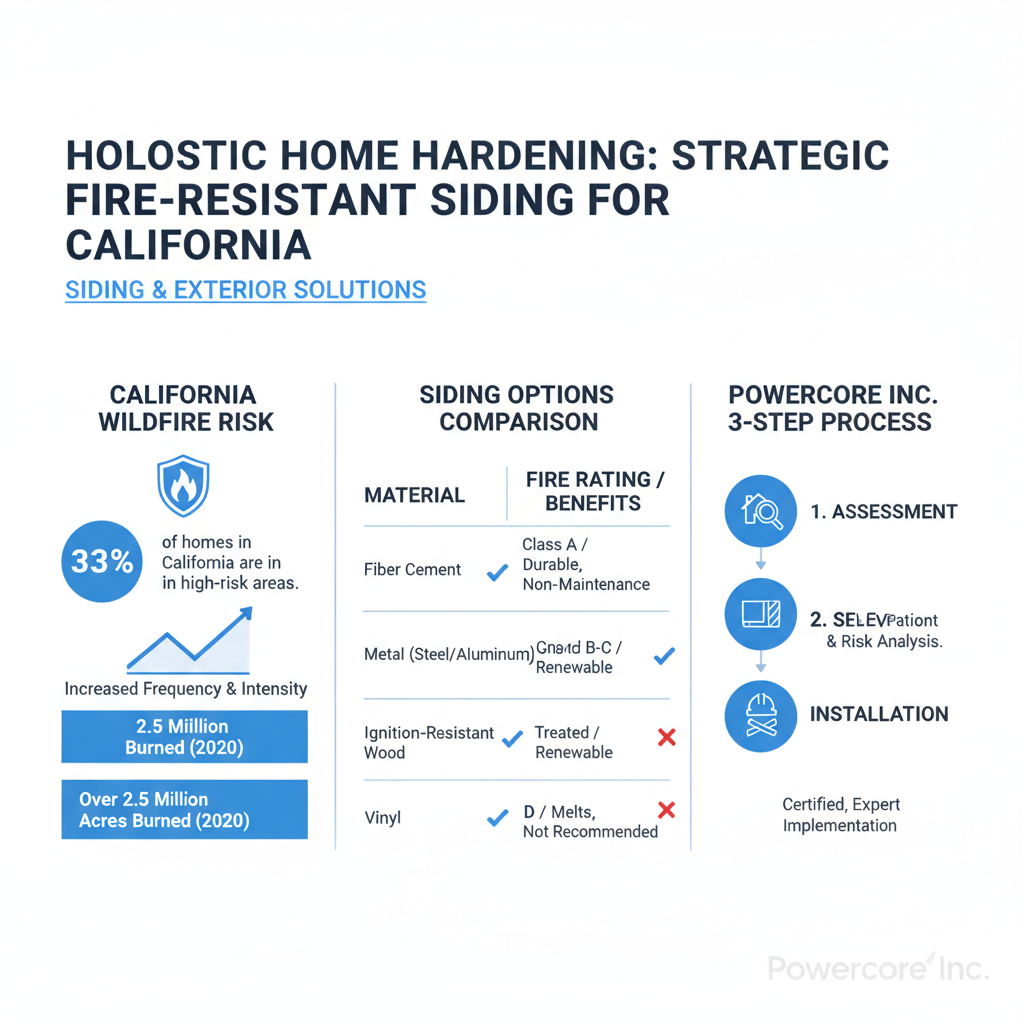
When selecting fire-resistant siding, you're looking for materials that won't easily ignite, contribute to flame spread, or melt under high heat. Here are some of the most effective options, along with their characteristics and considerations for California homeowners:
1. Fiber Cement Siding
Fiber cement is arguably the most popular and recommended fire-resistant siding option in California. Made from a blend of cement, sand, and cellulose fibers, it's incredibly durable and non-combustible.
- Pros:
- Superior Fire Resistance: Class A fire rating, meaning it has the lowest flame spread and smoke development ratings. It will not ignite or fuel a fire.
- Durability: Resistant to rot, pests, moisture, and extreme weather conditions, including high winds.
- Versatility: Available in a wide range of styles, textures, and colors, mimicking the look of wood, stucco, or masonry.
- Low Maintenance: Requires painting every 10-15 years, otherwise just occasional cleaning.
- Warranty: Often comes with excellent warranties (e.g., 30-50 years).
- Cons:
- Cost: Generally more expensive than vinyl or traditional wood siding.
- Installation Complexity: Heavy and requires specialized tools and experienced installers. Incorrect installation can lead to issues.
- Weight: Its density can sometimes require additional structural considerations, though typically not for standard homes.
- California Cost Estimate: $8 - $15+ per square foot installed, depending on brand (e.g., James Hardie), style, and labor rates in your specific region of California.
2. Stucco
A classic choice in many California architectural styles, stucco is a highly fire-resistant material composed of cement, lime, sand, and water.
- Pros:
- Excellent Fire Resistance: Naturally non-combustible and provides a continuous, seamless barrier against embers and flames. Often achieves a Class A rating.
- Durability & Longevity: Can last for decades with proper installation and minimal maintenance.
- Thermal Mass: Contributes to your home's insulation, potentially reducing energy costs.
- Aesthetics: Offers a smooth, textured, or decorative finish that is popular in Mediterranean, Spanish, and contemporary designs.
- Cons:
- Cracking: Prone to hairline cracks over time due to settling or extreme temperature fluctuations if not applied correctly.
- Moisture Issues: If not properly installed with a robust drainage plane, moisture can become trapped, leading to mold or rot in the underlying structure.
- Repair Complexity: Matching existing textures and colors can be challenging for repairs.
- California Cost Estimate: $7 - $12+ per square foot installed, varying with layers, finishes, and regional labor costs.
3. Metal Siding (Steel or Aluminum)
While less common for residential siding than fiber cement or stucco, metal siding is gaining traction for its modern aesthetic and undeniable fire-resistant properties.
- Pros:
- Non-Combustible: Steel and aluminum are inherently non-combustible and will not ignite or spread flames.
- Durability: Highly resistant to pests, rot, mold, and impact. Steel is particularly tough.
- Low Maintenance: Easy to clean and typically doesn't require painting.
- Modern Aesthetics: Available in various profiles (corrugated, flat panel, board and batten) and colors, offering a contemporary look.
- Cons:
- Denting: Aluminum can dent with strong impacts. Steel is more resistant but not impervious.
- Heat Conduction: Can get very hot in direct sunlight, though this doesn't affect its fire rating.
- Cost: Often on the higher end, especially for quality steel products.
- Noise: Can sometimes expand and contract with temperature changes, leading to slight noise.
- California Cost Estimate: $9 - $18+ per square foot installed, depending on the type of metal (steel generally more expensive), gauge, and finish.
4. Brick and Stone Veneer
For ultimate fire resistance and a classic, robust appearance, brick and stone veneer are excellent choices.
- Pros:
- Exceptional Fire Resistance: Masonry products are inherently non-combustible and provide an extremely effective barrier against fire. They have the highest fire ratings.
- Durability & Longevity: Can last for centuries with minimal maintenance.
- Aesthetics: Offers a timeless, elegant, and substantial look.
- Insulation: Adds thermal mass, contributing to energy efficiency.
- Cons:
- Cost: Significantly more expensive than other siding options due to material and labor.
- Weight: Requires a robust foundation to support the weight, which can add to construction costs for new builds or extensive remodels.
- Installation: Labor-intensive and requires skilled masons.
- California Cost Estimate: $15 - $30+ per square foot installed, varying significantly with the type of brick/stone, pattern, and complexity.
While these are the primary contenders for fire-resistant siding, it's worth noting that certain treated wood products or engineered wood siding can offer some level of fire resistance. However, they generally do not achieve the same Class A fire rating as fiber cement, stucco, or masonry, and often require more maintenance. For maximum protection in California's high-risk areas, non-combustible materials are always the superior choice.
Beyond the Surface: A Holistic Approach to Home Hardening
Choosing fire-resistant siding is a monumental step, but true home resilience against wildfires requires a comprehensive strategy. Powercore Inc's expertise as a dual-licensed General B contractor means we look at your home as an integrated system. We understand that a fire-resistant exterior is only as strong as its weakest link.
Ignition-Resistant Roofing
Your roof is the most vulnerable part of your home to airborne embers. A Class A rated roof (such as tile, metal, or specific asphalt shingles) is crucial. Powercore Inc also specializes in roofing, ensuring seamless integration of fire-safe roofing materials with your new siding, creating a complete protective envelope.
Eaves, Soffits, and Vents
These often-overlooked areas are prime entry points for embers. Upgrading to enclosed eaves, fire-rated vents (with fine mesh screening), and non-combustible soffit materials can make a significant difference. We assess these critical vulnerabilities during our consultation.
Windows and Doors
Standard windows can crack and fail under intense heat, allowing flames to enter. Consider multi-pane, tempered glass windows and non-combustible frames. Doors, especially garage doors, should also be fire-rated and sealed effectively.
Decks and Outdoor Structures
Wood decks can act as a wick for fire, drawing it directly to your home. Replacing or building with fire-resistant decking materials (like certain composite or metal options) and ensuring adequate defensible space around these structures is vital. Powercore Inc also offers expert decking solutions for enhanced safety and aesthetic appeal.
Defensible Space and Landscaping
While not a siding solution, maintaining proper defensible space (Zone 0, 1, and 2) around your home by clearing combustible vegetation is the first and most critical step in wildfire protection. Even the best fire-resistant siding needs this buffer.
Powercore's Integrated Resilience Solutions
At Powercore Inc, our comprehensive service offering allows us to go beyond just siding. We empower California homeowners with solutions that build true resilience:
- Solar & Battery Storage: During PSPS (Public Safety Power Shutoffs) events, which often accompany wildfire threats, robust solar and battery storage systems ensure your home remains powered. As a C-10 Electrical Contractor, Powercore Inc designs and installs advanced energy solutions that keep your lights on and critical systems running.
- HVAC Systems: Properly sealed HVAC systems with appropriate filtration can help prevent smoke and embers from entering your home through vents. Our HVAC expertise ensures your systems are integrated safely and efficiently.
- ADUs & Remodels: If you're planning an ADU or a major home remodel, it's the perfect opportunity to integrate fire-resistant materials and hardening strategies from the ground up. Our General B license allows us to manage these complex projects holistically.
- EV Charging: While not directly fire-resistant, safe and properly installed EV charging infrastructure is part of a modern, resilient home, managed by our electrical experts.
By considering all these elements together, Powercore Inc helps you create a truly hardened home, ready to face California's challenges.
Choosing the Right Fire-Resistant Siding for Your California Home
The "best" fire-resistant siding isn't a one-size-fits-all answer. It depends on several factors specific to your home and preferences:
- WUI Zone Requirements: This is non-negotiable. If you're in a WUI zone, your options will be narrowed by Chapter 7A compliance.
- Budget: Fire-resistant options generally cost more upfront than traditional vinyl or untreated wood, but offer significant long-term value, peace of mind, and potential insurance benefits.
- Aesthetics: Do you prefer the look of wood, stucco, or a modern finish? Fiber cement and metal offer significant versatility.
- Maintenance: How much time and effort are you willing to invest in upkeep? Fiber cement and metal are generally low maintenance.
- Climate: While fire resistance is key, also consider how the material performs against other local climate challenges, such as extreme heat, moisture, or strong winds.
- Energy Efficiency: Some materials, like stucco or brick, offer better thermal mass, contributing to insulation.
A personalized consultation with Powercore Inc is invaluable. We take the time to understand your specific needs, assess your property, and recommend the optimal fire-resistant siding solution that balances safety, aesthetics, and budget.
The Powercore Advantage: Expert Installation and Integrated Solutions
Choosing the right material is only half the battle; expert installation is equally, if not more, critical. Even the most fire-resistant siding can fail if installed improperly, leaving vulnerabilities that embers can exploit.
As a California dual-licensed General B (#1134334) and C-10 Electrical Contractor (#1098175), Powercore Inc brings unparalleled expertise to your home hardening project. Our general contractor license ensures we can manage the entire scope of work, from siding replacement to integrating new roofing, vents, or even solar and battery systems. Our electrical license means we understand the intricate power dynamics of your home, crucial for modern resilience solutions like EV charging and advanced energy storage.
When you choose Powercore Inc for your fire-resistant siding project, you benefit from:
- Comprehensive Project Management: We handle everything, ensuring seamless coordination between different trades and materials.
- Adherence to CA Building Codes: Our team is intimately familiar with Chapter 7A and all relevant California building codes, guaranteeing compliance and safety.
- Quality Craftsmanship: Our experienced crews are trained in the precise installation techniques required for high-performance siding, ensuring maximum protection and longevity.
- Integrated Home Solutions: We don't just replace siding; we help you envision and implement a truly resilient home, offering services from roofing to solar, HVAC, and more.
- Peace of Mind: Knowing your home is protected by experts who understand California's unique environmental challenges allows you to live with greater confidence.
Investing in Safety: Costs and ROI for Fire-Resistant Siding in California
The initial investment in fire-resistant siding is often higher than conventional alternatives. However, it's crucial to view this as an investment in your home's safety, longevity, and value, especially in California's wildfire-prone landscape.
- Upfront Costs: As estimated above, prices can range significantly from $7 to $30+ per square foot installed, depending on the material, complexity of your home's architecture, and regional labor costs.
- Insurance Benefits: Many insurance companies offer discounts or more favorable terms for homes with fire-resistant building materials. This can lead to long-term savings on premiums.
- Increased Property Value: A home demonstrably hardened against wildfires is a significant selling point in California's real estate market, potentially increasing its resale value.
- Reduced Risk of Loss: The most significant return on investment is the protection of your home and its contents, and the safety of your family. Preventing even partial fire damage can save hundreds of thousands of dollars in repairs and immeasurable emotional distress.
- Durability and Low Maintenance: Many fire-resistant sidings are also highly durable and low maintenance, meaning fewer repair costs and less upkeep over the decades.
Powercore Inc provides transparent, detailed estimates, helping you understand the value and long-term benefits of your investment.
Conclusion: Build a Resilient Future with Powercore Inc
In the face of California's evolving wildfire landscape, a proactive and strategic approach to home hardening is no longer a luxury but a necessity. Choosing the right fire-resistant siding is a fundamental step, but when coupled with a holistic strategy that addresses every vulnerability, it transforms your home into a fortress of resilience.
Powercore Inc is your trusted partner in this vital endeavor. Our deep understanding of California's building codes, our expertise in a wide array of home exterior solutions, and our commitment to integrated resilience – from advanced siding to solar and battery storage – make us uniquely qualified to protect and enhance your California home. Don't wait for the next wildfire season to act. Take control of your home's future today.
Ready to fortify your California home with strategic fire-resistant siding and comprehensive home hardening solutions? Contact Powercore Inc for a personalized consultation. Call us at 916-699-8778 or visit gopowercoreinc.com to learn more about how we can help you build a safer, more resilient future.