

Introduction: California's Fiery Reality and the Siding Imperative
California, a state celebrated for its stunning natural beauty, also faces an undeniable and escalating challenge: wildfires. Each year, these devastating events threaten homes, communities, and livelihoods, particularly in the Wildland-Urban Interface (WUI) zones where development meets natural terrain. For homeowners across the Golden State, from the rugged Sierra foothills to the coastal chaparral, the question is no longer if a wildfire might approach, but how prepared their property is to withstand it.
Your home's exterior, especially its siding, acts as the first line of defense against embers and direct flame impingement. Choosing the right fire-resistant siding isn't just about meeting building codes; it's a strategic investment in the safety of your family, the longevity of your property, and your peace of mind. Beyond protection, selecting durable, compliant, and aesthetically pleasing fire-resistant materials can significantly enhance your home's value and even influence insurance premiums.
At Powercore Inc, a dual-licensed General B & C-10 Electrical Contractor based in Roseville, CA, we understand the unique challenges California homeowners face. With extensive experience in exterior solutions, including roofing, siding, and decking, we are dedicated to helping you make informed decisions that safeguard your investment. This comprehensive guide will explore the strategic fire-resistant siding options available, delve into California's specific regulations, and empower you to choose solutions that offer both superior protection and lasting value.
Understanding California's Fire Hazard Zones and Building Codes
Before diving into specific siding materials, it's crucial to grasp the regulatory landscape that dictates construction standards in fire-prone areas of California. The state has implemented stringent building codes to enhance wildfire resistance, particularly within designated Wildland-Urban Interface (WUI) zones.
Wildland-Urban Interface (WUI) Zones Explained
WUI zones are areas where structures and other human development meet or intermingle with undeveloped wildland vegetation. These zones are inherently at higher risk during wildfires because of the proximity of flammable natural vegetation to homes and infrastructure. CalFire maps these zones, and if your property is located within one, specific construction requirements will apply to any new construction or significant renovations.
- High Fire Hazard Severity Zones (HFHSZ): Designated by CalFire, these areas require the highest level of fire-resistant construction.
- Local Ordinances: Many counties and cities within California have adopted their own, often more stringent, WUI ordinances that supplement state codes.
It's imperative to confirm your property's WUI status through your local fire department or planning agency, as this will directly influence your siding choices and installation methods.
California Building Code Chapter 7A Requirements
The cornerstone of fire-resistant construction in California's WUI zones is Chapter 7A of the California Building Code (CBC). This chapter specifies materials and methods of construction for exterior wildfire exposure, aiming to reduce the vulnerability of buildings to ignition from flying embers, radiant heat, and direct flame contact during a wildfire. Key aspects include:
- Ignition-Resistant Materials: Chapter 7A mandates the use of materials that resist ignition and flame spread for exterior components, including siding, roofing, decks, eaves, and vents.
- Testing Standards: Materials must pass specific performance tests, such as ASTM E84 (Standard Test Method for Surface Burning Characteristics of Building Materials) and ASTM E2707 (Standard Test Method for Determining Fire-Resistance of Exterior Wall Assemblies).
- Assembly Requirements: It's not just about the material; the entire assembly, including sheathing, insulation, and framing, must meet specific fire-resistance criteria.
Understanding and complying with Chapter 7A is non-negotiable for WUI properties. Non-compliance can lead to failed inspections, costly rework, difficulty obtaining permits, and even challenges with homeowner's insurance.
Key Characteristics of Fire-Resistant Siding
When evaluating siding options for wildfire protection, several critical characteristics differentiate truly fire-resistant materials from conventional ones:
- Ignition Resistance: The material's ability to resist catching fire when exposed to embers or direct flame. This is paramount in a wildfire scenario.
- Flame Spread Rating: A measure of how quickly flames spread across the surface of a material. Lower ratings (e.g., Class A) indicate superior performance.
- Combustibility: Whether a material will burn and contribute fuel to a fire. Non-combustible materials are highly desirable.
- Material Composition: The inherent properties of the material (e.g., cement, mineral fibers, metal) that contribute to its fire resistance.
- Durability in Harsh Conditions: Beyond fire, the siding must withstand California's diverse climate, including heat, UV exposure, moisture, and wind, without degrading its protective qualities.
Top Fire-Resistant Siding Options for California Homes
Navigating the options for fire-resistant siding can be complex, but certain materials consistently rise to the top for their proven performance and compliance with California's stringent WUI codes. Here, we delve into the leading choices, examining their benefits, drawbacks, and typical applications.
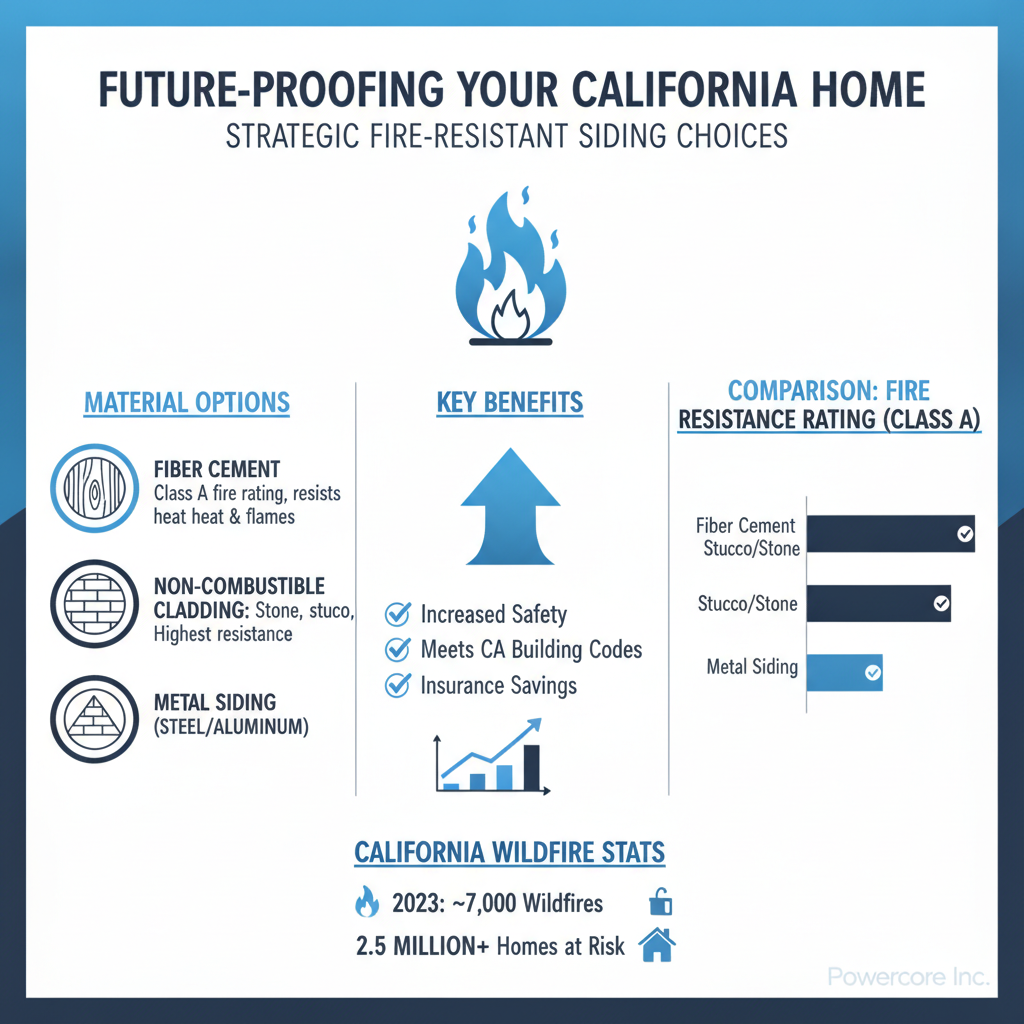
Fiber Cement Siding
Fiber cement siding, most notably recognized by brands like James Hardie, is a composite material made from cement, sand, water, and cellulose fibers. It's one of the most popular choices for fire-resistant applications in California.
- Description: Available in various styles, including planks, shingles, and panels, mimicking the look of wood, stucco, or masonry. It's incredibly durable and resistant to pests, rot, and moisture.
- Fire Rating: Typically boasts a Class A fire rating, meaning it has excellent resistance to flame spread and non-combustible properties. It will not ignite when exposed to embers or direct flame.
- Pros:
- Exceptional fire resistance (Class A).
- Highly durable against weather, pests, and rot.
- Versatile aesthetics, wide range of colors and textures.
- Long lifespan (often 50+ years).
- Low maintenance compared to wood.
- Cons:
- Higher upfront cost than some alternatives.
- Heavy material, requiring specialized installation.
- Can be brittle before installation.
- Requires painting or factory finish touch-ups over time.
- Cost Range (Installed in CA): Typically ranges from $8 to $15 per square foot, depending on style, finish, and complexity of installation.
Stucco Siding
A classic choice in many parts of California, traditional stucco is a cement-based plaster applied in layers over a lath base. Its inherent mineral composition makes it highly fire-resistant.
- Description: Creates a seamless, hard, and durable exterior finish. Can be textured in various ways and colored during application.
- Fire Rating: Provides excellent fire resistance, often receiving a 1-hour fire rating or more depending on the thickness and underlying wall assembly. It is non-combustible.
- Pros:
- Excellent fire resistance.
- Highly durable and long-lasting.
- Resistant to pests and rot.
- Good insulation properties.
- Low maintenance.
- Cons:
- Can crack if not properly installed or if the foundation settles.
- Difficult to repair seamlessly.
- Installation is labor-intensive and weather-dependent.
- Limited design flexibility compared to fiber cement.
- Cost Range (Installed in CA): Generally ranges from $7 to $12 per square foot, varying with the number of coats, texture, and scaffolding needs.
Metal Siding (Steel, Aluminum)
Metal siding, particularly steel and aluminum, offers a modern and highly fire-resistant option. It's becoming increasingly popular for its durability and sleek aesthetic.
- Description: Available in panels, planks, or shingles, often with factory-applied finishes. Steel is robust, while aluminum is lighter and highly corrosion-resistant.
- Fire Rating: Both steel and aluminum are non-combustible materials and boast Class A fire ratings. They do not ignite or contribute fuel to a fire.
- Pros:
- Superior fire resistance (non-combustible, Class A).
- Extremely durable and long-lasting.
- Resistant to pests, rot, and mold.
- Low maintenance.
- Modern aesthetic.
- Cons:
- Can dent or scratch.
- May fade over time with prolonged sun exposure (depending on finish).
- Can be noisy during heavy rain or hail.
- Higher upfront cost than some traditional options.
- Cost Range (Installed in CA): Ranges from $9 to $18 per square foot, influenced by the type of metal, gauge, finish, and installation complexity.
Stone and Masonry Veneers
Natural stone, brick, and manufactured stone veneers provide an exceptionally robust and aesthetically appealing fire-resistant exterior. These materials are inherently non-combustible.
- Description: Applied over a substrate, these veneers offer the timeless look and feel of solid stone or brick without the structural demands of full masonry.
- Fire Rating: Inherently non-combustible and provide excellent fire resistance, acting as a strong barrier against flames and embers.
- Pros:
- Exceptional fire resistance.
- Highly durable and long-lasting.
- Timeless aesthetic appeal.
- Excellent insulation properties.
- Low maintenance.
- Cons:
- Highest upfront cost among fire-resistant options.
- Heavy material, requiring strong structural support and specialized installation.
- Limited to certain architectural styles.
- Cost Range (Installed in CA): Can range from $15 to $35+ per square foot, depending on the type of stone/brick, complexity, and region.
Treated Wood Siding (Limited Use in WUI)
While untreated wood siding is highly combustible and generally prohibited in WUI zones, certain chemically treated wood products can offer enhanced fire resistance. However, their use is often restricted and requires specific approvals.
- Description: Wood siding treated with fire-retardant chemicals to reduce its flammability and flame spread.
- Fire Rating: Can achieve Class B or C ratings, but rarely Class A. Compliance with Chapter 7A in WUI zones is often difficult or impossible, as specific WUI products are needed.
- Pros:
- Retains the natural aesthetic of wood.
- Lighter than fiber cement or masonry.
- Cons:
- Generally not permitted for siding in high-risk WUI zones under Chapter 7A.
- Chemical treatments can be costly and may require reapplication over time.
- Still more vulnerable to fire than non-combustible options.
- Can be prone to rot and pests if not properly maintained.
- Cost Range (Installed in CA): Varies widely, but typically higher than untreated wood, ranging from $6 to $12 per square foot, plus treatment costs.
Choosing the Right Fire-Resistant Siding for Your California Home
With a clearer understanding of the primary fire-resistant siding options, the next step is to make an informed decision for your specific property. This involves weighing several factors unique to your home and location.
Factors to Consider:
- Your WUI Zone Designation: This is the most critical factor. If you're in a High Fire Hazard Severity Zone, Chapter 7A compliance is mandatory, narrowing your choices primarily to Class A non-combustible materials like fiber cement, stucco, or metal.
- Budget: Upfront material and installation costs vary significantly. While stone veneers offer superior protection, they come at a premium. Fiber cement and stucco often strike a good balance between cost and performance.
- Aesthetics and Architectural Style: Your siding should complement your home's design. Fiber cement offers the most versatility in mimicking other materials, while stucco provides a classic Mediterranean or Spanish style, and metal offers a contemporary look.
- Maintenance Requirements: Consider the long-term commitment. Stucco and metal are relatively low maintenance, while fiber cement might require occasional repainting.
- Local Climate and Environmental Factors: Beyond fire, think about your local climate. Does your area experience heavy rain, strong winds, extreme heat, or coastal salt spray? Choose a material that excels in all these conditions to ensure longevity and sustained protection.
- Insurance Implications: Many insurance providers offer discounts or require specific fire-resistant materials in WUI zones. Upgrading your siding can potentially lower your premiums or even make your home insurable in high-risk areas.
- Long-Term Value and ROI: Investing in high-quality fire-resistant siding not only protects your home but also enhances its curb appeal and resale value. Buyers in California are increasingly prioritizing wildfire-hardened homes.
Beyond Siding: A Holistic Approach to Wildfire Protection
While fire-resistant siding is a critical component, it's part of a larger strategy for comprehensive wildfire defense. A truly resilient home considers all vulnerabilities and creates layers of protection.
Defensible Space (Zone 0, 1, 2)
Creating and maintaining defensible space around your home is paramount. California law mandates 100 feet of defensible space. This is typically divided into zones:
- Zone 0 (Ember-Resistant Zone - 0-5 feet from home): This immediate zone should be entirely free of combustible materials. Use non-combustible hardscaping (concrete, pavers), remove all vegetation, and ensure no combustible items (firewood, outdoor furniture) are stored here.
- Zone 1 (Lean, Clean, and Green Zone - 0-30 feet): Remove dead or dying vegetation, space out remaining plants, and trim lower branches to prevent ladder fuels. Keep lawns irrigated and mowed.
- Zone 2 (Reduced Fuel Zone - 30-100 feet): Reduce the density of vegetation, remove small trees and shrubs, and ensure proper spacing between remaining trees.
Other Critical Exterior Elements
Don't overlook other parts of your home's exterior that can be ignition points:
- Roofing: Opt for Class A rated roofing materials like tile, metal, or asphalt composition shingles.
- Eaves and Vents: Enclose eaves and install fine mesh (1/8-inch) screens over all vents to prevent ember intrusion.
- Windows: Use multi-pane, tempered glass windows, especially on sides facing potential fire threats.
- Decks and Fences: Replace combustible wood decks with fire-resistant materials (composite decking, metal, or fire-treated lumber where approved). Fences should also be non-combustible near the home. Powercore Inc also specializes in durable, compliant decking solutions to enhance your outdoor living while maintaining safety standards.
- Gutters: Keep gutters free of leaves and debris, or consider non-combustible gutter guards.
Installation Expertise: Why Your Contractor Matters
Even the most fire-resistant siding material will fail if not installed correctly, especially in WUI zones where specific techniques and materials are mandated by Chapter 7A. This is where choosing the right contractor becomes paramount.
An experienced, licensed contractor understands the nuances of WUI compliance, local permitting processes, and the best installation practices for each material. They know that proper flashing, sealing, and integration with other building components (like windows and doors) are just as important as the siding itself in preventing ember entry and maintaining a fire-resistant envelope.
Powercore Inc stands as a trusted authority in California for comprehensive exterior solutions. As a dual-licensed General B (#1134334) and C-10 Electrical Contractor (#1098175), we bring a holistic understanding of home systems and construction. Our expertise extends beyond just siding to include roofing, solar, battery storage, HVAC, ADUs, remodels, and EV charging, ensuring that all aspects of your home's resilience and efficiency are considered. We are intimately familiar with California's building codes, including Chapter 7A, and our team is committed to precision, quality, and compliance, providing you with a robust, long-lasting, and fire-safe exterior.
When you partner with Powercore Inc, you’re not just getting a siding installation; you're investing in expert craftsmanship, code adherence, and peace of mind from a company that understands California's unique environmental and regulatory landscape.
Cost Considerations for Fire-Resistant Siding in California
Investing in fire-resistant siding is a significant decision, and understanding the cost implications is crucial. While upfront costs can be higher than conventional siding, the long-term benefits in safety, home value, and potential insurance savings often outweigh the initial expenditure.
Factors Influencing Cost:
- Material Choice: As discussed, fiber cement, stucco, metal, and masonry veneers have different price points.
- Labor Costs: California's labor costs are generally higher, and specialized installation for WUI compliance can add to this.
- Demolition and Disposal: Removing old siding adds to the project cost.
- Underlying Structure Repair: Any necessary repairs to the sheathing, insulation, or framing will increase the total.
- Complexity of Home Design: Multi-story homes, intricate architectural details, and numerous windows/doors require more labor and specialized cuts.
- Permits and Inspections: Necessary for WUI zone projects, adding administrative costs.
Return on Investment (ROI):
The ROI for fire-resistant siding extends beyond immediate monetary returns:
- Enhanced Safety: The most invaluable return is the protection of your family and property during a wildfire event.
- Increased Home Value: A fire-hardened home is a highly attractive asset in California's real estate market, commanding a premium and appealing to a broader buyer pool.
- Insurance Benefits: Some insurers offer reduced premiums for WUI-compliant homes, and in some high-risk areas, fire-resistant upgrades can be essential for obtaining coverage at all.
- Durability and Longevity: Many fire-resistant materials are also exceptionally durable, requiring less maintenance and replacement over their lifespan, saving you money in the long run.
Maintaining Your Fire-Resistant Siding
While fire-resistant siding requires less maintenance than traditional wood, proper care ensures its longevity and continued protective qualities.
- Regular Cleaning: Wash your siding annually with a soft brush and mild detergent to remove dirt, dust, and mildew.
- Inspect for Damage: Periodically check for cracks, chips, or loose panels. Promptly repair any damage to prevent moisture intrusion or compromise of the fire barrier.
- Check Sealants: Inspect caulking around windows, doors, and seams. Reapply as needed to maintain a tight seal.
- Maintain Defensible Space: Continue to manage vegetation around your home. Even the best siding can be overwhelmed by direct flame contact from overgrown plants.
- Repainting (if applicable): If your fiber cement or treated wood siding is painted, monitor for peeling or fading and repaint as recommended by the manufacturer to protect the material and maintain aesthetics.
Conclusion: Invest in Protection, Invest in Your Future
California's wildfire landscape demands proactive measures from homeowners. Choosing strategic fire-resistant siding is not merely a compliance task; it's a fundamental step in future-proofing your home, safeguarding your loved ones, and preserving your investment for generations to come. By understanding the unique challenges of WUI zones, adhering to Chapter 7A requirements, and selecting materials known for their superior fire resistance, you transform your home into a fortress against the unpredictable forces of nature.
Beyond the immediate protection, this investment pays dividends in enhanced property value, potential insurance savings, and, most importantly, unparalleled peace of mind. Don't compromise on safety or quality when it comes to your home's exterior. Partner with experts who understand California's specific needs and can deliver exceptional results.
Ready to explore the best fire-resistant siding options for your California home? Contact Powercore Inc today. Our team of licensed and experienced professionals is here to guide you through every step, from material selection to expert installation, ensuring your home is beautiful, compliant, and resilient. Call us at 916-699-8778 for a consultation and take the first step towards a safer, more valuable property.