

Introduction: Protecting Your California Home from the Blaze
California’s natural beauty is undeniable, but it comes with a formidable challenge: the increasing threat of wildfires. For homeowners across the state, from the Wildland-Urban Interface (WUI) to suburban neighborhoods, safeguarding your property against these devastating events is no longer an option—it’s a necessity. While defensible space and evacuation plans are critical, the first line of defense for your home often begins with its exterior envelope, particularly its siding.
Choosing the right fire-resistant siding is one of the most impactful decisions you can make to enhance your home's resilience. It’s about more than just aesthetics; it's about peace of mind, protecting your investment, and ensuring the safety of your loved ones. As a leading dual-licensed General B & C-10 Electrical Contractor in Roseville, Powercore Inc understands the unique challenges California homeowners face. We specialize in comprehensive exterior solutions, including advanced fire-resistant siding installations designed to meet the rigorous demands of our state's environment and building codes.
This comprehensive guide will delve into the world of fire-resistant siding, exploring the best options available for California homes. We'll examine materials, discuss their benefits, consider cost implications, and provide insights into how strategic siding choices can make a profound difference in the face of a wildfire.
Why Fire-Resistant Siding Matters in California
California’s wildfire season has become a year-round concern, impacting communities far beyond traditional fire zones. Understanding why fire-resistant siding is paramount involves recognizing several key factors unique to the state.
The Wildland-Urban Interface (WUI)
Much of California’s population resides in or near the Wildland-Urban Interface (WUI)—areas where developed land meets wildland vegetation. These are the zones most vulnerable to wildfires. In a WUI fire, homes are often ignited not by direct flame contact, but by radiant heat and, more commonly, by embers that travel great distances. A study by the National Institute of Standards and Technology (NIST) found that embers are responsible for over 90% of home ignitions during wildfires.
This reality means that even if your home isn't directly in the path of a flame front, it can still be highly susceptible to ignition from wind-borne embers. Fire-resistant siding is engineered to withstand these ember attacks and resist ignition from radiant heat, providing a crucial barrier.
California Building Codes and Regulations
Recognizing the severe threat, California has implemented some of the most stringent building codes in the nation for homes built in WUI zones. Chapter 7A of the California Building Code (CBC) specifically addresses WUI requirements, mandating the use of fire-resistant materials for various exterior components, including siding, roofing, windows, and decks.
These regulations specify materials that have been tested and approved to resist ignition and slow the spread of fire. For homeowners, this means that selecting siding isn't just a personal preference but often a legal compliance issue, especially when building new or undertaking major renovations in designated WUI areas. Working with a contractor like Powercore Inc, who is intimately familiar with these complex codes (CSLB #1134334 & #1098175), ensures your project meets all necessary safety and legal standards.
Beyond Flammability: Ignition Resistance
When we talk about fire-resistant siding, we’re not necessarily talking about materials that are completely fireproof (though some come very close). Instead, the focus is on ignition resistance. This means the material will not easily ignite when exposed to embers or radiant heat, and if it does catch fire, it will burn slowly and not contribute significantly to the spread of flames.
Key properties of ignition-resistant siding include:
- Non-combustibility: The material itself will not burn.
- Low Flame Spread Index: How quickly flames spread across the surface.
- High Ignition Temperature: The temperature at which the material will ignite.
- Resistance to Radiant Heat: Ability to withstand intense heat without deforming or igniting.
- Ember Resistance: Ability to repel or extinguish embers without igniting.
Top Fire-Resistant Siding Options for California Homes
Choosing the right siding involves balancing fire resistance with aesthetics, durability, maintenance, and cost. Here are the leading options for fortifying your California home:
Fiber Cement Siding: James Hardie and Beyond
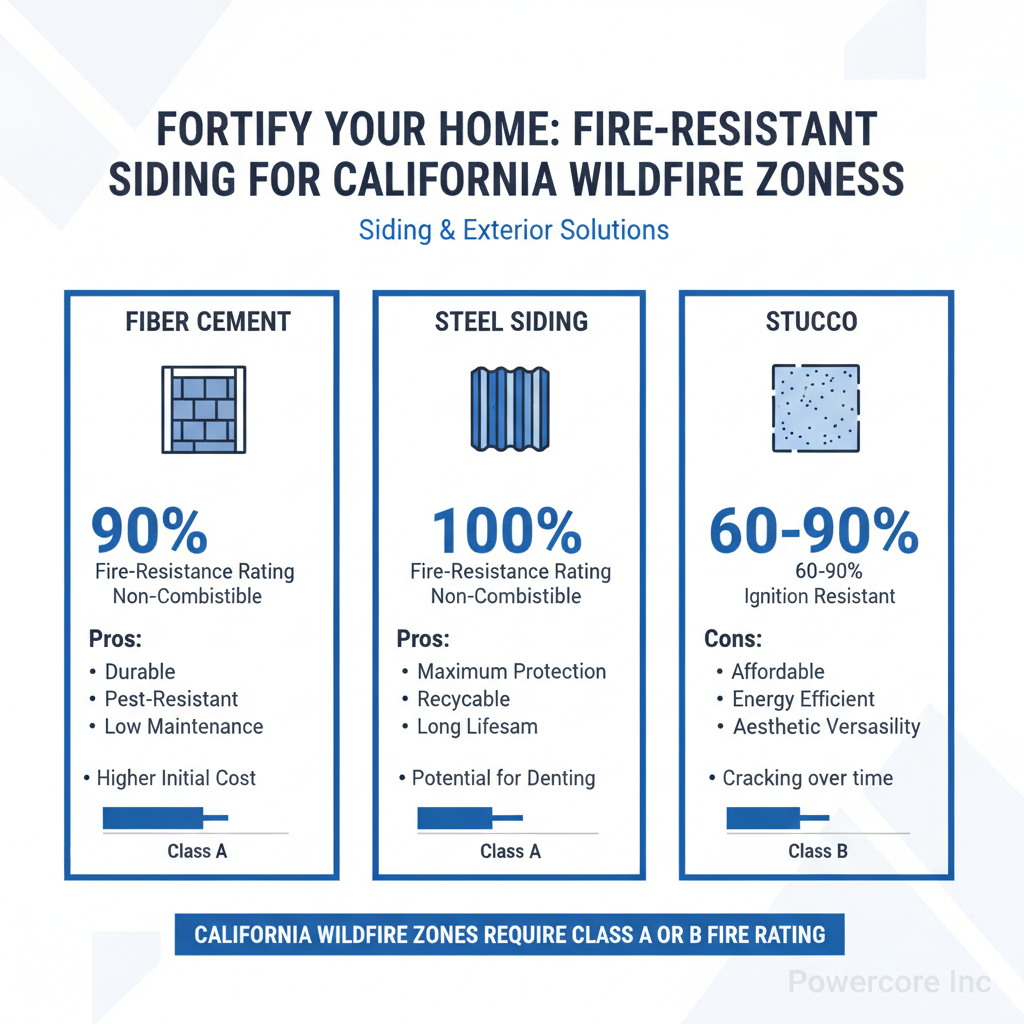
Fiber cement siding, most famously pioneered by James Hardie, is arguably one of the most popular and highly recommended fire-resistant options for California homes. It's composed of cement, sand, water, and cellulose fibers, resulting in a durable, non-combustible material.
- Fire Resistance: Fiber cement siding has a Class A fire rating, the highest possible. It will not ignite when exposed to direct flame or embers and will not contribute fuel to a fire. This makes it an ideal choice for WUI zones.
- Durability: Highly resistant to rot, pests, moisture, and extreme weather conditions. It stands up well to California’s diverse climate, from coastal humidity to inland heat.
- Aesthetics: Available in a wide variety of styles, textures, and colors, mimicking natural wood, stucco, or masonry. This versatility allows homeowners to achieve their desired architectural look without compromising on safety. Brands like James Hardie offer extensive design flexibility, while alternatives like LP SmartSide (engineered wood with specific treatments) also offer enhanced fire ratings, though typically not as high as pure fiber cement.
- Maintenance: Low maintenance; requires occasional cleaning and repainting every 10-15 years, depending on the finish.
- Cost: Mid-to-high range for materials and installation. While the initial investment might be higher than some vinyl options, its longevity, low maintenance, and fire protection offer significant long-term value, especially in California where insurance rates and peace of mind are paramount.
Stucco: The Traditional California Defender
Stucco is a classic choice for California homes, known for its Mediterranean and Spanish architectural styles. It's a cement-based plaster applied in multiple coats over a mesh base, creating a hard, durable shell.
- Fire Resistance: Stucco is naturally non-combustible and provides excellent fire resistance. Its thick, dense composition forms a robust barrier against flames and embers, earning it a high fire rating.
- Durability: Extremely durable and resistant to pests, rot, and moisture. It performs well in hot, dry climates, making it suitable for much of California.
- Aesthetics: Offers a smooth, textured, or patterned finish, providing a distinctive look. It can be integrally colored or painted, offering design flexibility.
- Maintenance: Relatively low maintenance, though cracks can develop over time due to ground movement or settling, requiring repair.
- Cost: Mid-range, with variations depending on the finish and complexity of installation. Its widespread use in California makes it a practical and aesthetically pleasing fire-resistant choice.
Stone and Brick: Timeless and Resilient
Natural stone and brick are inherently non-combustible materials that offer exceptional fire resistance. They are often used as full cladding or as accents on homes.
- Fire Resistance: Both stone and brick are among the most fire-resistant materials available. They will not ignite or melt and provide superior protection against radiant heat and direct flame.
- Durability: Extremely long-lasting and virtually impervious to pests, rot, and weather extremes. They can last for centuries with minimal maintenance.
- Aesthetics: Offers a timeless, elegant, and robust appearance. The variety of colors, textures, and patterns in natural stone and brick provides rich design possibilities.
- Maintenance: Very low maintenance, requiring only occasional cleaning.
- Cost: High-end, primarily due to material weight, complexity of installation, and labor. While a significant investment, the unparalleled durability, aesthetic appeal, and fire protection make them a premium choice for homeowners seeking the ultimate in resilience.
Steel Siding: Modern Strength and Protection
Steel siding, typically made from galvanized steel, is a durable and increasingly popular option, especially in areas where maximum protection is desired. It’s available in various profiles, including horizontal lap, vertical, and panel styles.
- Fire Resistance: Steel is non-combustible and boasts excellent fire resistance. It does not ignite, melt, or contribute fuel to a fire. It provides a strong barrier against embers and radiant heat.
- Durability: Extremely durable, resistant to dents, pests, rot, and moisture. It can withstand harsh weather conditions, including strong winds and hail.
- Aesthetics: Modern steel siding offers a wide range of colors and finishes, some even mimicking wood grain. It can provide a sleek, contemporary look or a more traditional appearance.
- Maintenance: Very low maintenance, generally only requiring occasional washing.
- Cost: Mid-to-high range, comparable to or slightly higher than fiber cement. Its strength and fire resistance offer significant value for homeowners prioritizing robust protection.
Other Considerations and Materials
- Concrete Siding: Similar to fiber cement but often thicker and heavier, offering excellent fire resistance. Less common for residential applications but highly effective.
- Treated Wood Siding: While wood is generally combustible, some wood siding products are chemically treated to enhance their fire resistance. However, their fire ratings are typically lower than non-combustible materials, and their effectiveness can diminish over time. For WUI zones, non-combustible options are almost always preferred or mandated.
- Vinyl Siding: Generally not recommended for WUI zones. While it can meet some basic fire codes, vinyl softens, melts, and contributes to fire spread at relatively low temperatures, making it a poor choice for wildfire-prone areas.
Evaluating Siding Options: Key Factors for California Homeowners
Choosing the best fire-resistant siding involves more than just selecting a material. Consider these factors specific to California's environment and homeowner needs:
Cost vs. Value: A Long-Term Investment
Initial cost is always a consideration. While some fire-resistant options like fiber cement, stone, or steel may have a higher upfront cost than conventional siding, it’s crucial to view this as a long-term investment. In California, this investment translates into:
- Increased Home Safety: The primary benefit, offering invaluable protection for your family and assets.
- Enhanced Property Value: Fire-resistant features are increasingly attractive to buyers in California, potentially increasing resale value.
- Insurance Benefits: Some insurance providers offer discounts for homes with WUI-compliant materials. It's always wise to check with your insurer.
- Reduced Maintenance: Many fire-resistant materials are also highly durable and low maintenance, saving you money and time over decades.
Aesthetics and Architectural Harmony
Your home's exterior is its first impression. The good news is that fire-resistant siding options have evolved significantly, offering a vast array of colors, textures, and profiles that can complement any architectural style, from modern farmhouses to Mediterranean villas and contemporary designs. You don't have to sacrifice curb appeal for safety.
Maintenance and Longevity
Consider the long-term upkeep. Materials like fiber cement, stucco, stone, and steel are known for their exceptional durability and minimal maintenance requirements. This is a significant advantage in California, where harsh sun exposure can degrade less robust materials quickly.
Installation Expertise and Local Codes
Even the best materials will fail if not installed correctly. Proper installation is critical for ensuring the siding performs as intended, especially in fire situations. This includes correct flashing, sealing, and adherence to manufacturer specifications and local building codes, particularly Chapter 7A of the California Building Code for WUI zones. Hiring an experienced, licensed contractor like Powercore Inc is non-negotiable for ensuring compliance and optimal performance.
The Powercore Inc Advantage: Your Trusted Partner
When it comes to protecting your California home, you need a partner who understands the unique challenges and regulations of the state. Powercore Inc is a California dual-licensed General B (#1134334) and C-10 Electrical Contractor (#1098175), based in Roseville, CA, with extensive experience across all of California. We offer a holistic approach to home improvement, integrating fire-resistant siding solutions with other critical home systems.
Our expertise goes beyond mere installation. We provide:
- Comprehensive Knowledge: Deep understanding of California’s WUI building codes, material performance in wildfire conditions, and best installation practices.
- Quality Materials: Access to and expertise in installing the leading fire-resistant siding brands and materials, ensuring optimal protection and aesthetic appeal.
- Integrated Solutions: As a comprehensive contractor, we can assess your entire home’s exterior and offer integrated solutions for roofing, windows, and defensible space recommendations, ensuring all elements work together for maximum wildfire resilience.
- Exceptional Craftsmanship: Our skilled teams are dedicated to precision, durability, and a flawless finish, ensuring your siding not only protects but also enhances your home's value and curb appeal.
- Customer-Centric Service: We pride ourselves on transparent communication, reliable project management, and unwavering commitment to client satisfaction, from initial consultation to project completion.
With Powercore Inc, you’re not just getting siding; you’re investing in a complete, code-compliant, and aesthetically pleasing solution designed to fortify your home against California's challenges.
Beyond Siding: A Holistic Approach to Wildfire Safety
While fire-resistant siding is a cornerstone of home protection, it’s part of a larger strategy. A truly resilient home integrates multiple layers of defense:
- Defensible Space: Clear vegetation around your home (Zone 0, 1, and 2) to create a buffer that reduces fuel for an approaching fire.
- Ember-Resistant Vents: Install fine mesh or baffled vents to prevent embers from entering attics and crawl spaces.
- Fire-Resistant Roofing: Replace wood shake or shingle roofs with Class A rated materials like tile, metal, or asphalt composition shingles.
- Dual-Pane Windows: Use tempered glass windows, especially on the side facing potential fire threats, to resist breakage from radiant heat.
- Decking and Exterior Attachments: Ensure decks, fences, and other attached structures are also made from fire-resistant materials or are adequately distanced from the home.
- Landscaping: Choose fire-resistant plants and maintain them meticulously.
Powercore Inc can help you evaluate your home's overall wildfire readiness and recommend comprehensive upgrades that go beyond just siding to create a truly hardened structure.
Making Your Decision and Next Steps
Choosing fire-resistant siding for your California home is a significant decision that impacts safety, value, and peace of mind. By understanding the options available, their benefits, and the specific requirements of California's WUI codes, you can make an informed choice that best suits your property and budget.
Don't wait for the next wildfire season to act. Proactive measures are the most effective. Consider the long-term benefits of investing in high-quality, fire-resistant materials and professional installation.
Conclusion
In a state as beautiful and dynamic as California, adapting our homes to withstand natural challenges is paramount. Fire-resistant siding is not just a building material; it's a critical investment in your home's safety and longevity. By choosing the right materials and partnering with experienced professionals, you can significantly reduce your home's vulnerability to wildfires, providing a sanctuary for your family for years to come.
Ready to fortify your California home with the best fire-resistant siding options? Contact Powercore Inc today for a personalized consultation. Our expert team will assess your needs, recommend the ideal solutions tailored to your property and local codes, and ensure a professional, high-quality installation across all of California. Call us at 916-699-8778 to schedule your estimate and take the first step towards a safer, more secure home.