

Understanding Siding Replacement Costs in California
As a California homeowner, you know that maintaining your property goes beyond mere aesthetics; it's about protecting your investment against the Golden State's diverse climate, from the scorching Central Valley summers to the coastal fogs and the risk of wildfires. Siding replacement isn't just a home improvement project; it's a critical upgrade that enhances curb appeal, boosts energy efficiency, and provides crucial protection. But what does siding replacement cost in California? This comprehensive guide from Powercore Inc will break down the factors influencing pricing, help you understand the return on investment, and equip you with the knowledge to make an informed decision for your home.
California's unique environmental challenges and stringent building codes mean that siding projects here often come with specific considerations. From material choices engineered for fire resistance to installation practices that meet seismic and energy efficiency standards, understanding these nuances is key to an accurate budget and a successful project. Let's dive into everything you need to know to navigate the complexities of siding replacement in California.
Why Your California Home Needs Quality Siding
Siding is more than just your home's exterior shell; it's its first line of defense against the elements. For California homeowners, the demands on siding are particularly high.
Protection Against Diverse California Climates
- Intense Sun Exposure: The relentless California sun can fade, crack, and warp inferior siding materials, leading to premature deterioration. Quality siding offers UV resistance to maintain its color and integrity for decades.
- Coastal Humidity and Inland Heat: From the dampness of coastal regions to the extreme heat of the desert and inland valleys, siding must withstand significant temperature fluctuations and moisture levels without succumbing to rot, mold, or structural damage.
- Wind and Rain: Seasonal storms can bring strong winds and heavy rainfall. Properly installed, durable siding prevents moisture intrusion, protecting your home's structural integrity and preventing costly interior damage.
Fire Resilience: A California Imperative
With increasing wildfire risks across the state, fire-resistant siding is no longer a luxury but a necessity for many California homes, especially those in Wildland-Urban Interface (WUI) zones. Materials like fiber cement or certain treated wood products can significantly reduce your home's vulnerability to embers and radiant heat, offering peace of mind and potentially lower insurance premiums. Understanding and complying with local fire codes is paramount for any siding project in high-risk areas.
Energy Efficiency and Cost Savings
Your siding plays a crucial role in your home's thermal envelope. Well-insulated, properly installed siding helps maintain consistent indoor temperatures, reducing the strain on your HVAC system. This translates directly into lower energy bills, a significant benefit in a state with rising energy costs. Upgrading to energy-efficient siding can be a smart investment that pays dividends over time.
Boosted Curb Appeal and Home Value
Beyond its protective functions, new siding dramatically enhances your home's aesthetic appeal. A fresh, modern exterior can transform the look and feel of your property, increasing its market value and making it more attractive to potential buyers should you decide to sell. It’s one of the most impactful exterior renovations you can undertake, offering a strong return on investment.
Key Factors Influencing Siding Replacement Cost in California
The cost of siding replacement in California isn't a one-size-fits-all figure. Several variables contribute to the final price tag, and understanding them will help you budget effectively.
1. Siding Material Choice
The material you select is often the most significant cost driver. California homeowners have a wide array of options, each with its own price point, durability, and aesthetic.
- Vinyl Siding: Generally the most budget-friendly option, vinyl is lightweight, low-maintenance, and comes in various colors and styles. However, it may not offer the same fire resistance or premium aesthetic as other materials.
- Fiber Cement Siding (e.g., James Hardie): Extremely popular in California due to its exceptional durability, fire resistance, pest resistance, and ability to mimic wood or stucco. It's a mid-to-high range option but offers excellent long-term value, especially in WUI zones.
- Engineered Wood Siding (e.g., LP SmartSide): Offers the look of natural wood without the high maintenance. It's durable, resistant to pests and rot, and comes with good warranties. Often a compelling alternative to natural wood or fiber cement.
- Wood Siding (Cedar, Redwood): Provides a classic, natural aesthetic. While beautiful, it requires more maintenance (staining, painting) and can be more expensive. Fire treatment is often necessary and adds to the cost in California.
- Stucco: A common choice in many parts of California, stucco is durable, fire-resistant, and offers a distinct Mediterranean or Southwestern look. Installation can be labor-intensive, and it requires specialized skills.
- Metal Siding (Steel, Aluminum): Highly durable, low-maintenance, and available in modern styles. Can be a higher upfront cost but offers excellent longevity and fire resistance.
2. Size and Complexity of Your Home
Naturally, a larger home requires more material and labor, increasing the overall cost. Beyond square footage, architectural complexity plays a significant role:
- Multi-Story Homes: Require scaffolding and specialized equipment, adding to labor costs and rental fees.
- Intricate Designs: Homes with many corners, gables, dormers, and unique architectural features demand more precise cuts, custom fitting, and increased labor time compared to a simple, rectangular structure.
- Number of Windows and Doors: Each opening requires careful trimming and sealing, adding to the labor and material costs for flashing and finishing.
3. Old Siding Removal and Disposal
Before new siding can be installed, the old material must be removed. This involves labor, and often, disposal fees for hazardous materials (like lead paint) or simply for large volumes of waste. The condition of the old siding can also impact removal difficulty and cost.
4. Substrate Repair and Preparation
Once the old siding is off, the underlying sheathing and framing are exposed. Any rot, water damage, or structural issues must be addressed before new siding goes up. This 'hidden' cost can vary significantly depending on the condition of your home's exterior walls. Proper preparation, including house wrap or a moisture barrier, is crucial for preventing future problems.
5. Labor Costs in California
California generally has higher labor costs than many other states, reflecting the cost of living and specialized skills required. The expertise of the installation team, their experience with specific materials, and their adherence to California's strict building codes all factor into labor pricing. Professional, licensed contractors like Powercore Inc ensure quality workmanship, which is critical for the longevity and performance of your new siding.
6. Permits and Local Regulations
Most siding replacement projects in California require permits from your local city or county building department. These permits ensure the work complies with safety standards, energy codes, and, importantly, fire-hardening regulations in designated WUI zones. Permit fees vary by municipality and project scope but are a necessary part of the overall cost.
7. Additional Features and Upgrades
Consider these potential add-ons:
- Trim, Soffits, and Fascias: Often replaced or upgraded along with siding for a cohesive look and enhanced protection.
- Insulation: Adding or upgrading exterior insulation can significantly improve energy efficiency, though it adds to the upfront cost.
- Painting/Finishing: If you choose a material that requires painting, this will be an additional cost unless it's factory-finished.
- Scaffolding: Necessary for multi-story homes or complex architectural features, adding to equipment rental and labor time.
Average Siding Replacement Costs by Material in California
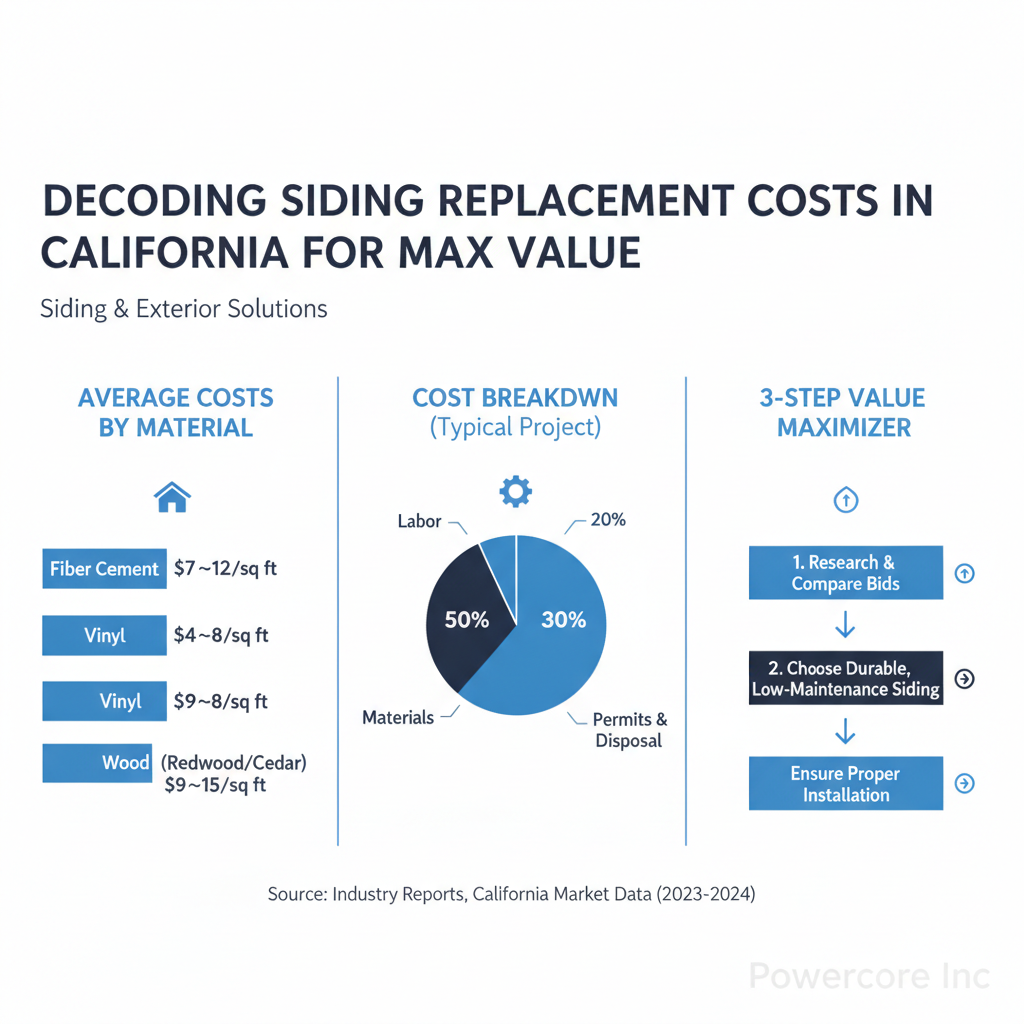
To provide a clearer picture of siding replacement cost in California, here are estimated ranges per square foot for common materials, including installation. Please note these are averages and can vary significantly based on the factors discussed above, your specific location within California, and the contractor you choose.
Estimated Siding Replacement Costs Per Square Foot (Material + Installation) in California:
- Vinyl Siding: $3.00 - $8.00 per sq. ft.
- Engineered Wood (e.g., LP SmartSide): $5.00 - $12.00 per sq. ft.
- Fiber Cement (e.g., James Hardie): $6.00 - $15.00 per sq. ft.
- Stucco: $7.00 - $18.00 per sq. ft.
- Wood Siding (Cedar, Redwood): $8.00 - $20.00+ per sq. ft. (can be higher with fire treatment)
- Metal Siding (Steel, Aluminum): $9.00 - $22.00+ per sq. ft.
Keep in mind that these figures typically cover the siding material itself, the labor for installation, and basic trim. They might not include extensive substrate repairs, premium insulation, or complex architectural detailing. For an accurate quote tailored to your home, a professional assessment is always recommended.
Return on Investment and Long-Term Value
While the upfront siding replacement cost in California might seem substantial, it's crucial to view it as an investment rather than just an expense. The long-term benefits often outweigh the initial outlay.
Enhanced Home Value
New siding consistently ranks as one of the top home improvement projects for ROI. According to the 2023 Remodeling Impact Report by the National Association of Realtors (NAR), new vinyl siding can recoup approximately 68% of its cost upon resale, while fiber cement siding can see even higher returns, sometimes upwards of 70-80%. This increase in curb appeal and perceived value makes your home more attractive in a competitive California real estate market.
Significant Energy Savings
Upgrading to modern, energy-efficient siding, especially when combined with proper insulation and a house wrap, can drastically reduce your heating and cooling costs. By preventing air leaks and improving thermal resistance, your HVAC system works less, saving you money month after month. Over the lifespan of the siding, these savings can be substantial.
Reduced Maintenance and Repair Costs
Older siding, particularly wood, often requires regular painting, staining, and repair of rot or pest damage. Modern materials like fiber cement, vinyl, or engineered wood are designed for low maintenance, resisting pests, rot, and fading. This means less time, effort, and money spent on upkeep, freeing you to enjoy your home more.
Improved Protection and Peace of Mind
Beyond aesthetics and energy, new siding provides superior protection against California's elements, including fire. Knowing your home is fortified with durable, fire-resistant materials offers invaluable peace of mind, protecting your family and your most significant asset from potential hazards. This often translates to better home insurance rates as well.
Navigating Financing Options for Your Siding Project
Understanding the siding replacement cost in California is one thing; financing it is another. Fortunately, several options are available to help make your project a reality.
- Home Equity Loan or Line of Credit (HELOC): If you have substantial equity in your home, a home equity loan or HELOC can provide access to funds at competitive interest rates. The interest may also be tax-deductible.
- PACE Programs (Property Assessed Clean Energy): For energy-efficient siding upgrades, California homeowners might qualify for PACE financing. These programs allow you to pay for improvements through an assessment on your property tax bill, often with no upfront payment. Powercore Inc can help you explore if your project qualifies for such programs.
- Contractor Financing: Many reputable contractors, including Powercore Inc, offer financing options through third-party lenders. These can include deferred interest, low-interest, or extended payment plans, making it easier to manage the cost.
- Personal Loans: While typically having higher interest rates than secured loans, a personal loan can provide quick access to funds without using your home as collateral.
- Cash Savings: If you have sufficient savings, paying cash avoids interest charges and can sometimes provide leverage for better pricing.
It's always wise to explore multiple financing avenues and compare terms to find the best fit for your financial situation. A qualified contractor can often guide you through the available options relevant to your specific project and location.
Choosing the Right Siding Contractor in California
Selecting the right contractor is paramount to ensuring a high-quality, long-lasting siding replacement that stays within budget. Given the specific demands of California building codes and climates, this decision is even more critical.
Licensing and Insurance: Non-Negotiables
Always verify your contractor's licenses and insurance. In California, a reputable siding contractor should hold a General Building Contractor (B) license, and for projects involving electrical work (e.g., integrated lighting or EV chargers), an Electrical Contractor (C-10) license is essential. Powercore Inc proudly holds both California CSLB #1134334 (General B) and #1098175 (C-10 Electrical), ensuring comprehensive expertise for your entire home exterior project.
- General Liability Insurance: Protects you from damage to your property during the project.
- Worker's Compensation Insurance: Protects you from liability if a worker is injured on your property.
Experience and Specialization in California
Look for contractors with extensive experience in your local California climate and with the specific siding materials you're considering. A contractor who understands California's WUI zone requirements, energy efficiency mandates, and local permitting processes will be invaluable. Ask for references and view past projects to assess their quality of work.
Detailed Bids and Transparency
Obtain multiple bids and ensure each one is detailed, breaking down material costs, labor, removal, disposal, and any additional fees like permits. A transparent contractor will explain their pricing and be upfront about potential challenges or unexpected costs. Avoid contractors who offer significantly lower bids without clear explanations, as this can often indicate cut corners or hidden fees later on.
Warranties and Customer Service
Inquire about both material warranties (from the manufacturer) and labor warranties (from the contractor). A strong warranty provides peace of mind. Additionally, assess the contractor's communication and customer service. You want a team that is responsive, professional, and keeps you informed throughout the project.
California-Specific Siding Considerations
Beyond general cost factors, California homeowners face unique challenges and opportunities that influence siding choices and project execution.
Wildland-Urban Interface (WUI) Zones
If your home is located in a WUI zone, specific building codes mandate the use of fire-resistant materials and construction methods to reduce wildfire risk. This often means choosing materials like fiber cement, stucco, or fire-treated wood, and ensuring specific installation techniques are followed, which can influence your siding replacement cost in California. Powercore Inc is well-versed in these regulations and can guide you in selecting compliant, high-performance options.
Energy Efficiency Standards (Title 24)
California's Title 24 energy code sets high standards for building efficiency. Upgrading your siding is an excellent opportunity to improve your home's thermal performance, potentially qualifying for energy-efficient rebates or programs. Consider adding exterior insulation, radiant barriers, or high-performance house wraps during your siding replacement to maximize energy savings and meet modern codes.
Seismic Resilience
While siding itself isn't a primary seismic component, the integrity of your home's exterior walls and foundation is crucial. A thorough inspection during siding removal can reveal any underlying structural issues that should be addressed, ensuring your entire home is robust against California's seismic activity.
Drought-Resistant and Low-Maintenance Materials
With ongoing drought concerns, choosing siding materials that require minimal water for cleaning or maintenance can be an eco-conscious decision. Materials like vinyl, fiber cement, and metal are excellent choices for their durability and low upkeep requirements, aligning with California's sustainability goals.
The Powercore Inc Advantage: Your California Exterior Solutions Expert
When it comes to understanding and executing your siding replacement in California, partnering with a knowledgeable and experienced contractor is key. Powercore Inc, based in Roseville, CA, is a dual-licensed General B (#1134334) and C-10 Electrical (#1098175) Contractor, serving homeowners across all of California. Our expertise extends far beyond just siding; we offer a full suite of exterior solutions that often integrate seamlessly with your siding project:
- Comprehensive Exterior Remodeling: Beyond siding, we handle roofing, decking, and interior remodels, ensuring a holistic approach to your home's exterior and interior needs.
- Energy Solutions: As electrical contractors, we can integrate EV charging, solar installations, and battery storage solutions, making your home more energy-efficient and future-proof.
- HVAC Systems: We understand how your home's envelope impacts heating and cooling, offering expert HVAC services that complement your new, energy-efficient siding.
- ADUs and Additions: Our General B license allows us to tackle larger projects like Accessory Dwelling Units (ADUs), ensuring consistent quality across all new and existing structures.
Our commitment to quality, adherence to California's unique building codes, and dedication to customer satisfaction make Powercore Inc the trusted choice for your siding and exterior needs. We provide transparent estimates, work with high-quality materials, and ensure expert installation for lasting value.
Conclusion: A Smart Investment for Your California Home
Siding replacement cost in California is a significant investment, but it's one that yields substantial returns in terms of protection, energy savings, curb appeal, and overall home value. By understanding the various factors that influence pricing – from material choices and home complexity to labor costs and California-specific regulations – you can approach your project with confidence and make informed decisions.
Don't let the numbers overwhelm you. Focus on the long-term benefits and partner with a reputable, licensed contractor who understands the intricacies of building in California. With the right planning and expert execution from Powercore Inc, your new siding will not only transform your home's appearance but also fortify it for years to come against the unique challenges of the Golden State.
Ready to explore siding options and get a precise estimate for your California home? Contact the experts at Powercore Inc today. Call us at 916-699-8778 to schedule a consultation and take the first step toward a more beautiful, protected, and energy-efficient home.