

California's Siding Dilemma: LP SmartSide vs James Hardie
For California homeowners, choosing the right exterior siding is more than just an aesthetic decision; it's a critical investment in protection, durability, and long-term value. With our state's diverse climates – from the humid coastlines to the arid deserts, and especially the ever-present threat of wildfires – the demands on your home's exterior are unique and rigorous. When it comes to top-tier siding solutions, two names consistently rise to the forefront: LP SmartSide engineered wood siding and James Hardie fiber cement siding.
Both products boast impressive reputations, but they achieve their performance through different materials and technologies. This comprehensive guide, brought to you by the exterior experts at Powercore Inc, will delve deep into an LP SmartSide vs James Hardie comparison, focusing on the factors most relevant to California properties. We'll explore everything from fire resistance and weather durability to aesthetics, cost, and environmental impact, helping you make an informed decision that future-proofs your home and brings peace of mind.
Understanding the Contenders
Before diving into a head-to-head comparison, let's establish a foundational understanding of what each product brings to the table.
What is LP SmartSide Engineered Wood Siding?
LP SmartSide is a leading brand of engineered wood siding that combines the natural look of traditional wood with enhanced durability and performance. Manufactured by LP Building Solutions, this product uses wood strands or fibers, often from sustainable sources, that are blended with industrial-grade binders and resins. This composite material is then treated with a proprietary SmartGuard® process, which involves four key components:
- Zinc Borate: Applied throughout the substrate for advanced protection against fungal decay and termites.
- Resins: Water-resistant waxes and binders that encapsulate each strand, providing exceptional moisture resistance.
- Overlay: A durable overlay that is bonded to the siding, offering extra protection against moisture, impacts, and UV rays, and creating an ideal surface for paint adhesion.
- Strength: Manufactured using a SmartFinish® process that compresses wood strands into a dense, strong product, making it highly resistant to impacts and buckling.
The result is a siding material that mimics the aesthetic appeal of natural wood but offers superior resistance to common issues like rot, decay, and insect damage. It's known for its lightweight nature, ease of installation, and a wide variety of styles, including lap siding, vertical siding, shakes, and trim.
What is James Hardie Fiber Cement Siding?
James Hardie is synonymous with fiber cement siding, a highly durable and low-maintenance exterior cladding material. Invented by James Hardie himself, this product is composed primarily of cement, sand, and cellulose fibers. The combination of these inert, non-combustible materials results in a siding that is exceptionally resilient.
HardiePlank® lap siding is perhaps their most iconic product, but James Hardie offers a full range of fiber cement products, including HardiePanel® vertical siding, HardieShingle® siding, and HardieTrim® boards. Key characteristics of James Hardie siding include:
- Non-Combustible: Its cementitious composition makes it highly resistant to fire, earning it a Class A fire rating. This is a significant advantage, particularly in wildfire-prone areas of California.
- Moisture and Pest Resistance: Fiber cement does not rot, warp, or crack due to moisture, nor is it susceptible to insect infestations like termites or woodpeckers.
- Durability: It stands up well to extreme weather, including high winds, hail, and harsh UV exposure.
- ColorPlus® Technology: James Hardie offers siding with factory-applied, baked-on color, which is engineered to resist fading, chipping, and cracking, often coming with a 15-year limited warranty on the finish.
While heavier and potentially more challenging to install than engineered wood, James Hardie fiber cement siding offers unparalleled performance in many critical areas, making it a robust choice for homes across California.
Key Comparison Factors for California Homeowners
Now, let's break down the essential aspects where LP SmartSide and James Hardie go head-to-head, keeping California's unique conditions in mind.
Durability and Longevity
When investing in new siding, you want a material that will stand the test of time and California's diverse environmental pressures.
-
Weather Resistance:
- LP SmartSide: Engineered with a SmartGuard® process, it offers excellent resistance to moisture, humidity, and extreme temperature changes. Its robust construction helps it resist warping, cracking, and buckling, even in the dry heat of California's Central Valley or the moisture-rich coastal regions. The overlay provides a strong barrier against UV degradation.
- James Hardie: Fiber cement is inherently stable and resistant to the elements. It does not swell, shrink, or crack due to temperature fluctuations or high humidity. Its non-porous nature makes it highly resistant to water absorption, preventing issues like rot and mold, which can be critical in areas with heavy fog or coastal dampness. James Hardie's HZ5® product line is specifically engineered for climates with freezing temperatures, high humidity, and significant temperature swings, while the HZ10® line is built for harsh sun and high heat, making it perfect for much of California.
-
Impact Resistance:
- LP SmartSide: Its engineered wood core provides exceptional impact resistance. It's less prone to denting or chipping from hail, thrown objects, or accidental bumps compared to some other siding materials. This can be a benefit in areas prone to strong winds or falling debris.
- James Hardie: Fiber cement is a dense, rigid material. While extremely durable, it can be susceptible to chipping or cracking upon severe impact, particularly if a heavy object strikes it directly. However, it generally holds up very well against typical wear and tear and most weather-related impacts.
-
Pest Resistance:
- LP SmartSide: The zinc borate treatment embedded throughout the substrate is a powerful deterrent against termites, carpenter ants, and fungal decay. This significantly mitigates common wood-related pest issues, which are prevalent throughout California.
- James Hardie: As it contains no wood, fiber cement is naturally impervious to pests like termites, carpenter ants, and woodpeckers. This makes it an ideal choice for areas where pest infestations are a significant concern.
Fire Resistance: A Critical California Concern
For California homeowners, especially those in the Wildland Urban Interface (WUI) zones, fire resistance is often the single most important factor in siding selection. The devastating wildfire seasons of recent years have underscored the need for fire-resistant building materials.
-
LP SmartSide's Fire Rating:
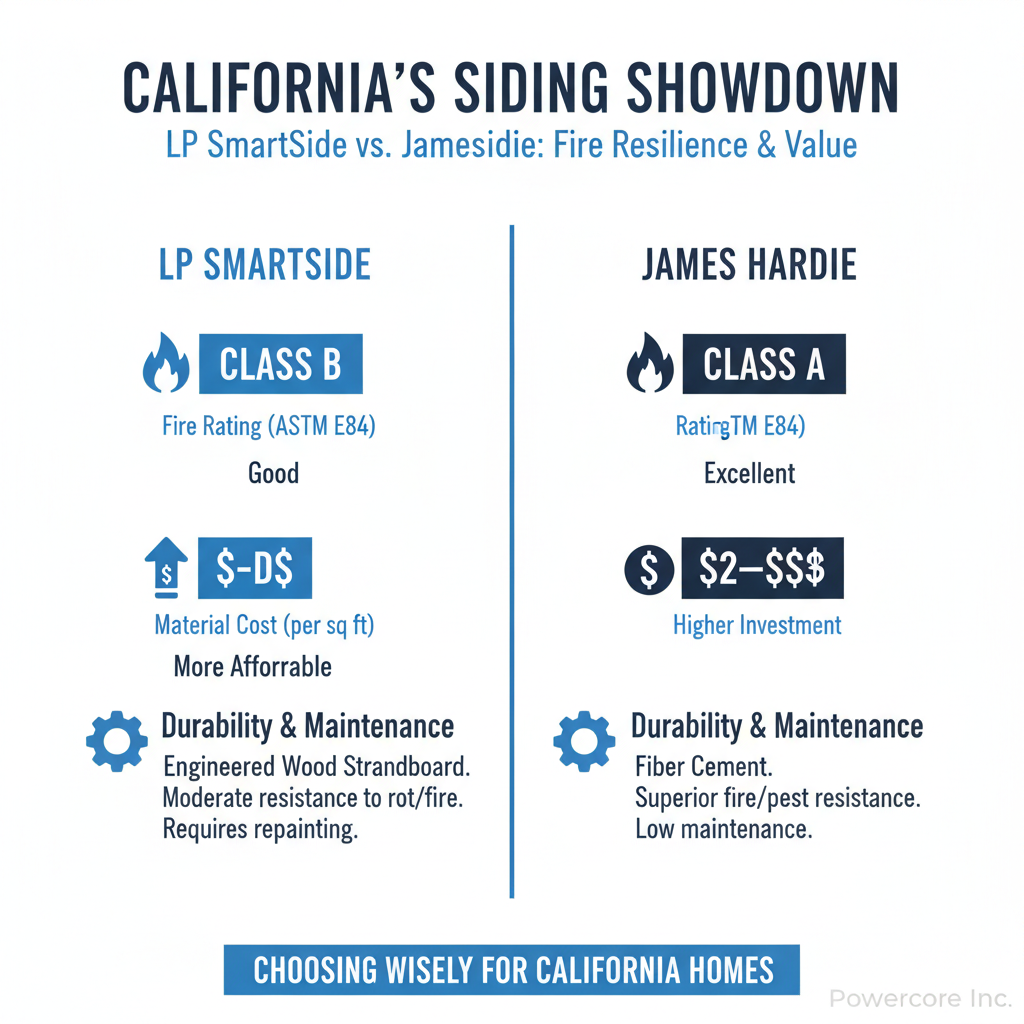
- LP SmartSide siding, being an engineered wood product, is combustible. While some engineered wood products can be treated to achieve a Class B fire rating, standard LP SmartSide products typically do not achieve the highest fire ratings without additional measures. It's important to check specific product certifications and local building codes for WUI zones. In many high-risk fire areas of California, standard engineered wood products may not meet strict Chapter 7A compliance for exterior wildland fire exposure.
-
James Hardie's Fire Rating:
- James Hardie fiber cement siding is non-combustible and holds a Class A fire rating (the highest possible rating). This means it will not ignite when exposed to a direct flame, nor will it contribute fuel to a fire. This is an unparalleled advantage in California's wildfire landscape. For homes in WUI zones, compliance with California's Chapter 7A of the California Building Code is mandatory, and James Hardie fiber cement products often meet or exceed these stringent requirements for exterior fire resistance. This superior fire performance makes James Hardie a preferred, and often required, choice for properties in high-risk fire zones.
Aesthetics and Design Flexibility
Beyond protection, siding significantly contributes to your home's curb appeal and architectural style.
-
Appearance and Textures:
- LP SmartSide: It excels at replicating the natural beauty of real wood with deep cedar grain textures. This allows homeowners to achieve a classic, warm aesthetic without the traditional maintenance concerns of wood. It comes in various styles, including traditional lap, vertical panel, and shingle/shake profiles.
- James Hardie: Offers a wide array of textures and profiles, from smooth to traditional wood grain (e.g., Cedarmill® texture) that mimics the look of wood. While it may not have the exact depth of grain as engineered wood, it provides a very convincing and high-quality finish that works with virtually any architectural style, from Craftsman to modern.
-
Color Options and Retention:
- LP SmartSide: Available primed for painting any color you desire, or pre-finished in a range of factory colors. The quality of color retention depends heavily on the paint chosen, if field-applied, and the quality of the pre-finish. Regular repainting (typically every 5-10 years) may be necessary to maintain vibrant color.
- James Hardie: Offers its proprietary ColorPlus® Technology, a factory-applied, baked-on finish that comes with a 15-year limited warranty against chipping, cracking, and fading. This provides exceptional color stability and reduces the need for frequent repainting, a significant advantage in California's intense sun. While field painting is an option, ColorPlus offers superior durability and a more consistent finish.
Cost: Initial Investment vs. Long-Term Value
Cost is always a significant factor. It’s important to consider not just the upfront price but the total cost of ownership over the lifetime of the siding.
-
Material Costs:
- LP SmartSide: Generally, LP SmartSide materials tend to be slightly less expensive per square foot than James Hardie fiber cement. Prices can vary widely based on style, thickness, and regional supplier, but you might expect LP SmartSide to be 5-15% less on material costs.
- James Hardie: Fiber cement materials are typically more expensive upfront. The premium reflects its composition and inherent durability benefits, particularly its fire resistance.
-
Installation Costs:
- LP SmartSide: Being lighter and easier to cut, LP SmartSide usually has lower installation labor costs. It requires standard carpentry tools, which speeds up the installation process.
- James Hardie: Fiber cement is heavier and requires specialized tools (e.g., fiber cement shears, dust-reducing saws) and techniques for cutting and installation. This often translates to higher labor costs and a longer installation timeline. However, Powercore Inc's experienced crews are proficient with both materials, ensuring efficient and high-quality installation regardless of your choice.
-
Maintenance Costs:
- LP SmartSide: While durable, engineered wood siding will eventually require repainting, typically every 5-10 years, depending on exposure and paint quality. This is an ongoing cost that should be factored into the long-term budget.
- James Hardie: Known for low maintenance. If you opt for ColorPlus® Technology, repainting may not be necessary for 15+ years. Even if field-painted, fiber cement holds paint exceptionally well, extending the repaint cycle significantly compared to engineered wood. Annual cleaning with a garden hose and soft brush is usually sufficient.
When considering the total cost of ownership over 20-30 years, the initial savings with LP SmartSide can be offset by higher long-term maintenance costs, especially repainting. James Hardie's higher upfront cost can be justified by its superior longevity and significantly reduced maintenance requirements, offering better long-term value, particularly in California's harsh environment.
Installation Process and Speed
The installation process impacts project timelines and labor costs.
-
LP SmartSide Installation:
- LP SmartSide is relatively lightweight and can be installed by most experienced carpentry crews using standard tools. Its ease of handling can lead to faster installation times, which might be appealing if you're on a tight schedule. It's often installed using traditional nailing methods.
-
James Hardie Installation:
- Fiber cement is considerably heavier, requiring more hands and specialized cutting tools to manage the dust generated during cutting. Proper installation is crucial for its performance and warranty validity, often necessitating installers who are specifically trained or certified in Hardie product installation. While more labor-intensive, Powercore Inc's General B license and extensive experience ensure that any James Hardie installation is executed precisely and efficiently, meeting all manufacturer specifications and California building codes.
Environmental Impact and Sustainability
Eco-conscious homeowners in California often consider the environmental footprint of their building materials.
-
LP SmartSide's Eco-Credentials:
- LP SmartSide products are made from wood, a renewable resource, often sourced from sustainably managed forests. The manufacturing process uses wood byproducts and employs advanced technology to minimize waste. The zinc borate treatment is a naturally occurring compound, and the resins used are often low-VOC.
-
James Hardie's Eco-Credentials:
- Fiber cement is made from readily available, inert raw materials: cement, sand, and cellulose fiber. Its exceptional longevity means less frequent replacement, reducing waste over the product's lifespan. While the manufacturing process can be energy-intensive, its durability and resistance to rot, pests, and fire contribute to a longer service life, making it a sustainable choice in the long run.
Warranty and Manufacturer Support
A strong warranty provides peace of mind for your investment.
-
LP SmartSide Warranty:
- LP SmartSide generally offers a 5/50-year limited warranty. This typically includes a 5-year, 100% labor and material replacement warranty, followed by a 50-year prorated limited warranty on the substrate. This is a robust warranty for an engineered wood product.
-
James Hardie Warranty:
- James Hardie provides an excellent 30-year non-prorated, transferable limited warranty on its fiber cement siding products. For their ColorPlus® Technology finish, they offer a separate 15-year limited warranty that covers paint and labor to correct peeling, cracking, or chipping. These comprehensive warranties reflect the manufacturer's confidence in the product's long-term performance.
California-Specific Considerations for Siding
The Golden State presents unique challenges and requirements that influence the best siding choice.
Navigating California's Diverse Climates
California is a land of microclimates, each impacting siding differently:
- Coastal Regions (e.g., San Francisco, Santa Monica): High humidity, salt air, and fog demand excellent moisture resistance. Both materials perform well, but James Hardie's inherent resistance to rot and mold offers a slight edge.
- Inland Valleys (e.g., Sacramento, Fresno): Extreme heat in summer and occasional freezes in winter, combined with intense UV exposure, require materials that resist warping, fading, and cracking. James Hardie's ColorPlus Technology is a standout here for color retention, while both offer good structural stability against temperature swings.
- Mountain Areas (e.g., Lake Tahoe, Big Bear): Snow, ice, and freeze-thaw cycles necessitate highly durable and moisture-resistant materials. Both products are robust, but James Hardie's HZ5® line is specifically designed for these conditions.
- Desert Regions (e.g., Palm Springs, Lancaster): Intense, prolonged UV exposure and extreme dry heat test a siding's ability to resist fading and brittleness. Again, James Hardie's ColorPlus has an advantage for color, and both offer excellent structural integrity.
Building Codes and Regulations in the Golden State
California has some of the strictest building codes in the nation, particularly concerning fire safety.
- Wildland Urban Interface (WUI) Zones: Many areas in California are designated WUI zones due to their proximity to wildlands. Homes in these areas must comply with Chapter 7A of the California Building Code, which mandates the use of fire-resistant exterior materials. James Hardie fiber cement siding, with its Class A fire rating, is consistently a top choice for meeting these requirements. While some LP SmartSide products might be acceptable in certain WUI zones with specific treatments or assemblies, James Hardie offers a more straightforward path to compliance for high-risk areas. Always consult with a local expert like Powercore Inc to ensure your chosen siding meets all local and state regulations.
- Energy Efficiency: While siding itself doesn't provide significant insulation, its proper installation and integration with a home's thermal envelope contribute to overall energy efficiency, a key focus of California's Title 24 building standards.
Resale Value and ROI for California Properties
Investing in quality siding can significantly boost your home's resale value.
- Curb Appeal: Both LP SmartSide and James Hardie can dramatically enhance curb appeal, offering beautiful, well-maintained exteriors that attract buyers.
- Durability and Low Maintenance: Buyers in California are increasingly savvy about long-term costs. A home with durable, low-maintenance siding like James Hardie, especially with its fire-resistant properties, can command a premium. The peace of mind offered by a Class A fire rating in a wildfire-prone state is an invaluable selling point.
- Perceived Value: James Hardie often carries a perception of higher quality and durability among homeowners and real estate professionals due to its strong brand recognition and robust performance in challenging environments. LP SmartSide offers excellent value, particularly for those seeking the aesthetic of wood at a more accessible price point.
Which Siding is Right for YOUR California Home?
The choice between LP SmartSide and James Hardie ultimately depends on your specific priorities, budget, and the unique conditions of your California property.
- Choose LP SmartSide if:
You prioritize the authentic look of wood, are working with a slightly tighter initial budget, desire a lighter-weight material for potentially faster installation, and are not in a strict WUI zone requiring the highest fire ratings. Its robust impact resistance and pest deterrence (thanks to zinc borate) are also strong selling points. - Choose James Hardie if:
Fire resistance is your absolute top priority (especially in WUI zones), you seek the lowest possible long-term maintenance, you want superior resistance to rot, pests, and extreme weather, and you're willing to invest more upfront for unparalleled durability and a long-lasting, factory-finished color. Its reputation for longevity and performance in harsh climates is unmatched.
Trust Powercore Inc for Expert Siding Installation
Regardless of which superior siding product you choose, the quality of installation is paramount. A poorly installed product, no matter how good the material, will fail prematurely. This is where Powercore Inc, your California dual-licensed General B & C-10 Electrical Contractor, comes in.
Based in Roseville, CA, and serving homeowners across the entire state, Powercore Inc has the expertise, experience, and certifications to ensure your siding project is executed to the highest standards. Our comprehensive understanding of California's building codes, climate challenges, and aesthetic preferences allows us to provide tailored recommendations and flawless installation. With our General B license, we don't just do siding; we understand your entire home's envelope, ensuring a cohesive and durable exterior solution that protects your investment for decades.
Conclusion
Both LP SmartSide and James Hardie offer exceptional value and protection for California homes. Your decision will hinge on balancing the rich aesthetics and cost-effectiveness of engineered wood against the supreme fire resistance and ultra-low maintenance of fiber cement. Whichever path you choose, remember that quality installation by a reputable contractor is non-negotiable for maximizing your siding's lifespan and performance.
Ready to upgrade your home's exterior with confidence? Contact Powercore Inc today for a personalized consultation. Our experts will assess your specific needs, discuss California-specific considerations, and help you select the perfect siding solution for your home. Call us at 916-699-8778 to schedule your free estimate and take the first step towards a more resilient, beautiful, and valuable California home.