

The California Stucco Dilemma: Remediation or Replacement?
For many California homeowners, stucco has long been a popular choice for its aesthetic appeal, durability, and perceived low maintenance. Yet, beneath that smooth, often Mediterranean-inspired surface, a silent threat can lurk: stucco failure. From minor cracks to significant water intrusion and structural damage, failing stucco is a widespread issue across our diverse state, driven by everything from seismic activity and extreme weather to initial installation flaws.
When faced with compromised stucco, property owners often find themselves at a critical crossroads: should you pursue targeted stucco remediation and repair, or is it a smarter, more cost-effective long-term investment to opt for a complete siding replacement, often referred to as a reclad? This isn't just a cosmetic decision; it's about protecting your home's structural integrity, enhancing energy efficiency, ensuring compliance with California's rigorous building codes, and preserving your property's value.
At Powercore Inc, a dual-licensed General B & C-10 Electrical Contractor serving all of California, we understand the complexities of exterior solutions. Our expertise extends beyond mere aesthetics, focusing on integrated solutions that provide lasting protection and value. In this comprehensive guide, we'll delve deep into the nuances of stucco remediation versus full siding replacement, helping you make an informed decision for your California home.
Why Stucco Fails in California: Understanding the Root Causes
Stucco, when installed correctly, can offer a robust and attractive exterior. However, California's unique environmental challenges and evolving construction practices often expose its vulnerabilities, leading to premature failure. Understanding these root causes is the first step in deciding on the best course of action.
Climatic Challenges
- Moisture Intrusion: California's varied climate zones, from the foggy coasts to the rainy northern regions and desert downpours, present significant moisture challenges. Stucco, while water-resistant, is not waterproof. If water penetrates the stucco system due to cracks, improper flashing around windows/doors, or inadequate drainage planes, it can become trapped, leading to wood rot, mold growth, and structural damage.
- Thermal Expansion and Contraction: Extreme temperature swings, particularly in inland valleys, cause building materials to expand and contract. Stucco, a rigid material, can develop hairline cracks under this stress, creating pathways for water.
- Seismic Activity: California is earthquake country. Even minor tremors can stress stucco finishes, leading to new cracks or exacerbating existing ones, compromising the building envelope's integrity.
- UV Exposure: Intense California sun can degrade stucco's finish over time, leading to fading, chalking, and a general weakening of the surface layers.
Installation Deficiencies
A significant portion of stucco failures can be attributed to improper installation practices that compromise the system's ability to shed water effectively. Common issues include:
- Inadequate Flashing: Critical areas like windows, doors, roof-to-wall junctions, and penetrations (vents, pipes) require precise flashing to direct water away from the building envelope. Missing or improperly installed flashing is a primary culprit for water intrusion.
- Missing or Compromised Drainage Planes: Modern stucco systems rely on a weather-resistive barrier (WRB) and a drainage plane behind the stucco to allow any water that penetrates the surface to drain out. Older homes or those with improper installation may lack these essential components, trapping moisture.
- Improper Lath and Weep Screeds: The metal lath provides reinforcement, and weep screeds at the base of walls are crucial for drainage. Incorrect installation of either can lead to water retention and stucco delamination.
- Insufficient Cure Time: Rushing the curing process between stucco coats can weaken the material, making it more prone to cracking.
Age and Wear and Tear
Even perfectly installed stucco has a lifespan. Over decades, environmental exposure and minor impacts can lead to general deterioration, requiring significant repairs or replacement.
Understanding Stucco Remediation and Repair
Stucco remediation involves targeted repairs to address specific issues, rather than a full system overhaul. This approach is often considered when the damage is localized, superficial, and has not led to widespread water intrusion or structural compromise.
What is Stucco Remediation?
Remediation typically focuses on:
- Crack Repair: Filling and sealing hairline or minor cracks to prevent water penetration.
- Patching: Repairing localized areas where stucco has delaminated, spalled, or been damaged.
- Addressing Minor Flashing Issues: Repairing or improving flashing in specific, contained areas.
- Mold and Mildew Treatment: Cleaning and treating surface mold, often a symptom of underlying moisture issues.
- Repainting/Restoring Finish: Applying a new elastomeric coating or paint to restore aesthetic and add a layer of protection.
The Remediation Process
- Inspection and Assessment: A thorough inspection identifies the extent and root cause of the damage. This might involve moisture meters or even small exploratory openings.
- Preparation: Damaged stucco is carefully removed, surfaces are cleaned, and any underlying substrate (e.g., sheathing) that is structurally sound is prepared.
- Repair of Substrate (if minor): If there's localized rot or damage to the sheathing or framing, these are repaired or replaced.
- Application of New Stucco: New layers of stucco are applied, feathered into the existing surface, and matched as closely as possible in texture and color.
- Flashing Upgrades: Existing flashing around critical areas may be improved or replaced if easily accessible and localized.
- Finishing: The repaired area is painted or coated to blend with the original stucco.
Pros and Cons of Stucco Remediation
Pros:
- Lower Upfront Cost: Generally less expensive than a full replacement, especially for localized issues.
- Less Disruptive: The repair process is typically quicker and less invasive to your daily life.
- Maintains Original Aesthetic: If matching is done well, your home's original look is preserved.
- Suitable for Superficial Damage: An excellent option when damage is truly minor and not indicative of systemic failure.
Cons:
- Doesn't Address Systemic Issues: If the underlying problem is widespread water intrusion due to fundamental installation flaws (e.g., no drainage plane, widespread improper flashing), remediation is often a temporary fix.
- Potential for Recurrence: Without addressing the root cause, problems can reappear in the same or different areas.
- Matching Difficulties: Achieving a perfect match in texture and color with aged stucco can be challenging, leading to visible patches.
- Limited Warranty: Repairs typically come with shorter warranties than a full replacement.
- Hidden Damage Risk: It's difficult to fully assess the extent of hidden water damage without removing significant portions of stucco.
Understanding Full Siding Replacement (Reclad)
A full siding replacement, or reclad, involves removing all existing stucco down to the structural sheathing, inspecting the underlying structure, and installing an entirely new, high-performance siding system. This is the more comprehensive solution, particularly recommended when stucco failure is widespread, recurrent, or indicative of significant underlying water damage.
What is a Siding Reclad?
A reclad means:
- Complete Removal: All existing stucco is stripped off.
- Structural Inspection and Repair: The exposed sheathing, framing, and insulation are thoroughly inspected for rot, mold, or structural damage. Any issues are meticulously repaired.
- New High-Performance Building Envelope: A modern, code-compliant weather-resistive barrier (WRB) and drainage plane are installed to prevent future water intrusion. New, robust flashing is installed around all penetrations.
- Installation of New Siding: A new siding material, chosen for its durability, aesthetics, and performance characteristics (e.g., fire resistance, energy efficiency), is installed.
Popular Siding Options for California Homes
When recladding, California homeowners have a wealth of modern, high-performance options far superior to traditional stucco in many respects:
- Fiber Cement Siding (e.g., James Hardie): Extremely durable, resistant to rot, pests, and fire (a critical factor in many CA communities). Available in various styles and colors, mimicking wood or stucco.
- Engineered Wood Siding (e.g., LP SmartSide): Offers the look of real wood with enhanced durability, moisture resistance, and impact resistance. Often comes with lengthy warranties.
- Vinyl Siding: A cost-effective option known for its low maintenance and variety of colors and profiles. Modern vinyl is more durable and aesthetically pleasing than older generations.
- Metal Siding: Gaining popularity for its contemporary look, extreme durability, and fire resistance. Often made from recycled materials.
The Reclad Process
- Thorough Assessment: A detailed inspection confirms the need for a reclad and identifies potential issues.
- Permitting: A full reclad typically requires local building permits in California, ensuring compliance with current codes, including Title 24 energy efficiency requirements.
- Demolition: The existing stucco is carefully removed, often revealing the true extent of hidden damage.
- Structural Repairs: Any damaged sheathing, framing, or insulation is repaired or replaced by qualified professionals.
- Installation of WRB and Flashing: A modern weather-resistive barrier and comprehensive flashing system are meticulously installed to create a superior water management system.
- New Siding Installation: The chosen siding material is expertly installed according to manufacturer specifications and local building codes.
- Finishing Touches: Trim, paint, and other exterior elements are completed to achieve the desired aesthetic.
Pros and Cons of Full Siding Replacement
Pros:
- Long-Term Solution: Addresses the root cause of stucco failure, providing a durable, lasting exterior.
- Superior Water Management: Modern WRBs and flashing systems offer vastly improved protection against moisture intrusion.
- Enhanced Curb Appeal and Resale Value: A new siding system significantly upgrades your home's appearance and can offer a high return on investment.
- Improved Energy Efficiency: Opportunity to upgrade insulation and air sealing, contributing to Title 24 compliance and lower energy bills.
- Increased Fire Resistance: Many modern siding materials (e.g., fiber cement) offer superior fire protection, crucial in California's fire-prone regions.
- New Warranties: Both material and installation warranties provide peace of mind for decades.
- Opportunity for Customization: Choose from a wide array of colors, textures, and styles to update your home's look.
Cons:
- Higher Upfront Cost: The most significant drawback is the higher initial investment compared to remediation.
- More Disruptive: The process is more extensive and takes longer, causing more disruption during construction.
- Permitting Requirements: Involves more paperwork and inspections to ensure compliance.
The Critical Decision: Remediation vs. Reclad for Your California Home
Choosing between stucco remediation and a full siding replacement is a significant decision that impacts your home's longevity, value, and your peace of mind. It's not a one-size-fits-all answer; the best choice depends on several key factors:
1. Extent and Nature of Damage
- Localized, Superficial Cracks: If the damage is truly minor, confined to surface cracks, and there's no evidence of widespread moisture intrusion or structural compromise, targeted remediation might be appropriate.
- Widespread Cracking, Delamination, or Signs of Water Intrusion: If you see significant cracking across multiple walls, stucco detaching from the wall, or clear signs of water damage (e.g., warped trim, interior water stains, mold), a reclad is almost always the safer and more effective long-term solution. Hidden damage is often far worse than what's visible on the surface.
2. Budget: Initial vs. Long-Term
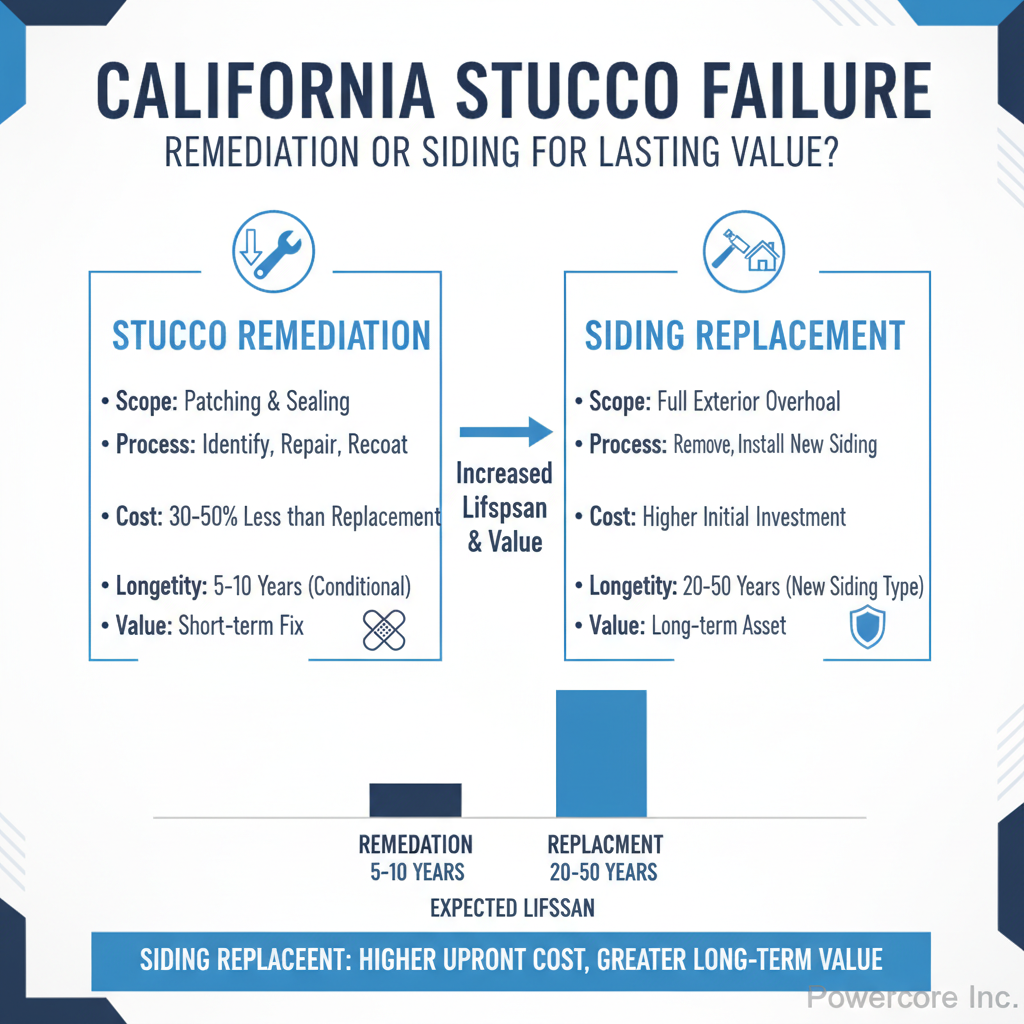
- Remediation: Typically costs less upfront, ranging from $5-$15 per square foot for minor repairs in California. However, if the underlying issues aren't fully resolved, you could face recurring costs and potentially more extensive repairs down the line.
- Full Siding Replacement: The initial investment is higher, often ranging from $15-$40+ per square foot in California, depending on the siding material chosen and the complexity of the project. While a larger upfront cost, it provides a comprehensive, long-lasting solution that often eliminates future stucco-related expenses.
Consider the total cost of ownership. A cheaper initial repair that fails in a few years could end up costing you more than a single, comprehensive replacement.
3. Desired Outcome and Future Plans
- Quick Fix vs. Permanent Solution: Are you looking for a short-term cosmetic improvement or a robust, long-term upgrade that protects your home for decades?
- Resale Value: A full siding replacement often offers a higher return on investment and significantly boosts curb appeal and perceived value, especially if you plan to sell within the next 5-10 years. Buyers are increasingly wary of homes with known stucco issues.
- Aesthetic Upgrade: A reclad allows you to completely transform your home's exterior, choosing from modern, high-performance materials that can dramatically enhance its look.
4. Energy Efficiency and California Codes
California's Title 24 energy codes are among the most stringent in the nation. A full reclad provides a prime opportunity to:
- Upgrade Insulation: Improve wall cavity insulation and add continuous exterior insulation, dramatically boosting your home's thermal performance.
- Enhance Air Sealing: Address air leaks around penetrations, windows, and doors, reducing drafts and energy waste.
- Meet Modern Standards: Ensure your home's envelope meets or exceeds current energy efficiency requirements, potentially qualifying for incentives or rebates.
Remediation offers limited opportunities for significant energy efficiency improvements, as it doesn't typically involve opening up the entire wall system.
5. Fire Resistance
With increasing wildfire risks across California, choosing fire-resistant exterior materials is a critical consideration. Many modern siding options like fiber cement are non-combustible or highly fire-resistant, offering superior protection compared to traditional stucco, which can still crack and expose combustible materials underneath in extreme heat.
6. Warranties and Peace of Mind
A full siding replacement, when performed by a reputable contractor like Powercore Inc, comes with comprehensive material and labor warranties, often spanning 20-50 years for materials and 5-10 years for installation. This provides significant peace of mind that your investment is protected. Remediation warranties are typically much shorter and less comprehensive.
The Powercore Inc Advantage: Your Expert for California Exterior Solutions
Navigating the complexities of stucco failure and exterior renovations requires expertise, integrity, and a deep understanding of California's specific challenges and regulations. Powercore Inc is uniquely positioned to be your trusted partner for this critical decision.
Dual-Licensed for Integrated Solutions
As a California dual-licensed General B (General Building) and C-10 (Electrical) Contractor, Powercore Inc offers a holistic approach to your home's exterior. This means:
- Comprehensive Assessment: We don't just look at the stucco; we assess your entire building envelope, identifying potential issues with underlying electrical, HVAC, or structural components that might be affected by moisture intrusion.
- Seamless Project Management: Our team can manage all aspects of your exterior project, from structural repairs and new siding installation to integrating new exterior lighting, EV charging, or even solar solutions. This eliminates the need for multiple contractors, streamlining the process and ensuring consistent quality.
- Code Compliance Expertise: We are intimately familiar with California's rigorous building codes, including Title 24 energy efficiency standards, ensuring your project is not only beautiful but also compliant and energy-efficient.
Experience and Quality You Can Trust
With extensive experience in exterior remodeling, including siding, roofing, and general construction, Powercore Inc brings unparalleled craftsmanship to every project. We are committed to using high-quality, durable materials and employing best-practice installation techniques to ensure your new exterior stands the test of time against California's diverse climate.
Our team understands the nuances of various siding materials, helping you choose the best option for your home's aesthetic, performance needs, and budget. Whether you opt for the robust fire resistance of fiber cement, the classic appeal of engineered wood, or another high-performance material, we ensure a flawless installation.
Serving All of California
Based in Roseville, CA, Powercore Inc proudly serves homeowners across the entire state. From the Bay Area to Southern California, and the Central Valley to the Sierra Foothills, our mobile teams are equipped to deliver expert exterior solutions tailored to your specific regional needs.
Preventative Measures for Exterior Longevity
Once you've made your decision and your home's exterior has been repaired or replaced, ongoing maintenance is key to maximizing its lifespan:
- Regular Inspections: Periodically inspect your siding for any signs of damage, cracks, or compromised flashing.
- Keep Gutters Clean: Ensure gutters and downspouts are clear and properly directing water away from your home's foundation.
- Maintain Landscaping: Trim shrubs and trees away from your home's exterior to prevent moisture buildup and physical damage.
- Address Leaks Promptly: Fix any roof leaks, plumbing leaks, or sprinkler issues immediately to prevent water from reaching your walls.
Conclusion: Making the Right Choice for Your Home
The decision between stucco remediation and a full siding replacement is a significant one for any California homeowner. While remediation can be a viable option for truly minor, localized issues, a comprehensive reclad often proves to be the superior long-term investment, especially when dealing with widespread stucco failure, water intrusion, or a desire for enhanced energy efficiency, fire resistance, and curb appeal.
Don't let failing stucco compromise your home's integrity or value. An expert assessment is crucial to accurately diagnose the problem and recommend the most effective, lasting solution. Powercore Inc is dedicated to providing California homeowners with unbiased advice and superior craftsmanship, ensuring your home is protected and beautiful for years to come.
Ready to explore the best exterior solution for your California home? Contact Powercore Inc today for a professional consultation. Our team is ready to provide an expert assessment and guide you through your options. Call us at 916-699-8778 or visit our website to schedule your appointment!