

Introduction: Siding Choices for California Homes
Your home's siding is more than just a decorative shell; it's a critical layer of protection against the elements, a significant contributor to curb appeal, and a key factor in your property's long-term value. In California, where diverse climates, seismic activity, and wildfire risks present unique challenges, choosing the right siding material is paramount. Homeowners across the Golden State are increasingly seeking solutions that offer both stunning aesthetics and robust durability.
Two of the most prominent contenders in the modern siding market are LP SmartSide engineered wood siding and James Hardie fiber cement siding. Both have earned reputations for quality and performance, but they approach durability and design from fundamentally different perspectives. Understanding the nuances between these two popular options is essential for making an informed decision that aligns with your specific needs, budget, and California home's requirements.
This comprehensive guide from Powercore Inc. will dive deep into the LP SmartSide vs. James Hardie debate, comparing their materials, performance characteristics, aesthetic versatility, installation considerations, and long-term value, all through the lens of a California homeowner. Let's explore which siding solution might be the perfect fit for your Golden State residence.
The California Factor: Why Siding Matters More Here
California homes face a spectrum of environmental conditions unmatched in most other states. From the salty air of the Pacific coast to the scorching heat of the desert, the seismic tremors of active fault lines, and the ever-present threat of wildfires, siding in California isn't just about looks – it's about resilience.
- Wildfire Resistance: With vast wildland-urban interface (WUI) zones, fire-resistant building materials are not just recommended but often mandated by local and state codes (like Chapter 7A of the California Building Code). The siding you choose can be a first line of defense against embers.
- Seismic Activity: Flexibility and resistance to cracking under stress are crucial for homes in earthquake-prone areas. Materials that can withstand movement without catastrophic failure are highly valued.
- Climate Extremes: Intense UV radiation, prolonged droughts followed by heavy rains, extreme temperature fluctuations, and coastal humidity all take a toll on exterior materials. Siding must resist warping, rotting, fading, and cracking.
- Pest Infestation: Termites, carpenter ants, and other pests are common throughout California. Siding materials that are resistant to insect damage can save homeowners significant repair costs down the line.
- Aesthetics & Home Value: California's diverse architectural styles, from Craftsman bungalows to modern farmhouses, demand siding that offers versatility in design. Furthermore, a well-maintained, attractive exterior significantly boosts property value and curb appeal in a competitive real estate market.
Given these unique demands, the choice between LP SmartSide and James Hardie becomes a strategic decision, not just a stylistic one.
LP SmartSide: Engineered Wood Siding – An Overview
LP SmartSide is an innovative engineered wood product designed to combine the aesthetic appeal of traditional wood with enhanced durability and performance. It's manufactured using a proprietary SmartGuard® process, which involves four components:
- Zinc Borate: Applied throughout the substrate to resist fungal decay and termite damage.
- Water-Resistant Waxes: Encapsulate wood strands for added moisture resistance.
- Resin-Saturated Overlays: Provide an extra layer of protection against moisture and impact.
- Durable Binders: Create a strong bond between the wood strands, enhancing overall strength.
Pros of LP SmartSide
- Authentic Wood Appearance: Offers the warm, natural look of real wood siding, with deep cedar grain textures or smooth finishes that appeal to many homeowners.
- Exceptional Impact Resistance: Thanks to its engineered composition, LP SmartSide is highly resistant to impacts from hail, golf balls, and other common sources of damage, often outperforming vinyl and even some fiber cement products in direct impact tests.
- Lightweight & Easy to Install: Being lighter than fiber cement, it's easier and faster for installers to work with, potentially reducing labor costs and installation time. It can be cut with standard woodworking tools.
- Cost-Effective: Generally, LP SmartSide has a lower material cost and faster installation, making the overall project cost more budget-friendly than fiber cement.
- Sustainability: Made from sustainably sourced wood and carries third-party certified sustainability credentials.
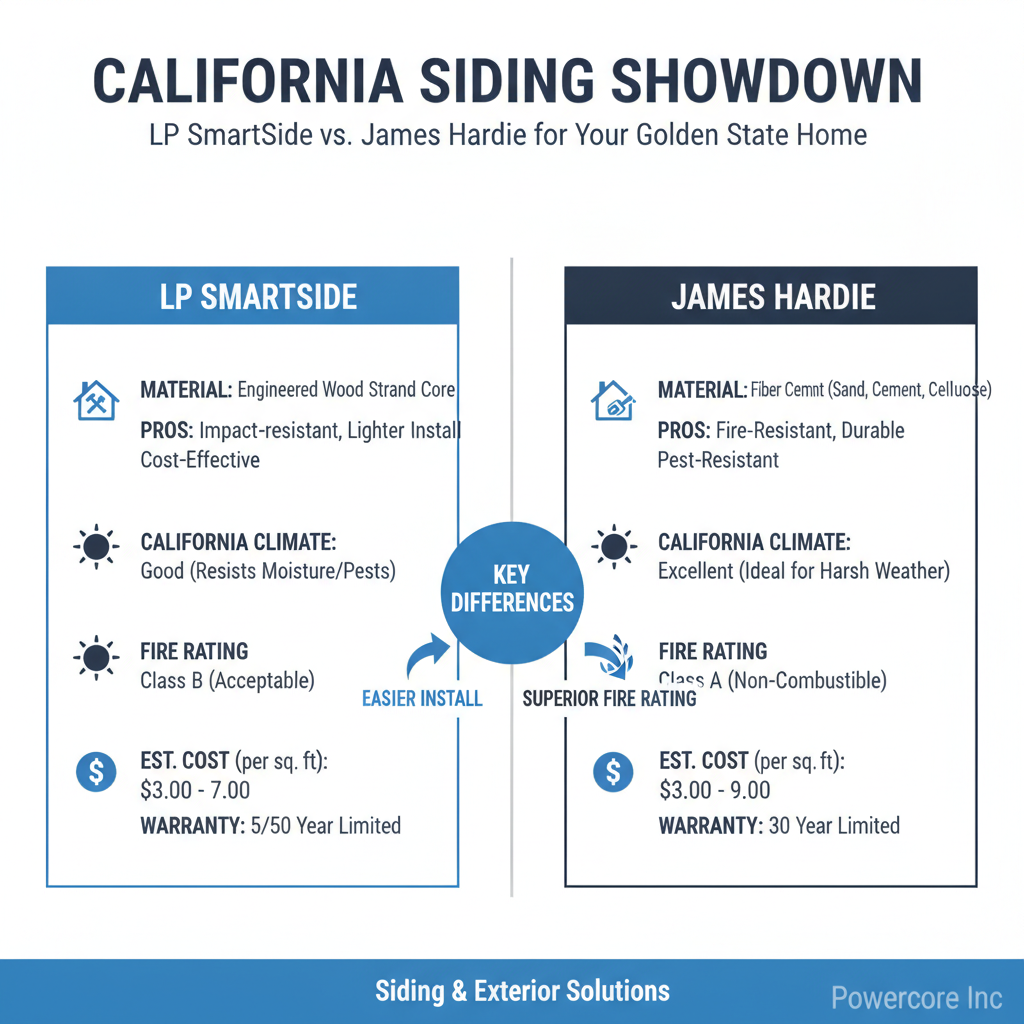
- Long Warranty: Backed by an industry-leading 5/50-year limited warranty, covering both defects and hail damage for 5 years, and a 50-year prorated warranty on the substrate.
Cons of LP SmartSide
- Fire Resistance: While treated, it is still a wood-based product. Its fire rating is generally lower than fiber cement, which can be a significant concern for homes in California's WUI zones where Chapter 7A compliance often requires ignition-resistant or non-combustible materials.
- Moisture Management is Crucial: Although engineered for moisture resistance, proper installation, including diligent caulking and flashing, is critical to prevent water intrusion and potential swelling or decay over time, particularly in California's rainier or coastal regions.
- Requires Painting: While available pre-primed, it still needs to be painted or comes pre-finished, adding to the initial cost or maintenance schedule.
LP SmartSide: California Relevance
For California homeowners, LP SmartSide's flexibility could be an advantage in seismic zones, as it might better accommodate minor structural shifts than more rigid materials. Its aesthetics blend well with many California architectural styles, from rustic mountain cabins to suburban homes. However, its fire rating often makes it a less viable option for homes within designated WUI zones, where stricter fire-resistance standards apply. It performs well against impact from debris, a plus during high winds or minor seismic events.
James Hardie: Fiber Cement Siding – A Closer Look
James Hardie fiber cement siding is composed of cement, sand, and cellulose fibers, creating an incredibly durable and stable material. It's engineered for specific climates, with HardieZone® systems (HZs) tailored to different weather conditions. For California, the HZ5® product line is designed for climates with extreme temperature variations and freezing, while HZ10® is for areas with high heat and humidity.
Pros of James Hardie
- Superior Fire Resistance: Fiber cement is non-combustible, earning the highest Class A fire rating. This is a massive advantage and often a requirement for homes in California's wildfire-prone areas, offering unparalleled peace of mind.
- Extreme Durability & Longevity: Highly resistant to rot, pests (termites and carpenter ants), fading, warping, and cracking. It stands up exceptionally well to harsh weather, including intense UV, heavy rain, and extreme temperatures.
- Moisture & Pest Resistant: Its composition makes it impervious to water absorption (when properly painted and installed) and unappetizing to pests, preventing costly damage.
- Low Maintenance: Requires minimal maintenance beyond occasional cleaning and repainting every 10-15 years, depending on the finish.
- Excellent Warranty: Comes with a 30-year non-prorated, transferable limited warranty on the siding itself, and a 15-year warranty on ColorPlus® Technology finishes.
- Aesthetic Versatility: Available in a wide range of styles, textures (smooth, wood grain, stucco), and pre-finished colors (ColorPlus® Technology), allowing it to emulate various traditional and modern looks.
Cons of James Hardie
- Higher Initial Cost: Generally more expensive per square foot than LP SmartSide, both for materials and installation.
- Heavier & More Difficult Installation: Fiber cement is significantly heavier than engineered wood, requiring more labor, specialized tools, and experienced installers. This contributes to higher installation costs.
- Requires Specialized Tools: Cutting fiber cement generates silica dust, necessitating specific tools and safety precautions (respirators) to protect workers.
- Rigidity: While durable, its rigidity means it may be more susceptible to cracking under extreme seismic stress if not properly installed with expansion joints.
James Hardie: California Relevance
For California homeowners, James Hardie's superior fire resistance is often the deciding factor, particularly in WUI areas where its non-combustible nature meets stringent Chapter 7A requirements. Its resistance to rot, pests, and extreme weather makes it ideal for coastal homes facing salt spray and humidity, or desert homes enduring intense heat and UV exposure. While heavier, its stability and proven performance in demanding environments make it a highly desirable, long-term investment for many California properties.
The Siding Showdown: LP SmartSide vs. James Hardie for Your California Home
Now, let's pit these two titans of the siding industry against each other across several key performance indicators relevant to California homeowners.
Durability and Longevity
- LP SmartSide: Excellent impact resistance against hail and everyday bumps. Treated to resist rot and insects. Generally expected to last 30-50 years with proper installation and maintenance.
- James Hardie: Superior resistance to rot, termites, fire, and extreme weather conditions. Extremely durable and often comes with a 30-year non-prorated warranty, with a lifespan potentially exceeding 50 years. Wins for overall long-term durability, especially against environmental factors.
Fire Resistance: A Critical California Metric
- LP SmartSide: As a wood-based product, it is combustible, though some products may have enhanced fire ratings through specific treatments. Generally, it will not meet the highest Class A fire ratings typically required or recommended in California's WUI zones.
- James Hardie: Non-combustible with a Class A fire rating. This is its standout feature, making it the preferred choice for homes in high-risk wildfire areas across California, providing a crucial layer of protection. James Hardie is the clear winner here for California.
Aesthetics and Design Versatility
- LP SmartSide: Mimics the look of natural wood very convincingly, with deep grain textures. Offers a range of profiles including lap, panel, and vertical siding. Can be painted any color.
- James Hardie: Extremely versatile, able to mimic wood grain (cedar mill, smooth), stucco, or traditional lap siding. Available in a vast palette of pre-finished colors with ColorPlus® Technology for lasting vibrancy, or primed for custom painting. Both offer excellent aesthetic options, but Hardie's pre-finished options offer superior color retention.
Installation and Labor Costs
- LP SmartSide: Lighter and easier to cut with standard tools. Installation is faster and typically less labor-intensive, leading to lower overall installation costs.
- James Hardie: Heavier and more brittle, requiring specialized tools for cutting (to manage silica dust) and more meticulous handling. Installation is more labor-intensive and generally takes longer, resulting in higher installation costs.
Maintenance Requirements
- LP SmartSide: Requires periodic repainting (typically every 5-10 years, depending on paint quality and exposure) and regular inspection of caulk lines.
- James Hardie: Extremely low maintenance. If using ColorPlus® Technology, repainting may not be necessary for 15+ years. Requires occasional cleaning with a garden hose and soft brush. Less prone to insect or rot damage means fewer structural concerns.
Environmental Impact
- LP SmartSide: Made from renewable resources (wood) and manufactured with a commitment to sustainable forestry.
- James Hardie: Made from abundant, natural materials (cement, sand, cellulose). While manufacturing is energy-intensive, its extreme longevity and low maintenance reduce its overall lifecycle impact.
Cost Analysis: Material and Installation
When evaluating the cost of siding, it's crucial to consider both the material cost per square foot and the labor cost for installation. These figures can vary significantly based on location, project complexity, and chosen contractor. In California, labor costs are typically higher than the national average.
- LP SmartSide: Generally, material costs range from $3.00 to $6.00 per square foot. Installed costs can range from $6.00 to $12.00 per square foot, including materials, labor, and basic trim.
- James Hardie: Material costs typically range from $4.00 to $8.00 per square foot (with ColorPlus® usually on the higher end). Installed costs can range from $8.00 to $18.00 per square foot, again including materials, labor, and trim.
While James Hardie has a higher upfront cost, its superior durability, lower maintenance needs, and often higher fire rating can translate into better long-term value and potentially higher resale value, especially in specific California markets.
California-Specific Considerations: A Deeper Dive
Wildfire Urban Interface (WUI) Zones
California's WUI zones are areas where structures meet or intermingle with wildland vegetation. Building codes in these areas, particularly Chapter 7A of the California Building Code, mandate the use of ignition-resistant or non-combustible materials for exterior components, including siding. James Hardie fiber cement products are typically Chapter 7A compliant and widely approved for WUI construction due to their Class A fire rating. LP SmartSide, being wood-based, generally requires additional fire-resistive treatments or specific product lines to meet WUI standards, making it a more complex choice in these critical areas.
Seismic Performance
California's seismic activity means building materials must be able to withstand ground movement. Both materials offer good performance:
- LP SmartSide: Its engineered wood composition provides some inherent flexibility, which can be advantageous during minor seismic events.
- James Hardie: While rigid, its robust nature and proper installation with appropriate detailing can ensure excellent performance during earthquakes. The key is correct fastening and allowing for proper expansion/contraction.
Climate Resilience: Coastal, Desert, Mountain
- Coastal: James Hardie excels in humid, salty coastal environments due to its resistance to moisture, mold, and salt degradation. LP SmartSide performs well but requires meticulous installation to prevent moisture intrusion in high-humidity areas.
- Desert: Both materials handle extreme heat and UV exposure well. James Hardie's ColorPlus® Technology offers superior fade resistance, crucial under intense desert sun. LP SmartSide's impact resistance is beneficial against wind-blown debris.
- Mountain: Both stand up to snow and ice. James Hardie's resistance to freeze-thaw cycles is a plus, while LP SmartSide's impact resistance is good against falling ice.
Permitting and Regulations
Navigating California's local building codes and permitting processes can be complex. Powercore Inc, as a dual-licensed General B & C-10 Electrical Contractor (CSLB #1134334 & #1098175), has extensive experience with California's diverse regulatory landscape. We understand the specific requirements for siding projects, especially concerning WUI zones, energy efficiency, and historical district guidelines. Ensuring your chosen siding meets all local regulations is vital for a smooth project and long-term compliance.
Making Your Choice: Factors to Consider
The best siding for your California home depends on your priorities:
- Budget: If upfront cost is your primary concern, LP SmartSide generally offers a more economical entry point.
- Fire Safety: For homes in WUI zones or if maximum fire resistance is a priority, James Hardie is the superior choice.
- Maintenance Level: If you desire minimal maintenance and long-lasting color, James Hardie with ColorPlus® Technology is ideal.
- Aesthetics: Both offer beautiful options, but if a truly authentic wood grain is paramount and fire risk is low, LP SmartSide might appeal more. If you want a vast array of durable, pre-finished colors, James Hardie shines.
- Location: Consider your specific California climate and local building codes. Coastal homes might benefit more from Hardie's moisture resistance, while WUI homes will almost certainly require it.
- Long-Term Value: While more expensive initially, James Hardie's longevity, low maintenance, and high fire rating can offer excellent return on investment and enhance resale value, especially in California.
Why Choose Powercore Inc. for Your Siding and Exterior Solutions?
Choosing the right siding is a significant investment in your home's future. The installation process is equally critical, directly impacting the siding's performance and longevity. This is where expertise matters. Powercore Inc. is a California dual-licensed General B & C-10 Electrical Contractor, based in Roseville, CA, serving homeowners across the entire state.
Our team understands the unique challenges and opportunities that California homes present. Whether you're navigating WUI requirements, seeking energy-efficient solutions, or simply aiming to enhance your home's curb appeal, we bring unparalleled knowledge and craftsmanship to every project. From initial consultation and material selection to meticulous installation and final inspection, we ensure your siding project is completed to the highest standards, on time and within budget.
Beyond siding, Powercore Inc. offers a comprehensive suite of exterior and interior solutions, including roofing, ADUs, remodels, EV charging, decking, and more. Our integrated approach means we can handle all aspects of your home's upgrade, ensuring seamless coordination and superior results.
Conclusion
Both LP SmartSide and James Hardie offer excellent siding options, each with distinct advantages. LP SmartSide provides a cost-effective, impact-resistant solution with the beautiful look of natural wood, ideal for homeowners prioritizing aesthetics and a slightly lower upfront cost where fire risk is not the primary concern. James Hardie, with its superior fire resistance, extreme durability, and low maintenance, stands out as the premium choice for California homes, especially in wildfire-prone areas or where long-term peace of mind against the harshest elements is paramount.
Ultimately, the best choice for your home depends on a careful evaluation of your property's specific location, local regulations, desired aesthetic, budget, and long-term goals. Don't leave this critical decision to chance. Consult with experienced professionals who understand California's unique building landscape.
Ready to transform your home's exterior with confidence? Contact Powercore Inc. today for a personalized consultation. Our experts are here to guide you through the process, helping you select and install the perfect siding solution for your California home. Call us at 916-699-8778 or visit gopowercoreinc.com to learn more about our comprehensive exterior solutions.