

Introduction: Why Your California Roof Deserves Strategic Attention
Your roof isn't just a cover; it's the primary shield protecting your most significant investment – your California home. In a state known for its diverse climate, from intense sun and occasional heavy rains to the ever-present threat of wildfires and seismic activity, a robust and well-maintained roof is non-negotiable. Yet, many homeowners overlook the importance of regular, strategic roof inspections until a problem becomes glaringly obvious.
At Powercore Inc, a dual-licensed General B & C-10 Electrical Contractor based in Roseville, CA, we understand the unique demands placed on California roofs. We believe that proactive care is the cornerstone of long-term home resilience, energy efficiency, and sustained property value. This comprehensive guide provides a strategic roof inspection checklist tailored for California homeowners, empowering you to identify potential issues early and ensure your home remains safe, sound, and ready for whatever Mother Nature throws its way.
California's Unique Roofing Challenges: More Than Just Shelter
California homes face a specific set of environmental stressors that make diligent roof maintenance critical. Understanding these challenges helps underscore why a generic roof inspection isn't enough:
- Wildfire Risk: Many parts of California are prone to wildfires. Embers can travel miles, making fire-resistant roofing materials and proper roof-to-wall integrity vital. Inspections must look for vulnerabilities that could allow ember intrusion.
- Intense UV Radiation: The abundant California sunshine, while celebrated, can degrade roofing materials over time, leading to cracking, fading, and brittleness, especially in asphalt shingles.
- Heavy Seasonal Rains: While periods of drought are common, California also experiences intense, concentrated rainfall during winter. This can quickly expose weaknesses in flashing, gutters, and sealing, leading to leaks and water damage.
- Seismic Activity: Earthquakes, even minor ones, can shift roof decking, loosen fasteners, and compromise the integrity of chimneys, skylights, and other roof penetrations.
- Energy Efficiency Demands: California's push for energy efficiency means your roof plays a crucial role in insulation and ventilation, impacting your HVAC costs and overall home comfort.
The Powercore Strategic Roof Inspection Checklist: Exterior Components
A thorough exterior inspection can often be performed from the ground with binoculars for safety, but a closer look by a professional is always recommended for hard-to-reach areas. Here’s what to look for:
Shingles, Tiles, or Panels: The First Line of Defense
- Asphalt Shingles: Look for cracked, curled, missing, or blistering shingles. Granule loss, especially in valleys or near downspouts, indicates significant wear.
- Tile Roofs (Clay/Concrete): Check for cracked, broken, or dislodged tiles. Ensure underlayment is not exposed. Note any moss or algae growth, which can trap moisture.
- Metal Roofs: Inspect for rust spots, loose fasteners, dents, or scratches that could compromise the protective coating. Ensure seams are tight and free of separation.
- Wood Shakes/Shingles: Examine for rot, splitting, cupping, or missing pieces. Moss and mildew are common but should be monitored.
Flashing and Sealants: Critical Water Barriers
- Chimneys, Vents, Skylights, and Valleys: Flashing (metal strips) around these penetrations prevents water intrusion. Look for bent, rusted, loose, or missing flashing. Cracks or deterioration in sealant around flashing are red flags.
- Wall Abutments: Ensure step flashing where the roof meets a wall is intact and properly sealed.
Gutters and Downspouts: Managing Water Flow
- Clogs: Clear leaves, debris, and shingle granules from gutters. Clogged gutters can lead to water backup, fascia damage, and foundation issues.
- Damage: Check for sagging, detached sections, rust, or holes. Ensure downspouts direct water away from the foundation.
Soffits and Fascia: The Eaves' Health
- Soffits (underside of eaves): Look for signs of water staining, rot, holes, or pest entry (e.g., wasps, birds, rodents).
- Fascia (board along the roofline): Inspect for peeling paint, soft spots, rot, or signs of water damage, which often indicate gutter problems.
Chimney Structure: Beyond the Flashing
- Masonry: Check for cracked, crumbling, or missing mortar joints. Look for loose bricks or stones.
- Chimney Cap/Crown: Ensure the cap is intact and free of cracks, which can allow water into the chimney flue.
- Spark Arrestor: Crucial in California wildfire zones. Ensure it’s present, intact, and not clogged.
Skylights: A Source of Light, A Source of Leaks
- Seals: Inspect the rubber seals and caulking around the skylight frame for cracks, shrinkage, or signs of deterioration.
- Glass/Plastic: Check for cracks, condensation between panes, or discoloration.
Roof Ventilation: The Unsung Hero of Longevity
- Vents: Ensure all roof vents (ridge vents, static vents, power vents) are clear of obstructions and damage. Proper ventilation prevents heat buildup and moisture accumulation in the attic.
Solar Panels and Attachments: A Modern Consideration
For homes with solar energy systems, an inspection is incomplete without assessing their impact on the roof.
- Panel Integrity: While primarily an electrical component, physically inspect panels for cracks, chips, or delamination.
- Mounting Hardware: Look for any loose or corroded mounting brackets. Ensure flashing around penetrations for wiring and mounts is secure and watertight.
- Shading/Debris: Check for accumulated debris under panels or new shading sources that might reduce efficiency.
Integrating solar means your roof has an even more critical role. If you’re considering solar and battery storage or need to address an aging roof under existing panels, Powercore Inc's dual expertise makes us uniquely qualified. We can assess both your roof's structural integrity and your solar system's performance. For those thinking about future solar, consider reading our guide on replacing your roof with solar shingles.
The Powercore Strategic Roof Inspection Checklist: Interior (Attic) Components
Don't overlook the attic! Many roof problems manifest inside before they become apparent outside. A safe attic inspection (with proper lighting and care) can reveal critical insights:
- Water Stains and Leaks: Look for any discoloration, streaks, or active drips on the underside of the roof deck, rafters, or insulation. Pay close attention after heavy rains.
- Mold or Mildew: Any fuzzy, discolored growth indicates moisture problems and poor ventilation.
- Insulation Condition: Check for damp, compressed, or missing insulation. Wet insulation loses its effectiveness and can harbor mold.
- Ventilation Issues: Feel for excessive heat or humidity. Look for blocked soffit vents or insufficient ridge/gable vents. Poor ventilation accelerates material degradation and increases energy bills.
- Pest Activity: Droppings, nests, or chewed wood indicate critters have found their way in, often through compromised roof access points.
- Sagging Roof Decking: Examine the roof sheathing for any signs of sagging or deflection between rafters, which could indicate structural issues or excessive moisture.
Seasonal Considerations for California Roof Inspections
Timing your inspections strategically can maximize their effectiveness:
- Late Fall (Pre-Winter Rains): This is arguably the most critical inspection. Ensure your roof is sealed and clear of debris before the heavy winter rains arrive. Pay extra attention to siding and exterior integrity, as interconnected systems.
- Early Spring (Post-Winter Assessment): After the rainy season, inspect for any damage incurred from storms, high winds, or accumulated moisture.
- Early Summer (Pre-Wildfire Season): Focus on removing debris, ensuring fire-resistant zones, checking spark arrestors, and addressing any potential ember entry points.
DIY vs. Professional: When to Call Powercore Inc for Expert Assistance
While a DIY ground-level inspection is a good starting point, many aspects of a truly comprehensive roof assessment require the expertise and safety equipment of a professional. Here’s why:
- Safety: Working on a roof can be dangerous, especially on steep pitches or wet surfaces. Professionals are trained and equipped to work safely at heights.
- Expert Eye: Experienced inspectors can spot subtle signs of damage or wear that an untrained eye might miss. They understand material lifecycles, common failure points, and California-specific building codes.
- Comprehensive Assessment: A professional goes beyond surface-level checks, often using specialized tools and techniques to identify hidden issues like water penetration, structural weaknesses, or compromised underlayment.
- Detailed Reporting: You’ll receive a thorough report, often with photos, outlining findings, recommended repairs, and estimated costs.
- Insurance Claims: A professional report can be invaluable when filing insurance claims for storm or wildfire damage.
- Licensing and Trust: When choosing a contractor, always verify their licensing. Powercore Inc holds both a California General B (General Contractor) license CSLB #1134334 and a C-10 Electrical Contractor license CSLB #1098175. This dual qualification means we can address not just your roofing needs but also any integrated systems like solar panels, ensuring a holistic approach to your home's integrity. We adhere strictly to California building codes and safety standards, as overseen by the California Contractors State License Board (CSLB).
Understanding Common California Roof Issues and Costs
Understanding the potential costs associated with common roof issues in California can help you budget for maintenance and repairs. While specific costs vary greatly based on material, roof size, pitch, and location, here's a general overview:
- Minor Repairs (e.g., replacing a few shingles, sealing flashing): Generally range from a few hundred to over a thousand dollars. Timely intervention here can prevent much larger expenses.
- Moderate Repairs (e.g., valley repair, partial re-decking due to water damage): Can range from $1,500 to $5,000+. These often involve more labor and material.
- Major Repairs/Partial Replacement: If a significant section of the roof is compromised, costs can escalate rapidly, potentially reaching $5,000 to $15,000 or more, especially if structural damage is involved.
- Full Roof Replacement: This is the most significant investment, typically ranging from $10,000 to $50,000+ for an average California home, depending on material choice (asphalt, tile, metal) and complexity.
Preventative inspections, especially for wildfire hardening, can save lives and significant financial loss. Investing in higher-quality, fire-resistant materials during remodels or new construction can also offer long-term savings and peace of mind.
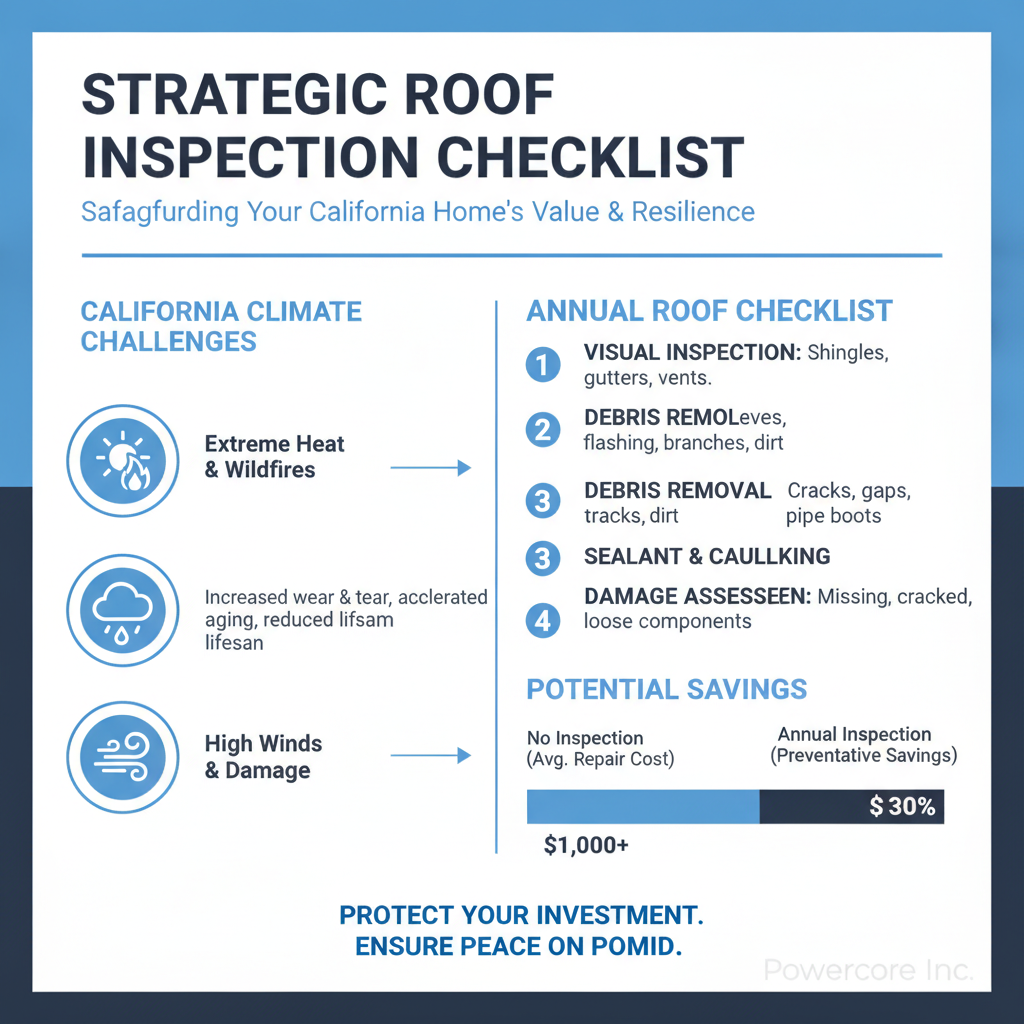
Note: These are estimated ranges. Actual costs will vary based on specific project details, contractor rates, and material choices. Obtaining multiple quotes from licensed professionals like Powercore Inc is always recommended.
Investing in Your Roof's Longevity and Home Value
A well-maintained roof contributes significantly to your home’s overall health and market value. Here’s why proactive roof care is a smart investment:
- Extended Lifespan: Regular inspections and timely repairs prevent small issues from becoming catastrophic failures, greatly extending your roof's functional life.
- Energy Savings: An intact roof with proper insulation and ventilation prevents heat loss in winter and heat gain in summer, leading to lower utility bills.
- Protection from Damage: Safeguards your home’s interior, foundation, and personal belongings from water damage, mold, and pests.
- Enhanced Curb Appeal: A clean, well-maintained roof contributes positively to your home's aesthetic and curb appeal.
- Higher Resale Value: Potential buyers appreciate a home with a healthy roof, often willing to pay a premium or making the sale smoother.
- Insurance Benefits: Some insurance providers may offer incentives or require proof of regular maintenance, especially for wildfire resilience, to maintain coverage or reduce premiums.
Conclusion: Your Strategic Partner in California Roofing
A strategic approach to roof maintenance is not just about avoiding leaks; it's about protecting your California home's structural integrity, enhancing its energy efficiency, and preserving its value against the state's unique environmental challenges. Regular, detailed inspections are your first and most effective line of defense.
Whether you're looking for a thorough inspection, minor repairs, or a complete roof replacement, Powercore Inc is your trusted partner. As a California dual-licensed General B & C-10 Electrical Contractor, we offer comprehensive solutions that consider your entire home system – from roofing and exterior improvements to integrated solar and electrical systems. Don't wait for a problem to escalate. Take a proactive step today to secure your home's future.
Ready for a Professional Roof Assessment? Contact Powercore Inc Today!
Ensure your California home is protected with a strategic roof inspection by Powercore Inc. Our experienced team is ready to provide expert advice and reliable service across the entire state. Contact us today for a consultation or call us directly at 916-699-8778 to schedule your professional roof assessment. Protect your investment with Powercore Inc.