

Introduction: The Unseen Asset Above Your California Business
For any commercial property owner or manager in California, the roof is far more than just a cover; it’s a critical asset that protects investments, ensures operational continuity, and significantly impacts energy efficiency. Among the various commercial roofing systems, TPO (Thermoplastic Polyolefin) flat roofs have become a favored choice due to their durability, energy-saving properties, and relative cost-effectiveness. However, the unique and often challenging climate of California – from scorching inland heat to coastal fog and sporadic heavy rains – demands more than just a quality installation. It requires a strategic, proactive approach to commercial TPO flat roof maintenance.
Ignoring regular maintenance on a TPO roof is akin to neglecting the foundation of your business. Over time, seemingly minor issues can escalate into significant problems, leading to costly repairs, operational disruptions, and a premature need for full roof replacement. At Powercore Inc, we understand the stakes. As a dual-licensed General B & C-10 Electrical Contractor based in Roseville, CA, and serving the entire state, we provide comprehensive roofing and weatherproofing solutions designed to protect your commercial investment for the long haul. This guide will delve into the essential strategies for optimizing your TPO flat roof's performance and longevity in the Golden State.
Understanding TPO: Why It's a Top Choice for Commercial Properties
Before diving into maintenance strategies, it's beneficial to understand what makes TPO roofing so popular for commercial applications. TPO is a single-ply membrane, meaning it's installed in large sheets and welded together to form a continuous, watertight surface. Its composition combines polypropylene and ethylene-propylene rubber, often reinforced with a fabric scrim, offering a blend of performance characteristics:
-
Durability: TPO is highly resistant to punctures, tears, and impacts, making it suitable for rooftops with foot traffic or equipment.
-
Energy Efficiency: Its naturally reflective white or light-colored surface helps to reflect sunlight and reduce heat absorption, lowering cooling costs for commercial buildings in California’s warm climates. This aligns with modern sustainability goals and can lead to significant energy savings.
-
Chemical Resistance: TPO stands up well to many common chemicals, oils, and greases, which can be present on commercial rooftops from HVAC systems or industrial processes.
-
Flexibility: The material remains flexible in varying temperatures, accommodating building movement and thermal expansion and contraction without cracking.
-
Cost-Effectiveness: While initial installation costs can vary, TPO often offers a strong return on investment through its longevity and energy-saving benefits.
These advantages make TPO an excellent choice, but its full potential is only realized through diligent and informed maintenance, especially when contending with California's diverse environmental pressures.
The California Climate Challenge: Protecting Your TPO Roof
California's vast and varied landscape presents a unique set of challenges for commercial roofing systems. A TPO roof in Sacramento will face different stresses than one in San Diego or Palm Springs. Understanding these regional impacts is crucial for effective maintenance:
-
Intense UV Radiation: California boasts abundant sunshine, which is great for commercial solar installations but harsh on roofing materials. Prolonged exposure to ultraviolet (UV) rays can accelerate the degradation of TPO membranes, leading to embrittlement, cracking, and a loss of flexibility. The reflective properties of TPO help, but UV still takes its toll.
-
Extreme Temperature Fluctuations: Inland areas, in particular, experience significant diurnal temperature swings. The constant expansion and contraction of the roof membrane and underlying structure can stress seams and flashing, leading to fatigue and potential breaches over time.
-
Heavy Rains and Ponding Water: While much of California experiences dry summers, winter storms can bring torrential downpours. Flat roofs, by design, are susceptible to ponding water if drainage systems are compromised or if there are structural depressions. Standing water can accelerate membrane degradation, promote algae and moss growth, and add significant stress to the roof structure.
-
Wildfire Embers: In fire-prone regions, commercial roofs must be resilient against wind-borne embers. While TPO generally has good fire resistance ratings, accumulated debris on the roof can become fuel, making cleanliness a critical fire prevention measure.
-
Seismic Activity: California is seismically active. While TPO itself is flexible, the underlying roof deck and structural components can shift during seismic events, potentially stressing membrane attachments, flashing details, and rooftop equipment connections. Post-earthquake inspections are vital.
-
Airborne Pollutants and Debris: Urban and industrial areas can expose roofs to various pollutants, dust, and debris. Coastal regions might experience salt spray. These elements can accumulate, compromising the reflective surface of TPO and potentially leading to membrane deterioration if not regularly cleaned.
These factors underscore the need for a tailored, consistent roofing maintenance plan that accounts for California's specific environmental challenges.
The Pillars of Proactive Commercial TPO Roof Maintenance
A reactive approach to roof maintenance – waiting for leaks to appear – is always more costly and disruptive than a proactive one. Here are the key pillars of a strategic TPO flat roof maintenance plan:
Regular Inspections: Your First Line of Defense
Consistency is key. Commercial TPO roofs should be inspected at least twice a year (spring and fall) and after any significant weather events (heavy storms, high winds, seismic activity). During inspections, look for:
-
Membrane Integrity: Check for any punctures, tears, cracks, blisters, or signs of delamination. Pay close attention to areas around fasteners and seams.
-
Seams and Flashing: These are the most common points of failure. Look for open seams, areas where the sealant has deteriorated, or flashing that has pulled away from parapet walls, skylights, or penetrations.
-
Ponding Water: Identify areas where water stands for more than 48 hours after rain. This indicates poor drainage or structural depressions that need addressing.
-
Debris Accumulation: Leaves, branches, trash, and even construction debris can hold moisture, promote organic growth, and puncture the membrane.
-
Rooftop Equipment: Inspect the condition of equipment curbs, supports, and associated flashing for damage or signs of wear. This includes HVAC units, vents, and any solar panel installations.
-
Drainage Systems: Ensure gutters, scuppers, and internal drains are clear of obstructions and functioning correctly.
Keeping It Clean: Debris and Drainage Management
A clean roof is a healthy roof. Over time, dirt, dust, leaves, and other organic matter can accumulate on your TPO roof. This accumulation can:
-
Compromise Reflectivity: Dirt darkens the surface, reducing its ability to reflect sunlight and increasing cooling loads on your building.
-
Promote Organic Growth: Algae, moss, and mildew thrive in damp, dirty conditions, which can degrade the TPO membrane over time.
-
Obstruct Drainage: Debris can block drains, scuppers, and gutters, leading to ponding water and potential structural strain or leaks.
Regular cleaning involves sweeping or blowing off loose debris. For stubborn dirt or organic growth, a low-pressure wash with a mild, roof-safe cleaning solution can be used, followed by a thorough rinse. Always ensure the cleaning process doesn't damage the membrane or force water into seams. Keeping drainage pathways clear is non-negotiable for preventing water-related issues.
Seam Integrity and Flashing: The Vulnerable Points
The vast majority of TPO roof leaks originate at seams and flashing details. The heat-welded seams are strong, but over years of thermal expansion and contraction, UV exposure, and building movement, they can weaken or separate. Flashing around penetrations (pipes, vents), parapet walls, and equipment curbs is also highly susceptible to failure.
-
Regular Seam Checks: During inspections, visually check every linear foot of seams. Look for signs of separation, cracking, or areas where the weld appears compromised. A professional roofer can perform pull tests to ensure seam integrity.
-
Flashing Maintenance: Inspect all flashing details for tears, cracks, or areas where it has pulled away from the substrate. Pay particular attention to corners and transitions.
-
Prompt Repairs: Any compromised seam or flashing should be repaired immediately by a qualified roofing contractor. Small issues can quickly become large, expensive leaks.
Addressing Punctures and Damage Promptly
Even durable TPO roofs can suffer damage from unexpected sources:
-
Foot Traffic: While TPO is robust, excessive or careless foot traffic from maintenance personnel (HVAC technicians, electricians, solar installers) can lead to punctures or abrasion. Establishing clear pathways and requiring soft-soled shoes can mitigate this risk.
-
Dropped Tools or Equipment: Accidental drops during rooftop work can cause immediate punctures.
-
Wildlife: Birds, rodents, or other animals can sometimes damage the membrane, especially if attracted by food debris.
-
Severe Weather: Hail, wind-borne debris, or falling branches can cause significant damage.
Any identified damage, no matter how small, requires immediate attention. A small puncture can allow water to seep into the insulation and deck, leading to widespread damage, mold growth, and costly interior repairs. Powercore Inc's roofing experts are skilled in precise TPO patch repairs that maintain the roof's integrity and warranty.
HVAC and Equipment Integration: A Dual Responsibility
Commercial rooftops are often home to a multitude of mechanical equipment, particularly HVAC units. The integration of this equipment with the roofing system is a critical point of potential failure if not managed correctly. It’s a dual responsibility: your HVAC maintenance team needs to be aware of roof integrity, and your roofing team needs to understand the impact of equipment.
-
Proper Equipment Stands: Ensure all rooftop equipment is mounted on appropriate, non-penetrating stands or curbs that are properly flashed into the TPO membrane. Vibrating equipment directly on the membrane can cause premature wear.
-
Vibration Control: Heavy machinery, like large HVAC compressors, can induce vibrations that stress the roof membrane and its seals. Vibration isolation pads should be used.
-
Condensate Lines: Ensure condensate lines from HVAC units drain directly into the roof's drainage system and not onto the membrane itself, as prolonged exposure to standing water or mineral deposits can degrade TPO.
-
Coordination of Services: When HVAC technicians are on the roof, ensure they understand best practices for roof safety and protection. Any work performed on or around rooftop equipment should be followed by a quick roof inspection of that area.
The ROI of Proactive TPO Roof Maintenance: Beyond Just Repairs
Investing in consistent commercial TPO flat roof maintenance isn't an expense; it's a smart business strategy that delivers tangible returns:
-
Extended Roof Lifespan: A well-maintained TPO roof can easily exceed its expected lifespan of 20-30 years, delaying the significant capital expenditure of a full roof replacement.
-
Enhanced Energy Efficiency: A clean, intact TPO membrane optimizes its reflective properties, reducing heat gain and subsequently lowering your cooling costs. Sealing leaks prevents compromised insulation, which is also critical for thermal performance.
-
Protection of Interior Assets: Preventing leaks safeguards your building's interior, inventory, equipment, and sensitive electronics from water damage. This also avoids costly business interruptions.
-
Maintained Property Value: A sound roof is a key indicator of a well-maintained commercial property, preserving its market value and appeal.
-
Warranty Compliance: Most TPO manufacturers' warranties require regular inspections and maintenance by qualified professionals. Neglecting this can void your warranty, leaving you exposed to full replacement costs.
-
Improved Safety: A stable, well-maintained roof surface reduces trip hazards and ensures the integrity of the work environment for any personnel accessing the roof.
The initial outlay for regular inspections and minor repairs is a fraction of the cost of emergency leak remediation or a premature roof replacement. For businesses in California, where operating costs can be high, these savings directly impact your bottom line.
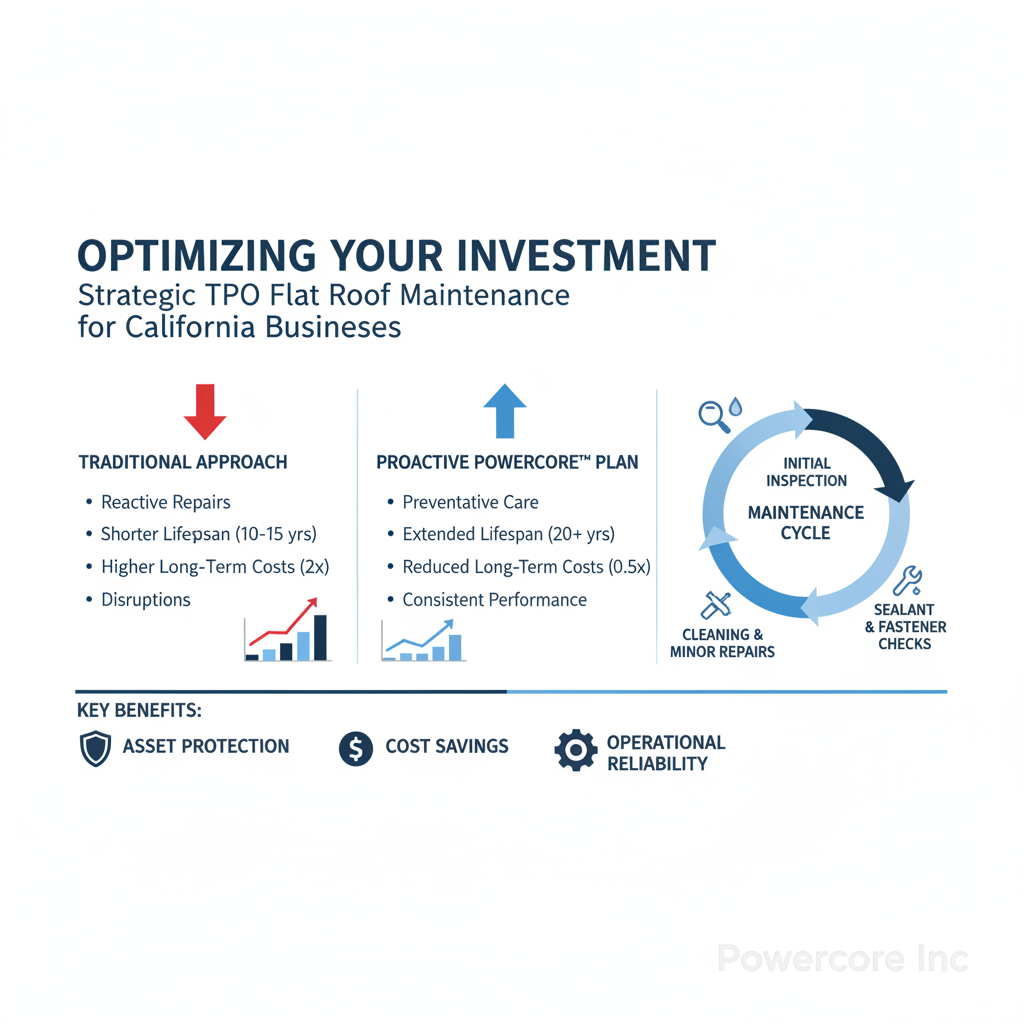
A California-Specific TPO Maintenance Schedule
While general guidelines exist, a truly effective TPO maintenance schedule for California commercial properties considers regional nuances:
-
Annual Spring Inspection: After the winter rains, assess any storm damage, clear debris, and check for ponding water, especially in areas that experienced heavy rainfall. Verify drainage systems are clear before the summer heat. This is also a good time to ensure your roof is ready to maximize its reflective properties for cooling efficiency during the hotter months.
-
Annual Fall Inspection: Before the winter storm season, remove all accumulated debris (leaves, branches) that could block drains. Inspect seams and flashing thoroughly, addressing any potential weaknesses that could become entry points for water during heavy rains. In wildfire-prone areas, this clearing of combustible material is critical.
-
Post-Storm Inspections: After any significant weather event – heavy rain, strong winds, or seismic activity – conduct an immediate inspection for new damage, punctures from wind-borne debris, or shifted equipment.
-
High-Traffic Area Monitoring: If your roof has frequent access for HVAC maintenance or solar panel cleaning, these areas may require more frequent visual checks for wear and tear.
-
Regional Considerations: In extremely hot desert regions, monitoring for UV degradation and material embrittlement is paramount. In coastal areas, salt accumulation and its impact on seals should be considered. Powercore Inc's statewide service means we understand these localized challenges.
When to Call the Experts: Powercore Inc's Comprehensive Approach
While some aspects of visual inspection and debris removal can be handled internally, certain situations demand the expertise of a professional commercial roofing contractor. You should contact Powercore Inc if you observe:
-
Persistent Ponding: If water consistently stands on your roof for more than 48 hours, it indicates a serious drainage or structural issue that requires professional assessment and repair.
-
Widespread Seam Separation or Cracking: Extensive damage to seams or large areas of membrane cracking suggest systemic issues or advanced material fatigue that a simple patch won't resolve.
-
Interior Leaks: Any sign of water intrusion inside your building is an emergency. A professional can trace the leak's origin and perform effective repairs.
-
Visible Membrane Degradation: If the TPO membrane appears brittle, discolored, or chalky over large areas, it indicates significant UV damage and potential nearing the end of its service life.
-
Mold or Algae Growth: While minor growth can be cleaned, persistent or aggressive growth may signal underlying moisture issues or poor drainage that needs professional attention.
-
Warranty Concerns: If you're unsure about warranty requirements or suspect issues that may fall under warranty, a professional can help navigate the process.
At Powercore Inc, our dual licensing as a General B and C-10 Electrical Contractor (CSLB #1134334 and #1098175) means we offer a unique advantage. We don't just fix roofs; we understand the entire building envelope and its integrated systems. This holistic perspective is invaluable for commercial properties, especially when dealing with rooftop HVAC, solar installations, or other complex electrical components. We can address the root cause of issues, whether it's solely roofing-related or involves coordination with electrical or mechanical systems, ensuring seamless, long-lasting solutions across your property.
Choosing Your Commercial Roofing Partner in California
Selecting the right partner for your commercial TPO flat roof maintenance is a critical decision. Here’s what to look for, and how Powercore Inc stands apart:
-
Proper Licensing and Insurance: Always verify that any contractor you hire is fully licensed and insured. Powercore Inc proudly holds California CSLB #1134334 (General B) and #1098175 (C-10 Electrical), ensuring peace of mind and adherence to state regulations. You can verify licenses at the California Contractors State License Board (CSLB).
-
Experience with TPO and California Climate: Choose a contractor with proven experience specifically in TPO roofing systems and a deep understanding of California's diverse climate challenges.
-
Comprehensive Service Offering: For commercial properties, a contractor who can offer more than just roofing – such as expertise in HVAC, commercial solar, and general construction – provides invaluable synergy and efficiency.
-
Reputation and References: Look for a company with a strong track record of reliability, quality workmanship, and excellent customer service.
-
Commitment to Safety: Roofing work carries inherent risks. A reputable contractor will have a robust safety program to protect their workers and your property.
Powercore Inc is committed to being that comprehensive, trusted partner for businesses across California. Our expertise in roofing, combined with our electrical and general contracting capabilities, allows us to provide integrated solutions that simplify project management and ensure the long-term health of your commercial property.
Conclusion: Secure Your Business with Powercore Inc
Your commercial TPO flat roof is a vital, long-term investment that directly impacts your business's operational efficiency, energy costs, and overall asset value. In California's demanding climate, a proactive and strategic approach to TPO flat roof maintenance is not merely a recommendation; it's a necessity. By implementing regular inspections, maintaining cleanliness, and promptly addressing any issues, you can significantly extend your roof's lifespan, safeguard your assets, and optimize your business's financial performance.
Don't wait for a leak to compromise your business. Partner with Powercore Inc, your trusted California dual-licensed contractor. We offer expert commercial roofing services designed to provide peace of mind and lasting protection. Contact us today to discuss your TPO roof maintenance needs or to schedule a professional inspection. Our team is ready to serve your commercial property throughout California. Call us at 916-699-8778 or visit our contact page to learn more about how Powercore Inc can protect your investment.