

Introduction: The Backbone of Your Business
In the dynamic landscape of California commerce, a reliable and well-maintained commercial roof isn't just a structural component—it's a critical asset. For many businesses across the Golden State, Thermoplastic Polyolefin (TPO) flat roofing has become the material of choice, celebrated for its durability, energy efficiency, and cost-effectiveness. However, simply installing a TPO roof isn't enough to guarantee its long-term performance and the protection of your valuable assets. The true secret to maximizing your investment and ensuring the enduring integrity of your commercial property lies in strategic, proactive TPO flat roof maintenance.
California's diverse and often extreme climate—from the scorching inland valleys to the moist coastal regions, and the seismic activity that can affect any structure—presents unique challenges for any roofing system. Without a diligent maintenance strategy, even the most robust TPO roof can fall victim to premature wear, leading to costly repairs, energy waste, and business disruptions. At Powercore Inc, a dual-licensed General B & C-10 Electrical Contractor based in Roseville, CA, we understand that your commercial roof is more than just a cover; it's a vital shield protecting your operations, inventory, and peace of mind.
This comprehensive guide will delve into the nuances of commercial TPO flat roof maintenance, offering actionable insights and California-specific considerations to help property owners and facility managers safeguard their investment. We’ll explore why proactive care is paramount, detail the essential components of a robust maintenance plan, and highlight how partnering with experienced professionals like Powercore Inc can ensure your roof stands the test of time and California's challenging environment.
Understanding TPO Roofing: A California Favorite
TPO roofing has rapidly gained popularity in the commercial sector, and for good reason. It’s a single-ply membrane made from a blend of polypropylene and ethylene-propylene rubber, often reinforced with a polyester fabric. This composition grants TPO membranes exceptional characteristics:
-
Durability: TPO is highly resistant to tears, punctures, and impacts, making it resilient against foot traffic and environmental debris.
-
Energy Efficiency: Its naturally reflective surface helps bounce sunlight away from the building, significantly reducing cooling costs during California’s hot summers. This "cool roof" property aligns well with California's Title 24 energy efficiency standards.
-
Flexibility: TPO maintains its flexibility in various temperatures, accommodating building movement without cracking.
-
Chemical Resistance: It holds up well against many chemicals, making it suitable for a wide range of commercial and industrial applications.
-
Cost-Effectiveness: While initial installation costs can vary, TPO often offers a favorable cost-to-performance ratio over its lifespan, especially with proper maintenance.
California’s Climate: The Ultimate Test for TPO
While TPO is engineered for resilience, California’s diverse climate can accelerate wear and tear if not properly managed:
-
Intense UV Radiation: The abundant sunshine, especially in inland and southern California, subjects TPO membranes to constant UV exposure, which can lead to material degradation over many years if not protected and maintained.
-
Extreme Temperature Fluctuations: Large swings between daytime highs and nighttime lows, particularly in desert and mountain regions, cause materials to expand and contract. This thermal cycling places stress on seams and flashings.
-
Seasonal Rains: While California experiences dry spells, the rainy season can bring intense downpours. Poor drainage or compromised seams can quickly lead to leaks and water damage.
-
Wind and Debris: Coastal winds and inland gusts can carry debris that scour the roof surface or cause punctures. High winds can also test the adhesion of the membrane, particularly at edges.
-
Seismic Activity: While TPO itself is flexible, building movement during seismic events can stress the entire roofing system, including its attachment points and penetrations.
Understanding these environmental pressures is the first step in developing an effective maintenance strategy that extends the life of your TPO roof and preserves its protective qualities.
The Hidden Costs of Neglect: Why Proactive Maintenance is Non-Negotiable
Many commercial property owners view roof maintenance as a discretionary expense, often waiting until a visible problem arises before taking action. This reactive approach, however, is a costly gamble that almost always leads to greater expenses and disruptions down the line. The "hidden costs" of neglecting your TPO flat roof can quickly erode your property's value and impact your business operations.
Financial Implications Beyond Repair Costs
-
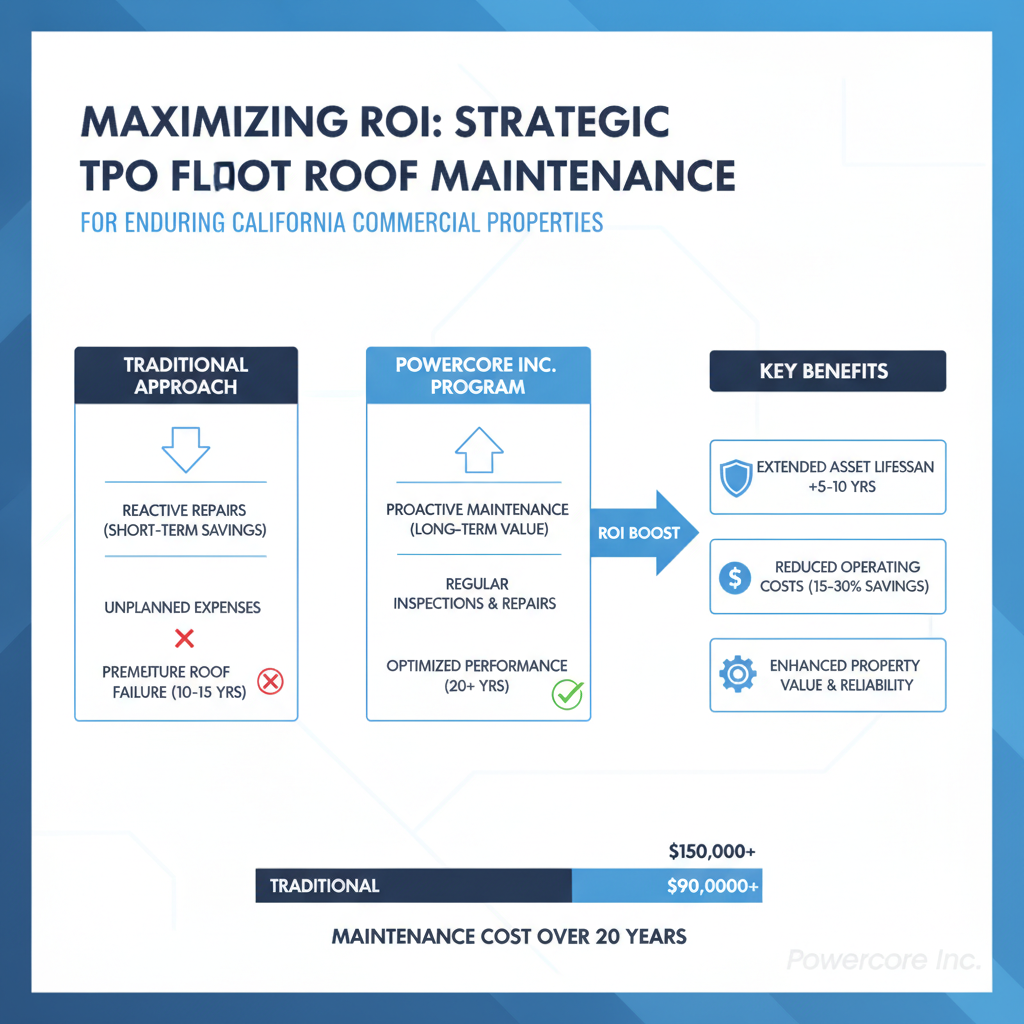
Premature Replacement: A TPO roof designed to last 20-30 years can fail in half that time without proper care. Replacing an entire commercial roof is a significant capital expenditure, often costing hundreds of thousands of dollars. Proactive maintenance, by contrast, is a fraction of this cost and can add years, even decades, to your roof's lifespan.
-
Escalating Repair Expenses: Small issues, if ignored, rarely stay small. A minor seam separation can quickly allow water penetration, leading to insulation saturation, structural damage, and mold growth. What might have been a simple patch job for a few hundred dollars can snowball into thousands in extensive reconstruction and repair costs.
-
Increased Energy Bills: Waterlogged insulation loses its R-value, meaning it no longer insulates effectively. Compromised seams or punctures can also lead to air leaks. Both scenarios force your HVAC system to work harder, driving up energy consumption and negating TPO's inherent energy efficiency benefits. This is particularly impactful in California, where energy costs are a significant operational expense.
-
Invalidated Warranties: Most TPO manufacturers' warranties stipulate regular maintenance as a condition for coverage. Failure to adhere to a documented maintenance schedule can void your warranty, leaving you fully responsible for major repairs or replacement.
Operational and Reputational Risks
-
Business Disruption: Leaks can damage inventory, equipment, and interior finishes, leading to operational downtime, lost productivity, and potential financial losses. Imagine a retail store having to close for repairs, or a manufacturing plant halting production due to water damage.
-
Safety Hazards: Water intrusion can create slip hazards, compromise electrical systems, and foster mold growth, posing health risks to employees and customers. In California, ensuring a safe working environment is not just good practice but a legal imperative.
-
Damage to Reputation: A leaking roof or a building visibly in disrepair can negatively impact your brand image, deterring clients and employees alike.
-
Insurance Headaches: While insurance covers sudden damage, gradual deterioration due to lack of maintenance is often excluded. Even when covered, claims can lead to higher premiums in the future.
By investing in strategic TPO flat roof maintenance, you're not just preserving your roof; you're protecting your entire business operation, optimizing your long-term return on investment, and ensuring compliance with manufacturer warranties.
Key Pillars of a Strategic TPO Maintenance Plan for California Commercial Properties
A comprehensive maintenance strategy for your commercial TPO flat roof in California must be proactive, systematic, and tailored to the specific challenges of your property and location. Here are the essential components:
1. Regular and Thorough Inspections
This is the cornerstone of any effective maintenance plan. Inspections allow for early detection and mitigation of issues before they escalate.
-
Frequency: At a minimum, conduct professional inspections semi-annually (spring and fall) and after any severe weather event (heavy rain, strong winds, hail). Quarterly inspections are ideal for roofs with heavy foot traffic, numerous penetrations, or those in high-debris environments.
-
What to Look For:
- Debris Accumulation: Leaves, branches, dirt, trash, and construction debris can block drains, promote organic growth, and abrade the membrane.
- Ponding Water: Any standing water that remains for more than 48 hours indicates drainage issues and can accelerate membrane degradation.
- Seam Integrity: Examine all welded seams for signs of separation, cracking, or lifting. This is a common failure point for TPO roofs.
- Flashing & Penetrations: Check around HVAC units, vents, skylights, pipes, and parapet walls. These areas are highly susceptible to leaks if flashing is compromised.
- Membrane Surface: Look for punctures, tears, cuts, blistering, crazing, or excessive chalking (a white powdery residue that indicates surface degradation).
- Drainage Systems: Ensure gutters, downspouts, scuppers, and internal drains are clear and functioning properly.
- HVAC & Rooftop Equipment: Inspect the condition of equipment supports, vibration isolators, and ensure no condensation lines are dripping directly onto the roof membrane.
-
Professional vs. In-House: While facility staff can perform basic visual checks, a certified roofing contractor like Powercore Inc offers the expertise, specialized tools, and safety protocols to conduct a thorough, detailed inspection, identifying subtle issues that might be missed by an untrained eye.
2. Proactive Cleaning and Debris Removal
Keeping your TPO roof clean is crucial for both its longevity and energy efficiency.
-
Debris Clearing: Regularly remove all loose debris. This prevents organic matter from decomposing and creating a substrate for plant growth, which can damage the membrane. It also ensures unobstructed water flow to drains.
-
Washing: For accumulated dirt, grime, or environmental pollutants, a gentle wash with a mild, non-abrasive cleaner and low-pressure water can restore the roof's reflectivity and maintain its cool roof properties. Avoid harsh chemicals or high-pressure washing, which can damage the membrane.
-
Vegetation Control: Address any moss, algae, or plant growth promptly. While TPO is resistant, prolonged organic growth can trap moisture and compromise the surface.
3. Seam and Flashing Integrity Maintenance
These are the most vulnerable areas on a TPO roof and require meticulous attention.
-
Thermal Stress: California’s temperature swings can cause expansion and contraction, stressing seams and flashings. Inspect these areas closely for any signs of cracking, lifting, or separation.
-
Prompt Repair: Even minor separations should be addressed immediately by a qualified professional using appropriate TPO welding techniques and materials. Ignoring them is an open invitation for water intrusion.
-
Caulking & Sealants: Inspect and reapply or replace sealants around penetrations and termination bars as needed. These materials degrade over time due to UV exposure.
4. Prompt Puncture and Damage Repair
Accidental damage is inevitable on commercial roofs, often caused by:
-
Foot Traffic: HVAC technicians, solar installers, or other service personnel can inadvertently cause punctures or scuffs. Establish clear pathways and educate personnel on roof safety.
-
Falling Objects: Storms can bring down branches or other debris that can pierce the membrane.
-
Construction Activity: Adjacent construction can lead to dropped tools or materials impacting the roof.
Any detected damage, no matter how small, must be repaired immediately by a professional. TPO patch materials are available, and proper welding ensures a watertight seal.
5. Drainage System Optimization
Effective drainage is paramount for flat roofs to prevent ponding water, which can lead to accelerated degradation, structural stress, and leaks.
-
Clear Drains: Regularly clean all internal drains, scuppers, and gutters of any debris. Ensure strainers are in place and clear.
-
Slope Assessment: If ponding water is a persistent issue, a professional evaluation of the roof’s slope and potential for installing additional drains or tapered insulation might be necessary.
6. Rooftop Equipment and Solar Integration Assessment
Commercial roofs often host a variety of equipment, from HVAC units to solar panels. Their integration with the roofing system requires special attention:
-
HVAC Units: Check for leaks from condensation lines, ensure unit vibrations aren't stressing the membrane, and inspect flashing around curbs and ductwork.
-
Solar Installations: California businesses are increasingly turning to solar power. If your TPO roof hosts a solar array (a service Powercore Inc specializes in for commercial solar & microgrids), ensure that the panel racking systems are properly installed, that penetrations are watertight, and that maintenance access for solar technicians doesn't damage the roof membrane. Powercore Inc’s dual licensing means we understand the critical interface between electrical systems and roofing integrity.
-
Support Structures: Ensure all equipment is properly supported and that its weight is distributed evenly, avoiding excessive stress on specific roof areas.
California-Specific Considerations for TPO Roof Longevity
Beyond general best practices, California's unique regulatory and environmental landscape introduces specific factors into commercial TPO roof maintenance.
Energy Efficiency and Title 24 Compliance
California's stringent Title 24 Building Energy Efficiency Standards emphasize "cool roofs" for commercial properties. TPO, with its reflective surface, often meets these requirements. However, neglecting maintenance can compromise this benefit:
-
Keeping it Clean: A dirty TPO roof loses its reflectivity, absorbing more solar radiation and increasing cooling loads. Regular cleaning is essential to maintain its energy-saving properties and ensure compliance with any ongoing performance requirements.
-
Insulation Integrity: Water intrusion can saturate insulation, drastically reducing its thermal performance. This directly impacts your building's energy efficiency and can lead to non-compliance with energy codes if not addressed.
Seismic Resilience and Structural Integrity
While TPO membranes are flexible, major seismic events can still impact the overall roof structure. During inspections, especially after an earthquake, it's crucial to:
-
Inspect Parapet Walls and Copings: These areas can be particularly vulnerable to cracking or displacement during seismic activity, potentially compromising the roof membrane's termination points.
-
Check Around Penetrations: Pipes, vents, and other penetrations that pass through the roof can shift, tearing the membrane or breaking seals. A comprehensive inspection after seismic activity should include these details.
Permitting and Contractor Licensing
In California, any significant roof repair or alteration often requires permitting and must be performed by licensed contractors. Powercore Inc holds both a General B (General Building Contractor) license (#1134334) and a C-10 (Electrical Contractor) license (#1098175) from the California Contractors State License Board (CSLB). This ensures that any work on your commercial roof, whether simple repairs or complex integrations with electrical systems like solar, is performed to the highest standards of safety, quality, and regulatory compliance.
Developing a Comprehensive Maintenance Schedule
To truly maximize your ROI and ensure the longevity of your commercial TPO roof, a structured and documented maintenance schedule is indispensable. Here’s a framework:
Annual Inspection and Major Maintenance
-
Professional Assessment: A thorough, top-to-bottom inspection by a certified roofing professional. This includes detailed examination of the entire membrane, all seams, flashings, penetrations, and drainage systems.
-
Core Samples (as needed): In areas of suspected water intrusion or insulation issues, core samples might be taken to assess the condition of the roof system's layers.
-
Major Cleaning: A comprehensive cleaning of the entire roof surface to remove accumulated dirt, debris, and organic growth, restoring reflectivity.
-
Minor Repairs: Address all identified minor repairs, such as re-welding small seam separations, patching small punctures, and reapplying sealants.
Semi-Annual Inspections (Spring and Fall)
-
Pre-Rainy Season (Fall): Crucial for identifying and addressing any vulnerabilities before California's winter rains. Focus on drainage, seams, and flashings.
-
Post-Winter/Pre-Summer (Spring): Assess any damage from winter storms and prepare the roof for the intense summer sun. Check for UV degradation signs and ensure cooling efficiency.
-
Debris Removal: Clear all accessible drains, gutters, and roof surfaces of leaves, dirt, and other accumulated debris.
Quarterly or Monthly Walk-Throughs (as needed)
-
Visual Checks: For roofs with heavy equipment traffic, significant debris accumulation, or known vulnerabilities, more frequent visual checks by trained facility staff can be beneficial.
-
Spot Cleaning: Remove any new debris that has accumulated.
Documentation and Budgeting
-
Record Keeping: Maintain detailed records of all inspections, repairs, and maintenance activities. Include dates, descriptions of work, materials used, and photographic evidence. This documentation is vital for warranty claims and future roof assessments.
-
Budget Allocation: Proactively budget for roof maintenance annually. This shifts from unpredictable, large emergency repair costs to predictable, manageable expenses that protect your investment.
Choosing the Right Partner: Powercore Inc, Your California Roofing Expert
Selecting the right commercial roofing contractor is as critical as the maintenance plan itself. You need a partner who understands not only TPO roofing systems but also the unique demands of California's environment and regulatory framework. Powercore Inc is that partner.
Why Powercore Inc Stands Out:
-
Dual-Licensed Expertise: As a California CSLB licensed General B (#1134334) and C-10 Electrical Contractor (#1098175), Powercore Inc offers a holistic approach to your commercial property. This dual expertise is particularly valuable for roofs with complex electrical components like solar arrays or extensive HVAC systems, ensuring seamless integration and maintenance of all rooftop infrastructure.
-
California-Wide Service: From San Diego to Eureka, our team serves all of California, bringing localized knowledge of regional climates, building codes, and permitting requirements to every project.
-
Comprehensive Solutions: Beyond TPO roof maintenance, Powercore Inc offers a full spectrum of services including new roof installations, roof repair, weatherproofing solutions, solar installations, and HVAC services. This means we can address all aspects of your building's envelope and energy systems.
-
Preventative Philosophy: We believe in preventing problems before they start. Our strategic maintenance programs are designed to extend the life of your TPO roof, optimize its performance, and protect your investment against California’s challenging conditions.
-
Unwavering Quality and Safety: Our commitment to excellence is reflected in our meticulous workmanship, use of high-quality materials, and strict adherence to safety standards on every job site.
Entrusting your commercial TPO flat roof maintenance to Powercore Inc means gaining a strategic partner dedicated to the long-term health and efficiency of your commercial property. We provide the peace of mind that comes from knowing your business is protected by a robust, well-maintained roofing system.
Conclusion: Securing Your Commercial Future
Your commercial TPO flat roof is a significant investment, a critical barrier against the elements, and a key contributor to your building's energy efficiency. In California’s demanding climate, simply having a TPO roof is not enough; strategic, proactive maintenance is the definitive path to maximizing its lifespan, protecting your assets, and ensuring optimal operational performance. By implementing a diligent inspection and maintenance schedule, focusing on key vulnerability points, and understanding California-specific considerations, you can transform your roof from a potential liability into a reliable, long-term asset.
Don't wait for a leak or a major repair to remind you of your roof's importance. Partner with Powercore Inc, your trusted California roofing and electrical experts, to develop and execute a tailored TPO flat roof maintenance plan. Our comprehensive services and dual-licensed expertise ensure your commercial property remains protected, efficient, and resilient for years to come. Reach out today to schedule a professional inspection and secure the future of your commercial investment.
For expert commercial TPO flat roof maintenance and a full range of building solutions across California, contact Powercore Inc at 916-699-8778 or visit our contact page to schedule a consultation.