

Strategic Hardwood Flooring in California: A Smart Home Investment
For homeowners across California, the choice of flooring is more than just a surface decision; it's a foundational element of your home’s character, comfort, and long-term value. While countless options exist, hardwood flooring consistently stands out as a timeless, elegant, and highly sought-after investment. But in a state as diverse and dynamic as California, selecting and installing hardwood isn't just about aesthetics—it's about making strategic choices that account for climate, lifestyle, and future resale.
At Powercore Inc, your trusted dual-licensed General B & C-10 Electrical Contractor based in Roseville, CA, we understand that a home remodel, even one focused on flooring, is part of a larger ecosystem. Our expertise spans everything from ADUs and remodels to HVAC and electrical, giving us a holistic perspective on how each component contributes to your home's overall health and value. This guide dives deep into strategic hardwood flooring for California homes, moving beyond simple installation to cover selection, preparation, maintenance, and integration into your broader home improvement vision.
Why Strategic Hardwood Flooring is Key for California Homes
Choosing hardwood flooring is a significant decision. In California, where housing markets are competitive and environmental factors vary widely, a strategic approach ensures your investment pays dividends for years to come.
Aesthetic Appeal & Resale Value
- Timeless Elegance: Hardwood offers a classic, sophisticated look that complements almost any interior design style, from modern minimalist to rustic farmhouse. Its natural warmth and unique grain patterns add character that synthetic materials struggle to replicate.
- Strong ROI: Real estate experts consistently cite hardwood flooring as a major selling point. Homes with hardwood often command higher prices and spend less time on the market. Buyers perceive hardwood as a premium upgrade, signifying quality and durability.
Durability & Longevity in California's Climate
- Built to Last: With proper care, hardwood floors can last for decades, even centuries. Unlike carpet or laminate, hardwood can be refinished multiple times, restoring its original beauty and extending its lifespan significantly.
- Climate Considerations: California’s diverse climate, from the dry heat of the Central Valley to the humidity of coastal regions, demands resilient materials. Engineered hardwood, in particular, offers enhanced stability against moisture fluctuations, making it a strategic choice for many areas.
Health Benefits & Indoor Air Quality
- Allergen Reduction: Hardwood floors do not trap dust, pollen, pet dander, or other allergens like carpets do, contributing to better indoor air quality—a critical factor for allergy sufferers and health-conscious homeowners.
- Easy to Clean: Spills and dirt are easily wiped away, preventing the buildup of grime and bacteria that can harbor in other flooring types.
Versatility in Design
Hardwood comes in a vast array of species, stains, finishes, and plank sizes, offering unparalleled design flexibility. Whether you envision a light, airy Scandinavian look or a rich, dark traditional feel, there's a hardwood option to bring your vision to life.
Understanding Your Options: Hardwood Types & Finishes
Making a strategic choice starts with understanding the fundamental differences in hardwood types and their suitability for your California home.
Solid Hardwood: The Traditional Choice
- Composition: Milled from a single piece of timber, typically ¾ inch thick.
- Pros: Unmatched durability, can be sanded and refinished many times (often 5-7+), adding significant longevity. Excellent for historical authenticity.
- Cons: More susceptible to expansion and contraction due to humidity changes, making it less ideal for basements or high-moisture areas. Installation can be more labor-intensive.
- Best for California: Works well in climate-controlled homes in stable, less humid regions.
Engineered Hardwood: Modern Stability
- Composition: Features a top layer of real hardwood (veneer) bonded to multiple layers of plywood or high-density fiberboard (HDF).
- Pros: Significantly more stable than solid hardwood, resisting expansion and contraction from humidity. Can be installed in more diverse environments, including below-grade. Available in wider plank options.
- Cons: Can typically only be refinished 1-3 times, depending on the thickness of the top veneer layer.
- Best for California: An excellent strategic choice for homes in coastal areas or regions with fluctuating humidity, offering greater flexibility in installation methods (floating, glue-down).
Wood Species & Hardness
The type of wood dramatically impacts durability and appearance. The Janka hardness scale measures a wood's resistance to denting and wear.
Common species for California homes include:
- Oak (Red & White): Classic, highly durable, and versatile. White oak is slightly harder and has a tighter grain.
- Maple: Very hard, smooth grain, lighter color. Excellent for high-traffic areas.
- Hickory: Among the hardest domestic woods, known for its distinctive grain patterns and strength.
- Walnut: Softer than oak or maple, but prized for its rich, dark color and elegant grain.
- Exotic Woods (e.g., Brazilian Cherry, Tigerwood): Often very hard, unique colors and patterns, but ensure sustainable sourcing.
Finishes & Aesthetics
The finish protects the wood and dictates its final look:
- Polyurethane (Oil-Based & Water-Based): Most common. Oil-based offers a warm amber tone and good durability. Water-based is clearer, faster drying, and lower VOC.
- Oil Finishes: Penetrate the wood, offering a natural, matte look and allowing for easier spot repairs. Requires more frequent maintenance.
- Aluminum Oxide: Extremely durable, factory-applied finish, often found on prefinished engineered hardwoods.
Consider the level of sheen (matte, satin, semi-gloss, high-gloss) based on your aesthetic preference and tolerance for showing imperfections (matte finishes hide scratches better).
The Crucial Pre-Installation Checklist for CA Homeowners
Before any planks are laid, thorough preparation is paramount, especially in California, where seismic activity and varying climates can impact flooring performance.
Subfloor Preparation: The Foundation of Success
- Cleanliness: The subfloor must be meticulously clean, free of debris, old adhesives, or anything that could compromise adhesion or create an uneven surface.
- Leveling: Any significant dips or humps (more than 1/8 inch over 6-8 feet) must be addressed. Self-leveling compounds or sanding high spots can rectify this. An uneven subfloor leads to squeaks, gaps, and premature wear in your hardwood.
- Structural Integrity: Ensure the subfloor is structurally sound, free of rot, excessive flexing, or damage. For significant subfloor repairs or structural modifications, especially if integrating with other home remodels, Powercore Inc's General B license means we can handle these foundational aspects with precision and compliance.
Moisture Testing: A California Imperative
Moisture is hardwood's greatest enemy. California's diverse microclimates mean moisture issues can arise anywhere. Both the subfloor and the hardwood itself must be tested for moisture content.
- Wood Moisture Content (MC): Hardwood should be within 2-4 percentage points of the subfloor's MC. In California, ideal MC for hardwood typically ranges from 6-9%.
- Subfloor Moisture: For concrete subfloors, relative humidity (RH) tests or calcium chloride tests are critical to detect potential vapor emissions. A moisture barrier is often essential, especially for glue-down or floating engineered floors.
Acclimatization: Letting Your Wood Breathe
Hardwood is a natural material that reacts to its environment. Before installation, bundles of wood must be brought into the home and allowed to acclimate to the ambient temperature and humidity for a specified period (typically 3-7 days, but check manufacturer guidelines). This minimizes expansion and contraction after installation, preventing gaps, cupping, or buckling.
Permits & Regulations
While installing flooring typically doesn't require a standalone permit, extensive subfloor repairs, structural changes, or integrating new electrical outlets (e.g., floor boxes) would necessitate proper permits and adherence to California building codes. This is where a comprehensive contractor like Powercore Inc, with both General B and C-10 Electrical licenses, offers significant value, ensuring all aspects of your project are compliant and safe.
Navigating the Installation Process: A Step-by-Step Guide
Once preparations are complete, the actual installation begins. The method chosen depends on the type of hardwood, the subfloor, and the specific environment.
Common Installation Methodologies
- Nail-Down: Primarily for solid hardwood over a wood subfloor (plywood or OSB). Boards are blind-nailed through the tongue into the subfloor using a pneumatic floor nailer. This creates a very stable and traditional installation.
- Glue-Down: Suitable for engineered hardwood over concrete or wood subfloors. Boards are adhered directly to the subfloor using a specialized adhesive. This method provides excellent stability and minimizes sound.
- Floating: Most common for engineered hardwood. Planks are interlocked (click-lock system) and rest on top of a foam or cork underlayment, without being attached to the subfloor. This allows the floor to expand and contract as a single unit, making it suitable for areas with moderate moisture fluctuations.
Key Installation Steps (General Overview)
- Layout Planning: Determine the starting wall, direction of planks (usually parallel to the longest wall or perpendicular to floor joists), and staggering pattern to avoid H-joints.
- Underlayment: Install a moisture barrier and/or sound-deadening underlayment as required by the chosen installation method and subfloor.
- First Row: Carefully install the first row, ensuring it's perfectly straight. This sets the tone for the entire floor. Use spacers to maintain expansion gaps along walls.
- Subsequent Rows: Continue installing rows, staggering end joints for strength and aesthetics. Use appropriate fastening methods (nailing, gluing, or clicking).
- Cutting & Fitting: Precisely cut planks to fit around obstacles, doorways, and at the end of rows. A miter saw, table saw, and jigsaw are essential tools.
- Finishing Touches: Install transition strips at doorways, baseboards or quarter-round molding to cover expansion gaps, and reinstall floor registers.
DIY vs. Professional Installation: A Strategic Choice
While a determined DIYer might tackle a floating engineered floor in a single room, strategic homeowners often opt for professional installation, especially for solid hardwood or complex projects.
- When to DIY: Small, simple rooms; floating engineered floors (click-lock); if you have extensive woodworking experience and specialized tools.
- When to Hire Powercore Inc:
- Complex Projects: Large areas, intricate layouts, stairs, or multiple rooms requiring seamless transitions.
- Subfloor Issues: When significant leveling or structural repair is needed. Powercore Inc's General B license ensures comprehensive subfloor preparation and structural work are handled correctly.
- Integrated Remodels: If your flooring is part of a larger renovation (e.g., kitchen remodel, ADU addition), coordinating with a general contractor like Powercore Inc ensures smooth transitions and proper integration with other trades (electrical, plumbing, HVAC).
- Warranty Compliance: Professional installation ensures manufacturer warranties remain valid.
- Peace of Mind: Guaranteed quality, adherence to California building codes, and expert problem-solving.
California-Specific Considerations for Hardwood Flooring
California presents unique challenges and opportunities that influence hardwood flooring choices.
Seismic Activity & Structural Resilience
While hardwood flooring itself isn't directly impacted by seismic events in the same way a foundation is, the structural integrity of your home's subfloor and framing is paramount. Ensuring your subfloor is robust and properly attached provides the best base for any flooring. If your home requires seismic retrofitting or foundation work, Powercore Inc's general contracting expertise can address these foundational issues before your beautiful new floor is laid.
Indoor Air Quality (IAQ) & VOCs
California has stringent regulations regarding indoor air quality and volatile organic compounds (VOCs). When selecting adhesives, sealants, and finishes, opt for low-VOC or zero-VOC products to ensure your home's air remains healthy. Many engineered hardwoods are certified by organizations like FloorScore, guaranteeing low emissions.
Coastal vs. Inland Climate: Humidity Control
The stark difference in humidity between California's coast and inland valleys significantly impacts hardwood. Coastal homes may contend with higher ambient humidity, while inland areas experience dry heat. Strategic choices include:
- Engineered Hardwood: Its cross-ply construction offers superior stability against moisture changes, making it ideal for coastal regions.
- Whole-Home Humidity Control: For all areas, maintaining stable indoor humidity (typically 35-55%) is crucial. Powercore Inc's HVAC services can help install whole-home humidifiers or dehumidifiers, protecting your investment and ensuring comfort.
- Radiant Heating: If considering radiant floor heating (common in some luxury remodels), ensure your chosen hardwood is compatible and installed with proper acclimation and temperature controls to prevent damage.
Cost of Hardwood Flooring in California: An Investment Perspective
Hardwood flooring is an investment, and understanding the cost components helps in strategic budgeting.
Material Costs
These vary widely based on wood species, whether it's solid or engineered, plank width/length, and finish quality.
- Entry-Level Engineered: $3 - $7 per square foot
- Mid-Range Solid or High-Quality Engineered: $6 - $12 per square foot
- Premium/Exotic Woods: $10 - $20+ per square foot
Labor Costs
Professional installation in California typically ranges from $3 - $8 per square foot, but can go higher for complex patterns (e.g., herringbone) or challenging subfloor conditions. Factors include:
- Geographic Location: Costs vary by region within California.
- Project Complexity: Intricate layouts, stairs, or multiple transitions.
- Prep Work: Significant subfloor leveling, repairs, or old flooring removal will add to labor costs.
Hidden Costs & Additional Materials
- Underlayment/Moisture Barrier: $0.20 - $1.00 per square foot.
- Adhesives/Fasteners: Varies by installation method.
- Old Flooring Removal & Disposal: $1 - $3 per square foot.
- Trim & Molding: Baseboards, quarter-round, transition strips.
- Subfloor Repair: Can add significant cost if extensive.
Total Estimated Cost (Materials & Installation): For a typical California home, expect to pay anywhere from $8 to $25+ per square foot for a professionally installed hardwood floor. While this might seem higher than other options initially, the long-term durability and ROI often justify the investment.
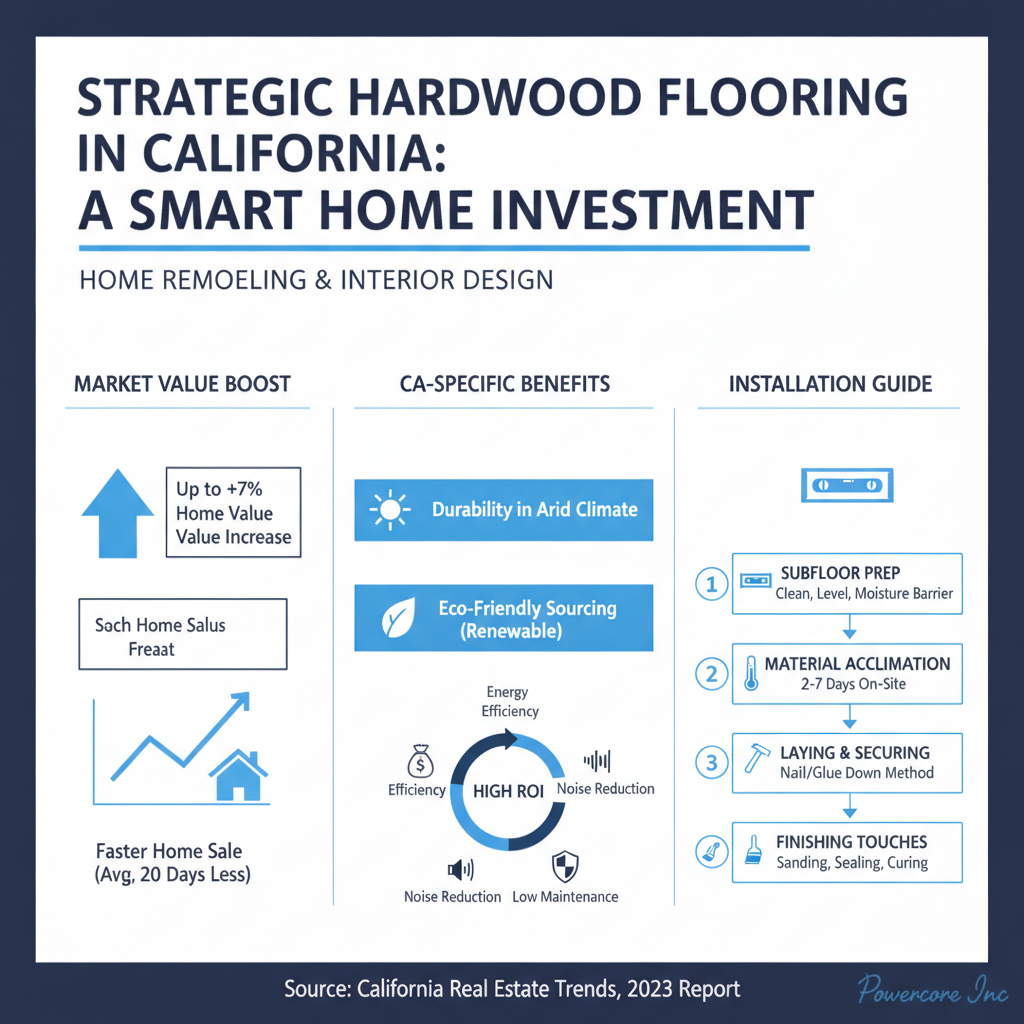
Return on Investment (ROI)
Hardwood flooring offers one of the best ROIs among home improvements. It consistently ranks high on buyers' wish lists and contributes significantly to perceived value. Depending on market conditions and home type, you can expect to recoup a substantial portion, if not all, of your investment upon sale. It’s not just about the money, though; it’s about creating a beautiful, comfortable, and healthy living environment you'll enjoy for years.
Beyond the Floor: Integrating Hardwood with Your Whole-Home Remodel
A strategic approach to hardwood flooring recognizes its place within the larger context of your home. This is where Powercore Inc’s comprehensive services truly shine.
- Seamless Design Integration: When planning a kitchen remodel, an ADU, or an interior renovation, the flooring choice influences everything from cabinet colors and lighting to paint schemes. Powercore Inc works with you to ensure your hardwood flows seamlessly with all other design elements.
- Electrical Considerations: Are you adding floor outlets? Relocating wall receptacles? Our C-10 Electrical license ensures any electrical work related to your flooring project—or any other part of your remodel—is handled safely and to code.
- HVAC & Humidity: As mentioned, humidity control is vital for hardwood longevity. If your HVAC system is outdated or inefficient, combining your flooring project with an HVAC upgrade can protect your investment and improve overall home comfort and energy efficiency.
- Structural Changes: If your renovation involves moving walls, adding an extension, or converting a garage into an ADU, your flooring needs to be considered in conjunction with these structural changes. Our General B license allows us to manage these complex, multi-faceted projects under one roof, simplifying the process for you.
By choosing Powercore Inc, you're not just getting a flooring installer; you're partnering with a dual-licensed contractor who can strategically integrate your hardwood project into a broader vision for a truly enhanced California home.
Maintaining Your Investment: Longevity Tips for CA Homes
Protecting your strategic hardwood flooring investment requires ongoing care.
- Regular Cleaning: Sweep or vacuum (with a bare floor setting) regularly to remove grit that can scratch the finish. Damp mop with a manufacturer-recommended cleaner, avoiding excessive water.
- Protect from Scratches: Use felt pads under furniture legs. Avoid walking on hardwood with high heels or cleats. Place mats at entryways to trap dirt.
- Manage Moisture: Wipe up spills immediately. Use area rugs in high-moisture areas like kitchens (with breathable backing). Maintain consistent indoor humidity levels.
- Sun Protection: Direct sunlight can fade or discolor hardwood over time. Use curtains, blinds, or UV-protective window films on windows exposed to intense sun.
- Refinishing: When the finish shows significant wear, consider professional refinishing. This can restore your floors to their original glory and extend their life by many years.
Choosing the Right Partner: Powercore Inc's Advantage
Embarking on a hardwood flooring project, whether standalone or as part of a larger home remodel, requires trust, expertise, and a commitment to quality. Powercore Inc stands as a premier choice for California homeowners.
- Dual-Licensed Expertise: Our California CSLB #1134334 (General B) and #1098175 (C-10 Electrical) licenses mean we bring a comprehensive skill set to every project. From the foundational subfloor work to intricate electrical integrations, we ensure every aspect of your remodel is executed to the highest standards.
- Holistic Home Solutions: Beyond flooring, we offer a full suite of services—Solar, Battery Storage, HVAC, Roofing, ADUs, Remodels, EV Charging, Siding, Decking, and Interior Remodeling. This integrated approach ensures seamless project management and superior results, eliminating the hassle of coordinating multiple contractors.
- California-Focused: Based in Roseville, CA, and serving all of California, we understand the unique challenges and regulations of our state's diverse environments. We are committed to sustainable practices and building solutions that stand the test of time in California conditions.
Elevate Your Home with Strategic Hardwood Flooring
Strategic hardwood flooring is more than just an aesthetic upgrade; it’s a smart, long-term investment in your California home's beauty, value, and comfort. By carefully considering wood types, ensuring meticulous preparation, and partnering with experienced professionals, you can create a foundation of enduring elegance that enhances your living space for decades.
Ready to explore the perfect hardwood flooring solution for your California home, or integrate it into a larger remodeling project? Trust the experts at Powercore Inc. Our team is here to guide you through every strategic decision, ensuring a flawless execution from concept to completion. Contact us today for a consultation and let's bring your vision to life. Call Powercore Inc at 916-699-8778 to get started!