

Introduction: Elevate Your California Home with Strategic Hardwood Flooring
For California homeowners, investing in your property isn't just about aesthetics; it's about making strategic choices that enhance lifestyle, increase value, and stand the test of time against our diverse climates. Among the most impactful upgrades you can make, hardwood flooring consistently ranks high, offering unparalleled beauty, durability, and a significant return on investment. It's more than just a floor; it's the foundation of your home's character and a testament to quality.
At Powercore Inc, your trusted dual-licensed General B & C-10 Electrical Contractor based in Roseville, CA, we understand the unique demands and opportunities of California home improvement. While our expertise spans solar, battery storage, HVAC, and comprehensive remodels, our commitment to quality craftsmanship extends to every facet of your home, including expert flooring solutions. This comprehensive guide will equip you with the knowledge to make informed decisions about hardwood flooring installation in your California home, ensuring lasting beauty and value.
Why Hardwood Flooring is a Strategic Choice for California Homes
Hardwood flooring offers a multitude of benefits that resonate particularly well with the California lifestyle and real estate market:
Enhanced Property Value and ROI
- High Demand: Potential buyers in California consistently list hardwood floors as a top desired feature, often willing to pay a premium.
- Timeless Appeal: Unlike trends that come and go, hardwood maintains its classic elegance, ensuring your investment remains relevant for decades.
- Durability: With proper care, hardwood floors can last a lifetime, often outliving other flooring options and requiring less frequent replacement.
Aesthetics and Design Versatility
- Natural Beauty: The unique grain patterns and rich tones of real wood add warmth and sophistication to any interior design, from modern minimalist to rustic farmhouse.
- Customization: Available in a vast array of species, finishes, plank widths, and installation patterns, hardwood offers endless possibilities to match your home's specific aesthetic.
- Spacious Feel: Continuous hardwood flooring throughout open-concept living spaces, common in many California homes, creates a seamless flow and makes rooms feel larger and more cohesive.
Health and Indoor Air Quality
- Hypoallergenic: Hardwood floors do not trap dust, pollen, pet dander, or other allergens as carpets do, making them an excellent choice for allergy sufferers.
- Easy to Clean: Spills and dirt are easily wiped away, contributing to a cleaner and healthier indoor environment.
Understanding Hardwood Types for California Homes
Choosing the right type of hardwood is paramount, especially considering California's diverse microclimates, from the coastal humidity to the dry desert heat and mountain snow. Each type offers distinct characteristics:
Solid Hardwood Flooring
Solid hardwood consists of a single piece of wood, typically ¾-inch thick. It's renowned for its longevity and can be sanded and refinished multiple times, effectively renewing its appearance for generations.
- Pros: Longevity, refinishable, authentic feel, excellent ROI.
- Cons: Susceptible to moisture and humidity changes (gapping, cupping, crowning), not ideal for below-grade installations or high-moisture areas. Requires careful acclimation in California's varying climates.
Engineered Hardwood Flooring
Engineered hardwood is constructed with multiple layers of plywood or high-density fiberboard (HDF) topped with a real wood veneer. This layered construction makes it more stable and resistant to moisture fluctuations than solid hardwood.
- Pros: More stable in varying humidity (ideal for many California regions), can be installed below grade, wider plank options, often pre-finished.
- Cons: Limited number of refinishes (depending on veneer thickness), typically higher initial cost than some solid options.
Popular Wood Species and Their Suitability for California
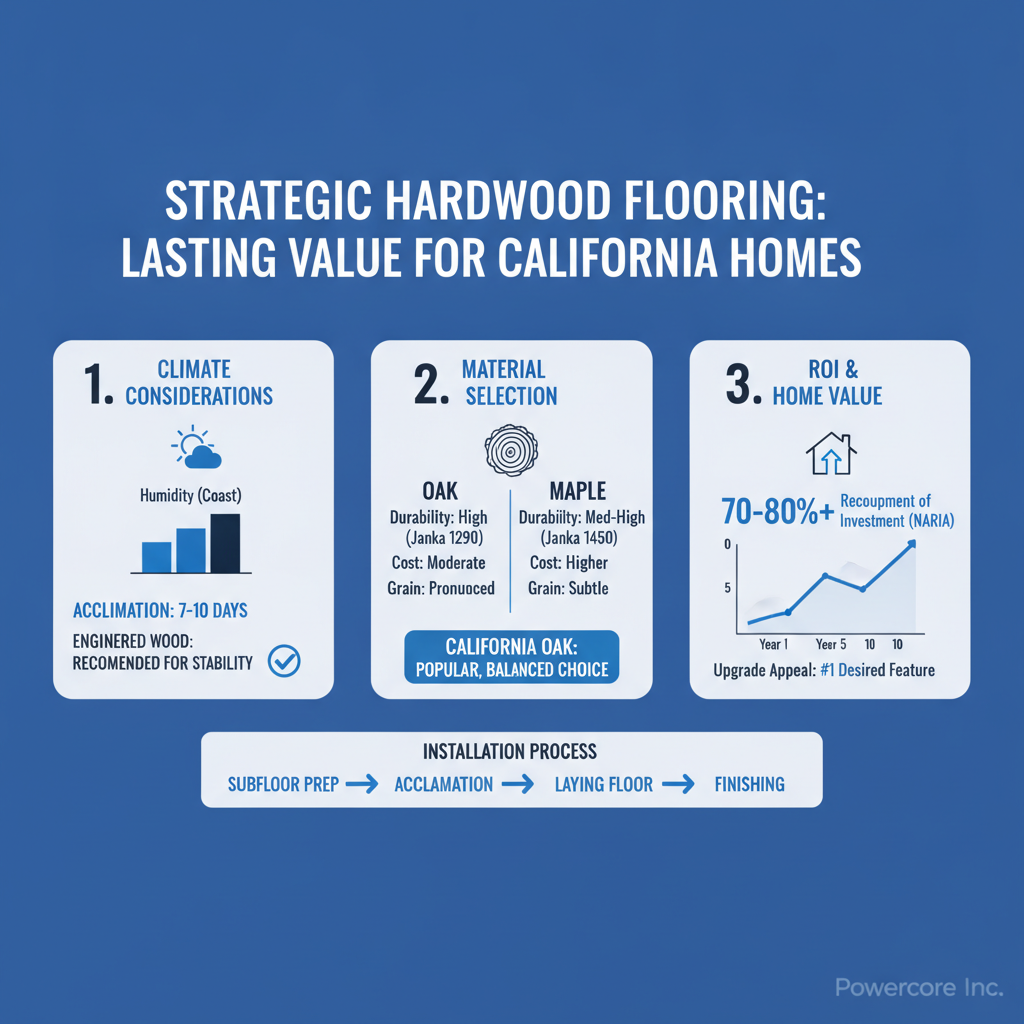
- Oak (Red and White): The most popular choice, highly durable, accepts stains well, and readily available. A versatile choice for most California homes.
- Maple: Harder than oak, with a smoother grain. Less porous, so it takes stain differently. Excellent for high-traffic areas.
- Hickory: One of the hardest domestic woods, known for its dramatic grain variations and durability. Great for active households.
- Walnut: Softer than oak or maple but known for its rich, dark tones and elegant appearance. More luxurious and often higher priced.
- Bamboo & Cork: While technically grasses, not hardwoods, these are popular eco-friendly alternatives. Bamboo is very hard and durable, while cork offers softness, sound absorption, and insulation. Both can be good choices for California's sustainable living ethos.
Laminate vs. Vinyl: A Brief Distinction from Hardwood
While often mimicking the look of wood, laminate and luxury vinyl plank (LVP) are not hardwood. Laminate uses a photographic layer under a protective wear layer, while LVP is 100% synthetic. Both are more moisture-resistant and generally less expensive than hardwood but lack the natural character, refinishing capability, and long-term value appreciation of genuine wood. For a strategic investment in your California home, authentic hardwood remains the superior choice.
Pre-Installation Planning: The Foundation of Hardwood Flooring Success
A successful hardwood installation hinges on meticulous planning. Skipping steps here can lead to costly problems down the line.
Budgeting and Cost Considerations in California
Hardwood flooring costs vary significantly based on wood species, type (solid vs. engineered), finish, plank width, and installation method. In California, labor costs can be higher due to prevailing wages and the demand for skilled trades. On average, expect to pay:
- Materials: $3 - $15 per square foot (for common species)
- Installation Labor: $3 - $10 per square foot (can be higher for complex patterns or difficult subfloor conditions)
- Additional Costs: Subfloor prep (leveling, repairs), old flooring removal, moisture barriers, trim work, and potential permit fees for larger remodels. Always factor in a 10-15% contingency for unexpected issues.
Choosing the Right Contractor: The Powercore Inc Difference
This is arguably the most critical decision. While DIY can save on labor, a professional ensures proper installation, warranty compliance, and adherence to local building codes. Look for a contractor with:
- Proper Licensing: Powercore Inc holds both a General B and a C-10 Electrical Contractor license (CSLB #1134334 and #1098175), demonstrating our commitment to comprehensive home solutions and adherence to California's strict standards.
- Experience: Specific experience with hardwood flooring in California climates is crucial.
- References and Portfolio: Ask for examples of past work and client testimonials.
- Insurance and Warranty: Ensure they are fully insured and offer a warranty on their workmanship.
Choosing a reputable contractor like Powercore Inc means you're not just getting a floor installed; you're getting peace of mind from a company that understands the intricacies of California home improvement.
Material Acclimation: Critical for California's Diverse Climates
Acclimation is non-negotiable. Hardwood, being a natural material, expands and contracts with changes in temperature and humidity. In California's varied climates (e.g., dry Sacramento Valley, humid Bay Area, temperate Southern California), proper acclimation prevents future problems like gapping, cupping, or buckling.
- Process: Deliver the flooring materials to the installation site at least 3-7 days (or longer, per manufacturer instructions) before installation. Lay the planks flat in the rooms where they will be installed, allowing them to adjust to the ambient temperature and humidity.
- Maintain Consistent HVAC: Keep your home's HVAC system (a service Powercore Inc can help optimize) running at normal living conditions during the acclimation period.
Subfloor Preparation: The Unseen Foundation
The subfloor must be clean, dry, flat, and structurally sound. Any imperfections will transfer to your new hardwood floor.
- Cleanliness: Thoroughly sweep and vacuum.
- Dryness: Test moisture levels using a moisture meter. Excessive moisture can lead to serious problems. A vapor barrier (e.g., felt paper, polyethylene sheeting) is often recommended, especially over crawl spaces or concrete slabs.
- Flatness: Level any high spots by sanding and fill low spots with a leveling compound. The subfloor should be flat to within 1/8 inch over 6-8 feet.
- Structural Soundness: Secure any loose subfloor sections by screwing them down to joists to prevent squeaks.
The Hardwood Flooring Installation Process: A Step-by-Step Guide
While professional installation is recommended, understanding the steps helps you appreciate the craftsmanship involved.
Step 1: Preparation and Room Clearing
- Remove all furniture, appliances, and existing flooring (carpet, tile, etc.).
- Remove baseboards and door casings, which can be reinstalled or replaced after flooring is down.
- Ensure the subfloor is prepped as discussed above.
Step 2: Layout and Planning
- Determine the direction of the planks. Generally, planks run parallel to the longest wall or perpendicular to the floor joists for structural stability.
- Find your starting point. Often, this is the longest exterior wall or a prominent focal point.
- Establish a working line to ensure your first row is perfectly straight.
Step 3: Installation Methods
The method depends on the type of hardwood and subfloor:
- Nail-Down/Staple-Down: Most common for solid hardwood over wood subfloors. Nails or staples are driven through the tongue of the plank at an angle (blind nailing) using a pneumatic floor nailer.
- Glue-Down: Often used for engineered hardwood over concrete slabs. A specialized adhesive is applied directly to the subfloor using a trowel. This method offers a very solid feel.
- Float: Primarily for engineered hardwood or laminate. Planks are interlocked (click-lock system) but not fastened to the subfloor, allowing the floor to expand and contract as a single unit. A foam underlayment is used for sound dampening and moisture protection.
Step 4: Cutting and Fitting
- Use a miter saw for straight cuts and a jigsaw or coping saw for intricate cuts around doorways, vents, and obstacles.
- Stagger end joints in adjacent rows by at least 6 inches to ensure stability and a pleasing aesthetic.
- Leave an expansion gap (typically ½ to ¾ inch) around all perimeter walls and fixed objects. This is crucial in California's climate to allow for natural wood movement.
Step 5: Finishing Touches
- Reinstall or replace baseboards and shoe molding to cover the expansion gaps.
- Clean the floor thoroughly and allow any glues or finishes to cure completely as per manufacturer instructions.
Post-Installation Care & Maintenance for California Climates
Proper care extends the life and beauty of your hardwood floors, ensuring your investment continues to yield returns.
Initial Curing and Protection
- Curing Time: If a site-finished floor, allow the finish to cure fully (can be several days to weeks) before placing heavy furniture or rugs.
- Felt Pads: Always place felt pads under furniture legs to prevent scratches.
- Area Rugs: Use area rugs in high-traffic zones, but avoid rubber-backed rugs that can trap moisture or damage finishes.
Routine Cleaning and Maintenance
- Regular Sweeping/Vacuuming: Use a soft-bristle broom or a vacuum with a hard floor attachment to remove dirt and grit that can scratch the finish.
- Damp Mopping: Clean spills immediately. For general cleaning, use a hardwood floor-specific cleaner with a slightly damp (not wet!) mop. Excess water is hardwood's enemy.
- Climate Control: In California's diverse climates, maintaining consistent indoor humidity (ideally between 35-55%) is vital. Your HVAC system plays a crucial role here. Powercore Inc specializes in efficient HVAC solutions that can help regulate your home's internal environment, protecting your hardwood investment.
- UV Protection: California's abundant sunshine can fade hardwood over time. Use curtains, blinds, or UV-filtering window films to protect your floors from direct, prolonged sun exposure.
Refinishing and Repair
One of hardwood's greatest advantages is its ability to be refinished, restoring it to its original glory. Solid hardwood can be refinished multiple times, while engineered hardwood can be refinished depending on the thickness of its veneer. Small scratches can often be repaired with touch-up kits, while deeper damage may require professional sanding and refinishing.
DIY vs. Professional Hardwood Flooring Installation in California
The decision to DIY or hire a professional is a critical one, especially with a significant investment like hardwood flooring.
When to Consider DIY
- Small Areas: For very small rooms, closets, or areas where mistakes are less visible.
- Simple Projects: If you have prior carpentry experience and are using a floating engineered floor.
- Budget Constraints: If labor costs are a major concern and you have ample time.
When to Hire a Professional (Recommended for Most California Homeowners)
- Large or Complex Areas: Hardwood installation for entire homes, multiple rooms, or intricate patterns (e.g., herringbone) is best left to experts.
- Solid Hardwood: Nail-down solid hardwood requires specialized tools and expertise to ensure proper alignment and prevent damage.
- Subfloor Issues: If your subfloor requires significant leveling, repair, or moisture mitigation, a professional will know how to address these correctly.
- Time Savings & Peace of Mind: Professionals complete the job efficiently and correctly, saving you time, frustration, and potential costly mistakes. They also offer warranties on their work.
- Optimal Results & Longevity: A professional installation ensures your floor looks its best and lasts for decades, maximizing your investment's ROI.
For significant home remodels or new installations across California, Powercore Inc brings the expertise and comprehensive project management to ensure your hardwood flooring is installed flawlessly, integrating seamlessly with any electrical, HVAC, or structural modifications required.
Maximizing Your Hardwood Investment in California
Your hardwood floors are part of a larger ecosystem within your home. To truly maximize their lifespan and value in California, consider these integrations:
HVAC Integration for Climate Control
As discussed, consistent indoor climate is key to hardwood longevity. Modern HVAC systems, especially those installed and maintained by experts like Powercore Inc, can precisely control temperature and humidity, protecting your floors from the expansion and contraction that leads to damage. Consider smart thermostats that can automate climate control for optimal conditions.
Smart Home Solutions
Beyond HVAC, smart home technology can contribute to a floor-friendly environment. Automated blinds can protect against sun exposure, while smart sensors can monitor humidity levels and alert you to potential issues, allowing proactive adjustments.
Long-Term ROI and Resale Value
A well-installed and meticulously maintained hardwood floor is a powerful asset in the competitive California real estate market. It signifies quality, luxury, and durability, directly contributing to higher appraisal values and faster sales.
Conclusion: Build Lasting Value with Powercore Inc
Choosing hardwood flooring for your California home is a strategic decision that promises enduring beauty, robust durability, and significant property value enhancement. From selecting the right species for your climate to ensuring flawless installation and diligent maintenance, every step contributes to a successful outcome.
At Powercore Inc, we pride ourselves on delivering comprehensive, high-quality home improvement solutions across California. Whether you're embarking on a full remodel, an ADU construction, or simply upgrading your flooring, our licensed experts are here to ensure every detail meets the highest standards of craftsmanship and efficiency. We don't just build; we build strategically for California living.
Ready to transform your home with stunning hardwood floors or explore other strategic upgrades? Contact Powercore Inc today for a consultation. Our team is ready to help you plan and execute your next home improvement project with precision and expertise. Call us at 916-699-8778 or visit gopowercoreinc.com to learn more about how we can enhance your California home.