

Dreaming of a home that perfectly reflects your lifestyle, embraces modern efficiencies, and significantly boosts its long-term value? A whole-house remodel in California is more than just an aesthetic upgrade; it's a strategic investment in your future. From the sun-drenched coasts to the sprawling valleys, California homes face unique considerations, from stringent building codes and energy demands to the desire for seamless indoor-outdoor living.
Undertaking such a comprehensive project requires meticulous planning, a clear vision, and the expertise of a trusted partner. This guide from Powercore Inc. — your dual-licensed General B & C-10 Electrical Contractor based in Roseville, CA, serving the entire state — will walk you through every critical step. We'll explore how to navigate California's specific challenges and opportunities, ensuring your whole-house remodel is not just beautiful, but also smart, sustainable, and a true reflection of your California dream.
The Vision: Defining Your California Dream Home
Before any demolition begins, the most crucial step in a whole-house remodel is defining your vision. This isn't just about picking paint colors; it's about understanding how your home needs to function, grow, and adapt to your life in California.
Identifying Your Needs & Desires
Start by taking stock of your current home's shortcomings and your family's evolving needs. Are you an expanding family needing more space or an aging couple looking for universal design principles to age in place comfortably? Do you host often and require a more open-concept kitchen and dining area, or are you working from home and need dedicated office spaces? Consider:
- Lifestyle Changes: How has your daily routine changed? Do you need a home gym, a dedicated media room, or a more efficient laundry area?
- Functionality: Are there bottlenecks in your current layout? Inefficient storage? Poor lighting?
- Aesthetics: What styles do you gravitate towards? Modern minimalist, classic Craftsman, Mediterranean villa, or something unique?
- Future-Proofing: Think about long-term goals. Do you plan to add an Accessory Dwelling Unit (ADU) for rental income or family, or install EV charging for a new electric vehicle? Powercore Inc. specializes in these forward-thinking solutions.
A detailed wish list, even if ambitious, provides a strong foundation for design discussions.
Architectural Style & Aesthetic Cohesion
California boasts a rich tapestry of architectural styles. Whether you live in a mid-century modern gem in Palm Springs, a Spanish Colonial Revival in San Diego, or a Craftsman bungalow in Berkeley, your remodel should ideally respect and enhance your home's inherent character while injecting your personal style. Achieving aesthetic cohesion throughout a whole house is paramount.
- Exterior Harmony: Consider how new siding, windows, roofing, or even an expanded deck or porch will integrate with the existing exterior and the surrounding neighborhood.
- Interior Flow: Ensure a consistent design language (materials, colors, lighting, trim) flows from room to room. This creates a sense of unity and makes the home feel larger and more intentional.
- Material Palette: Select a cohesive palette of flooring, countertops, cabinetry, and fixtures that complement each other and your chosen style.
Navigating California's Regulatory Landscape
California's commitment to safety, energy efficiency, and sustainable development means navigating a complex web of permits and regulations. This is where the expertise of a seasoned contractor like Powercore Inc. becomes invaluable.
Understanding Permits & Zoning
Nearly every significant structural or electrical change in a whole-house remodel will require permits. These are not just bureaucratic hurdles; they ensure your project meets safety standards and local ordinances. In California, you'll encounter:
- Local Building Departments: Each city or county has its own specific requirements for permits, inspections, and zoning ordinances (e.g., setback rules, height restrictions, ADU regulations).
- State-Level Regulations:
- California Energy Commission's Title 24: This is a critical component, dictating energy efficiency standards for new construction and major remodels. It covers everything from insulation, windows, and HVAC systems to solar readiness and lighting controls. Compliance is mandatory and requires specific documentation and inspections.
- Wildland-Urban Interface (WUI) Codes: If your home is in a high-fire risk area, specific fire-resistant materials and construction methods will be required for roofing, siding, windows, and decking, significantly impacting material choices and costs.
- Seismic Requirements: Depending on your home's age and location, seismic upgrades might be necessary for structural integrity.
Navigating these complexities can be daunting, but a reputable general contractor will manage the entire permitting process, ensuring your project is compliant and avoids costly delays or rework.
Working with Licensed Contractors
In California, hiring a properly licensed contractor is not just recommended; it's legally required for projects exceeding a certain monetary threshold. For a whole-house remodel, this is non-negotiable. Powercore Inc. holds both a General B (General Building Contractor) license and a C-10 (Electrical Contractor) license from the California Contractors State License Board (CSLB #1134334 and #1098175, respectively). This dual licensing is a significant advantage:
- Comprehensive Expertise: A General B license allows us to oversee all aspects of your remodel, from structural changes to plumbing, roofing, and interior finishes.
- Specialized Electrical Knowledge: The C-10 license means we have in-house electrical expertise, crucial for modern remodels that often involve significant electrical upgrades, EV charging installation, solar panel integration, or battery storage systems. This streamlines communication, ensures compliance, and often results in a more efficient project timeline and cost savings.
- Accountability & Protection: Licensed contractors are bonded and insured, offering homeowners protection against substandard work and potential liabilities.
Always verify a contractor's license on the CSLB website and check references to ensure peace of mind.
Crafting a Realistic Budget & Financing
Budgeting for a whole-house remodel in California requires a clear understanding of costs, which tend to be higher than the national average due to labor rates, material costs, and regulatory compliance. A well-defined budget is your project's financial roadmap.
Deconstructing Remodel Costs
A comprehensive whole-house remodel budget typically includes:
- Design & Planning Fees: Architects, designers, engineers.
- Permit Fees: Varies significantly by location and project scope.
- Demolition & Debris Removal: Essential but often underestimated.
- Structural & Framing: Major changes to layout or additions.
- Rough-Ins: Plumbing, electrical, HVAC systems.
- Insulation & Drywall: Critical for energy efficiency.
- Finishes: Flooring, cabinetry, countertops, paint, trim.
- Fixtures: Lighting, plumbing fixtures, appliances.
- Exterior Work: Roofing, siding, windows, doors, landscaping.
- Contingency Fund: 10-20% of the total budget is crucial for unexpected issues, which are common in older homes or during extensive remodels.
California's robust demand for skilled trades and its higher cost of living mean that labor costs will be a significant portion of your budget. Material costs can also fluctuate, so early selection and ordering are key to staying on track.
Financing Your Whole-House Transformation
Few homeowners can fund a whole-house remodel purely from savings. Common financing options include:
- Home Equity Line of Credit (HELOC): Offers flexibility to draw funds as needed.
- Cash-Out Refinance: Replaces your current mortgage with a larger one, giving you a lump sum of cash.
- Construction Loan: Specifically designed for large-scale renovations, disbursed in stages as work progresses.
- Personal Loans: Typically for smaller projects due to higher interest rates.
Consider the potential ROI of your remodel when choosing financing. Strategic upgrades, especially those enhancing energy efficiency or adding livable space (like an ADU), can significantly increase your home's appraised value, potentially offsetting some of the upfront costs.
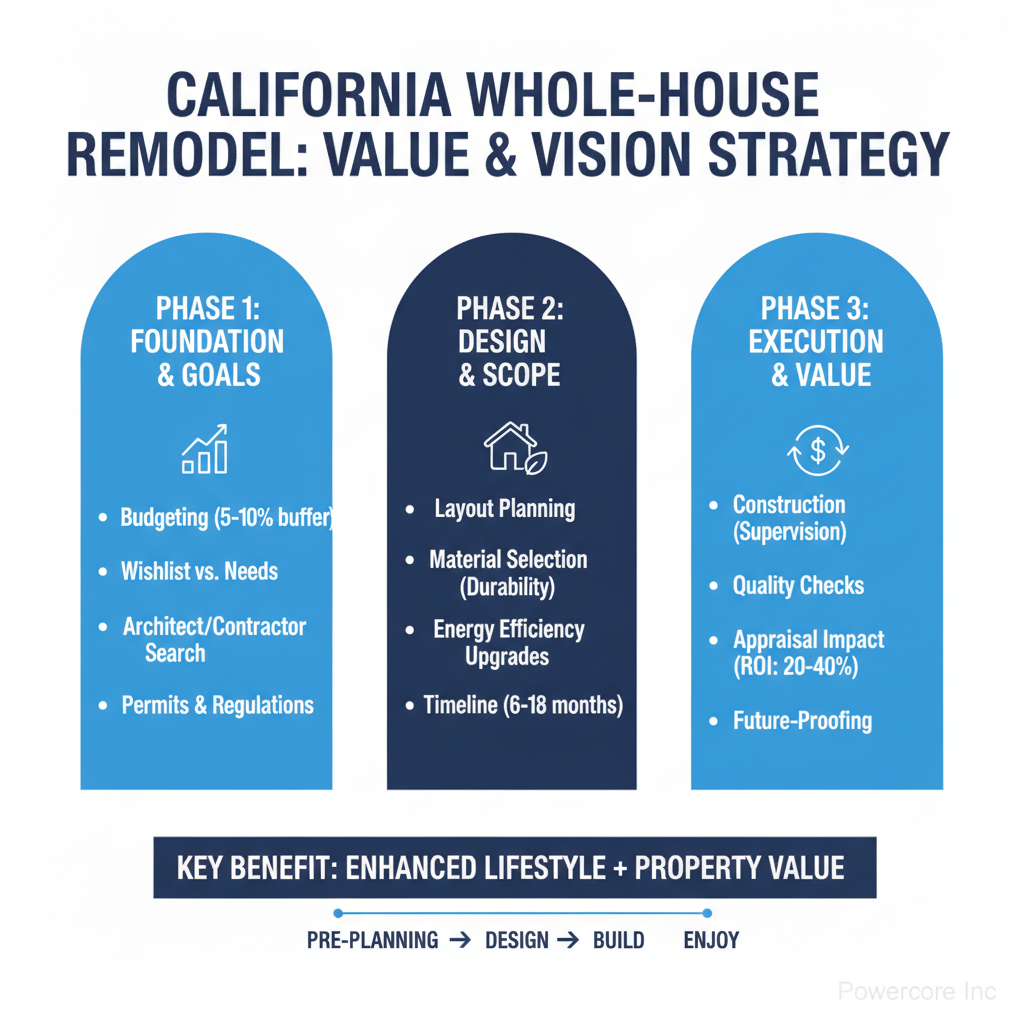
Design & Material Selection for California Living
The materials you choose define not only the aesthetic but also the long-term performance and sustainability of your California home. Smart choices here can lead to significant savings and comfort over time.
Sustainable & Energy-Efficient Choices
With California's focus on green building and energy independence, integrating sustainable and energy-efficient solutions into your remodel is paramount:
- Solar Integration & Battery Storage: As a C-10 Electrical Contractor, Powercore Inc. excels in designing and installing solar panel systems and battery storage solutions. This not only dramatically reduces your utility bills (especially crucial with California's NEM 3.0 policies and Time-of-Use rates) but also provides energy independence during power outages (like PSPS events) and significantly boosts your home's value.
- HVAC Upgrades: Replace old, inefficient heating and cooling systems with modern, high-efficiency units. Consider zoning systems for ultimate comfort and energy savings. Powercore Inc. offers comprehensive HVAC services.
- High-Performance Windows & Doors: Opt for low-E, double or triple-pane windows that minimize heat gain in summer and heat loss in winter, crucial for California's varied climates.
- Advanced Insulation: Upgrade wall, attic, and floor insulation to exceed Title 24 standards, ensuring a comfortable indoor environment and reduced energy consumption.
- Water-Saving Fixtures: Install low-flow toilets, showerheads, and faucets to conserve water, a vital consideration in California.
- Smart Home Technology: Integrate smart thermostats, lighting controls, and energy monitoring systems for enhanced efficiency and convenience.
Durability & Aesthetics: A Balanced Approach
California homes endure diverse conditions, from coastal humidity to inland heat and wildfire risks. Selecting durable, low-maintenance materials that also enhance your home's aesthetic is key:
- Flooring: Hardwood, engineered wood, luxury vinyl plank (LVP), and porcelain tile are popular, durable choices that can withstand heavy traffic and maintain their beauty.
- Countertops: Quartz and granite remain top choices for kitchens and bathrooms, offering both resilience and timeless appeal.
- Cabinetry: Opt for quality construction and finishes that can withstand daily use.
- Siding: For homes in wildfire-prone areas, fire-resistant siding options like fiber cement or stucco are often required or highly recommended. Even outside WUI zones, these materials offer excellent durability and weather resistance. Powercore Inc. specializes in various siding installations.
- Roofing: Consider cool roofs or reflective materials to reduce heat absorption, especially in hotter climates.
- Decking: If extending outdoor living, opt for low-maintenance composite decking like Trex or TimberTech, or naturally durable hardwoods. Powercore Inc. offers expert decking services.
The Execution Phase: What to Expect
Once plans are finalized and permits secured, the exciting, albeit sometimes disruptive, execution phase begins. Understanding the process will help manage expectations and minimize stress.
Project Management & Communication
Your general contractor is the orchestrator of your whole-house remodel. They are responsible for:
- Scheduling & Coordination: Managing subcontractors (plumbers, electricians, carpenters, roofers, etc.), material deliveries, and inspections.
- Quality Control: Ensuring all work meets industry standards, code requirements, and your project specifications.
- Budget & Timeline Management: Keeping the project on track financially and chronologically.
- Communication: Providing regular updates, addressing concerns, and acting as your single point of contact.
At Powercore Inc., clear and consistent communication is a cornerstone of our project management philosophy. We believe in keeping homeowners informed every step of the way, ensuring transparency and trust.
Living Through a Remodel
A whole-house remodel, by its very nature, is invasive. It's important to prepare for temporary inconveniences:
- Noise & Dust: Expect significant noise, especially during demolition and framing. Dust containment measures will be in place, but some dust is inevitable.
- Utility Disruptions: There may be temporary interruptions to water, power, or internet services.
- Loss of Space: Parts of your home will be inaccessible. Consider creating a temporary living zone if you plan to stay in the home, or make alternative arrangements if the disruption is too extensive.
- Safety: Construction sites pose hazards. Ensure children and pets are kept away from active work areas.
Your contractor can help you set realistic expectations and plan for these challenges, making the process as smooth as possible.
Maximizing Your Whole-House Remodel ROI in California
Beyond personal enjoyment, a well-executed whole-house remodel can yield significant returns, especially in California's competitive real estate market.
Appraised Value vs. Lifestyle Value
While often intertwined, it's helpful to distinguish between two types of value:
- Appraised Value: The monetary increase in your home's worth as assessed by a professional appraiser. This is influenced by comparable sales in your area and the quality/scope of your renovations.
- Lifestyle Value: The non-monetary benefits derived from a home that perfectly suits your needs, enhances your daily life, and brings you joy. This could be improved comfort, better functionality, or the pride of ownership.
A successful whole-house remodel strikes a balance, providing both a comfortable living environment and a sound financial investment.
Strategic Upgrades for Future Resale
If resale is a future consideration, certain upgrades offer higher ROI in California:
- Kitchen & Bathroom Remodels: These consistently top the list for value-adding renovations, appealing to a broad range of buyers.
- Energy Efficiency Improvements: Solar panels, battery storage, new HVAC, and upgraded insulation not only save you money now but are highly attractive to California buyers looking for lower utility bills and sustainable living.
- Adding Usable Space: Converting unused areas or adding an ADU can significantly increase square footage and earning potential. Powercore Inc. has extensive experience with ADU construction.
- Curb Appeal: A refreshed exterior, including new siding, roofing, windows, and thoughtful landscaping, creates a strong first impression.
- EV Charging Infrastructure: With the rise of electric vehicles, having EV charging capabilities at home is becoming a sought-after amenity.
Focus on timeless designs and quality materials that will withstand trends and wear, ensuring your investment holds its value for years to come.
Conclusion
A whole-house remodel in California is a transformative journey that can redefine your living experience and elevate your home's value. From crafting your initial vision and navigating complex regulations to making smart material choices and managing the construction process, every step is critical. By partnering with a knowledgeable, experienced, and dual-licensed contractor like Powercore Inc., you ensure your project is executed with precision, compliance, and a commitment to quality that stands the test of time.
At Powercore Inc., we understand the unique demands of California homeowners. Our expertise in General B construction, C-10 electrical work, solar, battery storage, HVAC, ADUs, and more, makes us your ideal partner for a seamless, successful whole-house remodel anywhere in California. Ready to transform your home into the perfect reflection of your California dream? Contact Powercore Inc. today for a consultation. Call us at 916-699-8778 to start planning your strategic remodel.