

Introduction: Navigating California's Evolving Building Standards for 2026
California, a pioneer in environmental stewardship and energy innovation, is continually updating its building standards to pave the way for a more sustainable future. As a property owner, developer, or business operator in the Golden State, understanding and preparing for these changes is not just about compliance—it's about future-proofing your investment, enhancing efficiency, and contributing to a greener California. The next significant cycle of the California Building Standards Code (CBSC), often referred to as Title 24, is slated for 2026, and it promises to bring forth substantial revisions that will impact everything from new construction to major remodels and even everyday property upgrades.
At Powercore Inc, a dual-licensed General B & C-10 Electrical Contractor based in Roseville, CA, we understand the complexities of these regulations. With licenses CSLB #1134334 and #1098175, we serve all of California, specializing in a comprehensive range of services including solar, battery storage, HVAC, roofing, ADUs, remodels, EV charging, siding, decking, and interior remodeling. Our mission is to empower homeowners and businesses to not only meet but exceed these evolving standards, transforming regulatory challenges into opportunities for innovation, savings, and enhanced property value.
This comprehensive guide will delve into the anticipated California 2026 building code updates, exploring their potential impact, key areas of focus, and practical steps you can take now to prepare. We'll highlight how these changes will shape the future of construction and renovation across California and how Powercore Inc stands ready to be your trusted partner in navigating this exciting, energy-efficient transition.
Understanding California's Building Standards Code (CBSC)
California's Building Standards Code, commonly known as Title 24 of the California Code of Regulations, is a unique and comprehensive set of rules governing the design, construction, and alteration of all buildings in the state. Unlike many other states that adopt national codes with minor amendments, California develops its own stringent standards, particularly concerning energy efficiency and environmental performance. These codes are revised and updated every three years, with the next major cycle culminating in the 2026 edition.
The Triennial Code Cycle: What 2026 Means
The triennial code cycle is a systematic process where the California Building Standards Commission (CBSC) and various state agencies review, amend, and adopt new building standards. This process involves extensive public input, research, and collaboration to ensure the codes reflect the latest advancements in building science, technology, and environmental policy goals. The 2026 updates will build upon the foundational changes introduced in previous cycles, pushing the envelope further towards a fully decarbonized and resilient built environment.
- Development Phase: Agencies propose changes based on legislative mandates, technological advancements, and feedback.
- Public Review & Comment: Stakeholders, industry professionals, and the public provide input.
- Adoption: The CBSC officially adopts the new standards.
- Implementation: Typically effective on January 1st of the designated year (e.g., January 1, 2026), though some provisions may have delayed applicability.
For property owners, understanding this cycle is crucial. It means that what might be compliant today could require significant upgrades or different design considerations for projects initiated after the 2026 effective date. Proactive planning is key to avoiding costly last-minute adjustments.
Key Drivers Behind the 2026 Updates: A Vision for Sustainability
The impending 2026 building code updates are not arbitrary; they are meticulously crafted to support California's ambitious climate goals and address pressing environmental and societal needs. Several core drivers underpin these revisions:
Climate Change Mitigation and Decarbonization
California is committed to achieving carbon neutrality by 2045. The building sector plays a critical role in this endeavor, as buildings are significant consumers of energy and emitters of greenhouse gases. The 2026 codes will likely intensify efforts to reduce operational carbon emissions, primarily through enhanced energy efficiency and the transition away from fossil fuels.
Energy Efficiency and Resource Conservation
A cornerstone of Title 24, energy efficiency standards aim to minimize energy consumption in buildings. The 2026 updates will undoubtedly introduce more stringent requirements for building envelopes, HVAC systems, lighting, and water heating, pushing for 'net-zero energy' or 'net-zero carbon' ready structures.
Electrification of Buildings
Perhaps one of the most transformative trends, the push for all-electric buildings will continue to accelerate. This means designing homes and businesses that rely solely on electricity for heating, cooling, water heating, and cooking, powered increasingly by renewable sources. This shift is critical for reducing natural gas consumption and its associated emissions.
Grid Resilience and Demand Flexibility
With a growing reliance on renewable energy and the increasing frequency of extreme weather events, grid resilience is paramount. The 2026 codes are expected to promote technologies that enhance grid stability, such as battery energy storage systems (BESS) and smart home devices that can respond to grid signals, enabling buildings to become active participants in energy management.
Health and Safety Enhancements
Beyond energy, the codes also address public health and safety. This includes indoor air quality, fire safety, seismic resilience, and accessibility standards, ensuring buildings are not only efficient but also safe and comfortable for all occupants.
Anticipated Major Changes for 2026: A Closer Look
While the exact details of the 2026 code updates are still being finalized, based on past trends, current legislative directives, and ongoing discussions, we can anticipate several key areas that will see significant revisions. These changes will impact residential, commercial, and industrial properties across California.
Enhanced Energy Efficiency (Title 24, Part 6)
The Energy Efficiency Standards are perpetually refined to push buildings towards lower energy consumption. For 2026, expect:
- Stricter Building Envelope Requirements: Improved insulation values (R-values) for walls, roofs, and floors; higher performance windows (lower U-factors and Solar Heat Gain Coefficients - SHGC). This will mean less heat gain in summer and less heat loss in winter, reducing reliance on HVAC systems.
- Advanced HVAC Systems: A continued push for high-efficiency electric heat pumps for space conditioning and water heating, potentially with minimum efficiency ratings (e.g., SEER2, HSPF2) that surpass current market averages. Expect provisions for improved duct sealing and ventilation systems (e.g., ERVs/HRVs) for better indoor air quality with minimal energy loss.
- Lighting Controls and Efficiency: More sophisticated controls for both indoor and outdoor lighting, including daylighting sensors, occupancy sensors, and high-efficiency LED fixtures with lower wattage per square foot requirements for commercial spaces.
Accelerated Electrification Mandates
The shift to all-electric buildings is a cornerstone of California's decarbonization strategy. The 2026 codes are expected to significantly expand these mandates:
- All-Electric New Construction: It is highly probable that all new residential and commercial construction will be required to be all-electric, eliminating natural gas hookups. This means electric appliances for cooking, heating, and water heating will become the standard.
- Electrification in Major Renovations: Significant remodels or additions might trigger requirements to electrify existing gas appliances, particularly when replacing HVAC or water heating systems. This could impact ADU conversions, extensive kitchen remodels, or whole-house renovations.
Expanded Renewable Energy and Battery Storage Integration
California already mandates solar PV for most new residential construction. The 2026 updates are likely to expand these requirements and place a greater emphasis on energy storage:
- Increased Solar PV Requirements: Potentially larger solar PV system sizes for new construction or even for certain types of major renovations.
- Mandatory Battery Energy Storage Systems (BESS): A strong possibility exists for mandatory battery storage integration alongside solar PV systems, especially for residential and certain commercial buildings. This will enhance grid resilience, allow for energy arbitrage (storing energy when cheap, using when expensive), and provide backup power during outages. Powercore Inc, with its C-10 Electrical Contractor license, is at the forefront of designing and installing these critical solar and battery storage systems across California.
Enhanced EV Charging Infrastructure
As EV adoption surges, so too does the need for robust charging infrastructure. The 2026 codes will likely expand existing requirements:
- More EV-Ready Spaces: Increased percentage of parking spaces required to be EV-ready (conduit installed) or EV-capable (wiring and panel capacity) in new multi-family dwellings, workplaces, and commercial developments.
- Mandatory EV Chargers: A greater number of actual Level 2 or even DC Fast Chargers could become mandatory for certain project types, ensuring future residents and employees have easy access to charging.
Water Efficiency (Title 24, Part 5)
Given California's recurring drought challenges, water conservation remains a priority. Expect continued focus on:
- Efficient Plumbing Fixtures: Stricter flow rates for faucets, showerheads, and toilets.
- Water Heating Efficiency: Integration of high-efficiency electric heat pump water heaters and potentially requirements for hot water recirculation systems to reduce water waste.
Adaptability and Accessibility (Title 24, Part 2)
While often less highlighted in energy discussions, general building standards will also evolve to ensure greater accessibility and adaptability, particularly in multi-family housing and public access buildings.
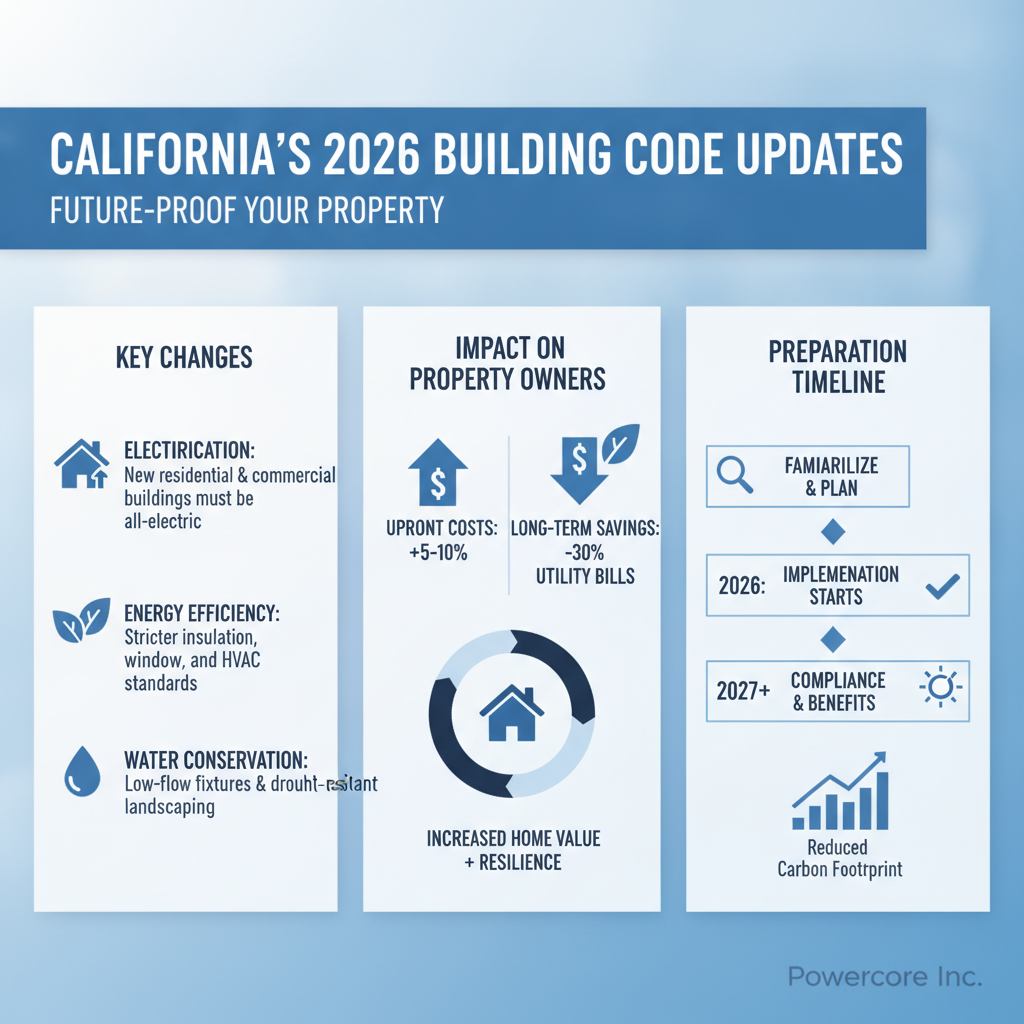
Impact on Homeowners and Businesses in California
The 2026 building code updates will have far-reaching implications for anyone planning new construction, additions, or significant renovations in California. Understanding these impacts is the first step toward successful project planning.
For New Construction: Setting a New Standard
Developers and builders of new homes, commercial spaces, and multi-family units will face higher initial construction costs due to the integration of advanced energy systems, superior insulation, and electrification infrastructure. However, these investments translate into significant long-term benefits:
- Lower Operating Costs: All-electric, highly efficient buildings will have substantially lower energy bills for occupants.
- Higher Property Value: Energy-efficient, modern homes and commercial spaces command higher market values and appeal to environmentally conscious buyers and tenants.
- Enhanced Comfort and Health: Better insulation, sealed envelopes, and efficient HVAC systems lead to more consistent indoor temperatures and improved air quality.
For Remodels, Additions, and ADUs: Navigating Compliance
Existing properties undergoing major renovations, additions, or the increasingly popular Accessory Dwelling Units (ADUs) will also be subject to new compliance requirements. This is where the expertise of a seasoned contractor like Powercore Inc becomes invaluable.
- ADU Electrification: New ADUs will almost certainly need to be all-electric, potentially requiring upgrades to the main service panel to accommodate the increased electrical load.
- HVAC and Water Heater Replacements: When replacing older gas furnaces or water heaters, owners may be required to switch to high-efficiency electric heat pumps, triggering panel upgrades or new circuits.
- Envelope Upgrades: Extensive remodels might necessitate upgrades to insulation, windows, or roofing to meet current energy efficiency standards, even in existing structures. Powercore Inc's General B license allows us to manage these complex, multi-trade projects, ensuring seamless integration of all compliance requirements.
Cost Implications and Long-Term Savings
While the upfront costs of complying with stricter codes may be higher, it's crucial to view these expenses as long-term investments. The superior energy performance of compliant buildings leads to:
- Reduced Utility Bills: Significant savings on electricity and eliminated natural gas bills.
- Increased Resilience: Battery storage offers protection against power outages, a growing concern in California.
- Environmental Benefits: A reduced carbon footprint and contribution to California's climate goals.
Preparing for the Future: Powercore Inc's Solutions
Navigating the complexities of California's building codes requires not just knowledge but also integrated solutions and expert execution. Powercore Inc is uniquely positioned to assist property owners throughout California in preparing for and complying with the 2026 updates, thanks to our dual General B and C-10 Electrical Contractor licenses and our comprehensive service offerings.
Solar and Battery Storage Solutions
As solar PV mandates expand and battery storage becomes increasingly critical, Powercore Inc provides cutting-edge solutions:
- Custom Solar System Design & Installation: We design and install high-performance solar PV systems tailored to your property's energy needs and the latest code requirements, maximizing your energy production and savings.
- Integrated Battery Storage: Our expertise extends to seamlessly integrating advanced battery energy storage systems (BESS) with your solar setup, providing energy independence, peak demand management, and reliable backup power—essential components for 2026 compliance and beyond.
High-Efficiency HVAC Upgrades
Transitioning to all-electric homes means upgrading your heating and cooling systems. We specialize in:
- Heat Pump Installation: Replacing outdated gas furnaces and traditional AC units with highly efficient electric heat pump systems that provide both heating and cooling, meeting new electrification mandates and significantly reducing energy consumption.
- Zoned Systems & Smart Controls: Implementing advanced HVAC solutions that offer precise climate control, further enhancing efficiency and comfort.
EV Charging Infrastructure Installation
With an increasing number of EV-ready and EV-capable requirements, Powercore Inc offers:
- Residential EV Charger Installation: From Level 2 chargers for home use to integrating charging solutions into new ADUs or garage remodels.
- Commercial EV Charging Solutions: Designing and installing robust charging stations for multi-family complexes, workplaces, and public facilities, ensuring your property is attractive to the growing EV market.
ADUs and Electrified Remodels
Whether you're building a new ADU or undertaking a significant home remodel, we ensure your project aligns with future codes:
- Full-Service ADU Construction: As a General B contractor, we handle every aspect of ADU construction, from foundation to finish, ensuring all-electric design, energy efficiency, and solar/storage integration.
- Whole-Home Electrification: We guide you through the process of converting your existing home to all-electric, including panel upgrades, appliance replacements, and energy efficiency improvements.
Roofing, Siding, and Interior Remodeling
Beyond electrical and mechanical systems, the building envelope plays a critical role in energy performance:
- Energy-Efficient Roofing: Installing cool roofs and highly insulated roofing systems that reduce heat gain and improve overall building performance.
- Insulated Siding & Windows: Upgrading exterior siding and windows to enhance thermal performance and contribute to Title 24 compliance.
- Interior Remodeling: Ensuring that interior renovations, such as kitchen and bath remodels, incorporate energy-efficient lighting, appliances, and water-saving fixtures.
Expert Permitting and Code Compliance Guidance
Navigating the permit process and ensuring strict adherence to the ever-changing codes can be daunting. Powercore Inc's experienced team provides:
- Comprehensive Project Planning: We help you understand how the 2026 codes will affect your specific project from the outset.
- Permit Acquisition: We manage the entire permitting process, ensuring all designs and installations meet local and state requirements, saving you time and preventing costly delays.
California-Specific Incentives and Rebates to Offset Costs
While the initial investment for code compliance might seem significant, California offers a variety of incentives and rebate programs designed to make these upgrades more affordable and attractive. Powercore Inc can help you identify and leverage these opportunities:
- Federal Solar Tax Credit (ITC): The Investment Tax Credit provides a substantial federal tax credit for homeowners and businesses installing solar PV and battery storage systems.
- California Solar Initiative (CSI) & Self-Generation Incentive Program (SGIP): While CSI has largely phased out for new installations, SGIP continues to offer incentives for energy storage systems, crucial for grid resilience.
- TECH Clean California: This program offers significant incentives for homeowners and businesses to install heat pump technology for space and water heating, directly supporting electrification goals.
- Local Utility Programs: Many California utility providers (e.g., PG&E, SCE, SDG&E) offer their own rebates for energy-efficient appliances, smart thermostats, and even EV charging infrastructure.
- Local Government Programs: Some cities and counties offer specific grants or financing options for energy efficiency upgrades, ADU construction, or solar installations.
Our team at Powercore Inc stays up-to-date on these dynamic programs and can assist you in navigating the application process to maximize your financial benefits, making compliance with the California 2026 building code updates more accessible.
The Powercore Advantage: Your Trusted Partner in California
Choosing the right contractor is paramount when embarking on projects that must comply with complex and evolving building codes. Powercore Inc offers distinct advantages that make us the ideal partner for your next project:
- Dual-Licensed Expertise: Our General B (CSLB #1134334) and C-10 Electrical (CSLB #1098175) licenses mean we can handle the full spectrum of your project—from comprehensive remodels and ADU construction to specialized electrical installations like solar, battery storage, and EV charging. This integrated approach simplifies project management and ensures seamless coordination.
- Comprehensive Service Offerings: We are a one-stop shop for all your energy efficiency, electrification, and remodeling needs, including Solar, Battery Storage, HVAC, Roofing, ADUs, Remodels, EV Charging, Siding, Decking, and Interior Remodeling. This holistic capability ensures that all aspects of your project are optimized for code compliance and maximum performance.
- California-Wide Service: While based in Roseville, CA, our services extend across the entire state of California, bringing our expertise to diverse climates and regulatory environments.
- Commitment to Quality & Innovation: We utilize the latest technologies and best practices to deliver durable, efficient, and future-proof solutions, ensuring your property is not just compliant but also performs exceptionally for years to come.
- Customer-Centric Approach: We prioritize clear communication, transparency, and tailored solutions, working closely with you to understand your goals and deliver results that exceed expectations.
Conclusion: Embrace the Future with Powercore Inc
The California 2026 building code updates represent more than just regulatory changes; they are a blueprint for a sustainable, resilient, and energy-independent future for the state. While these changes may present new challenges, they also unlock incredible opportunities for increased property value, significant long-term savings, and a reduced environmental footprint.
Don't wait until the last minute to understand and adapt to these crucial revisions. Proactive planning and partnering with an experienced, knowledgeable contractor are key to a smooth and successful transition. Powercore Inc is your trusted expert, equipped with the dual licenses, comprehensive service offerings, and deep understanding of California's unique regulatory landscape to guide you through every step.
Whether you're planning a new build, an ADU, a major remodel, or simply looking to upgrade your home's energy systems, we're here to help you future-proof your property. Contact Powercore Inc today at 916-699-8778 to discuss your project and discover how we can help you thrive under California's evolving building standards. Let's build a brighter, more efficient future together.