

Introduction: Building with Confidence – The Unseen Shield of Contractor Insurance
Embarking on a home improvement project in California, whether it’s a new solar installation, a major remodel, or adding an ADU, is an exciting venture. You meticulously plan, choose materials, and select a contractor. But beyond the flashy portfolios and competitive bids, there's one critical element that often gets overlooked yet forms the absolute bedrock of your project's security: contractor insurance.
In the bustling construction landscape of California, where innovation meets strict regulations, understanding a contractor's insurance isn't just a recommendation—it's a necessity. It's your ultimate safeguard against unforeseen accidents, property damage, and costly liabilities. At Powercore Inc, a dual-licensed General B & C-10 Electrical Contractor based in Roseville, CA, we believe in complete transparency and peace of mind for every client across the Golden State. We understand that our commitment to comprehensive insurance coverage isn't just about compliance; it's about protecting your investment and ensuring your project's success, from the first nail to the final inspection.
Why Contractor Insurance Is Your Project's Strongest Foundation
Imagine the worst-case scenario: a worker sustains an injury on your property, a sudden downpour damages newly installed materials, or an accidental mishap causes significant damage to your existing home structure. Without proper contractor insurance, these scenarios could leave you, the homeowner, shouldering immense financial and legal burdens. This isn't merely about avoiding fines; it's about protecting your financial future and ensuring your dream project doesn't turn into a nightmare.
Mitigating Financial Risk for Homeowners
- Protection Against Property Damage: Accidents happen. A dropped tool, an errant nail gun, or an unexpected structural issue could damage your home or a neighbor's property. Proper insurance covers the costs of repairs, preventing you from paying out of pocket.
- Shield from Liability Claims: If a contractor or their employee is injured on your property, you could potentially be held liable. Worker's Compensation insurance (a specific type we’ll detail) protects you from these claims.
- Ensuring Project Completion: While not direct insurance, contractor bonds (which we'll also discuss) offer a layer of financial protection if a contractor fails to complete the work or adhere to contract terms.
- Peace of Mind: Knowing your contractor is fully insured allows you to focus on the exciting aspects of your project, rather than worrying about potential catastrophic financial setbacks.
Types of Essential Contractor Insurance in California
California's contractor licensing board, the CSLB (Contractors State License Board), has specific requirements for contractors to operate legally. These requirements are designed to protect consumers. Here's a breakdown of the key types of insurance and financial protections you should expect from any legitimate California contractor, like Powercore Inc:
General Liability Insurance (GL)
General Liability insurance is the cornerstone of a contractor's protection. It's designed to cover claims of bodily injury or property damage to third parties (which includes you, the homeowner, and your property) that occur during the course of the project. This is distinct from damage to the work itself, which would typically fall under builder's risk or warranty.
- What it Covers:
- Damage to your existing home structure caused by the contractor's work.
- Damage to a neighbor's property (e.g., a falling tool damages their fence).
- Bodily injury to a third party (e.g., a visitor trips over equipment left on your property).
- Legal defense costs if the contractor is sued due to such incidents.
- California Requirements: The CSLB requires all licensed contractors to carry general liability insurance. The minimum coverage amount can vary, but reputable contractors often carry policies well above the minimum to ensure adequate protection for larger projects.
- Why it Matters to You: Without GL insurance, any property damage or third-party injury resulting from the contractor's work could become your responsibility, leading to significant out-of-pocket expenses and potential lawsuits.
Worker's Compensation Insurance (WC)
This is arguably one of the most critical insurance types for homeowners to verify, especially when a contractor has employees. California law mandates that any contractor with employees must carry Worker's Compensation insurance. This insurance provides benefits to employees who are injured or become ill as a direct result of their job duties, covering medical expenses, lost wages, and rehabilitation.
- What it Covers:
- Medical treatment for injured workers.
- Temporary or permanent disability benefits.
- Vocational rehabilitation.
- Death benefits to dependents.
- California Requirements: The CSLB rigorously enforces Worker's Compensation requirements. Contractors who misrepresent their employee status (e.g., claiming to be a sole proprietor with no employees when they do) face severe penalties.
- Why it Matters to You: If a worker is injured on your property and the contractor does NOT have Worker's Compensation insurance, you, the homeowner, could be held personally liable for the worker's medical bills, lost wages, and long-term care. This risk alone makes verifying WC insurance non-negotiable.
Contractor's Bond (Surety Bond)
While often discussed alongside insurance, a contractor's bond is technically a form of financial guarantee rather than traditional insurance. In California, all licensed contractors must have a CSLB-mandated surety bond. This bond acts as a financial safeguard for consumers, ensuring that funds are available if the contractor fails to complete a project, violates licensing laws, or fails to pay for materials or subcontractors.
- What it Covers:
- Reimbursement for financial losses due to a contractor's fraudulent or unethical practices.
- Payment for materials or subcontractors if the contractor defaults.
- Ensuring completion of the project as per the contract.
- California Requirements: The CSLB requires a minimum contractor's bond. This amount is subject to change but is a mandatory component of maintaining an active license.
- Why it Matters to You: The bond provides a layer of protection against financial malfeasance or abandonment of a project, giving you recourse that would otherwise be difficult or impossible to obtain.
Other Important Insurance Types to Consider
Depending on the scope and nature of your project, other types of insurance might be relevant:
- Builder's Risk Insurance (Course of Construction): For significant projects like ADU builds, large-scale remodels, or new home construction, Builder's Risk insurance covers the structure itself and materials on-site from perils like fire, theft, and vandalism during the construction phase. Your homeowner's insurance typically won't cover these risks during major construction.
- Commercial Auto Insurance: If the contractor uses company vehicles to transport materials and equipment to your site, commercial auto insurance covers accidents involving those vehicles.
- Professional Liability (Errors & Omissions) Insurance: For contractors offering design services or specialized consulting, E&O insurance covers financial losses due to errors or omissions in their professional advice or designs. This might be relevant for complex solar system designs or intricate architectural plans.
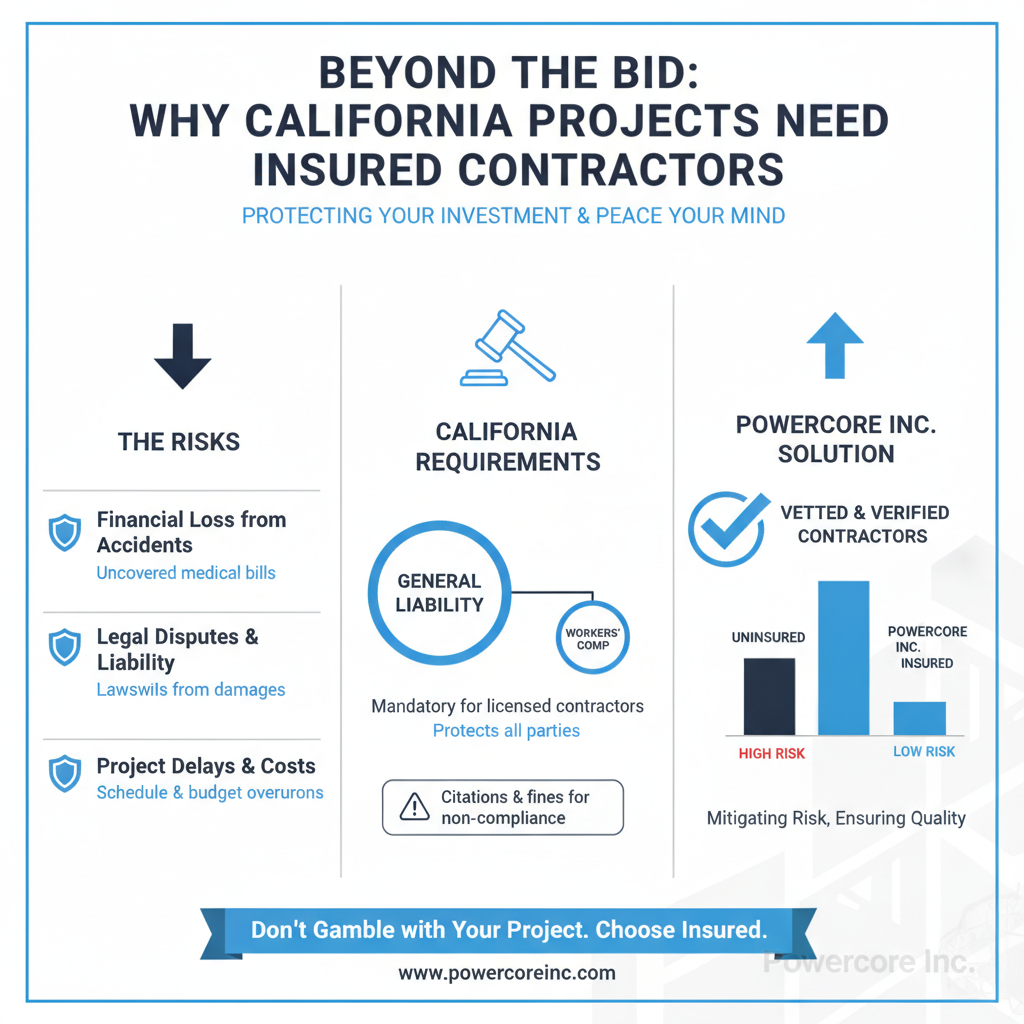
The Cost of Cutting Corners: Why Uninsured Contractors Are a False Economy
It can be tempting to choose the lowest bid, especially if it comes from a contractor who claims to be able to do the job for significantly less. Often, these lower bids come from individuals or companies that operate without proper licensing, bonding, or, critically, insurance. While the upfront savings might seem attractive, the long-term risks are staggering.
Risks of Hiring an Uninsured Contractor:
- Direct Financial Liability: As discussed, you could be responsible for property damage or worker injuries. This isn't just a hypothetical; it's a very real and common occurrence.
- Unfinished or Substandard Work: Unlicensed and uninsured contractors are less accountable. If they do shoddy work or abandon the project, your recourse is severely limited.
- Legal Headaches: Dealing with lawsuits, claims, and disputes without the backing of a contractor's insurance can be incredibly stressful, time-consuming, and expensive.
- Invalidated Homeowner's Insurance: Some homeowner's insurance policies may not cover damages or injuries that occur when an unlicensed or uninsured contractor is working on your property, potentially leaving you completely exposed.
- Difficulty Selling Your Home: If unpermitted or poorly done work by an uninsured contractor is discovered during a home inspection, it can severely impact your ability to sell your home and might require costly remediation.
Choosing a reputable, fully insured contractor like Powercore Inc might seem like a higher upfront investment, but it's an investment in your peace of mind, the quality of your project, and your financial security.
How to Verify Your California Contractor's Insurance and Licensing
As a homeowner, you have the right and the responsibility to verify that your contractor is legitimate and adequately insured. Here’s a step-by-step guide:
1. Check the CSLB License Status
The first and most crucial step is to verify the contractor's license with the California Contractors State License Board (CSLB). You can do this easily on their official website: www.cslb.ca.gov. Search by license number, contractor name, or business name.
- What to Look For:
- Active Status: Ensure the license is active.
- Classification: Verify the contractor holds the appropriate license class for your project (e.g., General B for general construction, C-10 for electrical work, which Powercore Inc holds).
- Bond Information: The CSLB profile will show if the contractor's bond is current.
- Worker's Compensation: The profile will indicate if the contractor has Worker's Compensation insurance on file (if they have employees).
- Disciplinary Actions: Check for any disciplinary actions or complaints against the contractor.
2. Request Certificates of Insurance (COIs)
A reputable contractor will be happy to provide you with current Certificates of Insurance (COIs) directly from their insurance providers. These documents serve as proof of active policies and outline the coverage limits and policy effective dates.
- Key COI Details to Review:
- Policy Holder: Ensure the name matches the contractor you're hiring.
- Policy Types: Confirm General Liability and Worker's Compensation (if applicable) are listed.
- Coverage Limits: Review the dollar amounts for coverage. For significant projects, higher limits offer better protection.
- Effective and Expiration Dates: Make sure the policies are current and will remain active throughout your project's duration.
- "Additional Insured" Request: For larger projects, consider asking to be listed as an "additional insured" on the contractor's General Liability policy. This provides a direct layer of protection, allowing you to file a claim directly if an incident occurs.
3. Ask for References and Check Reviews
While not directly related to insurance, a contractor's reputation for professionalism and reliability often correlates with their commitment to proper business practices, including insurance. Speak to past clients and check online reviews.
Powercore Inc's Commitment to Your Protection and Peace of Mind
At Powercore Inc, we understand that trust is built on transparency and unwavering commitment to safety and compliance. As a dual-licensed General B & C-10 Electrical Contractor (CSLB #1134334 & #1098175), we proudly serve all of California with a comprehensive range of services, from expert solar and battery storage installations to complete interior remodeling and vital EV charging solutions.
Our dedication to maintaining robust insurance policies—including General Liability and Worker's Compensation—and active bonding ensures that every project we undertake is backed by the strongest foundation of protection. When you choose Powercore Inc, you're not just hiring skilled professionals; you're partnering with a company that prioritizes your safety, your investment, and your complete peace of mind. We meticulously adhere to all California regulations, so you can rest assured that your project is in expert, fully protected hands.
For more insights into optimizing your home's efficiency and understanding complex installations, you might find our article Master Energy Storage: Steps to Enhance Home Efficiency helpful.
Conclusion: Build Smart, Build Protected
Don't let the excitement of a new project overshadow the critical importance of verifying your contractor's insurance. In California, where regulations are stringent and risks are real, ensuring your contractor is fully licensed, bonded, and insured is the most strategic decision you can make. It protects your finances, safeguards your property, and provides invaluable peace of mind throughout the construction process.
Before any work begins, always ask for proof of insurance and verify their CSLB license. This due diligence is your most powerful tool in securing a successful, stress-free home improvement experience.
Ready to Start Your Protected California Project?
Choose Powercore Inc for your next California home improvement. With our dual licenses, comprehensive insurance, and unwavering commitment to excellence, we’re ready to bring your vision to life safely and securely. Contact us today for a consultation or call us directly at 916-699-8778 to discuss your project and experience the Powercore Inc difference.