
Introduction
As electric vehicles continue to gain popularity, many homeowners are considering the installation of Level 2 chargers to enhance their driving experience. However, navigating the costs associated with this eco-friendly upgrade can be a bit overwhelming. From the type of charger and installation complexities to potential rebates and long-term electricity expenses, understanding the various factors at play is essential.
This guide breaks down everything homeowners need to know about the investment in a Level 2 home charger, ensuring they can make informed decisions that align with their needs and budget. Whether it's comparing different charging options or exploring the long-term savings, this comprehensive overview will illuminate the path toward a smarter, greener choice for electric vehicle charging.
Factors Influencing the Cost of Level 2 Home Chargers
When considering the cost of a Level 2 home charger, several key factors come into play:
- Charger Type: The market offers various models, each with its own features. Basic chargers can start around $300, while more advanced options, complete with smart technology for enhanced control and efficiency, can exceed $1,000.
- Installation Complexity: Your home’s existing electrical setup is crucial. If your wiring is outdated or if significant upgrades are necessary, anticipate higher labor and material expenses. A licensed electrician can assess your specific situation to provide the best solutions. As noted by a licensed electrician, "In most cases, your electrician will ensure you have a secure and effective grounding system within your electrical infrastructure by installing two grounding electrodes and a properly bonded ground-fault current path that redirects excess power to the earth, preventing overloads and minimizing the risk of electrical damage, shock, or fire."
- Labor Expenses: The expense of employing an electrician can vary widely, influenced by location, experience, and the complexity of the job. Homeowners should anticipate paying between $100 and $200 per hour for professional installation services.
- Permitting and Inspection Fees: Local regulations may require permits for installation, which can add to your total expenditure. These fees can range from $50 to several hundred dollars, depending on your area.
- Rebates and Incentives: Don’t overlook potential state or federal incentives for electric vehicle power installations. Programs such as the Clean Ports Program can cover 80% to 90% of the expenses, significantly reducing the financial burden for homeowners. The Clean Ports Program offers up to $500 million for zero-emission port equipment and charging infrastructure, with applications accepted by the EPA from February to May 2024.
- Real-World Examples: The distinctive arrangement and site of a residence can influence the expense of setting up an EV station, especially the closeness to the electrical panel and the intricacy of wiring. For example, running wires through challenging access points can raise installation expenses, requiring a licensed electrician to identify the most efficient routing.
By thoroughly assessing these elements, you can acquire a clearer understanding of the investment required for a second-tier home power station, assisting you in planning efficiently for this environmentally friendly enhancement.
A Detailed Cost Breakdown for Level 2 Home Charger Installation
When it involves setting up a Type 2 residential charging device, the expenses can differ significantly, and understanding what to anticipate can assist homeowners in planning their finances efficiently. Here’s a friendly overview of the key costs involved:
- Device Purchase: The cost of a Type 2 device can range from $300 to $1,200, depending on the features you select. This range reflects the varying capabilities and technology available in different models.
- Installation Costs: For the installation itself, you’re looking at a range of $500 to $2,000. This range accounts for the complexity of the job, which may require additional electrical upgrades or modifications. For example, Darren, a product designer, shared his experience where the installation of a NEMA 14-50 outlet near the breaker box set him back just $280 for a straightforward job. However, when he had a more complex setup involving cabinets and smart switches, the total came to $850. It’s also worth noting that the estimate for wiring a NEMA 14-50 outlet can be around $1,700 plus permit fees, which is an important consideration for homeowners.
- Permitting Fees: Homeowners should also factor in permitting fees, which generally range from $50 to $300. The precise figure will rely on your regional guidelines, so it's wise to consult your local authority.
- Total Estimated Expense: When you add these expenses, you should prepare to allocate roughly $850 to $3,500 for a full Level 2 home installation.
Additionally, many utility companies offer rebates or incentives that can significantly reduce these costs. For example, Duke Energy may provide rebates of up to $1,117 for installation, which can be applied for after the job is completed. Furthermore, a case study showed that another individual received an estimate of $2,700 for installing a 100 Amp sub panel in their garage, which would connect to a charger with a 60 Amp circuit—this was considered reasonable compared to another electrician's estimate of $5,000. By staying informed about these programs and examples, you can make smarter decisions about your electric vehicle charging needs and save some money in the process. Comprehending these expenses not only empowers you but also guarantees you choose the right solution for your home.
Long-Term Costs of Operating a Level 2 Home Charger
When investing in a Level 2 home charger, it’s essential to look beyond the initial installation expense and consider the long-term financial implications. Here are some important factors to keep in mind:
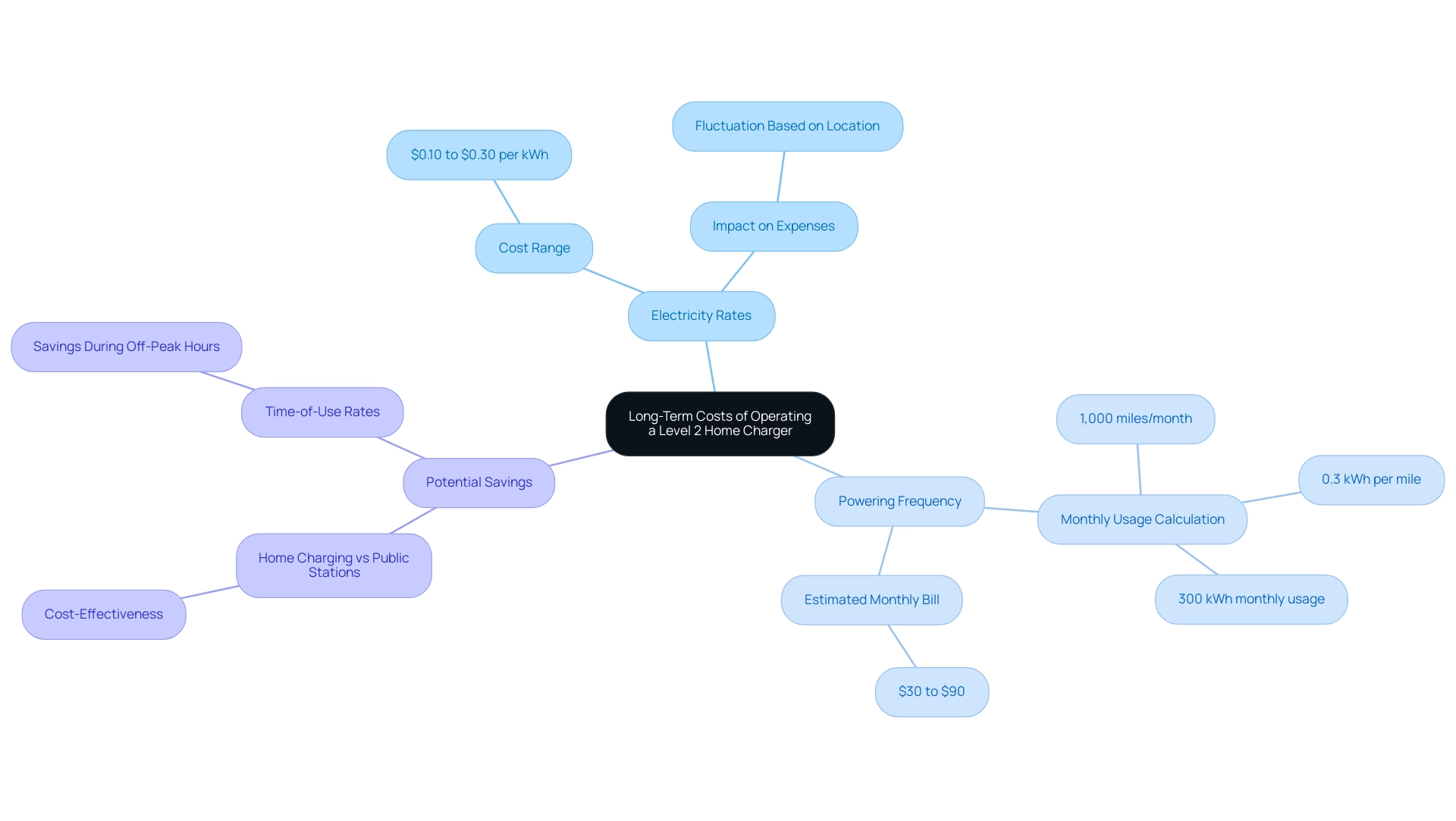
- Electricity Rates: The cost of electricity can fluctuate significantly based on where you live. On average, homeowners can expect to pay anywhere from $0.10 to $0.30 per kWh when powering their electric vehicles at home. This variation in local utility rates can have a notable impact on your overall expense for electricity. According to recent statistics, the estimated electric range per hour of power supply for DC Fast Charging is between 180 to 240 miles, which emphasizes the efficiency of utilizing fast power supply when available.
- Powering Frequency: Your powering habits will play a big role in determining your monthly electricity costs. For instance, if you’re driving around 1,000 miles a month and your EV consumes about 0.3 kWh per mile, you’re looking at a usage of around 300 kWh monthly. This translates to an electricity bill for powering that could range from $30 to $90, depending on your local rates. As noted in the EV Minimum Standards Rule, these standards aim to enhance the overall EV infrastructure, making it more accessible and reliable for homeowners.
- Potential Savings: Many electric vehicle owners find that recharging at home is usually more cost-effective than depending on public stations. Plus, some utility providers offer time-of-use rates, allowing you to save even more if you schedule your usage for off-peak hours when electricity is cheaper. An expert from FHWA stated, "These new standards aim to ensure that the process is a predictable and reliable experience for EV drivers," which can further enhance the cost-effectiveness of home power supply.
By considering these long-term expenses, you can make a more informed choice regarding your home charging station investment. Comprehending how electricity rates influence your EV power expenses can assist you in budgeting effectively and optimizing your savings over time.
Comparing Level 2 Chargers to Other Charging Options
When examining power supply options for electric vehicles, it’s essential to consider the advantages of Type 2 devices compared to other alternatives accessible to you:
- Type 1 Devices: These convenient tools are just regular household outlets, providing a slower power rate that generally adds about 4-5 miles of range per hour. They’re economical and remarkably user-friendly, but if you have a longer commute or drive often, they might not fulfill your daily power requirements.
- Public Charging Stations: Type 2 and DC rapid power sources are emerging in various locations, offering faster charging durations that can accommodate your hectic schedule—whether you’re working, shopping, or dining out. However, keep in mind that these stations can come with variable expenses based on location and may be less accessible during peak hours. For example, expenses can vary from $0.10 to $0.40 per kWh, depending on the supplier and area.
- Price Comparison: Type 2 devices achieve an optimal balance between speed and affordability, making them an excellent choice for home use. They power your vehicle more quickly than basic units and provide greater convenience than depending solely on public stations, which can occasionally result in waiting in line. In contrast, Type 3 devices, while offering even quicker power transfer, usually incur a greater expense, often surpassing $0.50 per kWh. Additionally, considering the GMC Sierra 3500 HD, which has a max Gross Combined Weight Rating (GCWR) of 40,000 lbs and a Gross Vehicle Weight Rating (GVWR) of 14,000 lbs, having a dependable power option is crucial for maximizing performance.
In essence, while Level 1 chargers might suffice for occasional use, Level 2 chargers present a more practical solution for most homeowners, especially those who regularly drive electric vehicles. Insights from the case study on rural EV electrification highlight the benefits of expanding infrastructure for electric vehicle refueling, as well as the challenges faced in rural areas, emphasizing the need for accessible refueling options. With Powercore Electric Inc.'s comprehensive services, including solar panels, battery backups, and competitive pricing on EV power solutions, you can confidently select the option that best fits your lifestyle while benefiting from sustainable energy solutions. Reach out to us today to discover more about how we can support you in making the best decision for your electric vehicle power requirements.
Choosing the Right Level 2 Charger for Your Home
Selecting the appropriate Level 2 device for your electric vehicle is a choice that can greatly improve your driving experience, and it includes a few key factors to take into account:
- Charging Speed: Various units have differing power outputs, typically between 16 to 50 amps. For instance, the NACS can provide up to 48 Amps on a single-phase 240-volt input, enabling quicker power-up durations. If you want to maximize the benefits of your power source, consider your vehicle’s power capacity and your daily driving patterns. Keep in mind, higher amperage results in quicker power delivery, which is excellent for those hectic mornings!
- Smart Features: Modern devices frequently include intelligent technology that allows you to schedule, monitor, and manage the power process directly from your smartphone. This means you can charge during off-peak hours to save on costs while ensuring your vehicle is ready when you are.
- Installation Requirements: It's essential to check that the unit you select is compatible with your home’s electrical system. Our team at Powercore Electric focuses on the setup of EV replenishment stations, assisting you through a detailed installation procedure that involves a complete site evaluation to identify the most suitable spot for the unit, required electrical enhancements, careful installation, and thorough testing to guarantee optimal performance. Having a qualified electrician on hand for installation is a must to ensure everything is set up safely and efficiently. Ideal places for installing Level 2 charging stations include residences, where overnight power-up offers convenience for daily commuting. Additionally, the installation process can influence the overall cost, so it's wise to factor in potential installation expenses when selecting your charger.
- Brand Reputation: Take the time to research different brands and read customer reviews. A dependable power supply with good customer support and warranty options can make a huge difference in your overall satisfaction. Exceptional customer experience is emphasized from inquiry to delivery in service offerings, reinforcing the importance of choosing a reputable brand. Always consider how well the brand is reviewed and the experiences of other users to ensure you make an informed choice.
By taking these factors into account, you can confidently select a Level 2 charger that fits seamlessly into your lifestyle, providing convenience and maximizing your electric vehicle's performance.
Conclusion
Investing in a Level 2 home charger is a significant step towards enhancing the electric vehicle experience, and understanding the associated costs is crucial. Throughout this guide, key factors have been highlighted, from the types of chargers available to the complexities of installation. Homeowners can expect a range of costs, influenced by everything from charger features to local permitting fees.
By evaluating these components, individuals can better prepare for the financial commitment involved.
Beyond the initial investment, it's essential to consider the long-term operational costs. Fluctuations in electricity rates and individual charging habits play a pivotal role in determining overall expenses. Many EV owners find that home charging is often more economical than public options, especially when factoring in potential rebates and incentives that can ease the financial burden.
Ultimately, the choice of a Level 2 charger not only impacts immediate convenience but also contributes to a more sustainable and cost-effective driving experience. By carefully assessing personal needs and available options, homeowners can confidently make a decision that aligns with their lifestyle and budget, paving the way for a greener future with electric vehicles.