

The California Dream of Outdoor Living
California living is synonymous with embracing the outdoors. Our state's enviable climate beckons us to spend more time outside, whether it's for entertaining friends, enjoying family meals al fresco, or simply unwinding in the golden hour. A well-designed outdoor living space doesn't just enhance your lifestyle; it significantly boosts your home's appeal and value. As homeowners across the Golden State look to expand their usable living areas, a common dilemma emerges: should you choose a patio cover or a pergola?
At Powercore Inc, we understand that transforming your outdoor space is a significant investment, one that requires careful consideration of aesthetics, functionality, and long-term value. As a dual-licensed General B and C-10 Electrical Contractor based in Roseville, CA, serving all of California, we specialize in creating integrated outdoor solutions that truly complement your home and lifestyle. This comprehensive guide will delve into the nuances of patio covers and pergolas, helping you navigate the options to build your ideal California outdoor oasis.
Understanding the Fundamentals: Patio Covers
A patio cover is typically a solid or semi-solid roof structure designed to provide significant protection from the elements. They can be attached directly to your home, extending your interior living space seamlessly into the outdoors, or freestanding, creating a distinct outdoor room in your yard. Unlike pergolas, patio covers are engineered for maximum shade and weather resistance, making them a robust solution for California homeowners seeking consistent comfort.
Key Benefits of Patio Covers
- Superior Shade & UV Protection: With a solid roof, patio covers offer complete protection from direct sunlight, drastically reducing heat gain on your patio and potentially lowering indoor cooling costs. This is particularly valuable during California's hot summers.
- All-Weather Protection: Beyond sun, patio covers shield your outdoor furniture and activities from rain, wind, and even light hail, extending the usability of your outdoor space throughout the year.
- Increased Usable Living Space: By creating a protected, comfortable area, a patio cover effectively adds an outdoor 'room' to your home, perfect for dining, lounging, or even an outdoor office setup.
- Integration Potential: They can easily accommodate integrated lighting, ceiling fans, misters, and even outdoor heating elements, transforming your patio into a truly functional extension of your home.
- Enhanced Home Value: A well-designed, permitted patio cover is often viewed as a permanent home improvement, adding tangible value to your property.
Common Materials for California Patio Covers
- Aluminum: A popular choice for its low maintenance, durability, and resistance to rust and pests. Available in various finishes and styles, often mimicking wood. Insulated aluminum panels can offer even greater thermal performance.
- Wood: Offers a classic, natural aesthetic. Redwood and cedar are favored in California for their natural resistance to rot and insects. Requires more maintenance (sealing, staining) but provides a timeless look.
- Alumawood: A composite material that combines the strength of aluminum with the aesthetic of wood, offering minimal maintenance.
- Insulated Roof Panels: These panels offer excellent thermal performance, keeping the space beneath cooler in summer and potentially reducing heat loss from the adjacent home.
California Considerations for Patio Covers
When planning a patio cover in California, several state-specific factors come into play:
- Fire Resistance: In Wildland-Urban Interface (WUI) areas, material choices and construction methods must comply with stricter fire-resistant building codes. Non-combustible materials like aluminum or specially treated wood are often preferred.
- Energy Efficiency: A strategically placed patio cover can significantly reduce solar heat gain on south- and west-facing windows, leading to lower air conditioning usage and energy bills.
- Permitting: Due to their size, attachment to the main structure, and potential electrical integration, most patio covers in California will require permits from your local building department. This ensures structural integrity and safety.
Understanding the Fundamentals: Pergolas
A pergola is an open-sided structure with a slatted or lattice roof, designed primarily to provide partial shade and an aesthetic focal point in your garden or patio. Pergolas emphasize an open, airy feel, allowing sunlight to filter through while still defining a distinct outdoor space. They can be freestanding, creating a beautiful garden feature, or attached to a home to extend an entryway or patio.
Key Benefits of Pergolas
- Aesthetic Appeal: Pergolas are renowned for their architectural beauty, adding elegance and charm to any backyard. They can create a stunning visual gateway or a serene focal point.
- Partial Shade & Filtered Light: While not offering full protection, pergolas provide dappled shade, perfect for those who enjoy sunlight but want to mitigate its intensity. This effect can be enhanced with retractable canopies or climbing plants.
- Open-Air Feel: The open structure promotes airflow, creating a breezy and comfortable environment, ideal for California's mild evenings.
- Design Flexibility: Pergolas come in a vast array of styles, from traditional to ultra-modern, and can be customized with various beam spacing, curved elements, or decorative posts.
- Supports Climbing Plants: Many homeowners use pergolas as a trellis for vines like wisteria, bougainvillea, or grapes, creating a living canopy that offers additional shade and natural beauty.
Common Materials for California Pergolas
- Wood: Cedar, redwood, and pressure-treated pine are popular for their natural look and durability. As with patio covers, wood requires regular maintenance.
- Vinyl/PVC: A low-maintenance option that resists rot, insects, and fading. Often comes in white and can mimic traditional wood designs.
- Aluminum: Offers a sleek, modern look with excellent durability and minimal maintenance. Can be powder-coated in various colors.
- Composite: Combines wood fibers with plastic, offering a durable, low-maintenance material that resists rot and splintering.
California Considerations for Pergolas
For California homeowners considering a pergola:
- Shade Effectiveness: While providing some shade, a standard pergola's open roof may not be sufficient during peak summer heat. Consider adding retractable shades, louvered roofs, or training dense climbing plants for increased sun protection.
- Fire Safety: Similar to patio covers, material choices in WUI zones are critical. Wood pergolas may need to be treated or constructed with specific fire-resistant species.
- Permitting: Freestanding pergolas under a certain size (often 120-200 sq ft, depending on local jurisdiction) may not require a permit, especially if not attached to the home or involving electrical work. However, always check with your local planning department. Attached pergolas or those with electrical components will almost certainly require permits.
The Great Showdown: Patio Cover vs. Pergola - A California Homeowner's Guide
Now that we've explored the individual characteristics of each structure, let's dive into a direct comparison to help you determine which best suits your California home, lifestyle, and investment goals.
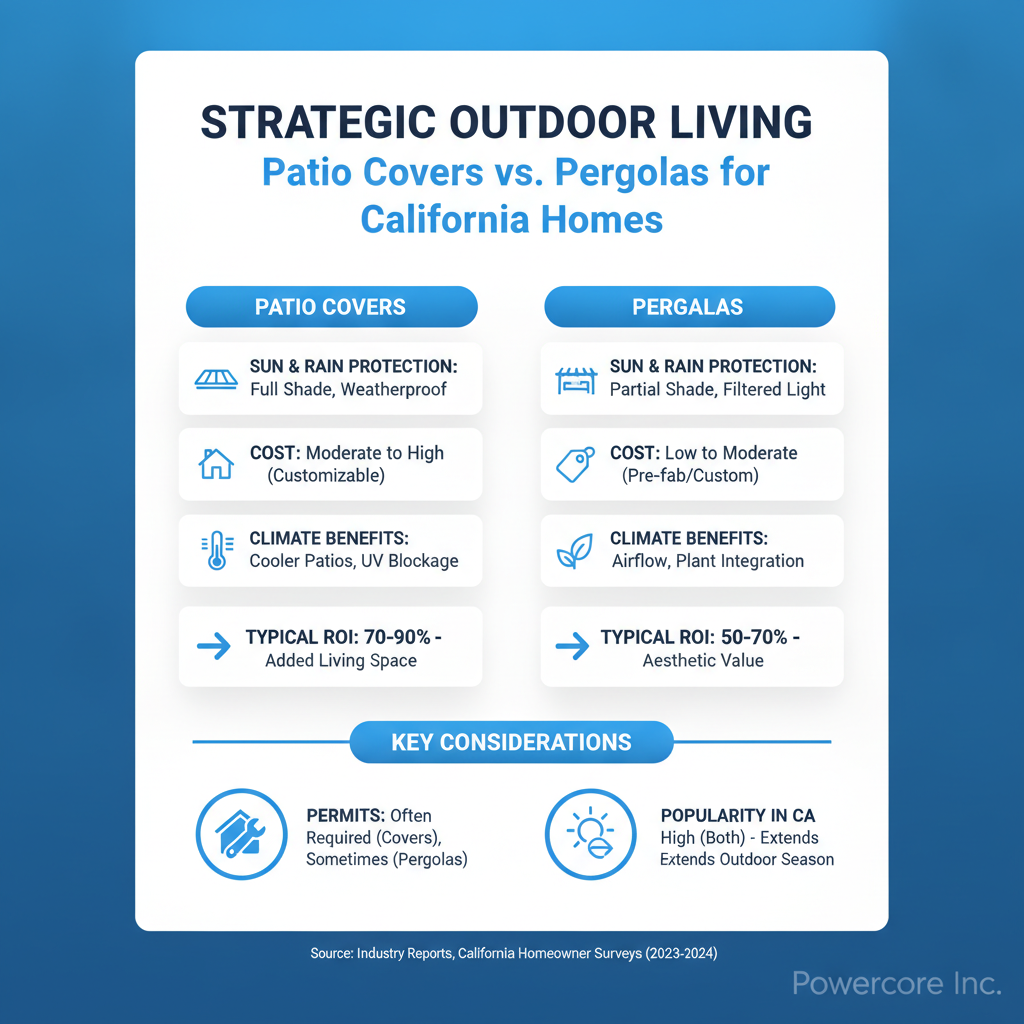
Shade and Weather Protection
- Patio Cover: Offers superior, consistent shade and full protection from rain and harmful UV rays. Ideal for areas where maximum comfort and shelter are paramount, such as outdoor dining areas or spaces with sensitive electronics/furniture.
- Pergola: Provides partial, dappled shade. While it breaks up direct sunlight, it doesn't offer full rain protection unless augmented with a retractable canopy or solid roof panels. Best for areas where you want to enjoy some sun exposure while mitigating intensity.
Cost and Return on Investment (ROI)
- Patio Cover: Generally has a higher upfront cost due to more materials, complex engineering, and often, extensive permitting requirements. However, a well-built patio cover can offer a significant ROI, often recouping 50-80% or more of its cost in increased home value, especially if it seamlessly extends living space.
- Pergola: Typically less expensive to install than a full patio cover, especially smaller, freestanding units. While adding aesthetic appeal, the direct ROI in terms of appraisal value might be slightly lower than a fully enclosed patio cover, but it still enhances marketability.
Permitting and Regulations in California
- Patio Cover: Almost always requires a building permit in California due to its structural nature, attachment to the home, and potential impact on existing structures and property lines. Electrical installations (lights, fans) also require separate permits. Powercore Inc, as a dual-licensed General B and C-10 Electrical Contractor, is expertly equipped to handle all necessary permitting and electrical work, ensuring your project meets all California building codes.
- Pergola: Permitting varies more widely. Small, freestanding pergolas (e.g., under 120 sq ft, not exceeding a certain height) might be exempt from permits in some jurisdictions. However, attached pergolas, larger structures, or those with electrical components will definitely require permits. Always check with your local city or county building department.
Maintenance Requirements
- Patio Cover: Depends heavily on the material. Aluminum and Alumawood are low-maintenance, requiring occasional cleaning. Wood patio covers will need regular sealing, staining, or painting to protect against California's sun and occasional moisture.
- Pergola: Similar to patio covers, maintenance varies by material. Vinyl/PVC and aluminum are minimal maintenance. Wood pergolas require regular care. If you have climbing plants, they will also require pruning and maintenance.
Aesthetics and Design Flexibility
- Patio Cover: Offers a more integrated, 'room-like' aesthetic, often designed to match the existing architecture of your home. Can feel more permanent and structured.
- Pergola: Provides a lighter, more open, and often more decorative aesthetic. It can serve as a garden feature, a transitional space, or a beautiful backdrop. Its open nature offers more flexibility for a variety of styles, from rustic to modern.
Energy Efficiency and Fire Hardening
- Patio Cover: Can significantly improve your home's energy efficiency by blocking direct sunlight from windows and walls, reducing the load on your HVAC system during hot California summers. In fire-prone areas, selecting fire-resistant materials (e.g., non-combustible aluminum, treated wood) is crucial and often mandated.
- Pergola: Offers less direct energy savings for the adjacent home due to its open design. However, dense climbing plants can provide substantial shading benefits. For fire hardening, material selection is equally important, especially if the pergola is close to the home or in a WUI zone. Consider materials and designs that minimize ember ignition and flame spread.
Beyond the Basics: Customization and Integration for Your California Oasis
Choosing between a patio cover and a pergola is just the first step. The true magic happens in the customization and integration of your new outdoor structure with other elements of your California home. Powercore Inc excels in holistic home solutions, ensuring your outdoor living space works in harmony with your entire property.
Lighting and Climate Control
- Integrated Lighting: From recessed LED lights in patio covers to elegant string lights draped over pergolas, proper lighting extends the usability of your space into the evening.
- Fans and Heaters: Ceiling fans under patio covers can dramatically improve comfort on warm days. For cooler California evenings, integrated heaters allow for year-round enjoyment.
- Misting Systems: A popular addition in warmer regions of California, misting systems can reduce ambient temperatures significantly.
Privacy and Enclosures
- Screens and Curtains: Retractable screens or outdoor curtains can be added to both patio covers and pergolas to provide privacy, block sun from specific angles, or even keep insects at bay.
- Louvered Roof Systems: For the ultimate flexibility, consider a louvered patio cover that allows you to adjust the amount of sun and shade with the touch of a button. These systems provide the best of both worlds – full protection when closed, and an open, airy feel when open.
Outdoor Kitchens and Entertainment
Both patio covers and pergolas can form the backbone of a sophisticated outdoor kitchen or entertainment zone. A patio cover offers ideal protection for cooking appliances, built-in BBQs, and outdoor electronics. Pergolas can define a grilling area or an outdoor bar, creating a distinct zone within your larger outdoor space.
Solar Integration: A Powercore Specialty
Given Powercore Inc's expertise in solar energy, it's worth noting how these structures can potentially integrate with your home's energy strategy. While not typical, a robust patio cover, especially one designed with structural integrity in mind, *could* potentially support a small array of solar panels, contributing to your home's energy independence. This would require careful planning and engineering to ensure structural load capacity and proper sun exposure, a service Powercore Inc is uniquely qualified to assess and implement.
Navigating California's Permitting and Building Codes
This is where professional expertise becomes invaluable. California has stringent building codes, especially concerning structural integrity, seismic considerations, electrical safety, and fire hardening. Attempting to build a patio cover or pergola without proper permits and adherence to codes can lead to costly fines, demolition orders, and safety hazards.
- The Importance of Licensed Contractors: Hiring a dual-licensed contractor like Powercore Inc (CSLB #1134334 for General B and #1098175 for C-10 Electrical) ensures that your project is handled by professionals who understand California's complex regulations. Our General B license covers the structural aspects, while our C-10 Electrical license ensures all integrated lighting, fans, and power outlets are installed safely and to code.
- Wildland-Urban Interface (WUI) Areas: If your property is in a WUI zone, specific fire-resistant materials and construction techniques will be mandatory. This includes considerations for decking, siding, and any attached or detached outdoor structures.
- HOA Regulations: Many homeowner associations in California have strict guidelines regarding outdoor structures, including design, materials, and colors. Always check with your HOA before beginning any project.
Cost Considerations for California Homeowners
The cost of installing a patio cover or pergola in California can vary widely based on several factors:
- Material Choice: Aluminum and vinyl are generally more budget-friendly than premium woods like redwood or exotic hardwoods. Insulated panels and custom louvered systems will be at the higher end.
- Size and Complexity: Larger structures, custom designs, and those requiring significant site preparation (e.g., leveling, new concrete pads) will naturally cost more.
- Features and Add-ons: Integrated lighting, ceiling fans, misting systems, outdoor kitchens, and retractable screens all add to the total cost.
- Permits and Engineering: The cost of permits, architectural drawings, and structural engineering (if required) must be factored in, especially for larger or attached structures.
- Labor: Professional installation by experienced, licensed contractors like Powercore Inc ensures quality and compliance but comes with a justified cost.
General Cost Ranges (California Average, subject to change):
- Basic Pergola (small, freestanding, DIY-friendly kit): $1,500 - $5,000
- Custom Pergola (professional installation, quality materials, larger): $5,000 - $20,000+
- Basic Patio Cover (attached, aluminum or Alumawood, standard size): $5,000 - $15,000
- Custom Patio Cover (larger, wood, insulated roof, integrated features): $15,000 - $50,000+
These figures are estimates and can fluctuate significantly based on your specific location within California, material choices, and the complexity of the installation. Investing in quality materials and professional installation from a reputable company like Powercore Inc will ensure durability, safety, and a better return on your investment.
Making the Right Choice for Your California Home
Deciding between a patio cover and a pergola boils down to aligning your needs, budget, aesthetic preferences, and long-term goals with the unique characteristics of each structure. Ask yourself:
- What level of sun protection do I need? Full shade for comfort and energy savings, or partial shade for ambiance?
- What is my budget? Consider both initial cost and long-term maintenance.
- What is the primary function of this space? Dining, lounging, entertaining, cooking, or a tranquil retreat?
- How important is weather protection (rain, wind)?
- What architectural style best suits my home?
- Are there specific local regulations (e.g., WUI zones, HOA rules) I need to consider?
For a truly integrated and value-adding outdoor living space, seeking expert advice is paramount. Powercore Inc's comprehensive services, from ADUs and remodels to solar and HVAC, mean we view your outdoor project as part of a larger home ecosystem. We consider how your new patio cover or pergola will impact your home's energy efficiency, fire resilience, and overall functionality, ensuring a seamless and strategic enhancement to your property.
Conclusion: Crafting Your Ideal California Outdoor Oasis
Whether you lean towards the robust protection of a patio cover or the airy charm of a pergola, investing in your outdoor living space is a smart move for any California homeowner. These structures not only enhance your daily enjoyment but also contribute significantly to your home's curb appeal, marketability, and long-term value. By carefully considering your needs, understanding the differences, and navigating California's specific requirements, you can create an outdoor oasis that perfectly complements your lifestyle.
Ready to transform your California backyard? Don't leave your outdoor living dreams to chance. Contact Powercore Inc today for a consultation. Our dual-licensed experts are ready to help you design and build the perfect outdoor living space, from concept to completion, ensuring every detail meets California's rigorous standards and exceeds your expectations. Call us at 916-699-8778 or visit gopowercoreinc.com to learn more about our comprehensive services across all of California. Let Powercore Inc power your home's next great transformation!