

Elevating California Views with Cable Railings: A Modern Outdoor Upgrade
California living is synonymous with embracing the outdoors. From the sprawling Pacific coastline to the majestic Sierra foothills and vibrant urban landscapes, maximizing your property's view potential is often a top priority for homeowners. Traditional deck railings, while functional, can often obstruct these cherished vistas, creating visual barriers that detract from the open, airy feel Californians love.
Enter the cable railing system: a modern, elegant, and highly functional solution that has rapidly become a favorite for those seeking to enhance their outdoor spaces without compromising on scenery. These systems offer unparalleled transparency, creating an illusion of boundless space and allowing the natural beauty of your surroundings to take center stage. But with various materials, designs, and installation methods available, choosing the right cable railing system for your California home can feel overwhelming.
At Powercore Inc, your trusted dual-licensed General B & C-10 Electrical Contractor based in Roseville, CA, we understand the nuances of creating exceptional outdoor living experiences across the Golden State. From comprehensive remodels and ADUs to specialized decking and outdoor features, our expertise ensures your project is not only beautiful but also built to last and compliant with California's stringent building standards. In this comprehensive guide, we'll delve deep into the world of cable railing systems, comparing different types, discussing crucial California-specific considerations, and helping you make an informed decision to elevate your home's aesthetic and value.
Why Cable Railings Are Perfect for California Homes
The appeal of cable railings goes far beyond their sleek appearance, especially when considering the unique lifestyle and environmental factors of California. Here's why they're an ideal choice for many homeowners:
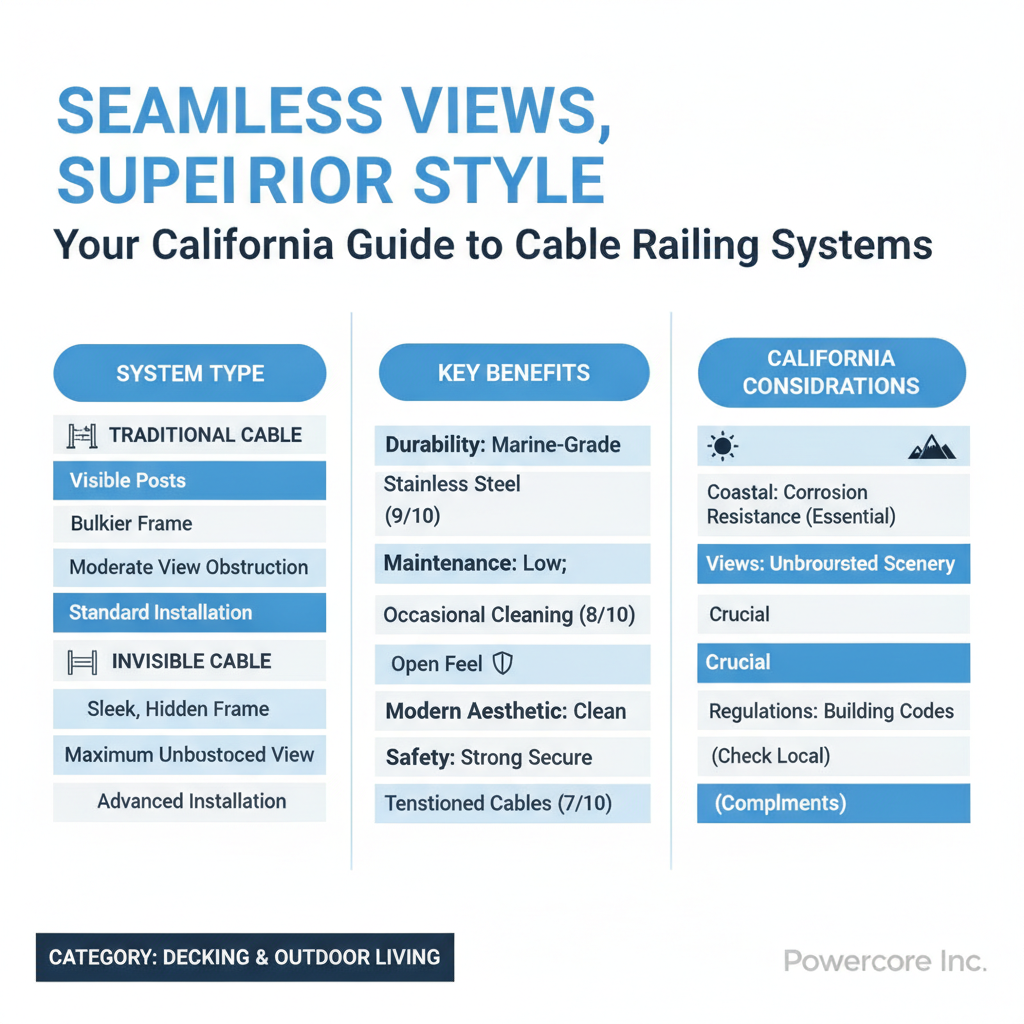
- Unobstructed Views: This is arguably the number one selling point. Whether you have a sweeping ocean view, a picturesque hillside, or a meticulously landscaped backyard, cable railings minimize visual interference, allowing you to fully appreciate your surroundings. This is particularly valuable in California, where property values are often tied to scenic outlooks.
- Modern & Timeless Aesthetic: Cable railings exude a contemporary elegance that complements a wide range of architectural styles, from ultra-modern and minimalist designs to updated traditional and even rustic-chic homes. Their clean lines and understated presence offer a sophisticated touch that won't go out of style.
- Exceptional Durability & Low Maintenance: Most high-quality cable railing systems utilize marine-grade stainless steel cables and components, renowned for their resistance to corrosion, rust, and weather damage. This makes them incredibly resilient against California's diverse climates, from coastal salt spray to inland heat and occasional rain. Unlike wood railings that require regular staining or painting, cable systems demand very little upkeep – typically just a simple cleaning.
- Enhanced Safety & Code Compliance: While seemingly minimalist, cable railings are incredibly strong and secure when properly installed. They meet strict building codes for safety, including height requirements and the critical 4-inch sphere rule (ensuring no gap wider than 4 inches to prevent children from slipping through). Powercore Inc ensures all installations adhere to California's specific building codes.
- Increased Property Value: Upgrading your deck or balcony with a modern, durable, and visually appealing cable railing system can significantly boost your home's curb appeal and market value. It's an investment that pays dividends, especially in California's competitive real estate market.
- Versatility: Cable railings can be integrated with various post materials, top rails, and mounting options, offering a high degree of customization to match your specific design preferences and existing home features.
Understanding the Core Components of a Cable Railing System
Before diving into specific comparisons, it's essential to understand the fundamental elements that make up a typical cable railing system. Each component plays a vital role in both aesthetics and structural integrity:
Posts
These are the vertical supports that anchor the entire railing structure. They bear the tension of the cables and define the overall aesthetic. Common materials include:
- Stainless Steel: Offers the most modern, sleek, and industrial look. Highly durable and corrosion-resistant, making it excellent for coastal California properties.
- Aluminum: Lightweight, corrosion-resistant, and often powder-coated in various colors (black, bronze, white) for design flexibility. A great balance of durability and cost.
- Wood: Provides a warmer, more traditional, or rustic aesthetic. Can be integrated with existing wood decks. Requires more maintenance than metal posts (sealing, staining).
- Composite: Low maintenance and often matches composite decking materials, creating a cohesive look.
Cables
The horizontal lines that create the open visual effect. They are almost exclusively made from marine-grade stainless steel (typically 316-grade) for maximum corrosion resistance and strength. Cable diameter usually ranges from 1/8 inch to 3/16 inch, with thinner cables offering a more discreet appearance.
Fittings & Hardware
These are the critical components that terminate, tension, and secure the cables to the posts. They include:
- Tensioners: Devices at the ends of the cables that allow for precise tightening to ensure the cables are taut and meet code requirements.
- Terminals: Connect the cables to the posts. Options include swage fittings (permanently crimped), threaded terminals, and quick-connect fittings.
- Protective Sleeves/Washers: Used with wood posts to prevent cables from cutting into the wood over time.
Top Rail
While some minimalist designs omit a top rail, it's generally recommended for comfort, safety, and code compliance as a graspable surface. It can be made from a variety of materials, often matching or complementing the posts:
- Stainless Steel, Aluminum, or Composite: For a cohesive, low-maintenance look.
- Wood: Often used with metal posts to soften the aesthetic and provide a comfortable handrail.
Types of Cable Railing Systems: A California Homeowner's Comparison
The primary distinction between cable railing systems often comes down to the material chosen for the posts, which significantly impacts the overall look, cost, and maintenance. Let's compare the most popular options for California homes:
1. Stainless Steel Posts with Stainless Steel Cables
- Aesthetic: The epitome of modern, sleek, and industrial design. Creates a truly minimalist and high-end look.
- Pros:
- Ultimate Corrosion Resistance: Marine-grade stainless steel (316) is highly resistant to rust and corrosion, making it ideal for California's coastal and high-humidity environments.
- Exceptional Durability: Incredibly strong and long-lasting, requiring minimal maintenance.
- High-End Appeal: Adds significant luxury and value to your property.
- Low Maintenance: Simply wipe down with a mild cleaner occasionally.
- Cons:
- Highest Initial Cost: Generally the most expensive option due to material and specialized fabrication.
- Professional Installation Recommended: Requires precision and specialized tools for optimal results.
- Ideal For: Contemporary and modern homes, luxury properties, waterfront decks, commercial applications, and any homeowner prioritizing a premium, maintenance-free system.
2. Aluminum Posts with Stainless Steel Cables
- Aesthetic: Offers a modern and clean look, often with powder-coated color options (black, bronze, white) to match or contrast with your home's exterior.
- Pros:
- Excellent Corrosion Resistance: Aluminum naturally resists rust and is often powder-coated for an extra layer of protection, suitable for various California climates.
- Lighter Weight: Easier to handle and install than stainless steel, potentially reducing labor costs.
- Design Versatility: Available in many profiles and colors, offering more customization than pure stainless steel.
- Moderate Cost: A good middle-ground in terms of price, offering a premium look without the highest price tag.
- Cons:
- Can Dent: While strong, aluminum can dent if subjected to significant impact, unlike steel.
- Less Robust than Stainless Steel: May not feel as substantial as solid stainless steel posts.
- Ideal For: Homeowners seeking a modern look with color options, good durability, and a more budget-friendly approach than full stainless steel. Great for contemporary and transitional California homes.
3. Wood Posts with Stainless Steel Cables
- Aesthetic: Blends rustic charm with modern transparency. Creates a warmer, more natural feel, often chosen to complement existing wood decks or traditional home styles.
- Pros:
- Warm & Natural Look: Integrates seamlessly with natural landscapes and homes with wood elements (e.g., Craftsman, farmhouse, cabins).
- Potentially Lower Post Cost: If you're using pressure-treated lumber or redwood, the initial cost for posts can be lower than metal options.
- DIY-Friendly (relative to other cable systems): If you're comfortable with carpentry, installing cables into wood posts can be more accessible than working with metal.
- Cons:
- Higher Maintenance: Wood posts require regular sealing, staining, or painting to protect against weathering, rot, and insects, especially in California's varying moisture levels.
- Potential for Movement: Wood can expand, contract, and warp with temperature and humidity changes, potentially affecting cable tension over time.
- Less Sleek: The visual impact is less minimalist than all-metal systems.
- Ideal For: Traditional, rustic, or transitional California homes; homeowners who prefer the look and feel of natural wood, or those matching existing wooden deck structures.
4. Composite Posts with Stainless Steel Cables
- Aesthetic: Modern and consistent, especially when paired with composite decking materials. Offers a uniform, manufactured look.
- Pros:
- Very Low Maintenance: Resists rot, insects, warping, and fading. No need for painting or staining.
- Consistent Appearance: Colors and textures are uniform, providing a clean, predictable finish.
- Durable: Designed to withstand harsh weather conditions, making them a great choice for various California climates.
- Integrates with Composite Decking: Creates a seamless look if you're also installing composite decking.
- Cons:
- Higher Cost than Wood: Can be more expensive than traditional wood posts.
- Limited Customization: Fewer unique profiles or colors compared to aluminum or the natural variations of wood.
- Less Natural Feel: Some homeowners prefer the look and feel of real wood or metal.
- Ideal For: Homeowners prioritizing ultra-low maintenance, those installing or upgrading to composite decking, and contemporary homes seeking a uniform, durable solution.
Mounting Options: Surface Mount vs. Fascia Mount
Beyond post materials, how your posts are mounted to your deck or structure also impacts aesthetics and space utilization:
- Surface Mount: Posts are secured directly to the top surface of your deck. This is the most common and often simplest installation method. It means the posts will be visible on your deck surface.
- Fascia Mount: Posts are attached to the side (fascia) of your deck or balcony joists. This method creates a clean, unobstructed deck surface, maximizing usable space and providing a sleek, cantilevered look. It's particularly popular for smaller decks or when a seamless transition from interior to exterior is desired. Fascia mounting can be more complex and may require additional structural reinforcement.
Key Considerations for Your California Cable Railing Project
Choosing the right cable railing system involves more than just aesthetics. Several practical factors, especially pertinent to California homeowners, should guide your decision.
Budget and Cost Analysis
The cost of cable railing systems can vary significantly based on materials, linear footage, complexity of design, and installation labor. In California, labor and material costs can be higher than in other states.
- Materials: Stainless steel systems are typically the most expensive, followed by aluminum, composite, and then wood. Cable quality (e.g., marine-grade 316 stainless steel) and fitting types also influence cost.
- Linear Footage: The longer your railing run, the higher the total material and labor cost.
- Post Spacing: More posts mean higher material and installation costs, but can also contribute to a sturdier system.
- Installation: Professional installation ensures code compliance, proper tensioning, and longevity. While DIY can save on labor, mistakes can be costly and compromise safety.
Estimated Cost Ranges (per linear foot, installed, in California):
- Wood Posts with Stainless Cables: $70 - $150+
- Aluminum Posts with Stainless Cables: $85 - $180+
- Composite Posts with Stainless Cables: $90 - $200+
- Stainless Steel Posts with Stainless Cables: $120 - $250+
These are general estimates; actual costs will depend on specific product choices, site conditions, and your chosen contractor.
California Building Codes and Permits
This is a critical aspect where professional expertise from a company like Powercore Inc becomes invaluable. California has specific building codes that all railing systems must meet to ensure safety. Key requirements include:
- Railing Height: Typically 36 inches for residential applications and 42 inches for commercial or multi-family dwellings.
- Cable Spacing (4-inch Sphere Rule): The most crucial code for cable railings. Cables must be spaced such that a 4-inch sphere cannot pass through any opening. This usually translates to cables being spaced no more than 3 inches apart vertically.
- Tensioning: Cables must be adequately tensioned to prevent deflection and maintain the 4-inch sphere rule. Sagging cables are not only unsightly but also unsafe and non-compliant.
- Post Spacing: While not strictly codified, proper post spacing (typically 3-6 feet) is essential to maintain cable tension and prevent excessive deflection between posts.
- Permits: Most substantial deck or railing replacements/installations will require a building permit from your local city or county planning department. This ensures the project meets structural integrity and safety standards. Navigating these regulations can be complex, and Powercore Inc is adept at handling the permitting process for our clients across California.
Maintenance and Longevity
Consider the long-term upkeep required for your chosen system:
- Stainless Steel & Aluminum: Very low maintenance. Occasional cleaning with soap and water is usually sufficient to remove dirt and environmental residue. For coastal areas, a more frequent rinse might be beneficial to remove salt buildup.
- Composite: Similar to metal, requiring minimal cleaning.
- Wood: Requires the most maintenance. Regular cleaning, sealing, or staining every 1-3 years is necessary to protect against UV damage, moisture, and pests.
Regardless of the system, periodic checks of cable tension are recommended to ensure optimal safety and appearance.
Design and Aesthetics
Your cable railing system should complement your home's architectural style and enhance your outdoor living space:
- Matching Your Home: Consider whether a sleek stainless steel system fits a contemporary home, or if wood posts would better suit a rustic or traditional California bungalow.
- Top Rail Choice: A continuous top rail provides a comfortable handhold and can tie the system together. Consider contrasting materials (e.g., a wood top rail on metal posts) for added visual interest.
- Post Profile: Square, round, or rectangular posts each offer a different visual impact.
- View Prioritization: Thinner cables and minimal posts maximize transparency.
DIY vs. Professional Installation
While some homeowners might consider a DIY approach for wood-post cable railings, the precision and expertise required for proper cable tensioning, post alignment, and strict code compliance (especially the 4-inch sphere rule) often make professional installation the safer and more reliable choice.
A licensed contractor like Powercore Inc brings:
- Expertise: Knowledge of best practices, tools, and materials.
- Code Compliance: Assurance that your railing meets all local and state building codes, avoiding costly rework or potential safety hazards.
- Structural Integrity: Proper post anchoring and tensioning ensure a robust and long-lasting system.
- Efficiency: Professionals can complete the job faster and more accurately.
- Warranty: Reputable contractors offer warranties on their work, providing peace of mind.
Maximizing Your Investment: Beyond the Railing
A new cable railing system is often part of a larger vision for your outdoor living space. At Powercore Inc, we specialize in a holistic approach to home improvement, ensuring all elements work in harmony. While focusing on your railing, consider how it integrates with:
- Decking: Pairing cable railings with high-performance composite decking (like Trex or TimberTech) can create a truly low-maintenance, stunning outdoor oasis.
- Outdoor Lighting: Strategically placed lighting can highlight your new railing and enhance nighttime ambiance and safety.
- Patio Covers or Pergolas: Extend your usable outdoor space with shade structures that complement your deck and railing design.
- Interior Remodels: If your deck connects to an open-concept living space, the transparency of cable railings helps blur the lines between indoors and out, enhancing the overall flow of your home.
Our dual licensing (General B and C-10 Electrical) means Powercore Inc can handle not just the structural aspects of your deck and railing, but also any integrated electrical work, such as outdoor lighting or even an EV charging station for your garage, ensuring seamless project management from start to finish.
Choosing Powercore Inc for Your California Outdoor Upgrade
When it comes to enhancing your California home with a beautiful and safe cable railing system, choosing the right contractor is paramount. Powercore Inc stands out as your ideal partner, bringing unparalleled expertise and a commitment to excellence.
With our California CSLB #1134334 (General B) and #1098175 (C-10 Electrical) licenses, we offer comprehensive services that span beyond just decking, including solar, battery storage, HVAC, roofing, ADUs, remodels, EV charging, siding, and interior remodeling. This broad expertise ensures that your cable railing project is not only flawlessly executed but also considered within the context of your entire home's value and functionality.
We pride ourselves on our deep understanding of California's diverse architectural styles, environmental conditions, and rigorous building codes. Our team will guide you through every step of the process, from selecting the perfect cable railing system that meets your aesthetic and budget requirements to handling all necessary permits and ensuring a professional, on-time installation.
Conclusion
Cable railing systems offer a transformative upgrade for any California home, blending unparalleled views with modern elegance, durability, and safety. By carefully comparing the different types of systems – from the sleekness of stainless steel to the warmth of wood and the versatility of aluminum or composite – and considering California-specific factors like climate, codes, and costs, you can make an informed decision that will enhance your outdoor living experience for years to come.
Ready to transform your California outdoor space with a stunning cable railing system? Contact Powercore Inc today for a personalized consultation. Our team is ready to discuss your vision, answer your questions, and provide expert guidance to bring your dream outdoor living area to life. Call us at 916-699-8778 to get started on your seamless and stylish outdoor upgrade!