

Crafting Your California Outdoor Oasis
California living is synonymous with embracing the outdoors. Our Golden State climate, with its abundant sunshine and mild evenings, beckons us to extend our living spaces beyond the confines of four walls. A well-designed outdoor area not only enhances your lifestyle but also significantly boosts your property's value and curb appeal. However, when it comes to creating that perfect shaded retreat, many homeowners face a pivotal decision: patio cover vs. pergola?
This isn't just a question of aesthetics; it's a strategic choice that impacts comfort, energy efficiency, maintenance, and your home's long-term investment. From protecting against the intense summer sun to defining an elegant entertainment zone, both patio covers and pergolas offer distinct advantages tailored to the California lifestyle.
At Powercore Inc, your trusted dual-licensed General B and C-10 Electrical Contractor based in Roseville, CA, we understand the nuances of crafting exceptional outdoor living spaces across California. Our expertise extends beyond construction; we guide you through the strategic decisions, ensuring your outdoor addition perfectly aligns with your vision, budget, and local regulations. This comprehensive guide will dissect the fundamental differences, advantages, disadvantages, and California-specific considerations for each option, empowering you to make the most informed decision for your dream outdoor oasis.
Understanding the Fundamentals: Patio Covers
When maximum protection and an extension of your indoor living space are paramount, a patio cover often emerges as the front-runner. These structures are designed to offer robust shelter from the elements, creating a truly all-weather outdoor room.
What is a Patio Cover?
A patio cover is essentially a solid, permanent roof extension that attaches to your home or stands independently over a patio or deck. Unlike open-air structures, a patio cover provides complete overhead protection, shielding the area beneath from direct sunlight, rain, and often, harmful UV rays. They create a consistent, shaded environment, making your outdoor space usable even during the hottest parts of a California summer or unexpected winter showers.
- Attached Patio Covers: These seamlessly extend from your home's existing roofline, often integrating with the architectural style to create a cohesive look.
- Freestanding Patio Covers: Ideal for detached patios, poolside areas, or creating a separate outdoor room in your yard, offering flexibility in placement.
Common materials include:
- Aluminum: Popular in California for its low maintenance, durability, and resistance to rust and pests. Available in various finishes, including wood grain.
- Wood: Offers a classic, natural aesthetic, often chosen for its warmth and ability to be stained or painted to match home exteriors. Requires more maintenance.
- Insulated & Non-Insulated Panels: Aluminum or composite panels provide varying degrees of insulation, helping to keep the shaded area cooler.
- Alumawood: A popular choice in California, mimicking the look of wood without the maintenance.
Advantages of Patio Covers in California
- Superior Sun & UV Protection: Offers complete shade, drastically reducing heat gain and protecting skin and outdoor furniture from damaging UV rays, crucial in California's intense sun.
- Rain Protection: Keeps your patio dry, allowing for outdoor enjoyment even during California's rainy season. Protects outdoor cushions and decor.
- Enhanced Energy Efficiency: By shading windows and walls, an attached patio cover can significantly reduce the solar heat gain on your home, leading to lower air conditioning costs. This is a major benefit in hot California regions.
- Increased Usable Outdoor Space: Transforms your patio into an all-weather room, expanding your functional living area for dining, lounging, or entertaining year-round.
- Property Value Boost: A well-designed and properly permitted patio cover is often considered a desirable amenity, adding tangible value to your California home.
- Pest Control: Can be easily screened or enclosed to provide protection from insects, a common concern in many parts of the state.
Disadvantages of Patio Covers
- Less Open Feel: The solid roof can make the area feel more enclosed, potentially limiting the open-air ambiance some homeowners desire.
- Potential for Reduced Natural Light Indoors: Attached covers, especially those extending far from the home, can cast shade on adjacent windows, reducing natural light penetration into interior rooms.
- Higher Initial Cost: Generally more expensive to construct than a basic pergola due to the structural requirements and roofing materials.
- Permit Complexity: Due to their permanent nature and structural impact, patio covers almost always require permits in California, which can involve engineering plans and inspections.
California Climate Considerations for Patio Covers
California's diverse climate, from the coastal cool to the desert heat, influences patio cover choices. In hotter inland areas like the Central Valley or Southern California, an insulated aluminum patio cover can be a game-changer for keeping temperatures down. Along the coast, robust materials are needed to withstand salty air. Given the state's seismic activity, proper engineering and anchoring are non-negotiable for structural integrity. Powercore Inc ensures all patio cover installations meet or exceed California building codes, providing peace of mind and lasting quality.
Understanding the Fundamentals: Pergolas
For homeowners seeking a blend of architectural beauty, partial shade, and an open, airy feel, the pergola offers a compelling solution. These structures are more about defining space and creating an inviting atmosphere than offering complete enclosure.
What is a Pergola?
A pergola is an open-sided structure with a slatted or lattice roof, typically supported by posts or pillars. Its primary function is to provide partial shade and a sense of enclosure without fully blocking the sky. Pergolas are celebrated for their aesthetic appeal, often serving as a focal point in gardens, over walkways, or as an elegant addition to a patio or deck. They create an architectural frame for outdoor living, inviting natural light and breezes while offering some relief from direct sun.
- Attached Pergolas: Connect to the side of your home, extending your living space with an open overhead design.
- Freestanding Pergolas: Stand independently, ideal for creating a distinct outdoor room, shading a garden path, or accentuating a pool area.
Popular materials for pergolas in California include:
- Wood: Cedar, redwood, or pressure-treated pine are common choices, offering a timeless look and the flexibility to be stained or painted.
- Vinyl/PVC: Low maintenance, durable, and resistant to rot, pests, and weathering, making it a practical choice for many California homeowners.
- Aluminum: Lightweight, strong, rust-resistant, and offers a sleek, modern aesthetic.
- Steel: Used for more contemporary designs, offering exceptional strength and durability.
Advantages of Pergolas in California
- Exceptional Aesthetic Appeal: Pergolas add significant architectural interest and elegance to any outdoor space, enhancing curb appeal.
- Open-Air Ambiance: The slatted roof allows for a constant connection to the sky and surrounding environment, fostering a breezy, natural feel.
- Customizable Shade: While offering partial shade naturally, pergolas can be easily enhanced with retractable canopies, shade sails, or climbing vines to provide more substantial protection from the sun as needed. This flexibility is great for California's changing seasons.
- Defines Outdoor Spaces: They effectively delineate an outdoor room or pathway without creating a feeling of being enclosed, perfect for garden zones or dining areas.
- Cost-Effective (Potentially): Often less expensive to install than a full patio cover, especially for simpler designs and materials.
- Versatility: Can be designed in a multitude of styles, from rustic to ultra-modern, to complement any California home's architecture.
Disadvantages of Pergolas
- Limited Rain Protection: The open roof structure offers minimal protection from rain, making the area less suitable for use during wet weather.
- Less Sun Protection: While they offer some shade, pergolas do not provide complete relief from intense sun and UV rays unless additional shade solutions are incorporated.
- Lower Energy Efficiency Impact: Unlike solid patio covers, pergolas offer less direct impact on reducing a home's cooling load, though they can still help shade windows.
- Requires Additional Shade Solutions: To achieve significant sun protection, homeowners often need to invest in add-ons like fabrics, screens, or plants, adding to the overall cost and maintenance.
California Climate Considerations for Pergolas
In California, where sunny days are plentiful, the partial shade of a pergola is often sufficient for comfort, particularly during milder seasons or in cooler coastal regions. For hotter areas, strategic placement and the addition of shade solutions are key to maximizing their utility. Drought-tolerant climbing plants can add beauty and natural shade without excessive water use, aligning with California's conservation efforts. Like patio covers, local building codes and seismic considerations are vital for proper installation and longevity.
The Core Comparison: Patio Cover vs. Pergola for Your California Home
The choice between a patio cover and a pergola ultimately hinges on your specific needs, lifestyle, and the unique characteristics of your California property. Let's delve into a direct comparison across key decision-making factors.
Shade & Protection: Who Wins?
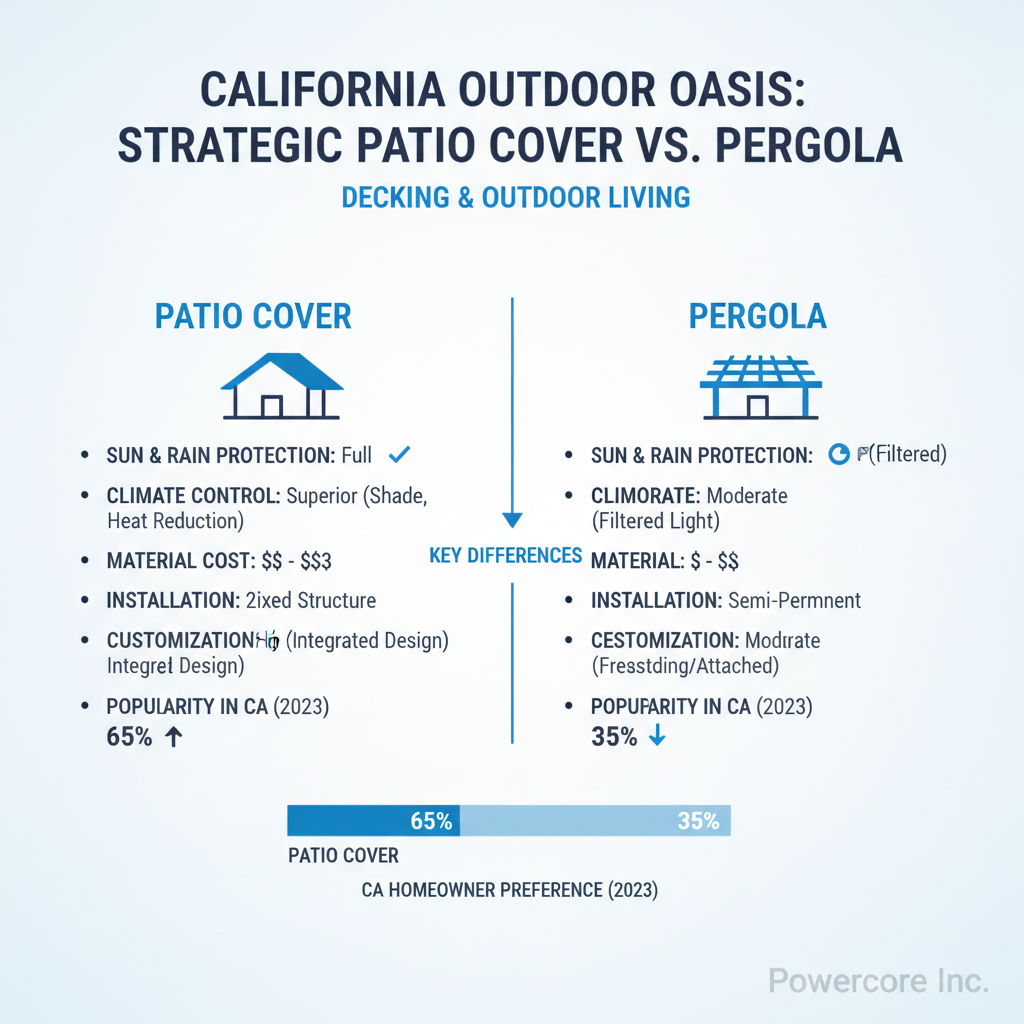
- Patio Cover: Unquestionably superior for maximum sun, UV, and rain protection. It creates a fully sheltered outdoor room, ideal for year-round use regardless of weather.
- Pergola: Offers partial shade and protection. Excellent for filtering sunlight and defining a space, but typically requires additional elements (vines, retractable canopies) for substantial sun or rain protection.
Aesthetic & Ambiance
- Patio Cover: Can feel like a true extension of your home, offering a more enclosed, room-like feel. Modern designs can be sleek, while traditional ones blend seamlessly.
- Pergola: Provides an open, airy, and more natural aesthetic. It's often chosen for its architectural beauty, allowing for dappled light and a connection to the sky.
Cost & Investment Value
- Patio Cover: Generally has a higher upfront cost due to more complex construction, roofing materials, and often, extensive permitting requirements. However, a well-built patio cover can offer a significant return on investment, particularly in increasing usable square footage and enhancing energy efficiency, which is highly valued in California real estate.
- Pergola: Typically less expensive initially, especially for basic designs. While it adds aesthetic value and defines a space, its impact on appraised value might be less direct than a fully enclosed patio cover, depending on its design and features. Powercore Inc helps homeowners understand the long-term value proposition of both options, ensuring your investment aligns with your home improvement goals.
Energy Efficiency Implications
- Patio Cover: Especially insulated models, significantly reduces solar heat gain on your home's exterior walls and windows. This translates directly to lower air conditioning bills during California's hot months.
- Pergola: While offering some shade, its open design means less direct impact on your home's energy consumption. Strategic placement can still shade windows, but the effect is less pronounced than a solid cover.
Maintenance & Longevity
- Patio Cover: Maintenance varies by material. Aluminum and Alumawood are virtually maintenance-free. Wood requires regular sealing, staining, or painting.
- Pergola: Similar to patio covers, maintenance depends on material. Wood pergolas require more upkeep, while vinyl and aluminum are low maintenance. Additional elements like retractable canopies will have their own maintenance needs.
Permitting & Regulations in California
This is a critical area for both structures in California. Due to stringent building codes and seismic requirements, most permanent outdoor structures will require permits. The specific requirements can vary significantly by city and county (e.g., Roseville, Sacramento, Los Angeles, San Diego all have their own specific regulations). Key factors include:
- Size and Height: Larger structures or those exceeding certain heights almost always trigger permit requirements.
- Attachment to Home: Any structure attached to your home will likely require detailed plans and inspections.
- Setbacks: Local zoning laws dictate how close structures can be to property lines.
- Structural Integrity: Engineering calculations are often needed to ensure the structure can withstand wind, seismic activity, and snow loads (in certain California regions).
While some small, detached pergolas might fall under an exemption in certain jurisdictions, it's never safe to assume. Powercore Inc, as a dual-licensed General B and C-10 Electrical Contractor, has extensive experience navigating California's complex permitting landscape, ensuring your project is compliant from conception to completion.
Choosing Your Perfect Outdoor Structure: Key Questions for California Homeowners
To help solidify your decision, consider these crucial questions tailored to the California homeowner's experience:
- What is your primary goal for the space? Is it maximum shade and weather protection for an outdoor kitchen, or an aesthetically pleasing structure to define a garden sitting area?
- How much natural light do you want to retain in your home's interior? A solid patio cover will inevitably cast more shade on adjacent windows than a slatted pergola.
- What is your budget for the initial installation and ongoing maintenance? Factor in not just the structure itself, but any enhancements like lighting, fans, or additional shade solutions.
- What aesthetic best complements your home's architecture and your personal style? Do you prefer a sleek, modern extension or a more open, natural garden feature?
- Do you need protection from pests (e.g., mosquitoes, flies) or privacy? Patio covers can be more easily screened or enclosed.
- How important is energy efficiency to you? If reducing cooling costs is a top priority, a well-designed patio cover offers more tangible benefits.
- What are the specific local HOA rules or city/county building regulations in your California community? Always verify permit requirements early in the planning process.
Beyond the Structure: Enhancing Your California Outdoor Living Space
The choice between a patio cover and a pergola is just the beginning. Powercore Inc offers a holistic approach to transforming your entire outdoor living experience.
Decking Solutions
Whether you choose a patio cover or a pergola, the foundation of your outdoor space often starts with the deck itself. We specialize in robust and beautiful decking solutions, including low-maintenance composite decking like Trex, or classic hardwood options, designed to withstand California's varied climates and enhance your outdoor oasis.
Outdoor Lighting
Extend the usability and ambiance of your outdoor area well into the evening with strategic outdoor lighting. From subtle accent lighting to functional task lighting for cooking areas, proper illumination transforms your space into a magical nighttime retreat.
Landscaping & Hardscaping
Integrate your new structure seamlessly with the surrounding landscape. Thoughtful planting, pathways, and hardscaping elements (like fire pits or retaining walls) create a cohesive and inviting environment that complements your patio cover or pergola.
Outdoor Kitchens & Entertainment
Take your outdoor living to the next level with a fully equipped outdoor kitchen, complete with grilling stations, sinks, and refrigeration. Pair this with integrated sound systems and comfortable seating areas for the ultimate California entertaining experience.
Powercore Inc: Your Trusted Partner for California Outdoor Transformations
Making the right choice between a patio cover and a pergola requires expert insight, meticulous planning, and flawless execution. As a California dual-licensed General B and C-10 Electrical Contractor, Powercore Inc brings unparalleled expertise to every outdoor living project. Our comprehensive services, from initial design consultation and material selection to permit acquisition and professional installation, ensure a smooth and successful transformation.
We understand California's unique climate, architectural styles, and stringent building codes. Our team is dedicated to delivering durable, beautiful, and functional outdoor structures that not only meet your needs but exceed your expectations, adding lasting value and enjoyment to your home. Whether you envision the full protection of a patio cover or the elegant, open feel of a pergola, Powercore Inc is committed to building your dream outdoor space with precision and integrity.
Conclusion: Build Your Dream Outdoor Space with Confidence
Deciding between a patio cover and a pergola is a significant step in enhancing your California home. By carefully considering your priorities for shade, aesthetics, cost, and long-term value, you can make an informed choice that perfectly suits your lifestyle and property. Both options offer incredible potential to transform your outdoor area into a cherished extension of your living space.
Ready to design the outdoor oasis you've always dreamed of? Don't navigate the complexities of design, materials, and California permits alone. Contact Powercore Inc today for a personalized consultation. Our expert team is ready to help you bring your vision to life, ensuring a beautiful, functional, and compliant outdoor living solution. Call us at 916-699-8778 to get started on your strategic outdoor transformation.