

Introduction: Crafting Your California Outdoor Oasis
California living is synonymous with outdoor living. From the sun-drenched coasts to the serene mountains and sprawling valleys, a well-designed deck extends your home’s usable space, offering a perfect venue for relaxation, entertaining, and enjoying the Golden State’s unparalleled natural beauty. But when it comes to selecting the right material for your California dream deck, homeowners often face a pivotal decision: composite decking or natural hardwood? This isn't just a matter of aesthetics; it's a strategic choice that impacts durability, maintenance, environmental footprint, and long-term value, especially within California's diverse climate zones and stringent building regulations.
At Powercore Inc, your trusted dual-licensed General B & C-10 Electrical Contractor based in Roseville, CA, we understand the nuances of building and remodeling in California. Our expertise extends beyond traditional construction to encompass creating integrated outdoor living solutions that stand the test of time and climate. This comprehensive guide will meticulously break down the pros and cons of composite vs. hardwood decking, offering California-specific insights to help you make an informed decision for your home.
California's Unique Decking Challenges and Opportunities
Building a deck in California isn't like building one just anywhere. The state presents a unique set of environmental factors and regulatory considerations that significantly influence material choice and construction methods. Understanding these elements is the first step in making an optimal decking decision.
Diverse Climate Zones: From Coast to Desert
- Intense UV Exposure: California's abundant sunshine, while cherished, can be brutal on decking materials. UV rays accelerate fading, degradation, and structural wear, making UV resistance a critical factor.
- Extreme Temperatures: From scorching inland summers exceeding 100°F to cooler coastal fogs and occasional winter freezes, decking materials must withstand significant temperature fluctuations without warping, cracking, or becoming uncomfortably hot underfoot.
- Moisture & Humidity: Coastal areas experience high humidity and salt air, which can accelerate corrosion and rot. Inland regions, while drier, still contend with seasonal rains and potential irrigation overspray.
- Wildland-Urban Interface (WUI) Zones: Many California homes are located in areas prone to wildfires. This necessitates specific fire-resistant building materials and construction practices, often mandated by local and state codes.
California Building Codes and Environmental Consciousness
- Fire Safety Regulations: For homes in WUI zones, decking materials must often meet specific fire-resistance ratings (e.g., Class A, B, or C). This can heavily influence the viability of certain hardwoods or require specific treatments.
- Permitting & Inspections: Significant deck construction or replacement projects almost always require permits and adhere to local structural and safety codes. Working with a licensed contractor like Powercore Inc ensures compliance.
- Sustainability & Sourcing: California homeowners are increasingly conscious of environmental impact. The origin and sustainability of decking materials, especially hardwoods, often play a role in decision-making.
Deep Dive: Hardwood Decking in California
Hardwood decking embodies timeless elegance and natural beauty, offering an unparalleled aesthetic that many homeowners find irresistible. But what does owning a hardwood deck truly entail in California?
Aesthetics and Appeal: The Undeniable Charm of Natural Wood
- Unmatched Natural Beauty: Each board boasts unique grain patterns, knots, and color variations, creating a rich, organic look that synthetic materials struggle to replicate. Hardwoods like Ipe, Redwood, Cedar, and Tigerwood offer distinct hues and textures.
- Warmth and Authenticity: Natural wood adds a sense of warmth, sophistication, and connection to nature that enhances any outdoor space.
- Aging Gracefully: While some prefer to maintain the original color, many hardwoods, like Ipe, naturally weather to a beautiful silver-gray patina over time, a look highly prized by some designers.
Durability and Longevity: Strength from the Earth
The durability of hardwood varies significantly by species:
- Exotic Hardwoods (e.g., Ipe, Cumaru, Tigerwood): Renowned for extreme density and hardness, these woods are naturally resistant to rot, decay, insects (including California's prevalent termites), and mold. They can last 40+ years with proper care. Ipe, in particular, offers excellent inherent fire resistance due to its density, making it a consideration for some WUI zones.
- Domestic Hardwoods (e.g., Redwood, Cedar): California Redwood is a classic choice, prized for its natural resistance to insects and decay due to inherent tannins. It's softer than exotic woods but offers good durability (20-30 years) and is a more sustainable, locally sourced option. Cedar is another naturally resistant, aromatic wood, though generally softer.
- Resistance to Pests: Many dense hardwoods and naturally resistant softwoods offer excellent protection against common California pests like termites, which can devastate untreated lumber.
Maintenance and Care: The Commitment to Preservation
Maintaining a hardwood deck in California requires a commitment:
- Regular Cleaning: Sweeping and occasional washing to remove dirt and debris.
- Sanding & Sealing/Staining: To preserve color and prevent weathering, hardwoods typically require annual or bi-annual cleaning, sanding (for some species), and reapplication of UV-protective sealers or stains. Skipping this can lead to graying, splintering, and checking (small cracks).
- Addressing Warping & Splintering: Especially in areas with extreme temperature swings, some hardwoods can be prone to warping or developing splinters if not properly maintained.
Cost Considerations: The Investment in Authenticity
- Material Costs: Exotic hardwoods are among the most expensive decking materials, reflecting their density, durability, and often, international sourcing. Redwood can be more affordable, especially when sourced locally.
- Installation Costs: Dense hardwoods can be more challenging to cut and fasten, potentially increasing labor costs for installation. Specialized fasteners may also be required.
- Long-Term Maintenance Costs: While materials might be pricier, the ongoing costs of sealers, stains, and the labor for their application must be factored into the total cost of ownership.
Environmental Impact: Sourcing Responsibly
For environmentally conscious Californians, the source of hardwood is paramount. Look for:
- FSC Certified Wood: Ensures the wood comes from sustainably managed forests.
- Local Sourcing: Opting for California Redwood or other domestically sourced woods reduces transportation emissions.
- Biodegradability: Hardwood is a natural, renewable resource that eventually breaks down, unlike synthetic alternatives.
Deep Dive: Composite Decking in California
Composite decking has rapidly gained popularity as a low-maintenance, durable alternative to natural wood. For California homeowners, its engineered properties offer compelling advantages.
Aesthetics and Appeal: Engineered Perfection
- Consistent Appearance: Composite boards offer uniform color and grain patterns, providing a clean, modern aesthetic.
- Variety of Styles: Available in a vast array of colors, textures, and finishes that convincingly mimic various wood species, stone, or even unique contemporary designs. Capped composites, in particular, offer enhanced realism.
- Fade Resistance: High-quality composite decks are engineered with UV inhibitors to resist fading and maintain their color over many years, a significant advantage under the California sun.
Durability and Longevity: The Power of Engineering
- Exceptional Resistance: Composite decking is highly resistant to rot, decay, insects (including termites), mold, and mildew. It won't splinter, warp, or crack like natural wood.
- Low Moisture Absorption: Its composition makes it less susceptible to the effects of humidity and moisture, making it suitable for coastal California environments.
- Fire Performance: Many composite brands offer boards with enhanced fire ratings, some even meeting Class A wildfire standards, making them a viable option for WUI zones where natural wood options might be limited or require extensive treatment.
- Heat Retention: A crucial consideration in California. Darker composite boards can get significantly hotter under direct sun than many hardwoods, potentially making them uncomfortable to walk on barefoot. Lighter colors and specific brands are designed to mitigate this.
- Lifespan: Most composite decks come with warranties ranging from 25 years to a limited lifetime, often exceeding the practical lifespan of many hardwoods without intensive maintenance.
Maintenance and Care: Effortless Enjoyment
This is where composite decking truly shines for many homeowners:
- Minimal Upkeep: No sanding, staining, or sealing ever required.
- Simple Cleaning: Regular cleaning with soap and water or a pressure washer (on a low setting, following manufacturer guidelines) is usually all that's needed to keep it looking new.
- Stain Resistance: Many capped composite boards are highly resistant to stains from food, drinks, and other common outdoor spills.
Cost Considerations: Balancing Upfront and Long-Term
- Material Costs: High-quality composite decking materials can have a higher upfront cost per linear foot than many natural softwoods (like redwood) but are often comparable to or less than exotic hardwoods (like Ipe).
- Installation Costs: Installation costs are often similar to hardwoods, sometimes slightly lower due to easier workability and consistent board dimensions. Hidden fastener systems are popular for a cleaner look but can add to labor.
- Long-Term Savings: The significant reduction in maintenance costs (no annual staining, sealing, or potential repair of warped boards) means composite decking often has a lower total cost of ownership over its lifespan.
Environmental Impact: The Recycled Story
- Recycled Content: Many composite boards are made from a blend of recycled plastics and wood fibers, diverting waste from landfills.
- Manufacturing Process: The energy and resources used in manufacturing composites should be considered.
- Non-Biodegradable: Unlike natural wood, composite decking does not biodegrade, though many manufacturers offer recycling programs for end-of-life products.
Head-to-Head Comparison: Key Factors for California Homeowners
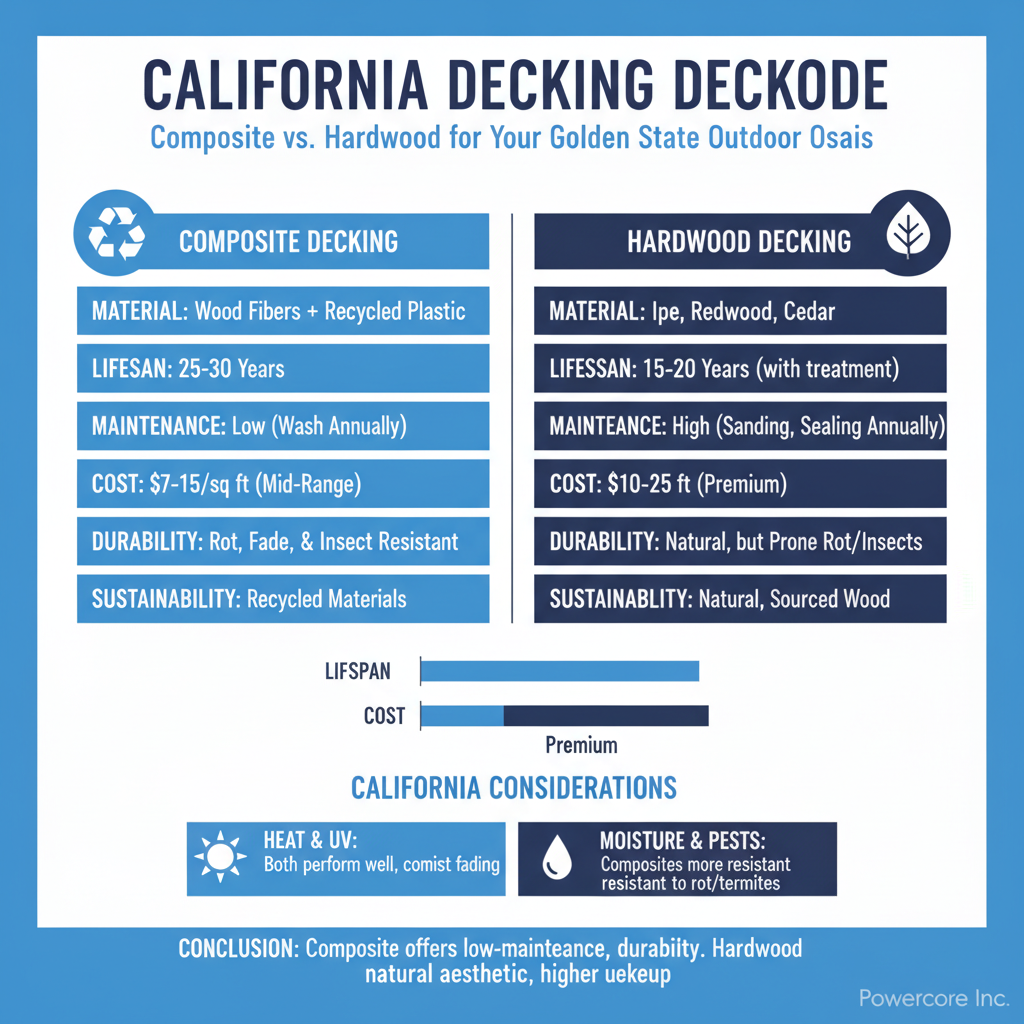
To distill the decision for your California home, let's compare the critical aspects side-by-side:
Upfront Cost vs. Long-Term Value
- Hardwood: Can range from moderately expensive (Redwood) to very high (Ipe). Long-term value depends heavily on consistent maintenance; neglect can diminish its appeal and lifespan.
- Composite: Often higher upfront than mid-range hardwoods, but lower long-term maintenance costs can result in a more favorable total cost of ownership over 10-20 years.
Maintenance Demands
- Hardwood: High. Requires regular cleaning, and periodic sanding, staining, or sealing to maintain aesthetics and integrity.
- Composite: Low. Simple cleaning with soap and water. No sanding, staining, or sealing ever needed.
Aesthetics and Design Versatility
- Hardwood: Unmatched natural beauty, unique grain, ages gracefully. Less color variety unless stained.
- Composite: Consistent appearance, vast range of colors and textures, can mimic various materials. Can sometimes lack the depth of natural wood.
Durability and Climate Resilience
- Hardwood: Varies by species. Dense hardwoods (Ipe) are extremely durable and naturally resistant to pests/rot. Softer woods (Redwood) offer good resistance but require more care against physical damage. All woods are susceptible to UV fading without protection. Fire resistance can be an issue in WUI zones unless treated or naturally dense.
- Composite: Excellent resistance to rot, insects, splintering, warping. Good UV resistance. Many options meet WUI fire codes. Can get very hot under direct California sun.
Environmental Footprint
- Hardwood: Renewable resource if sustainably sourced (FSC certified). Biodegradable.
- Composite: Often contains recycled materials. Non-biodegradable, but recycling programs exist. Manufacturing process impacts.
Heat Retention (Critical for California)
- Hardwood: Generally cooler underfoot than dark composite, but still absorbs heat.
- Composite: Darker colors can become extremely hot, especially in California's intense summer sun. Lighter colors or specific cool-touch technologies can mitigate this.
Resale Value
- Both can add significant resale value. A well-maintained hardwood deck offers classic appeal. A high-quality, low-maintenance composite deck is a strong selling point for modern buyers.
Navigating California Regulations and Specifics
Understanding local regulations is paramount for any decking project in California. Powercore Inc, as a licensed General B contractor, is well-versed in these requirements.
Wildland-Urban Interface (WUI) Zones: Fire Safety First
If your property is in a WUI zone, your decking material choice will be heavily influenced by fire-resistance ratings. The California Building Code (CBC) often mandates Class A or Class B fire-rated materials for exterior components. Some composite decking products are specifically engineered to meet these rigorous standards, offering peace of mind and compliance. Certain dense hardwoods, like Ipe, can also offer significant inherent fire resistance, but always check local codes and product certifications.
Permitting and Structural Integrity
Any new deck construction, significant expansion, or replacement of an existing deck's structural elements (like joists or beams) will likely require a building permit. This ensures your deck is built to withstand seismic activity, local load requirements, and general safety standards. Working with a qualified contractor like Powercore Inc ensures that all necessary permits are secured and that your deck is built to code, protecting your investment and ensuring safety.
Coastal Considerations: Salt Air and Humidity
For homes near the California coast, salt air and higher humidity levels can be concerns. Both hardwood and composite decks perform well, but certain considerations apply. Hardwoods like Ipe are highly resistant to moisture and salt. Composite decks are also excellent as they won't rot or degrade from humidity. The primary concern becomes fastener corrosion for both, requiring stainless steel or coated fasteners in coastal areas.
Making Your Informed Decision with Powercore Inc
The choice between composite and hardwood decking for your California home ultimately comes down to a balance of your priorities:
- Lifestyle: How much time and effort are you willing to dedicate to maintenance? If low-maintenance is paramount, composite is a strong contender.
- Aesthetic Preference: Do you crave the natural, evolving beauty of real wood, or do you prefer the consistent, engineered look and broad color palette of composite?
- Budget: Consider both the upfront material and installation costs, as well as the long-term maintenance expenses.
- Climate & Location: Factor in sun exposure, potential for wildfires, and humidity levels in your specific California region.
Regardless of your preference, selecting the right contractor is as crucial as selecting the right material. Powercore Inc prides itself on being a dual-licensed General B & C-10 Electrical Contractor, offering comprehensive home improvement services across California. Our team possesses the expertise to guide you through material selection, navigate complex California building codes, and execute your decking project with precision and quality craftsmanship. We believe in creating outdoor spaces that are not only beautiful but also durable, safe, and tailored to the unique demands of California living.
Why Choose Powercore Inc for Your Decking Project?
Choosing Powercore Inc means partnering with a team that understands the intricacies of California construction. Our General B license (CSLB #1134334) signifies our broad expertise in residential and commercial projects, including specialized outdoor living spaces like decks. We are committed to:
- Expert Guidance: Helping you weigh the pros and cons of composite vs. hardwood, considering your specific needs, budget, and local regulations.
- Quality Craftsmanship: Delivering superior installation with attention to detail, ensuring your deck is built to last.
- Code Compliance: Navigating all California building codes, including WUI requirements, and securing necessary permits.
- Integrated Solutions: Beyond decking, we offer a full spectrum of services from ADUs and remodels to roofing and HVAC, providing a seamless experience for homeowners looking for comprehensive improvements.
Conclusion: Your Golden State Outdoor Dream Awaits
Whether you lean towards the natural allure of hardwood or the low-maintenance resilience of composite, both options offer incredible potential for enhancing your California home. The 'best' choice isn't universal; it's the one that aligns perfectly with your vision, lifestyle, and the unique characteristics of your property. By carefully considering durability, aesthetics, maintenance, cost, and California's specific environmental and regulatory landscape, you can confidently choose the decking material that will provide years of enjoyment.
Ready to transform your outdoor space? Don't let the decking dilemma overwhelm you. Contact Powercore Inc today at 916-699-8778 for a personalized consultation. Let our experts help you design and build the perfect composite or hardwood deck that truly elevates your California outdoor living experience.