

Introduction: Strategic Resilience for California Homes
California homeowners are no strangers to power disruptions. From the Public Safety Power Shutoffs (PSPS) designed to prevent wildfires to an aging grid grappling with extreme weather and increasing demand, reliable electricity has become a precious commodity. While whole-home backup solutions offer comprehensive protection, they often come with a substantial price tag. This is where the strategic advantage of a critical load panel setup shines, offering a smarter, more cost-effective path to energy independence and resilience.
At Powercore Inc, we understand the unique energy challenges faced by residents across California. As a dual-licensed General B & C-10 Electrical Contractor, we specialize in tailoring robust backup power solutions that prioritize your home's most essential needs. This guide delves into the world of critical load panels, exploring how this strategic approach can safeguard your family's comfort, safety, and productivity when the unexpected happens.
What is a Critical Load Panel?
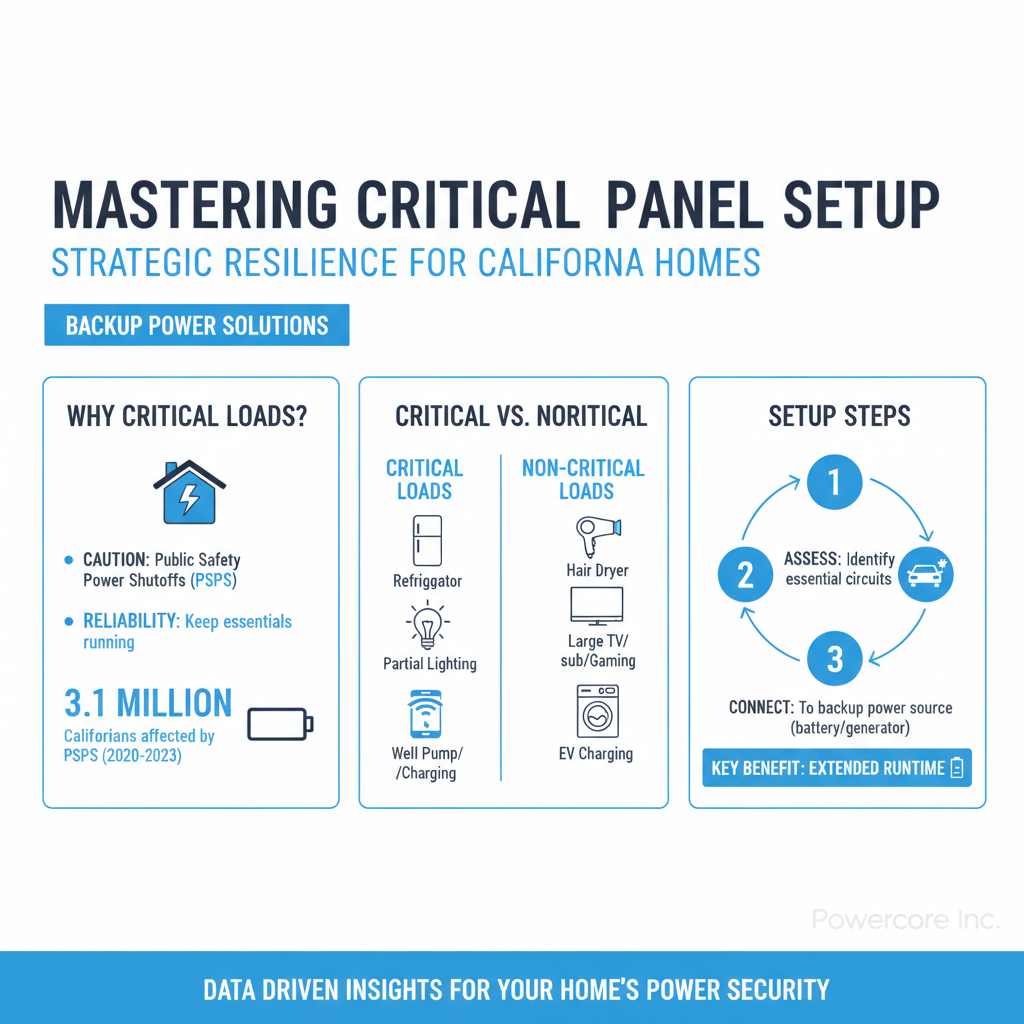
Imagine the power goes out. What are the absolute must-haves for your home? The refrigerator keeping your food fresh? The internet keeping you connected? Medical equipment? This prioritized list forms your “critical loads.” A critical load panel, sometimes called an essential load panel or backup subpanel, is a separate electrical panel installed alongside your main service panel. Its sole purpose is to house the circuits for these vital appliances and systems.
Unlike a whole-home backup system that attempts to power every circuit in your house, a critical load panel setup selectively funnels backup power—typically from a battery storage system or generator—only to those designated essential circuits. This targeted approach offers several key advantages:
- Efficiency: Backup power is conserved for what truly matters, extending the runtime of your battery or fuel supply.
- Cost-Effectiveness: A smaller battery bank or generator can be used, significantly reducing the initial investment compared to whole-home solutions.
- Simplicity: Installation and integration can be less complex, streamlining the path to backup power.
Critical Load vs. Whole-Home Backup: The Strategic Choice
While whole-home backup ensures seamless operation of every appliance, it's often overkill for many households. Consider the energy demands of non-essential items like guest room lights, a rarely used garage opener, or certain entertainment systems. Powering these during an outage unnecessarily drains your backup resources.
A critical load panel setup, by contrast, is a strategic choice. It's about smart energy management, ensuring that during a PSPS event or unexpected blackout, you can still maintain critical functions like refrigeration, lighting in key areas, communication, and climate control, without the expense or oversized equipment required for full home coverage.
Why Critical Load Prioritization Matters in California
California's unique energy landscape makes critical load prioritization not just a convenience, but a strategic necessity. Here’s why:
- Public Safety Power Shutoffs (PSPS): These preventative shutoffs, though vital for wildfire mitigation, can leave communities without power for extended periods. A critical load panel ensures your most important systems remain operational, providing peace of mind during these events.
- Rising Energy Costs and Time-of-Use (TOU) Rates: Strategic energy management isn't just for outages. Integrating your critical load panel with a solar and battery storage system allows you to store cheaper off-peak electricity or self-generated solar power. During peak TOU hours, you can draw from your battery to power critical loads, significantly reducing your reliance on expensive grid power and lowering your monthly utility bills.
- Aging Infrastructure and Climate Events: Beyond PSPS, California faces increasing strain on its electrical grid from extreme heat, storms, and aging infrastructure, leading to more frequent and unpredictable local outages. Critical load backup provides a reliable buffer against these uncertainties.
- Incentives for Battery Storage: California continues to offer various incentives to encourage battery storage adoption, which pairs perfectly with a critical load setup. Programs like the Self-Generation Incentive Program (SGIP) and federal tax credits make these systems more accessible. You can explore current California battery storage incentives to see how they might benefit your investment.
Identifying Your Home's Critical Loads: A Practical Approach
The first step in any successful critical load panel setup is identifying exactly what needs to stay on. This isn't a one-size-fits-all list; it depends on your family's unique needs, lifestyle, and property specifics. Consider the following categories:
- Health and Safety:
- Medical equipment (CPAP machines, oxygen concentrators, essential refrigeration for medicines)
- Smoke detectors/carbon monoxide alarms (if hardwired with battery backup is insufficient)
- Security systems and exterior lighting
- Well pumps (for homes relying on well water – see our article on Strategic Water Resilience: Battery Backup for California Well Pumps)
- Food and Water:
- Refrigerator and freezer
- Water heater (if electric and essential for short-term needs)
- Communication and Connectivity:
- Internet router and modem
- Charging outlets for phones and laptops
- Comfort and Convenience:
- Select lighting circuits (kitchen, living room, bedrooms)
- A few critical outlets for small appliances
- A furnace fan or a specific HVAC zone (depending on climate needs)
- Garage door opener
Powercore Inc's expert electricians can help you conduct a thorough load assessment, calculating the precise wattage and amperage requirements for each critical item. This critical step ensures your backup system is perfectly sized, preventing under-powering vital systems or overspending on unnecessary capacity.
The Core Components of a Critical Load System
A well-designed critical load panel setup integrates several key technologies to deliver seamless backup power:
- Battery Storage System: The heart of most modern backup solutions. Batteries store energy generated by solar panels or drawn from the grid, providing clean, quiet, and instantaneous power during an outage. For more on this, check out our service page on Residential Solar & Storage.
- Inverter: This crucial device converts the DC (direct current) electricity stored in your battery into AC (alternating current) electricity, which is what your home appliances use. Many modern battery storage systems come with integrated inverters.
- Automatic Transfer Switch (ATS) or Smart Panel: This intelligent device detects a power outage and automatically switches your critical load panel from grid power to battery power, often within milliseconds. When grid power returns, it seamlessly switches back, recharging your battery in the process. Advanced smart panels offer even greater control and monitoring.
- Critical Load Subpanel: As discussed, this is the dedicated electrical panel that houses the breakers for your selected essential circuits.
- Solar Panels (Optional, but Recommended): Integrating solar panels with your battery storage creates a truly resilient and independent energy ecosystem. Solar panels recharge your battery during the day, extending backup duration indefinitely and maximizing energy savings. Discover the 7 Benefits of Solar Panels for Emergency Power Solutions.
Planning Your Critical Load Panel Setup with Powercore Inc
Executing a critical load panel setup requires careful planning and expert execution. Powercore Inc guides you through every step:
1. Comprehensive Load Assessment and Design
Our certified electricians begin with a detailed analysis of your home's energy consumption and your prioritized critical loads. We calculate surge and continuous wattage requirements to accurately size your battery storage and ensure compatibility with your existing electrical infrastructure. This assessment also considers future needs, such as potential EV charging stations or additional appliances.
2. System Sizing and Technology Selection
Based on your load assessment and desired backup duration, we recommend the optimal battery storage capacity and inverter size. We work with leading manufacturers to provide robust, reliable, and efficient solutions tailored to California's climate and regulations. This phase also includes integrating any existing or new solar arrays.
3. Location and Installation Considerations
The placement of your battery storage system and critical load panel is crucial for efficiency, safety, and aesthetics. Our team ensures proper ventilation, accessibility, and compliance with all local codes and California Electrical Code (CEC) requirements. We handle all aspects of the physical installation, ensuring minimal disruption to your home.
4. Permitting and California Regulations
Electrical work, especially involving backup power and solar, requires adherence to strict local and state regulations. As a licensed California contractor (CSLB #1134334 & #1098175), Powercore Inc manages all necessary permitting processes, ensuring your installation is fully compliant and passes all inspections. This includes navigating requirements from local AHJs (Authorities Having Jurisdiction) and utilities.
The Installation Process: What to Expect
Once the design and permits are in place, the installation typically follows these steps:
- Main Panel Prep: Our team safely disconnects power and prepares your main electrical panel for the new subpanel connection.
- Critical Load Subpanel Installation: The dedicated critical load subpanel is mounted, and selected circuits from your main panel are carefully transferred to it.
- ATS/Smart Panel Integration: The automatic transfer switch or smart panel is installed, connecting your critical load subpanel to both the grid and your backup power source.
- Battery & Inverter Setup: Your battery storage system and inverter are installed, typically outdoors or in a garage, following manufacturer specifications and safety protocols.
- Solar Integration (if applicable): If you’re adding solar, panels are mounted on your roof and wired into the system, ensuring seamless energy flow to charge your battery.
- System Commissioning & Testing: Once all components are installed, the entire system is thoroughly tested to ensure proper functionality, seamless transfer, and efficient operation. We walk you through the system, explaining its features and how to monitor it.
Benefits Beyond Outages: Energy Management and ROI
While power outage protection is the primary driver for a critical load panel setup, its benefits extend far beyond simply keeping the lights on. When integrated with solar and battery storage, this system becomes a powerful tool for comprehensive home energy management, offering significant financial returns and environmental advantages.
Maximizing Energy Independence and Savings
- Time-of-Use Optimization: With a battery, you can charge during off-peak hours when electricity is cheapest or from your solar panels during the day. Then, power your critical loads from the battery during expensive peak hours, dramatically reducing your utility bill.
- Self-Consumption of Solar: Instead of sending excess solar energy back to the grid for minimal credit (especially with NEM 3.0 in California), you can store it in your battery to power your critical loads later, maximizing your self-sufficiency.
- Reduced Carbon Footprint: By relying more on clean, stored solar energy, you reduce your dependence on fossil-fuel generated grid electricity, contributing to a healthier environment.
Understanding the Investment and Incentives
The initial investment in a critical load panel setup, particularly with battery storage, varies based on system size, battery capacity, and installation complexity. However, the long-term ROI is compelling, especially in California:
- Federal Solar Tax Credit (ITC): The Residential Clean Energy Credit, as detailed by the IRS, offers a significant tax credit for homeowners installing new, qualified clean energy property, including solar panels and battery storage.
- California Battery Storage Incentives: While programs like SGIP have evolved, California often has local and state-level incentives that can offset costs. Powercore Inc stays up-to-date on all available programs to help you maximize your savings.
- Increased Property Value: Homes with integrated solar and battery backup systems are increasingly attractive to buyers, often commanding higher resale values.
- Peace of Mind: The value of knowing your essential services will remain operational during an outage is immeasurable.
Choosing the Right Partner for Your California Home
Installing a critical load panel setup is a significant investment in your home's future and resilience. It requires specialized knowledge in electrical systems, battery storage, solar integration, and adherence to California's stringent building and electrical codes. This is not a DIY project.
Powercore Inc is your trusted partner for navigating the complexities of backup power solutions in California. Here’s why homeowners across the state choose us:
- Dual-Licensed Expertise: As a General B and C-10 Electrical Contractor, we possess the comprehensive knowledge and licenses to handle all aspects of your project, from structural considerations to intricate electrical wiring.
- California-Specific Knowledge: We are deeply familiar with California's unique energy challenges, regulations, and incentive programs, ensuring your system is optimized for local conditions.
- Comprehensive Service Offering: Beyond backup power, we offer a full suite of home improvement services, including solar, battery storage, HVAC, roofing, and remodels. This holistic approach means we can integrate your critical load solution seamlessly into your broader home improvement goals.
- Customer-Centric Approach: We pride ourselves on transparent communication, superior craftsmanship, and dedicated customer service from initial consultation to post-installation support.
Don't just take our word for it. Explore our article on Strategic Resilience: Portable vs. Permanent Backup Power for California Homes to understand the breadth of our expertise in ensuring energy security.
Secure Your California Home's Future with Powercore Inc
A strategic critical load panel setup is more than just backup power; it's an investment in your California home's energy independence, financial stability, and long-term resilience. Don't wait for the next power outage to realize the importance of a reliable energy solution. Powercore Inc is ready to design and install a custom critical load system that perfectly meets your needs and budget.
Take the first step towards uninterrupted power and strategic energy management. Contact Powercore Inc today for a personalized consultation. Call us at 916-699-8778 or visit our contact page to schedule an appointment. Let us help you build a more secure and sustainable future for your California home.