

Introduction: Securing Your California Home's Energy Future
California's dynamic energy landscape presents unique challenges and opportunities for homeowners. From Public Safety Power Shutoffs (PSPS) and an aging grid to the increasing frequency of extreme weather events, ensuring a reliable power supply for your home is no longer a luxury—it's a critical component of modern living and safety. As a homeowner in the Golden State, you've likely considered various strategies to protect your family and property from unexpected blackouts. The central dilemma often revolves around two primary contenders for home backup power: traditional generators and modern battery energy storage systems.
Both generators and battery backup offer compelling advantages, but they cater to different needs, budgets, and environmental philosophies. Choosing the right solution involves more than just comparing price tags; it requires a strategic understanding of California-specific regulations, energy usage patterns, long-term costs, and the ultimate vision for your home's energy independence. At Powercore Inc, a dual-licensed General B and C-10 Electrical Contractor based in Roseville, CA, we understand these complexities and are dedicated to guiding California homeowners through informed decisions that enhance resilience and value.
This comprehensive guide will delve deep into the world of home backup power, meticulously comparing generators and battery storage systems. We'll explore their operational mechanics, evaluate their pros and cons within the California context, and highlight how each option can contribute to future-proofing your home against an unpredictable energy future. Our goal is to equip you with the knowledge needed to make a strategic choice, ensuring your home remains powered, comfortable, and secure, no matter what challenges the grid faces.
California's Evolving Energy Challenges: Why Backup Power is Essential
Living in California means embracing innovation, natural beauty, and unfortunately, a growing susceptibility to power disruptions. Understanding the specific threats to your home's power supply is the first step toward building a robust energy resilience strategy.
Public Safety Power Shutoffs (PSPS) and Wildfire Risk
Perhaps the most significant and unique challenge for California homeowners is the prevalence of Public Safety Power Shutoffs (PSPS). Initiated by utility companies like PG&E, Southern California Edison, and SDG&E, PSPS events are preemptive measures taken during high-risk weather conditions—particularly strong winds, dry vegetation, and low humidity—to prevent utility equipment from sparking wildfires. While intended to protect communities, these planned outages can last for days, leaving homes without power and disrupting daily life. For many, PSPS events have underscored the urgent need for reliable backup power solutions.
Aging Infrastructure and Grid Instability
Beyond wildfires, California's electrical grid, like much of the nation's, is aging and increasingly strained by growing demand, particularly during extreme heatwaves. This can lead to unexpected blackouts, brownouts, and even calls for voluntary conservation. The grid's vulnerability means that even outside of PSPS events, your home could be susceptible to sudden power loss, impacting everything from refrigeration and heating/cooling to security systems and vital medical equipment.
The Impact of NEM 3.0 on Solar Homeowners
For California homeowners with solar panels, the introduction of Net Energy Metering (NEM) 3.0 has significantly altered the financial landscape of solar energy. NEM 3.0 reduces the credit solar owners receive for exporting excess energy back to the grid, making self-consumption and energy storage more financially attractive. This shift means that pairing solar with battery backup isn't just about resilience during outages; it's now a strategic financial decision that maximizes the return on your solar investment by storing energy generated during the day for use in the evening or during grid outages.
Climate Change and Extreme Weather Events
California is at the forefront of climate change impacts, experiencing more frequent and intense heatwaves, droughts, and severe storms. These events place immense pressure on the energy grid and increase the likelihood of power outages. Investing in backup power is a proactive step towards mitigating the disruptive effects of these environmental shifts on your home and lifestyle, ensuring continuity and comfort.
Traditional Generators: A Deep Dive into Reliable, On-Demand Power
For decades, generators have been the go-to solution for homeowners seeking backup power. These robust machines convert fuel into electricity, providing a direct and often immediate source of power during an outage. Understanding their mechanics, advantages, and drawbacks is crucial for a balanced comparison.
How Generators Work: Fueling Your Home's Resilience
Generators operate on an internal combustion engine, similar to a car engine, which drives an alternator to produce electricity. They typically run on various fuel sources:
- Natural Gas: Often connected directly to your home's existing gas line, offering a continuous fuel supply without the need for on-site storage or refueling. This is a popular choice for whole-home standby generators due to its convenience.
- Propane: Stored in large tanks on your property. Propane generators offer a clean-burning alternative to natural gas and are excellent for homes where natural gas lines are unavailable. However, fuel supply is finite and depends on tank size and refills.
- Diesel: Less common for residential use due to higher maintenance, noise, and bulkier fuel storage, but known for their efficiency and reliability in larger applications.
Modern standby generators are often equipped with an Automatic Transfer Switch (ATS). When the grid power fails, the ATS detects the outage, signals the generator to start, and seamlessly switches your home's electrical load to generator power. Once grid power is restored, the ATS switches back and shuts down the generator, all without manual intervention.
Advantages of Generators for California Homes
- Unlimited Run Time (with fuel): For natural gas generators, the fuel supply is continuous, meaning they can run for days or even weeks as long as the gas line is active. Propane generators can run for extended periods depending on tank size. This makes them ideal for prolonged PSPS events or multi-day blackouts.
- Immediate and Powerful Output: Generators, especially larger standby models, can power an entire home, including high-demand appliances like air conditioning units, electric ovens, and well pumps, without compromising performance.
- Lower Upfront Cost (for basic models): While whole-home standby generators can be a significant investment, they often have a lower upfront cost compared to a comprehensive battery storage system, particularly when solar integration isn't a factor.
- Proven Technology: Generators are a mature and well-understood technology with a long track record of reliability. Parts and service are widely available.
Disadvantages and Considerations for California Homeowners
- Noise Pollution: Generators can be quite loud, which can be a nuisance for homeowners and neighbors, especially during extended use. California has strict noise ordinances in many residential areas.
- Emissions and Environmental Impact: Running on fossil fuels, generators produce exhaust emissions (carbon monoxide, nitrogen oxides, particulate matter). This contributes to air pollution and greenhouse gas emissions, a significant concern in environmentally conscious California.
- Fuel Storage and Delivery: For propane or diesel generators, you need adequate on-site fuel storage and a plan for refueling during prolonged outages, which can be challenging during widespread emergencies. Natural gas, while convenient, is also susceptible to utility disruptions.
- Maintenance Requirements: Generators require regular maintenance, including oil changes, filter replacements, and periodic testing, to ensure they operate reliably when needed.
- Permitting and Regulations: California has specific regulations regarding generator installation, including setbacks from property lines, noise levels, and emissions standards. Obtaining permits can add to the complexity and cost of installation.
- Safety Concerns: Improper installation or operation can pose safety risks, including carbon monoxide poisoning (if indoors), fire hazards, and electrical dangers.
When considering a generator, it's essential to consult with a qualified professional like Powercore Inc to ensure proper sizing, safe installation, and compliance with all local and state regulations. We can help you navigate the complexities of fuel types, automatic transfer switches, and permitting requirements.
Battery Energy Storage Systems (BESS): The Modern, Sustainable Solution
Battery energy storage systems, often integrated with solar panels, represent the cutting edge of home backup power. They offer a silent, clean, and increasingly intelligent way to secure your home's energy future, aligning perfectly with California's sustainability goals.
How Battery Backup Works: Storing Sunlight for a Rainy Day
A typical home battery backup system consists of one or more large batteries (most commonly lithium-ion), an inverter, and a charge controller. Here's how it generally operates:
- Charging: Batteries can be charged in several ways:
- From Solar Panels: During the day, excess electricity generated by your solar panels, not immediately used by your home, is directed to charge the batteries.
- From the Grid: In certain scenarios, especially with time-of-use (TOU) utility rates, batteries can be charged from the grid during off-peak hours when electricity is cheaper, then discharged during peak hours to save money.
- Discharging During Outages: When grid power fails, the battery system detects the outage and seamlessly switches to providing power to your home. Depending on the system's capacity and your energy usage, it can power essential circuits or even your entire home for several hours to multiple days.
- Smart Management: Modern battery systems come with sophisticated software that allows you to monitor energy flow, prioritize which appliances get power, and optimize charging/discharging cycles based on weather forecasts, utility rates, and your preferences.
Advantages of Battery Storage for California Homes
- Silent Operation: Unlike generators, batteries operate silently, maintaining the peace and quiet of your home and neighborhood during an outage.
- Clean and Zero Emissions: Batteries produce no emissions during operation, making them an environmentally friendly choice that aligns with California's clean energy initiatives. When paired with solar, they represent true renewable energy resilience.
- Seamless and Instantaneous Power Transfer: Battery systems, especially those integrated with an automatic transfer switch, provide virtually instantaneous power backup, often imperceptible to the homeowner.
- Enhanced Solar ROI (especially with NEM 3.0): For solar owners, batteries are a game-changer under NEM 3.0. They allow you to store your self-generated solar power for use at night or during peak demand, significantly reducing reliance on the grid and maximizing your savings.
- Grid Services and Incentives: Battery systems can participate in demand response programs, potentially earning you credits for supporting grid stability. California offers incentives like the Self-Generation Incentive Program (SGIP) to reduce the upfront cost of battery storage.
- Low Maintenance: Battery systems generally require minimal maintenance compared to generators, primarily consisting of software updates and occasional visual inspections.
- Scalability and Modularity: Many battery systems are modular, allowing you to add more battery units as your energy needs grow or your budget allows.
Disadvantages and Considerations for California Homeowners
- Higher Upfront Cost: Battery storage systems typically have a higher initial investment than traditional generators, especially for whole-home solutions. However, incentives can help offset this cost.
- Limited Energy Duration: While powerful, a battery's capacity is finite. Without a continuous charging source (like solar during daylight hours), it can only power your home for a limited duration, usually 8-24 hours for a typical setup, depending on usage.
- Temperature Sensitivity: Battery performance and lifespan can be affected by extreme temperatures. Proper installation location (e.g., garage, shaded outdoor area) is crucial in California's diverse climate zones.
- Degradation Over Time: Like all batteries, their capacity will slowly degrade over their lifespan (typically 10-15 years), though modern systems are designed for long-term reliability.
- Space Requirements: While smaller than some generators, battery units still require dedicated space, often mounted on a wall or placed on a slab.
Powercore Inc specializes in designing and installing customized battery energy storage solutions, integrating them seamlessly with new or existing solar installations. We help homeowners navigate the complexities of system sizing, inverter compatibility, and unlocking available incentives to maximize your investment.
Generator vs. Battery: A Strategic Comparison for California Homes
Now that we've explored each solution in depth, let's put them head-to-head. The "better" choice isn't universal; it depends heavily on your specific needs, priorities, and the unique characteristics of your California property. This comparison will help you weigh the critical factors.
Key Comparison Metrics:
- Upfront Cost:
- Generator: Generally lower initial investment for a basic whole-home standby generator (e.g., $7,000 - $20,000 for equipment and installation). Portable generators are even less.
- Battery Storage: Higher initial investment, especially for whole-home solutions often integrated with solar (e.g., $10,000 - $30,000+ per battery, with multiple units often needed for whole-home backup, plus inverter/installation). However, incentives like SGIP can significantly reduce net cost.
- Operating Costs:
- Generator: Ongoing fuel costs (natural gas bill, propane refills), regular maintenance (oil changes, filters), and potential repairs.
- Battery Storage: Minimal operational costs. If integrated with solar, charging is free. If grid-charging, costs depend on utility rates. Very low maintenance.
- Run Time & Capacity:
- Generator: Essentially unlimited run time for natural gas models with an active utility connection. Propane/diesel models are limited by fuel tank size. Can power large loads (AC, well pumps) simultaneously.
- Battery Storage: Limited by stored capacity. A typical home battery might provide 8-24 hours of power, potentially more with solar recharging during a multi-day outage. May require load management (prioritizing essential circuits).
- Environmental Impact:
- Generator: Produces greenhouse gas emissions and noise pollution. Uses fossil fuels.
- Battery Storage: Zero direct emissions or noise during operation. Environmentally friendly, especially when paired with solar.
- Maintenance & Longevity:
- Generator: Requires regular engine maintenance (oil, filters, spark plugs) and periodic testing. Lifespan typically 15-30 years with proper care.
- Battery Storage: Very low maintenance. Designed for many charge/discharge cycles. Lifespan typically 10-15 years, with warranties often covering capacity degradation.
- Grid Interaction & Smart Capabilities:
- Generator: Primarily an isolated backup solution. Some smart features for monitoring, but limited grid interaction beyond automatic transfer.
- Battery Storage: Highly integrated with smart home energy management. Can optimize energy use, participate in demand response, and provide grid services. Essential for maximizing solar ROI under NEM 3.0.
- Permitting & Regulations (California Specific):
- Generator: Subject to local noise ordinances, setback requirements, and air quality regulations. Emissions permits may be required in some areas.
- Battery Storage: Generally simpler permitting process, though electrical permits are always required. Often incentivized by state programs.
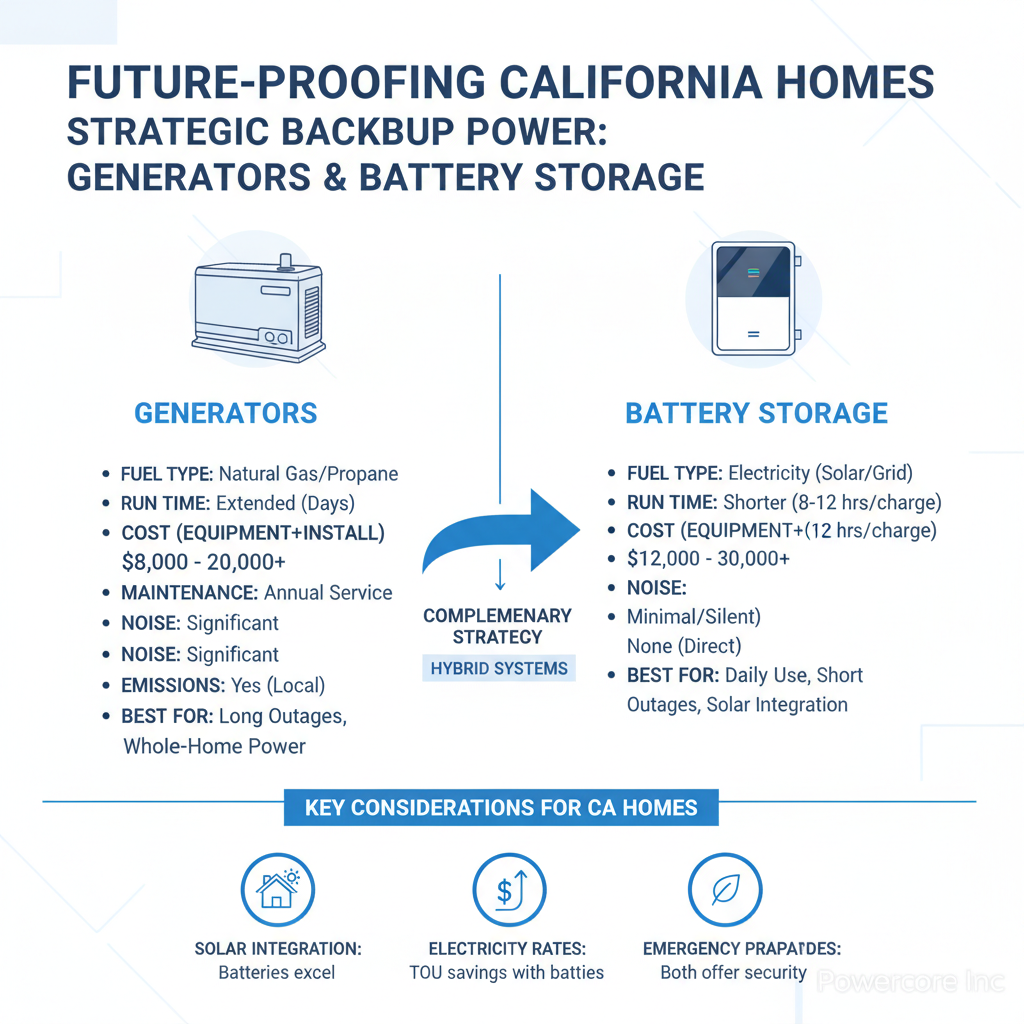
Beyond Either/Or: Holistic Energy Resilience Strategies for California
While the generator vs. battery debate is central, for many California homeowners, the most strategic approach isn't about choosing one over the other, but rather considering how they can complement each other, or how a single solution can be integrated into a larger home energy management system.
The Hybrid Approach: Best of Both Worlds
Imagine a scenario where your solar panels and battery storage system handle daily energy needs, optimize your solar investment under NEM 3.0, and provide silent, clean backup for typical short outages. For extended PSPS events or multi-day blackouts, a natural gas generator can then automatically kick in, ensuring uninterrupted power for as long as needed. This hybrid setup offers:
- Maximized Resilience: Redundant layers of protection for any outage duration.
- Cost Optimization: Batteries handle the frequent, shorter outages and daily peak shaving, reducing reliance on the generator's fuel consumption.
- Environmental Balance: Prioritizing clean energy (solar + battery) for most operations, with the generator as a powerful, long-duration backup.
Designing such an integrated system requires expert knowledge of electrical systems, energy consumption, and local regulations. Powercore Inc excels in crafting these bespoke, multi-faceted energy solutions that provide unparalleled peace of mind for California homeowners.
Whole-Home Energy Management and Smart Integration
Modern backup power isn't just about keeping the lights on; it's about intelligent energy management. Both generators and battery systems can be integrated into a smart home ecosystem, allowing for:
- Load Prioritization: Automatically or manually directing power to essential appliances during an outage.
- Remote Monitoring & Control: Managing your backup system from anywhere via a smartphone app.
- Predictive Power Management: Using weather forecasts and grid alerts to optimize charging and discharging.
This level of integration transforms backup power from a reactive measure into a proactive component of your home's overall energy strategy, contributing to efficiency, savings, and security.
Considering Other Home Improvements for Resilience
Backup power is one piece of the puzzle. For ultimate home resilience, also consider:
- Energy Efficiency Upgrades: Reducing your overall energy demand lessens the load on any backup system. This includes HVAC upgrades, better insulation, and energy-efficient appliances. Powercore Inc also offers HVAC services.
- Solar Panel Installation (if not already present): A solar array provides a continuous charging source for batteries, significantly extending their run time during multi-day outages.
- ADUs and Remodels: When planning an ADU or a major remodel, it's the perfect opportunity to integrate backup power solutions from the ground up, ensuring seamless power for new additions.
Making the Right Choice: Tailoring Backup Power to Your California Home
Deciding between a generator, a battery backup, or a hybrid system is a significant investment that requires careful consideration of several factors unique to your situation.
Assess Your Energy Needs and Usage Patterns
- Critical Loads: What absolutely needs to stay on during an outage (refrigerator, medical devices, internet, well pump)?
- Whole-Home vs. Essential Circuits: Do you need to power your entire house, or can you manage with just essential circuits?
- Daily Consumption: How much energy do you typically use? This helps in sizing battery capacity or generator output.
- Duration of Outages: Are you primarily concerned with short, frequent outages, or long, multi-day PSPS events?
Evaluate Your Budget and Financial Incentives
- Upfront vs. Long-Term Costs: Consider not just the purchase price, but also fuel costs, maintenance, and potential savings (e.g., from solar integration and demand response programs).
- California Incentives: Research programs like the Self-Generation Incentive Program (SGIP) for battery storage, which can significantly reduce the initial investment.
- ROI: Calculate the return on investment, considering not just financial savings but also the invaluable peace of mind and enhanced property value.
Consider Your Environmental Goals and Lifestyle
- Carbon Footprint: If reducing your environmental impact is a top priority, a solar-plus-battery system offers the cleanest solution.
- Noise Sensitivity: For quiet neighborhoods or if you work from home, the silent operation of batteries might be a deciding factor.
- Convenience: Do you prefer a "set it and forget it" system, or are you comfortable with occasional refueling and maintenance?
Understand Local Regulations and Property Constraints
- Permitting: Be aware of local permitting requirements for both types of installations.
- Space: Do you have adequate space for a generator (considering setbacks and noise) or battery units (wall-mounted or ground-mounted)?
- Fuel Access: Is natural gas available at your property? If considering propane, do you have space for a tank?
The journey to selecting the perfect backup power solution doesn't have to be overwhelming. As a trusted California electrical contractor, Powercore Inc offers expert consultation, design, and installation services across the entire state. Our dual licensing (General B and C-10 Electrical) means we have the comprehensive expertise to handle every aspect of your project, from initial assessment to final commissioning, ensuring a safe, efficient, and compliant installation.
Conclusion: Powering Your California Future with Confidence
In a state as dynamic and forward-thinking as California, preparing your home for energy challenges is not just a smart move—it's an essential one. Whether you lean towards the proven reliability of a traditional generator, the clean, silent innovation of battery energy storage, or a powerful hybrid combination, the goal remains the same: to ensure uninterrupted power, comfort, and security for your family and property.
The strategic choice between generators and battery backup systems, or their intelligent integration, hinges on a nuanced understanding of your specific needs, the California energy landscape, and future-proofing your home. With the right solution, you can transform periods of grid instability into moments of uninterrupted peace, knowing your home is resilient and self-sufficient.
Don't wait for the next outage to realize the importance of strategic backup power. Take control of your home's energy future today. For a personalized consultation and expert installation of generators, battery storage, or integrated energy solutions anywhere in California, contact Powercore Inc. Our team of licensed professionals is ready to design a system that meets your unique requirements and provides lasting value. Call us at 916-699-8778 to schedule your consultation and build a more resilient home.